
“Elliott Gould’s Hollywood Odyssey, 1980–1983: Big Studios, Tiny Films, and the Gamble of Reinvention”
Between 1980 and 1983, Elliott Gould’s career veered wildly—from Disney fantasy to sleazy campus comedy to obscure indie tramps. This article dives into his own candid reflections on box-office flops, creative risks, and a strange, essential chapter in his storied journey through Hollywood.

Falling, Flopping, and Fleeing: A Triptych of Strange Choices
By the dawn of the 1980s, Elliott Gould had already traversed the pinnacle of counter-culture stardom—MASH, Bob & Carol & Ted & Alice, The Long Goodbye—and had become synonymous with risky, unconventional roles. The years 1980 to 1983 marked a curious trough: big studio attempts, budget flops, and offbeat indie gambles. Here’s how that played out.
1980: Overscored Romance & High-Concept Misfires
Falling in Love Again (1980) saw Gould as Harry Lewis, an architect beset by nostalgia and marital tension. The film brought an early appearance by Michelle Pfeiffer and an elegant score by Michel Legrand, but its reception was tepid—Vincent Canby derided its “witless screenplay” and it bombed at the box office. Gould himself, reflecting years later, said:
“It was a very large score, it was over-musical. It was beautiful. … I thought there was too much of it. It was the first picture of a very, very young director … It was alright.”
On the same year, he appeared in The Last Flight of Noah’s Ark (1980), a Disney adventure—fun, high-budget, but hardly prestige. By contrast, Dirty Tricks (1981) was a low-brow campus comedy, budgeted modestly at $5 million, which critics relentlessly pummeled. As Variety put it: “If you’ve ever wondered what it’s like at the bottom of the barrel, this film will take you on a guided tour.” Gould was “fun and full of sweet mischief,” but the project “wastes both him and an amusing premise”
1981: Selling Your Soul—for Disney
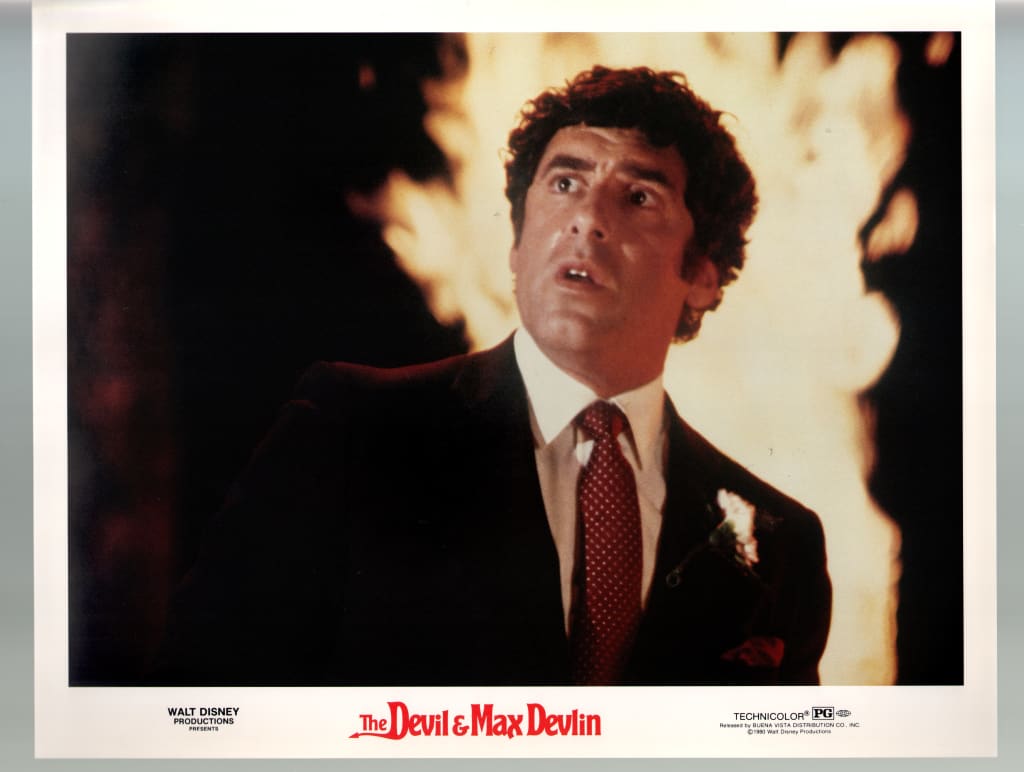
That same year, Gould starred in The Devil and Max Devlin, a Disney fantasy-comedy where Bill Cosby plays the titular devil. The film stirred controversy due to its mature themes—so much so that it helped lead Disney to create its Touchstone label for more grown-up fare. On paper, a bold jump; in reality, one more odd step in a shifting trajectory.
The film was odd, Gould was off, Cosby was strange, and yet, The Devil and Max Devilin made money. The film grossed $16 million dollars, that would be more than $62 million dollars today, with inflation.
1983: Underground Tramps & Quiet Comebacks
By 1983, Gould had dropped into obscurity, leaving his Disney deal behind, Gould drifted over to Austria to make the movie Tramps, a tiny indie where he played Willie Zobel, a drunken American architect who befriends a railroad worker. All of Gould's dialogue is English dubbed into German and the film has never received an official American release. Nothing flashy, nothing trending—just an actor continuing to work. The film stands alongside other low-budget 1980s credits that rarely see the light of day.
⸻
Narrating the Ride: Gould’s Self-Reflections
One of the most compelling stories of that era echoes from five years earlier: the infamous collapse of A Glimpse of Tiger. Although that unfinished project hails from the early 1970s, Gould’s own self-analysis resonates powerfully in context:
“I showed up with a six-day beard, a cigar butt … I finally couldn’t—or wouldn’t—vacillate between the role of actor and producer. In a sense, I scuttled my own ship … I was very unstable, but it wasn’t drugs. … I was a lamb, unaware of the laws of the jungle.”
Though before our 1980 window, it offers a lens: Gould had a pattern of taking immense creative risks—often without the armor of commercial calculation. That reckless bravery likely shadowed the odd choices of 1980–1983, where each film reflected a willingness to leap and hope for a soft landing.
From his 2013 reflection in Hidden Films, he dismissed regrets:
“I’ve had a lot of lessons to learn. I don’t cross that line.”
And to that, one might say those low moments were the lessons.
⸻
Reflections on the Ride: Why This Strange Chapter Matters
1. Risk Over Prestige: Even after mainstream success, Gould chose projects for unique voices rather than safe acclaim—from Disney’s devilish fantasy to slim comedy capers.
2. Creative, Not Commercial: His comments on Falling in Love Again underscore how aesthetically beautiful could still feel excessive—indicating an artist prioritizing texture over marketability.
3. Self-Awareness and Resilience: Though the work veered odd or failed, Gould never retreated entirely. He continued working, learning, and candidly speaking about misfires without self-pity.
4. Foundation for Reinvention: Though 1980–1983 may have lacked huge hits, they grounded Gould’s later reinvention—character roles in Bugsy, Ocean’s Eleven, Friends—that embraced nuance and humility.

About the Creator
Movies of the 80s
We love the 1980s. Everything on this page is all about movies of the 1980s. Starting in 1980 and working our way the decade, we are preserving the stories and movies of the greatest decade, the 80s. https://www.youtube.com/@Moviesofthe80s
Keep reading
More stories from Movies of the 80s and writers in Geeks and other communities.
The Wild, Weird Rise and Fall of The Apple (1980): Behind the Scenes, Box Office, and Menahem Golan’s Big Swing
If you’ve ever seen The Apple, you know it’s not a movie you simply “watch.” You survive it, you tell your friends, and—eventually—you kind of treasure it. Conceived as a Faust-by-way-of-Euro-disco musical set in the “future” of 1994, The Apple was written and directed by Cannon Films co-chief Menahem Golan and stars Catherine Mary Stewart as Bibi, a singer tempted by an evil megacorp called BIM—Boogalow International Music. Shot in late 1979 in West Berlin and released in 1980, it’s since earned a cult reputation as one of the great camp disasters.
By Movies of the 80s5 months ago in Geeks
Silver Screen Magic with Mae West
American actress and singer Mae West became a popular film actress during the Great Depression. She started entertaining in vaudeville, then performed on Broadway, and finally went to Hollywood. She signed up with Paramount Pictures and made her debut in the 1932 film “Night After Night.” She also starred in musicals, comedies, and crime dramas. The American Film Institute named her one of the best classic Hollywood actresses.
By Rasma Raisters6 days ago in Geeks



Comments
There are no comments for this story
Be the first to respond and start the conversation.