
Don Knotts & Tim Conway: An Unconventional Comedy Juggernaut — and the Lasting Charm of The Private Eyes (1980)
Don Knotts and Tim Conway forged an unlikely but wildly successful screen partnership across Disney crowd-pleasers and indie hits.

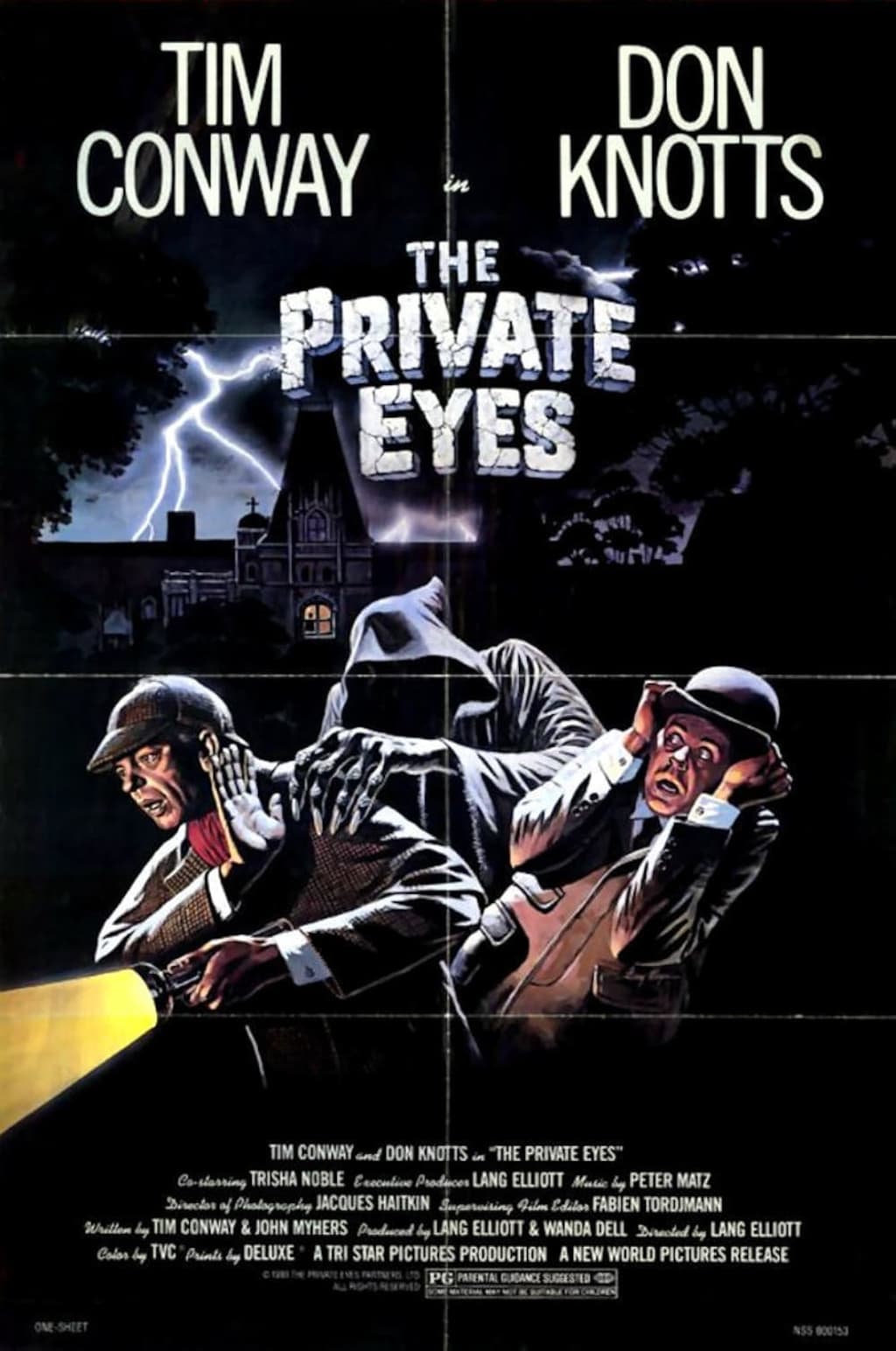
Don Knotts and Tim Conway forged an unlikely but wildly successful screen partnership across Disney crowd-pleasers and indie hits. Their final starring vehicle, The Private Eyes (1980), became New World Pictures’ top Corman-era earner and a cult favorite. Here’s the well-sourced story of how the duo worked—and why their last film endures.
The Odd Couple That Worked—Every Time
By any conventional metric, Don Knotts and Tim Conway didn’t “match.” Knotts was television’s nervous string bean, a master of micro-gestures and jittery pauses; Conway was a slow-boil physical comedian who weaponized silence. Put them together, though, and you get a style of buddy comedy that felt both throwback and brand-new in the 1970s—broad enough for kids, intricate enough for adults who appreciated timing.
Between 1975 and 1980, the pair co-starred in five theatrical features: Disney’s The Apple Dumpling Gang (1975), Gus (1976), The Apple Dumpling Gang Rides Again (1979), plus two independent vehicles tailored to them, The Prize Fighter (1979) and The Private Eyes (1980).
Note: They later shared brief cameos together in Cannonball Run II (1984), bringing their total film collaborations to six—but The Private Eyes remained their final starring team-up.
⸻
How They Became a Box-Office Bet
Knotts and Conway found their broadest audience at Disney, where their amiably inept personas anchored PG comedies that families showed up for. The Apple Dumpling Gang turned them into a duo audiences recognized on sight, and Gus and Apple Dumpling Gang Rides Again kept that momentum going, even when (famously) the two didn’t always share many scenes (Gus splits them for long stretches).
Their next act was riskier: stepping outside the studio system for projects built around their rhythms. The Prize Fighter (1979), a Prohibition-era boxing farce written by Conway and John Myhers, was made lean and released by New World Pictures. On a reported $2 million budget, it earned about $6.5 million—more than double its cost—signaling that the “Knotts & Conway” brand could succeed beyond Disney. 
⸻
The Private Eyes (1980): The Duo’s Last—and Biggest—Starring Hit
Their follow-up, Lang Elliott’s The Private Eyes, is the purest distillation of their two-hander chemistry: a creaky-mansion mystery with the pair as hapless Scotland Yard “sleuths” sent to an American castle to investigate a murder. The setting—North Carolina’s Biltmore Estate—gives the film a grand, gothic playground for Conway’s deadpan stumbles and Knotts’s wide-eyed panic. 
Audiences turned out in force. According to distribution records compiled by film historian Suzanne Mary Donahue and contemporary trade ads, The Private Eyes earned approximately $12 million in U.S./Canada rentals (roughly equivalent to about $19 million domestic gross reported by other tallies). That made it the highest-grossing New World Pictures release of the Roger Corman era—a startling feat for a genteel, family-friendly comedy at a company best known for drive-in fare and cult exploitation hits.
Why did it click? The movie is engineered around what the team did best:
• Set-piece misunderstandings that let Conway stretch a gag past its breaking point until it becomes funny again.
• Rapid-fire fright takes from Knotts that puncture the tension just when a scene threatens to turn serious.
• A contained mystery format where every corridor, dumbwaiter, and secret panel is an excuse for a bit.
Even critics who weren’t fully sold on the plot acknowledged the ratio of gags-per-minute was squarely aimed at audiences who wanted to see “two clowns as private eyes,” as the New York Times framed them on release.
⸻
Unconventional Success at an Unlikely Studio
To appreciate The Private Eyes’ performance, it helps to remember the Corman-era New World Pictures playbook: low budgets, high concepts, and a steady pipeline of genre pictures that could thrive in regional bookings and on the burgeoning home-video market. That a cozy, PG mystery-comedy became New World’s Corman-era top earner underscores how flexible the company’s distribution machine was—and how bankable the Knotts-Conway pairing had become with American families by 1980.
The Biltmore location photography also gives the film an upscale sheen that set it apart from the duo’s earlier western/sports capers, elevating the movie without blunting their slapstick. (The Biltmore shoot is well-documented in production notes and location listings.)
⸻
Legacy: The Lasting Appeal of Two Very Different Comics
After The Private Eyes, the duo’s big-screen era effectively wrapped. They would still pop up together, but the 1980 film stands as their final headlining showcase—and the moment their collaboration reached its commercial peak. The movie’s continued rotation on cable and disc kept the team in front of new viewers, and its success validated an approach many “odd couple” acts have tried since: pair opposite energies, let them tug at the same joke from different directions, and trust the audience to meet you in the middle.
⸻
Quick Filmography (Feature collaborations)
• The Apple Dumpling Gang (1975) — Disney family western.
• Gus (1976) — Disney sports farce; both appear.
• The Apple Dumpling Gang Rides Again (1979) — Sequel built around the duo.
• The Prize Fighter (1979) — Independent; released by New World Pictures.
• The Private Eyes (1980) — Independent; New World Pictures’ top Corman-era hit.
• Cannonball Run II (1984) — Cameos together (post-Private Eyes).
About the Creator
Movies of the 80s
We love the 1980s. Everything on this page is all about movies of the 1980s. Starting in 1980 and working our way the decade, we are preserving the stories and movies of the greatest decade, the 80s. https://www.youtube.com/@Moviesofthe80s
Keep reading
More stories from Movies of the 80s and writers in Geeks and other communities.
“Falling in Love Again (1980): Steven Paul’s Bold Debut and Michelle Pfeiffer’s Early Break”
Falling in Love Again: A Short History When Falling in Love Again arrived in 1980 it carried a quietly exotic pedigree: a lush Michel Legrand score, a cast led by Elliott Gould and Susannah York, and the curious byline of a wunderkind director-producer-screenwriter named Steven Paul — who was barely out of his teens when the picture was made. Paul, born in 1959, wrote, produced and directed the film as his feature debut at roughly 21 years old, a bold move that set the tone for a movie that felt as much like an earnest family project as it did an attempt at classical, sentimental romance.
By Movies of the 80s5 months ago in Geeks
Silver Screen Magic with Mae West
American actress and singer Mae West became a popular film actress during the Great Depression. She started entertaining in vaudeville, then performed on Broadway, and finally went to Hollywood. She signed up with Paramount Pictures and made her debut in the 1932 film “Night After Night.” She also starred in musicals, comedies, and crime dramas. The American Film Institute named her one of the best classic Hollywood actresses.
By Rasma Raisters6 days ago in Geeks




Comments
There are no comments for this story
Be the first to respond and start the conversation.