
Crimson Tide (1995) Review – A Tense, Timely Submarine Thriller That Still Surfaces After 30 Years
Denzel Washington and Gene Hackman face off in Tony Scott’s Crimson Tide, a tense 1995 submarine thriller that remains relevant 30 years later. Here’s why this military classic still hits hard.

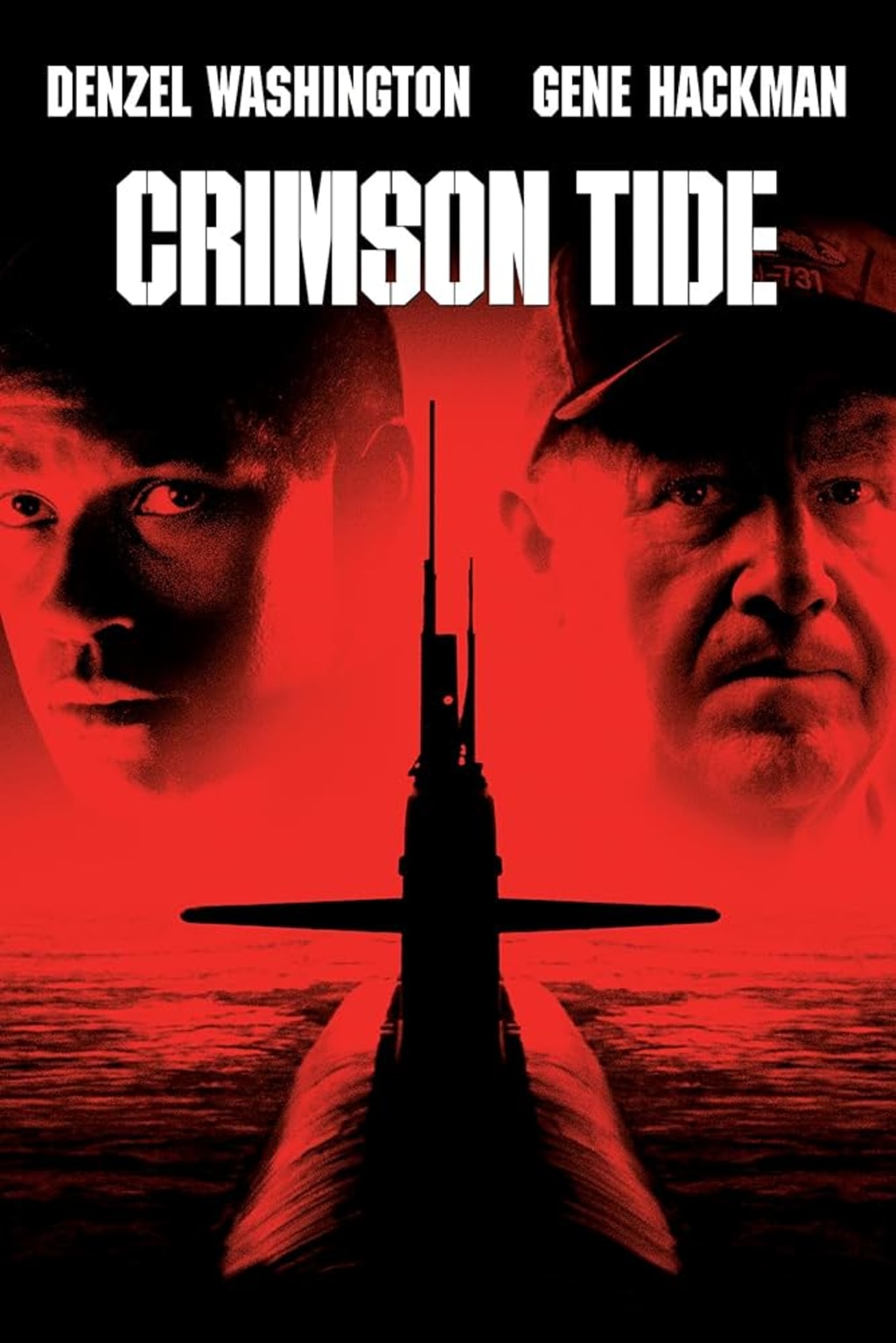
Crimson Tide (1995)
Directed by: Tony Scott
Written by: Michael Schiffer, Richard P. Henrick
Starring: Denzel Washington, Gene Hackman, Viggo Mortensen
Release Date: May 12, 1995
Review Published: May 12, 2025
⸻
Crimson Tide stars Denzel Washington and Gene Hackman as ideological opposites thrust into high-stakes conflict aboard a U.S. nuclear submarine. Washington plays Executive Officer Hunter, newly assigned to the Alabama-class sub, helmed by the commanding and volatile Captain Ramsey (Hackman). From the moment Hunter boards, friction is inevitable. Ramsey is used to throwing his weight around; Hunter is not so easily moved.
The dichotomy between Hunter and Ramsey couldn’t be more stark. While both are Navy officers, their approaches to leadership—and life—differ dramatically. Hunter is younger, Black, and more methodical, representing a newer generation of leadership. Ramsey, an old-school military man, clearly remembers a time when officers like Hunter weren’t even allowed on submarines, much less commanding them. Racial tension is never named outright, but it hums beneath the surface.
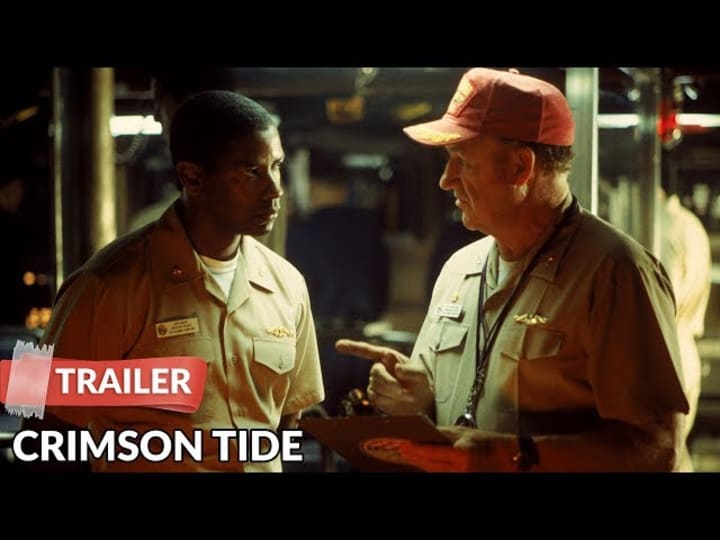
Beyond race, their philosophical divide defines the movie: Ramsey trusts his gut and charges ahead, while Hunter is calm, deliberate, and committed to following orders and verifying facts before taking drastic action. So when a rogue Russian nationalist gains access to Russia’s nuclear arsenal and communications with U.S. command are compromised, the stage is set for a deadly standoff. Ramsey believes they have orders to launch. Hunter insists they wait for confirmation. The world hangs in the balance.
What follows is a nail-biting, claustrophobic showdown of wills. With the sub’s communication array damaged, a vital second message is cut off. Did it confirm the launch order—or revoke it? Ramsey wants to move forward with a preemptive strike. Hunter wants to wait and verify. In the tight quarters of a nuclear sub, where the wrong call means global annihilation, the ideological divide becomes mutiny.
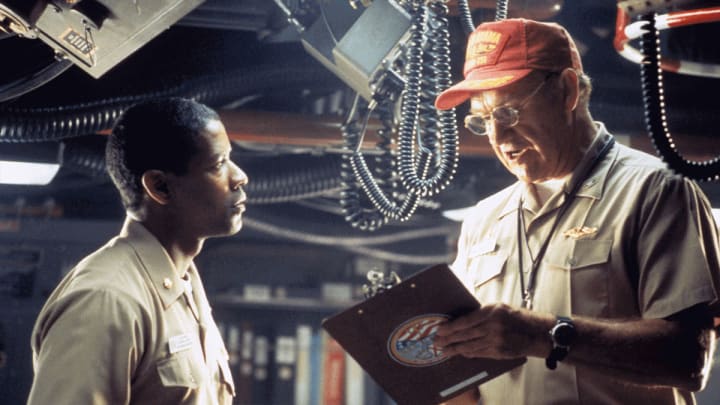
Hunter’s defiance sparks an onboard power struggle, as senior officers loyal to Ramsey refuse to stand down. The tension is heightened by a terrific supporting cast including Matt Craven, George Dzundza, James Gandolfini, Rocky Carroll, and Viggo Mortensen. Mortensen’s character—torn between loyalty to his captain and friendship with Hunter—plays a pivotal role. The conflict builds to a pulse-pounding climax, interrupted only briefly (and brilliantly) by a discussion about Lipizzaner stallions—one of the film’s most memorable scenes.
I really admire Crimson Tide. Tony Scott’s sleek, kinetic direction elevates a complex narrative into a taut, mainstream thriller. The film leans on archetypes—Hackman as the blustering, conservative “father figure” and Washington as the rational, principled “son”—but wisely avoids overt politics. That doesn’t mean the subtext isn’t there for those willing to look. Ramsey operates on instinct, dismissing contradictory data as irrelevant. Hunter insists on evidence, on process, on due diligence.
Ramsey’s belief in the virtue of action—regardless of consequence—is portrayed as dangerously ego-driven. His need to be right, to not be questioned by a junior officer, underscores his willingness to risk everything. Hunter, in contrast, explains that even if they don’t fire, another sub will. Redundancy is built into the system for a reason. There’s no reason to launch without confirmation—unless pride is the only factor at play.
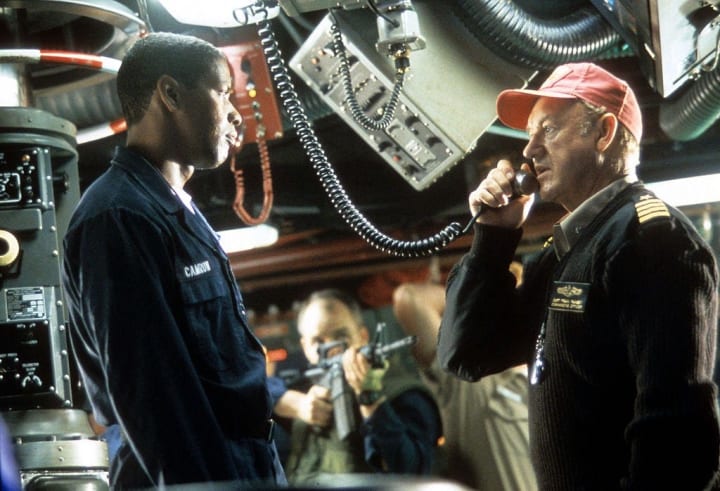
The performances from both leads are incredible. Hackman brings theatrical bravado and gravitas to Ramsey, making him both formidable and deeply flawed. Washington counters with quiet authority, intelligence, and moral clarity. It’s a battle of egos and ideologies, and neither actor misses a beat.
All the while, Crimson Tide never forgets to entertain. The submarine battles are intense and visually engaging. The cinematography is slick and vibrant—rare for a film set largely in steel corridors. Scott uses jarring angles and sharp editing to emphasize the chaos and pressure of the underwater environment. It’s pure popcorn with brains.
Is Crimson Tide perfect? Not quite. The script is occasionally uneven. Officially credited to Michael Schiffer and Richard P. Henrick, the film also reportedly received uncredited dialogue polish from Quentin Tarantino and Robert Towne. You can tell. Tarantino’s fingerprints are all over a few awkward scenes involving comic book trivia, Star Trek, and Jack Kirby. These moments break the film’s otherwise serious tone and feel like they were pasted in from another movie.
Towne’s influence is more elegant, most notably in the aforementioned Lipizzaner horse scene. Ramsey praises the white stallions; Hunter calmly notes that they’re born black. It’s not subtle, but it is effective—and watching Hackman and Washington trade barbed metaphors in close quarters is a masterclass in acting. The tension is palpable, the meaning unmistakable.
Crimson Tide was released 30 years ago today, and its themes feel more relevant than ever. This review coincides with the latest episode of the I Hate Critics 1995 podcast, where Amy and I discuss her first viewing of this testosterone-fueled, idea-driven blockbuster. You can find that episode—and all our others—on the I Hate Critics Movie Review Podcast feed wherever you get your podcasts.
About the Creator
Sean Patrick
Hello, my name is Sean Patrick He/Him, and I am a film critic and podcast host for the I Hate Critics Movie Review Podcast I am a voting member of the Critics Choice Association, the group behind the annual Critics Choice Awards.
Keep reading
More stories from Sean Patrick and writers in Geeks and other communities.
Silver Screen Magic with Mae West
American actress and singer Mae West became a popular film actress during the Great Depression. She started entertaining in vaudeville, then performed on Broadway, and finally went to Hollywood. She signed up with Paramount Pictures and made her debut in the 1932 film “Night After Night.” She also starred in musicals, comedies, and crime dramas. The American Film Institute named her one of the best classic Hollywood actresses.
By Rasma Raisters5 days ago in Geeks
Twitter Outage
For millions of users around the world, Twitter—now known as X—is more than just a social media platform. It’s a real-time news source, a communication tool, and a digital town square. So when a Twitter outage occurs, confusion spreads quickly. Users rush to search questions like “is Twitter down?”, “is X down right now?”, or “why is X not working?” hoping for clarity. In recent years, X outages have become highly visible events, often trending across other platforms within minutes. Whether the issue lasts a few minutes or several hours, a Twitter down situation highlights how deeply embedded the platform is in daily online life. When Twitter Goes Down: What Users Experience During a typical Twitter down incident, users may encounter several problems at once. Timelines stop refreshing, posts fail to load, and notifications disappear. Some users can open the app but see blank feeds, while others are completely locked out. These moments spark a flood of searches like “is Twitter down right now?” and “Twitter not working.” As branding has shifted, the same frustration now appears under newer searches such as “is X down?”, “X down?”, or “X is down.” The name may have changed, but user expectations remain the same: instant access and real-time updates. The Role of X Down Detectors and Status Tools When users suspect an outage, many turn to tools like X down detector or Twitter down detector websites. These platforms collect real-time reports from users and visualize spikes in complaints. A sudden surge often confirms that the issue isn’t isolated. People also search for Twitter status updates, hoping for official confirmation. While X occasionally posts updates during major outages, users often rely on external sources first—especially when the platform itself isn’t accessible. Is X.com Down or Something Else? One of the most common questions during an outage is “is x.com down?” While it may appear that the entire platform is unavailable, the underlying cause can vary. Sometimes the issue affects only certain regions, mobile apps, or specific features like posting or direct messages. In other cases, users notice that third-party integrations fail. This leads to additional searches such as “X not working” or “is X down?” as people try to determine whether the problem lies with their device, internet connection, or the platform itself. Cloudflare and Large-Scale Outages Occasionally, outages are linked to infrastructure providers rather than X directly. Cloudflare, a major content delivery and security service used by many large websites, has been associated with widespread disruptions across the internet. During a Cloudflare outage, multiple platforms can experience downtime simultaneously. When this happens, searches for “Cloudflare outage” often rise alongside “Twitter is down.” These events show how interconnected modern platforms are and how a single failure point can affect millions of users at once. Grok Down: A New Kind of Concern With the introduction of AI-powered features, outages now extend beyond basic posting and browsing. Some users have reported instances of Grok down during broader X outages. When Grok, the platform’s AI assistant, stops responding, it adds another layer of frustration—especially for users who rely on it for research, summaries, or creative tasks. As X continues to expand its feature set, future outages may impact different services independently, making it harder to quickly understand what exactly is broken. Why Twitter Outages Feel So Disruptive Unlike many platforms, X thrives on immediacy. It’s often the first place people go during breaking news, global events, or emergencies. When Twitter is down, users lose access to real-time conversations and firsthand updates. This is why even short outages trigger widespread concern. Questions like “is Twitter down?” or “is X down right now?” aren’t just about inconvenience—they reflect a sudden loss of connection to the global conversation. How Users Cope When X Is Down When an X outage occurs, users often migrate temporarily to other platforms to confirm the issue or share updates. Ironically, people frequently use those platforms to say that Twitter is unavailable. In the meantime, down-detector sites, tech forums, and news outlets become the primary sources of information. For creators, journalists, and businesses, downtime can disrupt workflows and audience engagement. Scheduling posts, responding to trending topics, or managing customer communication becomes impossible until service is restored. What Outages Reveal About Digital Dependence Every major Twitter outage serves as a reminder of how dependent modern communication has become on a few centralized platforms. Whether the search term is “Twitter down?” or “X down?”, the concern is universal. While most outages are resolved relatively quickly, their impact lingers. They raise questions about platform stability, transparency, and the importance of having alternative channels for communication. Final Thoughts A Twitter outage—or X outage—is rarely just a technical hiccup. It’s a moment that exposes how essential the platform has become for news, discussion, and connection. From searches like “is Twitter down right now?” to monitoring X down detector reports, users instinctively seek reassurance and answers.
By Saboor Brohi 2 days ago in Geeks


Comments
There are no comments for this story
Be the first to respond and start the conversation.