
CIVIL WAR: WHEN HEROES FALL - A DEEP DIVE INTO CAPTAIN AMERICA'S MOST COMPLEX BATTLE
Following the events of Avengers: Age of Ultron, where the Avengers inadvertently caused massive collateral damage in Sokovia, the world grapples with the idea of holding these super-powered individuals accountable


Introduction:
Captain America: Civil War, released in 2016, stands as a pivotal chapter in the Marvel Cinematic Universe (MCU). More than just another superhero brawl, it's a nuanced exploration of moral ambiguity, the consequences of unchecked power, and the complexities of friendship fractured by ideological divides. Following the events of Avengers: Age of Ultron, where the Avengers inadvertently caused massive collateral damage in Sokovia, the world grapples with the idea of holding these super-powered individuals accountable. This simmering tension explodes into a full-blown conflict when the United Nations proposes the Sokovia Accords, forcing the Avengers to register with and be controlled by a global authority. The stage is set for a devastating clash, not against a villainous external force, but between the very heroes who swore to protect the world.

Plot:
The film kicks off with a flashback to 1991, revealing the Winter Soldier's chilling role in the murder of Howard and Maria Stark, setting a crucial element in motion. The present-day narrative sees the Avengers successfully thwarting a terrorist attack in Lagos, but the resulting civilian casualties further fuel the global demand for oversight. The Sokovia Accords are presented as the solution, dividing the Avengers down the middle. Tony Stark, burdened by the guilt of his past and the weight of responsibility, advocates for signing the accords, believing accountability is necessary. Steve Rogers, fiercely protective of individual freedom and wary of governmental overreach, refuses to comply, fearing the potential for the accords to be weaponized.
The division deepens when a bomb explodes at a UN conference where the Sokovia Accords are being ratified, killing King T'Chaka of Wakanda. Suspicion falls on Bucky Barnes, the Winter Soldier, reigniting Steve's loyalty and resolve to protect his friend. Tony, convinced of Bucky's guilt, vows to bring him to justice, igniting the titular Civil War.
What follows is a series of escalating confrontations, each side recruiting allies to their cause. Steve enlists the help of Falcon, Scarlet Witch, Hawkeye, and Ant-Man, while Tony brings in War Machine, Black Widow, Spider-Man, and Black Panther (initially seeking revenge for his father's death). Their clash at Leipzig/Halle Airport is a spectacular display of superhero abilities, showcasing the film's blend of thrilling action and witty banter.
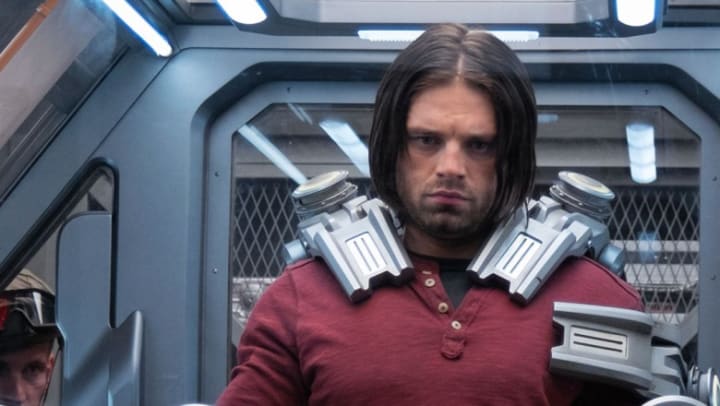
However, the true mastermind behind the conflict is Helmut Zemo, a Sokovian colonel seeking revenge for the loss of his family in the Ultron incident. Zemo manipulates events to reveal the truth about the Starks' murder to Tony, shattering his already fragile relationship with Steve. The final confrontation takes place at a remote HYDRA facility in Siberia, where Tony, Steve, and Bucky engage in a brutal three-way fight, fueled by betrayal, loyalty, and grief. The film ends with the Avengers fractured, Steve abandoning his shield and leaving Tony to grapple with the consequences of their actions. The narrative masterfully weaves together personal stakes with broader political implications, creating a superhero film with unprecedented emotional depth.
Cast:
Chris Evans as Steve Rogers/Captain America: Evans delivers a powerful performance as the unwavering moral compass, grappling with his loyalty to Bucky and his responsibility to the world. His Captain America is not just a symbol of American idealism but a nuanced character struggling with complex ethical dilemmas.

Robert Downey Jr. as Tony Stark/Iron Man: Downey Jr. shines as the conflicted genius, billionaire, playboy, philanthropist. He portrays a Tony Stark burdened by guilt and driven by a desire to protect the world, even if it means sacrificing his principles. His emotional vulnerability is palpable.
Sebastian Stan as Bucky Barnes/Winter Soldier: Stan's portrayal of the tormented Winter Soldier is compelling. He captures the character's internal struggle with his past programming and his desperate desire for redemption.
Scarlett Johansson as Natasha Romanoff/Black Widow: Johansson provides a crucial bridge between the two sides, her Black Widow wrestling with her own past and striving to maintain a semblance of unity.
Anthony Mackie as Sam Wilson/Falcon: Mackie's Falcon offers a grounded perspective and unwavering support to Captain America. His comedic timing and aerial combat skills add a crucial dynamic to Team Cap.
Don Cheadle as James Rhodes/War Machine: Cheadle portrays War Machine as a loyal friend to Tony Stark, deeply committed to serving his country. His injury during the airport battle serves as a stark reminder of the human cost of the conflict.
Jeremy Renner as Clint Barton/Hawkeye: Renner's Hawkeye, retired but drawn back into the conflict by his loyalty to Steve, adds a touch of levity and family values to the fray.
Elizabeth Olsen as Wanda Maximoff/Scarlet Witch: Olsen portrays Scarlet Witch as a powerful but emotionally vulnerable character, struggling to control her abilities and grappling with the consequences of her actions.
Paul Rudd as Scott Lang/Ant-Man: Rudd brings his signature comedic charm to the role of Ant-Man, providing much-needed lighthearted moments amidst the heavy themes of the film.
Tom Holland as Peter Parker/Spider-Man: Holland's debut as Spider-Man is a breath of fresh air, injecting youthful energy and humor into the conflict. His interactions with Tony Stark are particularly delightful.
Chadwick Boseman as T'Challa/Black Panther: Boseman makes a strong impression as Black Panther, showcasing his regal presence and martial arts prowess. His initial quest for revenge evolves into a more nuanced understanding of justice.
Daniel Brühl as Helmut Zemo: Brühl delivers a chilling performance as the calculating and vengeful Zemo. Unlike typical MCU villains, Zemo has no superpowers; his weapon is his intellect and his understanding of human nature.
Reviews:
Captain America: Civil War was met with widespread critical acclaim and overwhelming audience enthusiasm. Critics lauded the film for its complex narrative, compelling characters, and impressive action sequences. Rotten Tomatoes reports a 91% approval rating, with the consensus stating that the film is ambitious, emotionally resonant, and packed with thrilling action, Captain America: Civil War is another outstanding addition to the MCU.
Common praise focused on the film's exploration of moral ambiguity, the strong performances from the cast, and the impressive visual effects. Some critics, however, noted that the plot could feel convoluted at times, and the sheer number of characters could occasionally detract from the central conflict.
Audience reviews echoed the critical praise, with many viewers hailing the film as one of the best in the MCU. Positive comments centered on the film's emotional depth, the exciting superhero battles, and the introduction of new characters like Spider-Man and Black Panther. A minority of viewers found the film to be overly long or felt that the stakes were not as high as advertised.
Production:

Captain America: Civil War was directed by Anthony and Joe Russo, who had previously helmed Captain America: The Winter Soldier. The film was produced by Kevin Feige and distributed by Walt Disney Studios Motion Pictures. The project was officially announced in 2014, with development commencing soon after the release of The Winter Soldier. The Russos aimed to create a film that felt like a psychological thriller within the superhero genre, exploring the consequences of superhero actions and the complexities of political oversight. The film's budget was estimated to be around $250 million.
Writing and Casting:

The screenplay was written by Christopher Markus and Stephen McFeely, who had previously worked on the Captain America sequels and Thor: The Dark World. The writing team drew inspiration from the Civil War comic book storyline, but adapted it to fit the established MCU continuity and character dynamics.
Casting was a crucial aspect of the film's success. Chris Evans and Robert Downey Jr. reprised their roles as Captain America and Iron Man, respectively. The film also saw the return of several supporting characters from previous MCU films, including Scarlett Johansson, Sebastian Stan, Anthony Mackie, Don Cheadle, Jeremy Renner, Elizabeth Olsen, and Paul Rudd.
The casting of Tom Holland as Spider-Man was a major highlight. Marvel Studios partnered with Sony Pictures to bring Spider-Man into the MCU for the first time. Chadwick Boseman was also cast as Black Panther, marking the character's first appearance in the MCU before his solo film.
Principal Photography:
Principal photography began in April 2015 at Pinewood Atlanta Studios in Fayette County, Georgia, and concluded in August 2015. Additional filming took place in Germany, Austria, Puerto Rico, and Iceland.
The airport battle sequence was one of the most challenging and complex scenes to film, requiring extensive planning, stunt work, and visual effects. One funny anecdote from the set involves Paul Rudd, who was so excited to be working with the other actors that he kept asking to take selfies with them between takes. Chris Evans, known for his love of practical jokes, reportedly hid Rudd's phone several times, leading to hilarious searches.
Production Design:
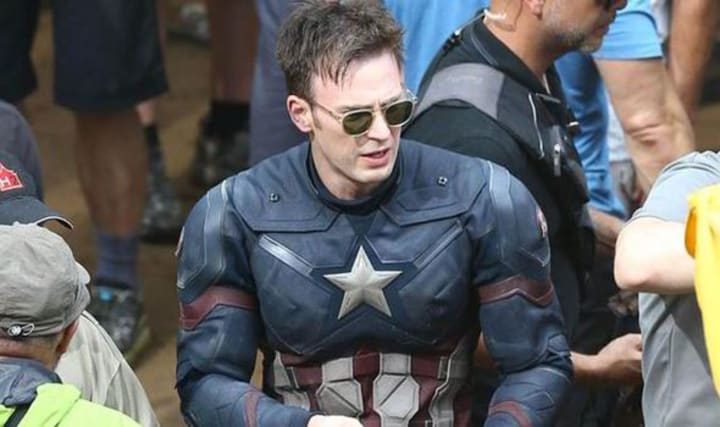
The production design of Captain America: Civil War was crucial in creating a believable and visually appealing world. The set design ranged from the sleek and modern Stark Tower to the gritty and industrial HYDRA facility in Siberia.
The costumes were designed by Judianna Makovsky, who aimed to create costumes that were both functional and visually distinct for each character. Captain America's costume was updated with a more tactical design, while Iron Man's armor was enhanced with new features and weaponry. Black Panther's suit was particularly impressive, incorporating vibranium technology and a sleek, panther-like aesthetic.
Sound Design & Music:
The sound design of Captain America: Civil War was immersive and impactful, enhancing the action sequences and creating a sense of tension and drama. The sound effects for the superhero abilities were particularly well-crafted, from the thunderous blasts of Iron Man's repulsors to the subtle whooshes of Falcon's wings.
Henry Jackman composed the film's musical score, blending orchestral arrangements with electronic elements to create a dynamic and emotionally resonant soundtrack. The score effectively underscores the film's themes of conflict, loyalty, and sacrifice.
Visual Effects:

The visual effects in Captain America: Civil War were top-notch, seamlessly integrating CGI with practical effects to create stunning and believable superhero action. The visual effects team, led by Dan DeLeeuw, worked tirelessly to bring the characters' powers to life, from Scarlet Witch's reality-bending abilities to Ant-Man's size-changing powers. The creation of the new Spider-Man suit was also a significant challenge, requiring meticulous attention to detail and cutting-edge CGI techniques.
Influences:
Captain America: Civil War draws inspiration from various sources, including the Civil War comic book storyline by Mark Millar and Steve McNiven. The film also references real-world political and ethical dilemmas, such as the debate over government surveillance and the responsibility of military intervention.
The film's exploration of moral ambiguity and the consequences of unchecked power can be seen as influenced by classic works of literature and philosophy, such as The Republic by Plato and The Prince by Machiavelli.
Scientific Knowledge :
The film integrates various scientific elements and technologies, although often exaggerated for dramatic effect. Iron Man's armor utilizes advanced robotics, artificial intelligence, and energy weapons. Ant-Man's suit employs Pym Particles to alter his size, a concept rooted in quantum physics but presented in a highly fictionalized manner. The vibranium technology of Wakanda, as seen in Black Panther's suit, is a fictional material with unique properties, serving as a plot device to showcase advanced technological capabilities. The scientific elements in the film serve primarily as narrative tools to enhance the superhero action and create a sense of wonder.
Marketing, Release & Box Office:
The marketing campaign for Captain America: Civil War was extensive and highly effective, generating significant buzz and anticipation. The trailers and promotional materials emphasized the central conflict between Captain America and Iron Man, showcasing the impressive superhero battles and introducing new characters like Spider-Man and Black Panther.
The film was released on April 12, 2016, in various international markets, and on May 6, 2016, in the United States. It was a massive box office success, grossing over $1.15 billion worldwide, making it the highest-grossing film of 2016 and the twelfth-highest-grossing film of all time at the time of its release. The film's success was attributed to its compelling narrative, strong cast, impressive visual effects, and effective marketing campaign.
Critical Responses:
Overall, Captain America: Civil War was a resounding success, both critically and commercially. The film was praised for its complex narrative, compelling characters, impressive action sequences, and thought-provoking themes. The film's exploration of moral ambiguity and the consequences of superhero actions resonated with audiences, establishing it as a pivotal moment in the MCU. While some critics noted minor flaws, the overwhelming consensus was that Captain America: Civil War is a standout entry in the superhero genre, showcasing the potential for these films to explore complex themes and engage audiences on a deeper level. It remains a benchmark for superhero storytelling, demonstrating that even amidst the explosions and super-powered clashes, human drama and difficult choices can be the most captivating elements.
About the Creator
Xavier
Global news reporter covering science, tech, environment, Entertainment & sports. Delivering balanced insights to inform and inspire readers worldwide. Sometimes a poet.
The Politics of Playing Dress-Up
Well, to start off I'd like to say a happy world book day to all who celebrate. I know I haven't really posted anything on my socials about it but I'm not a jubilant kind of person. I lay low most of the time. Let's start off with a popular anecdote from the vaults...
By Annie Kapur3 days ago in Geeks
The BAFTA Awards
By now, in a stunning departure from recent years, most of the world is aware of what happened at the BAFTA film awards. Social Media Headlines will tell you the bare bones: that John Davidson, a Tourette's Syndrome advocate, shouted a racial slur at two Actors of Colour, Michael B Jordan and Delroy Lindo.
By Natasja Rose4 days ago in Psyche


Comments
There are no comments for this story
Be the first to respond and start the conversation.