
Sapiens: A Brief History of Humankind
A Journey Through the History and Evolution of Humanity

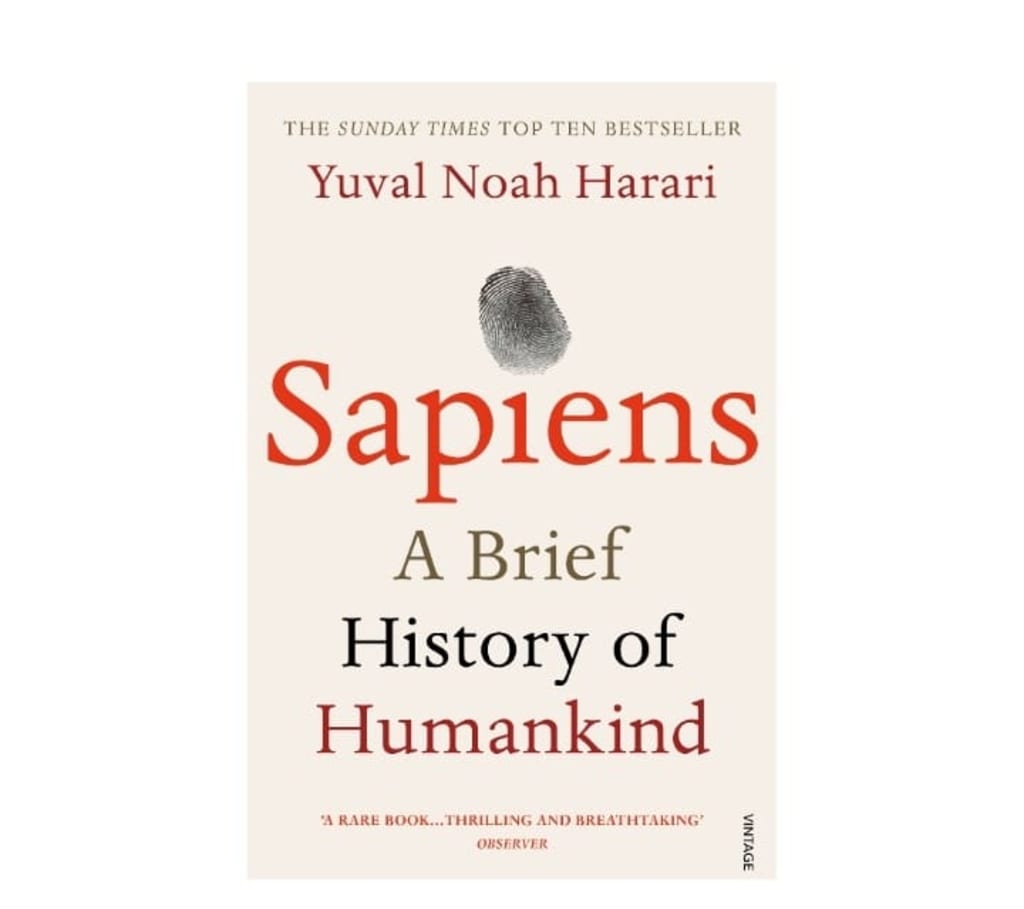
Yuval Noah Harari’s Sapiens: A Brief History of Humankind is one of the most influential and widely read history books of the 21st century. First published in 2011, the book quickly gained global popularity because of its fascinating storytelling and bold ideas about the history and future of humankind. Harari explores how human beings evolved from insignificant animals into the dominant species on Earth.
The Beginning of Humanity
The book begins around 70,000 years ago, when early humans began developing advanced thinking and communication abilities. Harari calls this period the Cognitive Revolution. During this time, humans started to create complex languages, myths, and shared beliefs. These abilities allowed large groups of people to cooperate with one another.
Unlike other animals, humans could believe in things that did not physically exist, such as religions, nations, laws, and money. According to Harari, these shared beliefs helped humans organize large societies and build civilizations.
The Agricultural Revolution
Another important stage in human history discussed in the book is the Agricultural Revolution, which began around 12,000 years ago. Humans shifted from hunting and gathering to farming and domesticating animals. This change allowed populations to grow rapidly and led to the creation of villages, towns, and eventually cities.
However, Harari presents a surprising argument. While agriculture increased food production, it also made life harder for many people. Farmers often worked longer hours and had less varied diets compared to hunter-gatherers. Despite these challenges, agriculture allowed human societies to expand and become more complex.
The Unification of Humankind
As civilizations grew, humans began forming larger and more connected societies. Harari explains that three major forces helped unite humanity: money, empires, and religion.
Money became a universal system of trust that allowed people to trade goods and services even if they did not know each other. Empires expanded political control over large territories, spreading cultures, technologies, and ideas. Religions created shared moral systems that connected millions of people under common beliefs.
Together, these forces gradually created a more interconnected world.
The Scientific Revolution
About 500 years ago, the Scientific Revolution transformed human history once again. Humans began using observation, experimentation, and research to understand the world. This led to major discoveries in science, medicine, and technology.
Scientific progress eventually sparked the Industrial Revolution, which dramatically changed economies, societies, and daily life. Machines replaced manual labor in many industries, and global trade expanded rapidly.
However, Harari also raises an important question: although humans have become more powerful and technologically advanced, have we actually become happier?
The Future of Humanity
In the final part of the book, Harari discusses the possible future of humankind. Advances in biotechnology, artificial intelligence, and genetic engineering could soon allow humans to modify their own bodies and minds.
Some scientists believe humans may eventually evolve into entirely new forms of life, sometimes called “Homo Deus,” or god-like humans with enhanced abilities. While these developments could bring incredible progress, they also raise serious ethical and social questions.
Another important idea discussed in Sapiens: A Brief History of Humankind is how human happiness and progress are not always the same thing. Yuval Noah Harari argues that although humans have achieved incredible scientific and technological advancements, these developments do not necessarily guarantee a better or happier life. Modern societies enjoy medicine, technology, and comfort that ancient people never had, yet many individuals still experience stress, inequality, and environmental challenges. Harari encourages readers to question whether humanity’s rapid progress has truly improved overall well-being, or if it has simply created new problems that future generations must solve.
Conclusion
Sapiens: A Brief History of Humankind is more than just a history book—it is a thought-provoking exploration of what it means to be human. By combining history, science, philosophy, and anthropology, Yuval Noah Harari encourages readers to rethink humanity’s past and consider its possible future.
The book’s powerful ideas and engaging storytelling have made it a global bestseller. For anyone interested in understanding how humans shaped the world—and how the world might change in the future—Sapiens is a fascinating and unforgettable read. 📚
About the Creator
Sk
"I am a passionate writer, crafting books and articles on Vocal Media, exploring human experiences, stories, and creative reflections."
A Knight of the Seven Kingdoms Series Review (Season 1)
As one of the biggest properties in fantasy, A Song of Ice and Fire remains immensely popular with audiences. After reaching far into the past with House of the Dragon, a second spin-off was on the cards. A Knight of the Seven Kingdoms serves up a bite-sized slice of action and drama, but it still claims a spot among the best small-screen titles.
By Robert Cain7 days ago in Geeks
Spongebob Review
The episode “Walking Small” opens with a sun‑drenched panorama of Goo Lagoon, the golden sand glittering like powdered sugar under a cloudless sky, and the playful chatter of Bikini Bottom’s residents echoing across the waves. From the very first frame, the animation captures the carefree rhythm of a typical day at the beach, yet a subtle tension is already bubbling beneath the surface as Plankton slides into view, his tiny silhouette a dark crescent against the bright horizon. The writers cleverly juxtapose the idyllic setting with Plankton’s scheming grin, foreshadowing the paradoxical lesson that will unfold: the transformation of SpongeBob from his usual bubbly innocence into a surprisingly assertive beach‑goer. The visual palette—turquoise water, amber sun, and the occasional flash of a distant jellyfish—serves as a vivid backdrop for the episode’s central conflict, immersing the audience in a world that feels both familiar and slightly off‑kilter, as if the sand itself is waiting for a ripple that will reshape the familiar rhythm of beach life.
By Forest Green6 days ago in Geeks



Comments
There are no comments for this story
Be the first to respond and start the conversation.