
A COMPASS LOST? UNRAVELING THE AMBITIONS AND CONTROVERSIES OF 'THE GOLDEN COMPASS'
Set in a parallel world where human souls manifest as animal companions called daemons, and a powerful, shadowy organization known as the Magisterium holds sway

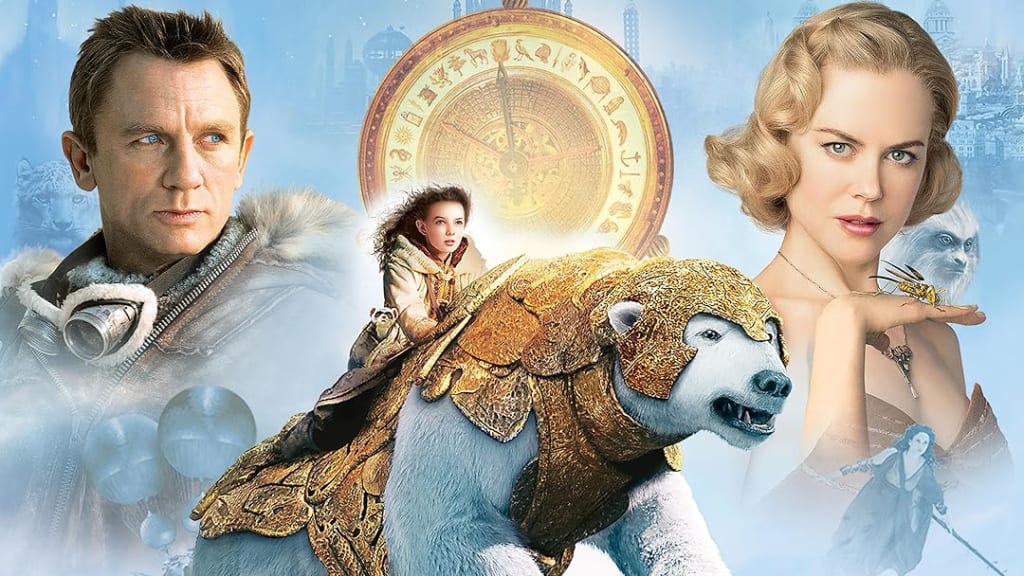
The Golden Compass, released in 2007, was intended to be the cinematic launchpad for a sweeping fantasy epic. Based on Philip Pullman's celebrated and controversial novel, Northern Lights (the first book in the His Dark Materials trilogy), the film promised a visually stunning and intellectually stimulating adventure. New Line Cinema, fresh off the success of The Lord of the Rings, hoped to replicate that franchise's magic. Set in a parallel world where human souls manifest as animal companions called daemons, and a powerful, shadowy organization known as the Magisterium holds sway, the film followed the young and headstrong Lyra Belacqua as she embarks on a perilous journey to uncover the truth behind kidnapped children and a mysterious substance called Dust. However, the film’s path to the silver screen was far from smooth, culminating in a reception that, while visually impressive, ultimately fell short of its lofty aspirations.
Plot:
Lyra Belacqua, a spirited orphan living at Jordan College, Oxford, inhabits a world strikingly similar yet subtly different from our own. Central to this world are daemons, animal manifestations of a person's soul that accompany them throughout life, shifting form during childhood and settling into a permanent form in adulthood. When Lyra overhears a clandestine conversation about Dust, a mysterious particle that the powerful Magisterium deems heretical, her curiosity is piqued.
Simultaneously, children begin disappearing, snatched by shadowy figures known as Gobblers. Lyra's friend, Roger Parslow, is among the abducted. Before Roger's disappearance, Lyra is entrusted with the alethiometer, a golden compass capable of answering any question, provided the user can decipher its symbolic readings. She is given this gift by the Master of Jordan College, who cautions her about its immense power and the dangers surrounding it.
Lyra's life takes another dramatic turn when Mrs. Coulter, a glamorous and influential woman, takes her under her wing. Initially, Lyra is enchanted by Mrs. Coulter's charm and sophistication. However, she soon discovers that Mrs. Coulter is not only involved with the Magisterium but is also deeply implicated in the disappearances of the children.
Fleeing Mrs. Coulter, Lyra joins forces with the Gyptians, river-faring people whose children have also been targeted by the Gobblers. She learns of a secret research facility in the Arctic called Bolvangar, where the missing children are being held. Along the way, Lyra gathers allies, including the armored bear Iorek Byrnison, stripped of his armor and exiled from his kingdom, and Lee Scoresby, a Texan aeronaut with his own airship and a sharp wit.
The journey to Bolvangar is fraught with peril, including encounters with Tartars, treacherous terrain, and the ever-present threat of the Magisterium. Lyra’s ability to read the alethiometer becomes crucial to their survival and guides them towards their destination. At Bolvangar, Lyra witnesses the horrific experiments being conducted on the children, including intercision, a procedure that severs the connection between a child and their daemon, rendering them docile and obedient.
In a thrilling climax, Lyra and her allies storm Bolvangar, freeing the children and battling Mrs. Coulter's forces. The rescued children include Roger and Billy Costa, the son of a Gyptian woman whose son had been taken. During the escape, Billy dies and this fuels Lyra's determination to continue her quest. Iorek Byrnison reclaims his armor and his rightful place as King of the armored bears, while Lyra and Roger are taken North by Lee Scoresby.
The film ends on a cliffhanger, with Lyra heading towards Lord Asriel, her father, who is conducting his own dangerous experiments in the Arctic. He is attempting to build a bridge to another world, a controversial act that challenges the authority of the Magisterium and promises to unravel the fabric of reality. Lyra is determined to stop him before he goes too far. This, tragically, is where the film ends, leaving the audience without the resolution that would have come had the sequels been made.
Cast:

The cast of The Golden Compass was a mix of seasoned veterans and rising stars.
Dakota Blue Richards, making her film debut, portrayed Lyra Belacqua. While some critics found her performance a bit wooden, others praised her capturing the character's stubbornness and curiosity.
Nicole Kidman brought her icy elegance to the role of Mrs. Coulter, perfectly embodying the character's seductive yet sinister nature.
Daniel Craig played Lord Asriel, Lyra's enigmatic and driven father, conveying a sense of unwavering determination.
Sam Elliott provided a memorable performance as Lee Scoresby, injecting a dose of Texan charm and humor into the film.
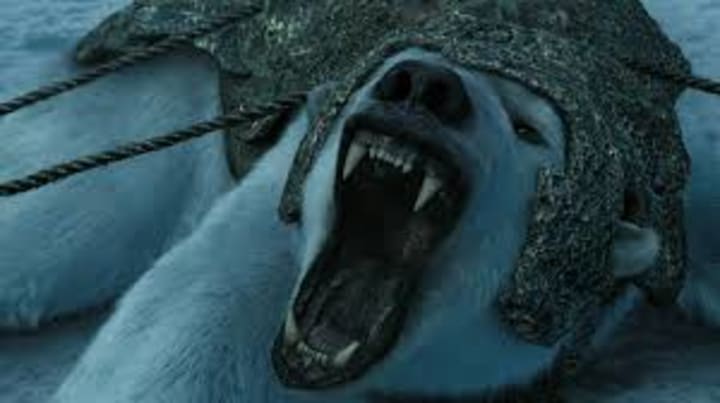
Ian McKellen lent his voice to Iorek Byrnison, the armored bear, giving him a gravitas and dignity befitting a warrior king.
Eva Green had a smaller role as Serafina Pekkala, the witch queen, but her presence added a touch of ethereal beauty to the film.
The casting choices were largely praised, with Kidman and Elliott receiving particular acclaim for their performances. However, some felt that certain actors, particularly Richards and Craig, lacked the nuance and complexity needed to fully embody their characters.
Reviews:
The Golden Compass received mixed reviews from critics and audiences alike. While praised for its visual effects, production design, and performances from certain cast members, the film was criticized for its rushed pacing, simplified plot, and perceived watering down of the novel's controversial themes. Many felt the film sacrificed intellectual depth for superficial spectacle, ultimately failing to capture the essence of Pullman's complex and thought-provoking story.
Some critics appreciated the film's visual flair and its attempt to bring Pullman's fantastical world to life. Others, however, found the film to be a hollow spectacle, lacking the emotional resonance and intellectual substance of the source material. The ending, which truncated the story significantly, was a major point of contention, leaving audiences feeling unsatisfied and cheated.
Production:
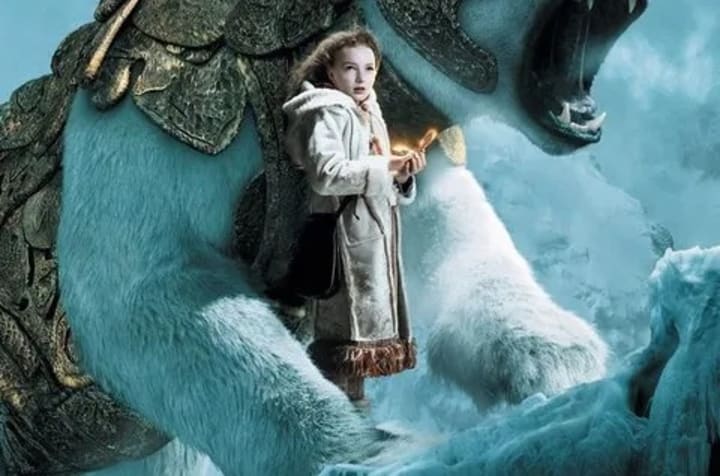
The production of The Golden Compass was a massive undertaking, costing an estimated $180 million, making it one of the most expensive films ever made at the time. New Line Cinema, riding high on the success of The Lord of the Rings, poured resources into the project, hoping to create another blockbuster franchise.
The film was directed by Chris Weitz, who previously directed About a Boy. Weitz faced the daunting task of adapting Pullman's dense and complex novel into a two-hour film. The production involved extensive location shooting in Europe, including Switzerland, Norway, and the United Kingdom, as well as extensive studio work in London.
Writing and Casting:
The screenplay for The Golden Compass underwent numerous revisions, as the filmmakers struggled to balance the needs of adaptation with the demands of a commercial film. The decision was made to downplay the novel's anti-religious themes, a move that proved controversial among fans of the book.
The casting process was extensive, with Dakota Blue Richards being chosen for the role of Lyra after an open audition involving thousands of young actresses. Kidman was an early choice for Mrs. Coulter, while Craig's involvement was a late addition to the cast.
Principal Photography:
Principal photography took place over several months, involving a large crew and numerous special effects. The shoot was reportedly challenging, with demanding location work and complex visual effects sequences.
Anecdotes from the set include stories of Dakota Blue Richards struggling to control her daemon puppet, Pan, which was often referred to as the naughty Pan because it had a mind of its own. Another amusing incident involved Ian McKellen, who recorded his voice performance as Iorek Byrnison wearing a full suit of armor to get into character.
Production Design:
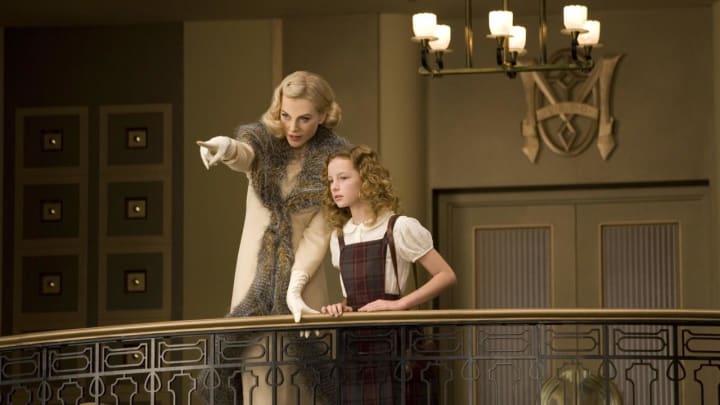
The production design of The Golden Compass was one of its strongest assets. The film created a visually stunning world, blending Victorian-era aesthetics with fantastical elements. The sets were meticulously crafted, from the grand halls of Jordan College to the icy landscapes of the Arctic.
The costumes were equally impressive, reflecting the social hierarchy and cultural diversity of the film's world. Mrs. Coulter's wardrobe, in particular, was a visual feast, showcasing her power and sophistication. The design of the daemons was also a crucial aspect of the production, with each animal companion carefully chosen to reflect the personality of its human counterpart.
Sound Design & Music:
The sound design of The Golden Compass was immersive and effective, creating a rich and believable world. The sound effects, from the roar of Iorek Byrnison to the hiss of the alethiometer, added to the film's atmosphere and sense of realism.
The musical score, composed by Alexandre Desplat, was sweeping and evocative, capturing the film's sense of adventure and wonder. Desplat's score blended orchestral elements with traditional folk instruments, creating a unique and memorable soundscape.
Visual Effects:
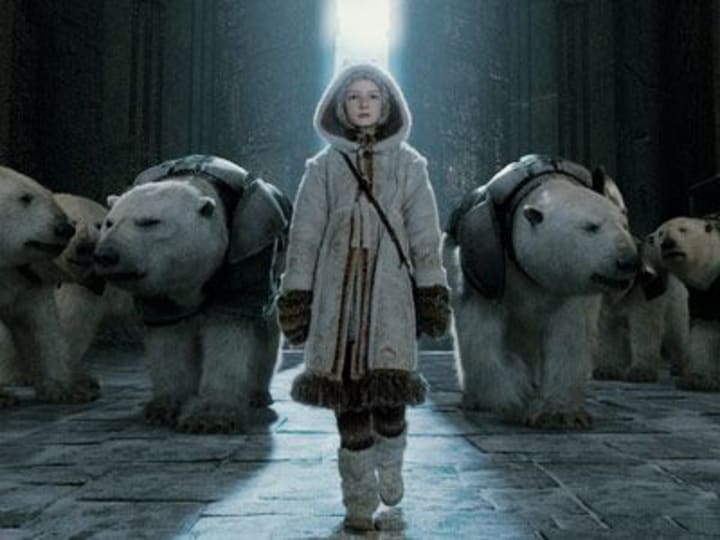
The visual effects in The Golden Compass were groundbreaking for their time, bringing the daemons and other fantastical creatures to life with stunning realism. The film featured hundreds of visual effects shots, created by a team of talented artists.
The creation of Iorek Byrnison was a particularly impressive achievement, requiring a combination of motion capture, CGI, and animation. The daemons were also meticulously crafted, with each animal rendered in exquisite detail.
Influences:
The Golden Compass drew inspiration from a variety of sources, including Victorian literature, classical mythology, and religious iconography. Pullman's novel was also heavily influenced by Milton's Paradise Lost, with its themes of rebellion and the fall from grace.
The film also borrowed elements from other fantasy films, such as The Lord of the Rings and Harry Potter, while forging its own unique visual style.
Scientific Knowledge:
While primarily a fantasy film, The Golden Compass touches upon certain scientific concepts, albeit in a metaphorical way. The concept of Dust, for example, can be interpreted as a representation of consciousness or awareness, a topic that has been explored by scientists and philosophers for centuries. The alethiometer itself, while a magical device, can be seen as a metaphor for intuition and the ability to access hidden knowledge.

Marketing, Release & Box Office:
The marketing campaign for The Golden Compass was extensive, targeting both children and adults. Trailers and posters emphasized the film's visual spectacle and its themes of adventure and discovery.
The film was released in December 2007, opening in the United States to mixed reviews but strong box office numbers. However, its performance declined rapidly in subsequent weeks, due in part to negative word-of-mouth and the controversy surrounding the film's adaptation of the source material.
The film performed better internationally, particularly in Europe, but ultimately fell short of expectations, grossing approximately $372 million worldwide against a production budget of $180 million. This performance effectively killed any plans for sequels.
Critical Responses:
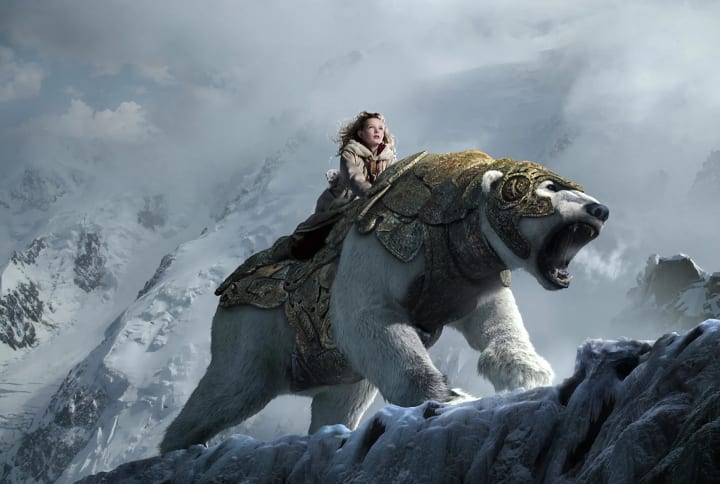
The Golden Compass remains a controversial film, years after its release. While praised for its visual effects and production design, it is often criticized for its rushed pacing, simplified plot, and perceived watering down of the novel's themes. Many feel that the film failed to capture the essence of Pullman's complex and thought-provoking story, ultimately disappointing fans of the book. The negative response, coupled with the film’s box office underperformance, led to the cancellation of the planned sequels, leaving Lyra’s story unfinished on the big screen. The Golden Compass serves as a cautionary tale of ambitious adaptations, and the pitfalls of trying to sanitize complex narratives for mainstream appeal.
About the Creator
Xavier
Global news reporter covering science, tech, environment, Entertainment & sports. Delivering balanced insights to inform and inspire readers worldwide. Sometimes a poet.
History of The Three Stooges (Part I: The Beginnings and Columbia Pictures - 1920s-1936)
I have been itching to write about The Three Stooges on Vocal for close to two years, but I couldn't figure out how to do it. I wanted to do it by third Stooge, but that's a bit complicated. I know this much. I was about eight or nine years old when I first saw The Three Stooges. I remember one of my local channels had the Stooges on for hours, and I tried my damnedest to be up for those shorts. I remember that the Family Channel actually had an hour of the Stooges on from 11PM to midnight, and it was the entire library on during that time.
By Clyde E. Dawkins4 days ago in Geeks
Oscar Winners 2026: Films That Moved the World This Year
Every year, the Academy Awards arrive with excitement, curiosity, and a sense of reflection. For film lovers, it is more than a ceremony. It is a moment when stories that touched audiences across the world are recognized. The list of Oscar winners 2026 carries special meaning because it reflects the emotions, struggles, and hopes people experienced during the past year. Some films made viewers laugh, others left them quiet and thoughtful long after the credits ended. Behind every award is a team of writers, actors, directors, and artists who spent years bringing their ideas to life. When the Oscar winners 2026 were announced, it was not only about trophies. It was about honoring storytelling that connected deeply with people everywhere.
By Muqadas khanabout 5 hours ago in Geeks
The Forsyth House Fire
Since 1851, Forsyth House has stood on the corner of Union Street and Gordon Street in the heart of Glasgow. Its iconic, or was... because on Sunday 8th of March, 2026, a fire broke out in a small, seemingly un-named shop in the building and tore all that history down. As I write, the rubble is still unsettled and the street is still blocked off. Central Station is quiet on the upper level, and around 30 small businesses have quite literally gone up in smoke.
By S. A. Crawford3 days ago in The Swamp



Comments
There are no comments for this story
Be the first to respond and start the conversation.