
Book Review: "The Sound of Being Human" by Jude Rogers
3.5/5 - a fairly interesting biography told over the course of a questionable soundtrack...


There's something about reading books to do with music that really gets me wondering about what songs I would pick to go on to my personal playlist. If you have read my article My Reading Songs then you will be aware of what kind of songs might be on there. I'm not someone who listens to all kinds of music and that's because some of it is simply too loud for me now. When I was younger, my propensity to listen to loud rock music was much higher. I have to admit though, I don't fully remember what led me to this book and it definitely had its ups and downs. Thankfully though, it was more of a positive reading experience...
The author’s personal journey begins with one of the most formative experiences of her life: the loss of her father when she was just five years old. This tragedy becomes an emotional through-line in the book, as she reflects on how music became a way of connecting to memory, emotion, and a sense of self. She describes how specific songs from her early years, ones played by her parents or heard on the radio that took on a special significance, acting as vessels that preserved fleeting moments from her childhood.
She also explores how children absorb music differently from adults, often experiencing it in a more instinctive and emotional way. Without the filters of critical judgment, young listeners can form deep and immediate attachments to songs simply because of how they make them feel. She reflects on the music that shaped her early understanding of the world, from nursery rhymes to pop songs, highlighting how even the simplest melodies can leave an imprint on the subconscious. I like how she compares different aspects of neurological studies when looking at how music shapes our lives. (She takes more than a few digs at the research done by Steven Pinker for being just a little bit too simple. As a Pinker fan, I accept this).

The book also moves into Rogers’ teenage years, she examines the critical role music plays in identity formation. Adolescence is often the time when people begin to develop a sense of personal taste in music, moving beyond the influence of their parents and discovering artists that feel uniquely their own.
She vividly recalls the sense of excitement and discovery that came with hearing new music in her teenage years. She explores the way certain albums and songs became intertwined with her sense of self, shaping the way she saw the world and understood her own emotions. She describes the almost religious devotion that young people often have to their favourite artists and the way music can serve as both a refuge and a form of rebellion.
She also examines the social aspects of music in adolescence; how musical taste can define friendships, create in-groups and out-groups, and serve as a form of self-expression. The way a person dresses, the concerts they attend, and the lyrics they memorise all become part of their personal mythology, shaping how they present themselves to the world. Even though I do not like her particular music taste, I could not help with agreeing with some of her points. Be that as it may, I think it also reduces teen music listening to a singular experience where perhaps, it is more 'cultish' than religious devotion and we cannot ignore the marketing teams that are behind intensifying these things purposefully.

A major theme in The Sound of Being Human is the idea that music serves as a form of emotional support. Rogers shares her own experiences of turning to music in times of sadness, loneliness, and personal struggle. She reflects on how songs became a source of comfort and stability, offering a sense of companionship when words failed.
This section also touches on the therapeutic aspects of music, citing studies on how listening to music can help regulate emotions, reduce stress, and even alleviate physical pain. She highlights the work of music therapists, who use songs to help patients cope with trauma, mental health challenges, and neurological conditions.
Rogers reflects on the changing ways we consume music, from the tactile experience of vinyl and cassettes to the instant accessibility of digital streaming. She questions whether the ability to access any song at any time has changed the way we engage with music such as: has it made us less emotionally connected to individual songs, or has it simply broadened our musical horizons? I can honestly say that people are probably more obsessed with music now than ever before. I think streaming services have also been a brilliant way to bring artists who are perhaps not as famous to the forefront.
All in all, this book is a wonderful biography of music and though I wasn't too crazy about the song choices and thought that they could've been better (it's a great song, but I don't think anyone who likes ABBA would choose Super Trouper as their favourite song by the band). Though there were some difficulties for me when the book moved away from the interesting story of her father, I think it did pick up in the end when it began talking about David Bowie.
About the Creator
Annie Kapur
I am:
🙋🏽♀️ Annie
📚 Avid Reader
📝 Reviewer and Commentator
🎓 Post-Grad Millennial (M.A)
***
I have:
📖 280K+ reads on Vocal
🫶🏼 Love for reading & research
🦋/X @AnnieWithBooks
***
🏡 UK
Keep reading
More stories from Annie Kapur and writers in Geeks and other communities.
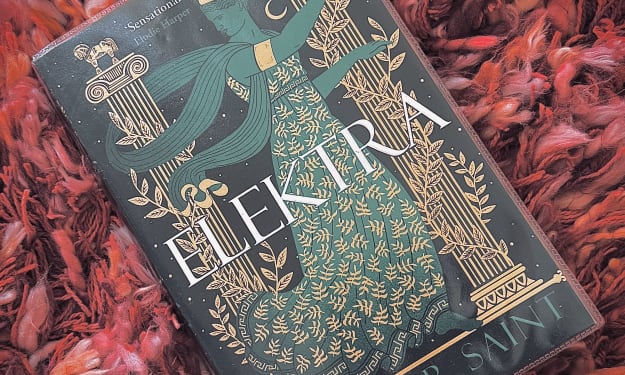
Book Review: "Elektra" by Jennifer Saint
Jennifer Saint is perhaps one of the best writers of her genre in our times. With books such as Atalanta and Ariadne, Jennifer Saint has proven herself to be a powerhouse of mythical women. Hera is yet another great book but, I am here to support her novel Elektra and her interpretation of yet another female-based myth in which the story of a brave woman has been sidelined by the men around her. So let's go on to how this book went for me. As you can tell, Jennifer Saint can do no wrong…
By Annie Kapur10 months ago in Geeks
Silver Screen Magic with Mae West
American actress and singer Mae West became a popular film actress during the Great Depression. She started entertaining in vaudeville, then performed on Broadway, and finally went to Hollywood. She signed up with Paramount Pictures and made her debut in the 1932 film “Night After Night.” She also starred in musicals, comedies, and crime dramas. The American Film Institute named her one of the best classic Hollywood actresses.
By Rasma Raisters9 days ago in Geeks
Can I Watch Super Bowl in NZ?
Super Bowl, one of the most exciting sporting nights of the year, is now less than a month away and the excitement is already palpable. Scheduled on February 8, 2026 at Levi’s Stadium in Santa Clara, California, this will be the third Super Bowl held in the San Francisco Bay Area.
By David Cooka day ago in Geeks


Comments (1)
I did once pick 'Super Trouper' as my favourite, Ms. K. Things change. And I have too many books to read!