
Book Review: "Elektra" by Jennifer Saint
5/5 - another sidelined woman brought to the forefront to have her story made into a revolutionary tale...

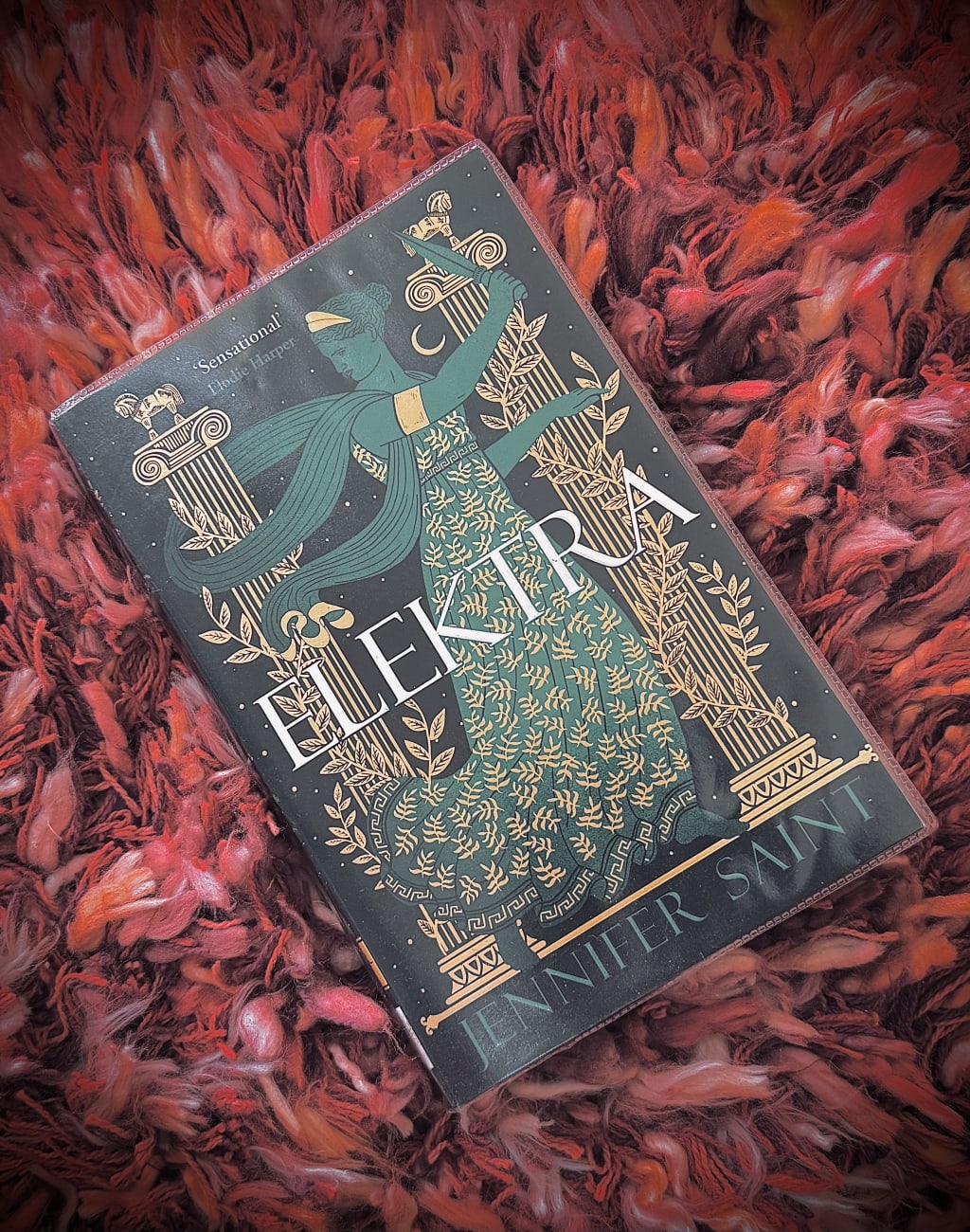
Jennifer Saint is perhaps one of the best writers of her genre in our times. With books such as Atalanta and Ariadne, Jennifer Saint has proven herself to be a powerhouse of mythical women. Hera is yet another great book but, I am here to support her novel Elektra and her interpretation of yet another female-based myth in which the story of a brave woman has been sidelined by the men around her. So let's go on to how this book went for me. As you can tell, Jennifer Saint can do no wrong…
From the very beginning, the novel establishes the oppressive weight of the curse that haunts the House of Atreus, a family doomed to cycles of betrayal and violence. Generations of brutality have led to an unbreakable pattern of revenge, where murder begets murder, and the gods seem to revel in human suffering. Clytemnestra, the queen of Mycenae, is well aware of this curse, and the novel carefully lays the groundwork for the inevitable tragedy that will unfold. The sins of the past including the gruesome crime of Atreus serving his brother Thyestes’ children as a meal, linger over every decision, shaping the fates of the characters trapped within this cycle.

While Clytemnestra’s story is one of righteous anger, Elektra’s is defined by blind devotion and misplaced loyalty. Unlike her mother, she idolises Agamemnon and refuses to see his faults, believing his actions to be divinely sanctioned. To her, Iphigenia’s death is a tragic but necessary sacrifice, and she views her mother’s desire for vengeance as monstrous rather than justified. Elektra’s perspective is filled with youthful idealism, but as the novel progresses, it becomes clear that she is trapped in her own kind of curse; one of bitterness, stubbornness, and an inability to see the full picture. She clings to the past, longing for her father’s return from Troy, unaware of the bloodshed his homecoming will bring. I love Jennifer Saint’s writing because Elektra’s story becomes so familiar to so many women and yet, we know that she is technically apart from ourselves. This brings us into her stories emotionally. Another thing I have to say is that the Clytemnestra section reminds me of a great book called ‘Clytemnestra’ by Constanza Casati.

Cassandra, the doomed Trojan princess and priestess of Apollo, provides a contrast to both Clytemnestra and Elektra. Gifted with the power of prophecy but cursed so that no one will ever believe her, she is forced to watch as her city falls and her people are slaughtered. Her chapters are some of the most haunting, as she foresees every horror that is about to unfold yet is powerless to stop it. She knows Agamemnon’s fate long before he arrives in Mycenae, and she understands her own death is inevitable. Despite this, she continues to speak the truth, a tragic testament to the cruelty of the gods and the helplessness of mortals against fate. I’m not going to lie, this section reminded me so much of the book ‘Cassandra’ by Christa Wolf and works in some of those horrors that she knew about before anyone else.

One of the novel’s most climactic moments is Agamemnon’s return to Mycenae. Clytemnestra, now fully hardened by her grief, has spent years plotting her revenge, waiting for the perfect moment to strike. The tension in this section is palpable, as readers know what is coming but cannot look away. Clytemnestra murders Agamemnon in his bath, ensuring that he pays for Iphigenia’s death with his own blood. It is a moment of catharsis, but also one of horror. Though justified, her vengeance does not end the curse, it merely continues it. Oh, this scene was brilliantly written and the rage of Elektra afterwards was fantastic. She is consumed by this fury about her mother being a murderer. Elektra’s fate is intertwined with that of her brother, Orestes, who has been in exile since childhood. When he returns, Elektra seizes the opportunity to exact vengeance, urging him to kill Clytemnestra.
All in all, I have to say that though we know the story a million times over and though we always read these stories with the same level of thrill, we can still have a different perspective on the situation. Jennifer Saint does for us what ‘The Libation Bears’ by Aeschylus does for the Greeks on giving them the perspective of Orestes to a grand degree. It was a fantastic read.
About the Creator
Annie Kapur
I am:
🙋🏽♀️ Annie
📚 Avid Reader
📝 Reviewer and Commentator
🎓 Post-Grad Millennial (M.A)
***
I have:
📖 280K+ reads on Vocal
🫶🏼 Love for reading & research
🦋/X @AnnieWithBooks
***
🏡 UK
Keep reading
More stories from Annie Kapur and writers in Geeks and other communities.
Book Review: "The Last Witch of Scotland" by Philip Paris
I've been wanting to read this for some time and for some reason have only got around to it now. I'm actually not that bright because listen to this: I've had the ebook for as long as I've wanted to read it and then kept complaining to myself that I wanted to read it. I had the book the entire time but for some reason just never actually opened it. Ugh, there is so much to unpack in my life at the moment. The Last Witch of Scotland is a story that intertwines religion, mystery and passion to create a grand narrative and a really enjoyable reading experience. Let's take a look at it.
By Annie Kapur10 months ago in Geeks
Silver Screen Magic with Mae West
American actress and singer Mae West became a popular film actress during the Great Depression. She started entertaining in vaudeville, then performed on Broadway, and finally went to Hollywood. She signed up with Paramount Pictures and made her debut in the 1932 film “Night After Night.” She also starred in musicals, comedies, and crime dramas. The American Film Institute named her one of the best classic Hollywood actresses.
By Rasma Raisters9 days ago in Geeks
Can I Watch Super Bowl in NZ?
Super Bowl, one of the most exciting sporting nights of the year, is now less than a month away and the excitement is already palpable. Scheduled on February 8, 2026 at Levi’s Stadium in Santa Clara, California, this will be the third Super Bowl held in the San Francisco Bay Area.
By David Cook2 days ago in Geeks


Comments
There are no comments for this story
Be the first to respond and start the conversation.