
Book Review: "The Penguin Book of Elegy" ed. by Andrew Motion and Stephen Regan
5/5 - the very best the sub-genre has to offer...it is a fantastic collection of mourning...

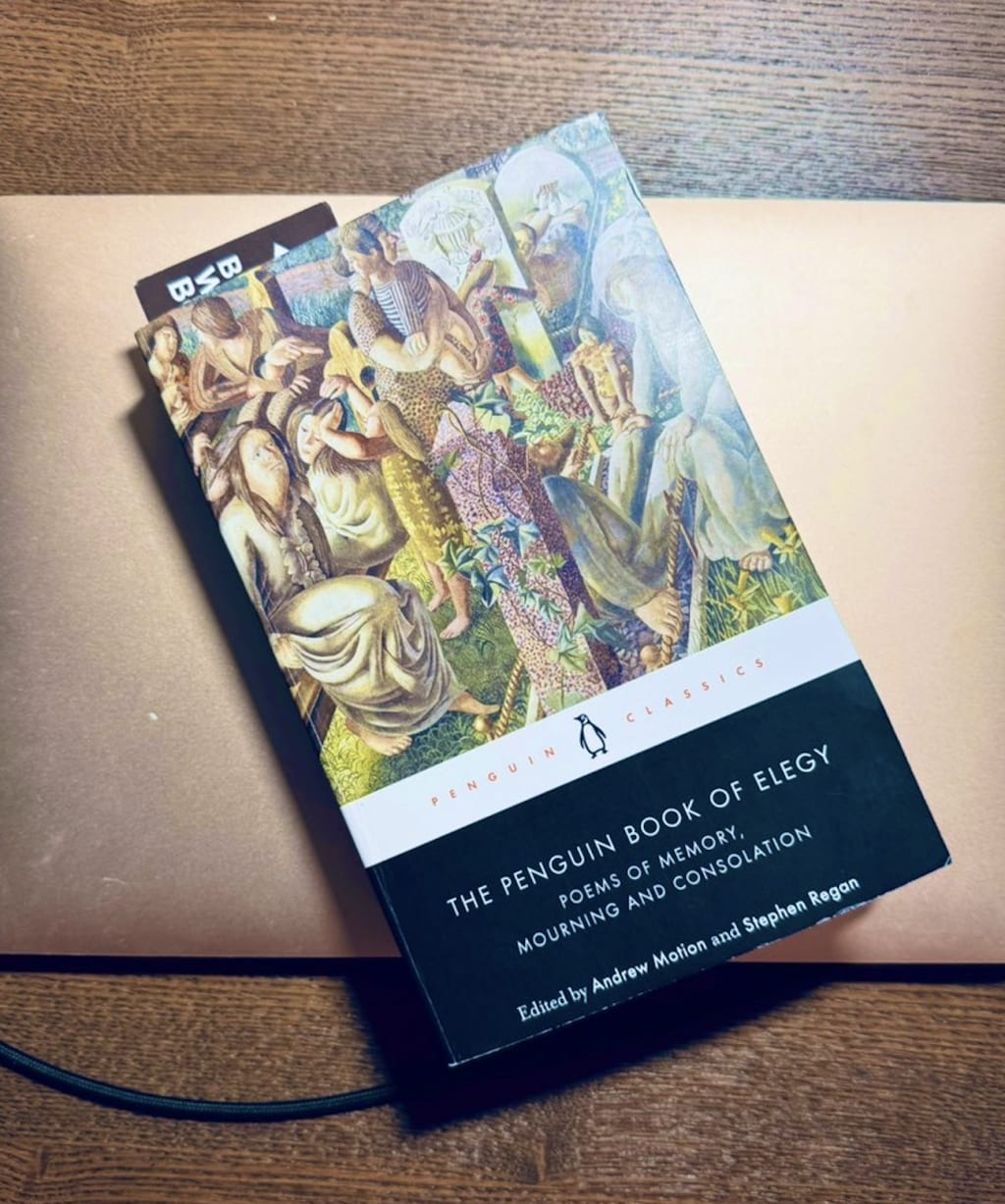
At the time of writing this, I have had to take sick leave from work. Why? Well, of course it's going to be because of my mental health (have you seen my poetry? That's not the poetry of a mentally healthy person). Anyways, I needed some consolation poetry to soothe the brain and Penguin have a great anthology for that. Entitled The Penguin Anthology of Elegy, this book goes through years of thoughtful poems of death, mourning, loss and love from Catullus all the way down to Byron and beyond. If you ever think that you too, would like to read some elegy, I would highly recommend this brilliant anthology. You can tell it has been carefully and meticulously compiled to include the very best the sub-genre has to offer.
At the heart of The Penguin Book of Elegy is the exploration of elegy as a poetic form dedicated to mourning, remembrance, and reflection on death. The editors provide a broad definition of elegy, acknowledging its historical evolution from classical antiquity to contemporary poetry. They emphasise that while elegy often deals with personal loss, it can also engage with collective grief, national trauma, and philosophical meditations on mortality. The anthology showcases how elegy has been used as a mode of expression across different cultures and literary traditions, highlighting its adaptability and continued relevance.
A recurring theme in elegiac poetry is the relationship between nature and grief. Many poets use natural imagery to symbolise the cycle of life and death, offering consolation or reinforcing the inevitability of mortality. The anthology includes numerous examples where landscapes, seasons, and the changing elements serve as metaphors for human loss. This tradition is particularly evident in Romantic and Victorian elegies, where poets like Wordsworth and Tennyson use nature as both a source of solace and a reminder of transience. A poem which is particularly good at this plus using the self as the subject is the famed I am by John Clare, which is perhaps one of my favourite poems of all time.
While elegy is often deeply personal, it has also been employed as a form of social and political commentary. The anthology includes elegies that mourn not only individual lives but also collective tragedies, such as war, genocide, and political upheaval. Poets like Seamus Heaney use the elegiac form to reflect on the horrors of war and the weight of historical loss. These poems highlight how elegy can function beyond private mourning, becoming a means of bearing witness to suffering and injustice.
As elegy has evolved, poets have experimented with its structure, language, and themes. Modern elegists often reject traditional forms, opting for free verse, fragmented syntax, and unconventional imagery to express grief. The anthology includes works from poets like Ted Hughes, Elizabeth Bishop, and Anne Carson, illustrating how contemporary elegists continue to push the boundaries of the genre. These poets challenge traditional notions of closure and consolation, instead embracing ambiguity, doubt, and unresolved mourning.
A central question in elegy is whether poetry can provide solace in the face of death. The anthology presents a spectrum of responses, from poets who find comfort in religious or philosophical reflections to those who express profound existential doubt. For instance, Tennyson’s In Memoriam offers a journey from despair to faith, while other poets, such as Philip Larkin, take a more sceptical approach, questioning the possibility of consolation. This diversity of perspectives highlights the complexity of elegy as both an emotional and intellectual endeavour. I think many of my readers know my strong feelings towards the poetry of Philip Larkin (here's a hint: I don't like it) but I think what is included of his era in this anthology is relevant and so, I don't mind.
Here are a list of 10 poems that stood out for me, yes I may have read them before but that's not the point - I still like them:
- In Memory of WB Yeats by WH Auden
- Elegy for Rosita by Kamau Braithwaite
- On the Death of Emily Jane Bronte by Charlotte Bronte
- Elegy on Thyrza by Lord Byron
- I Am by John Clare
- At Melville's Tomb by Hart Crane
- Because I Could Not Stop Death by Emily Dickinson
- Elegy Written in a Country Churchyard by Thomas Gray
- The Farmer's Bride by Charlotte Mew
- Anthem for Doomed Youth by Wilfred Owen
All in all, this is a brilliant anthology that has done wonders for getting me out of myself for a bit. To read this book whilst sipping coffee in a cafe as it rains outside the window is one of the very few joys of life and if you don't believe me, you should try it.
About the Creator
Annie Kapur
I am:
🙋🏽♀️ Annie
📚 Avid Reader
📝 Reviewer and Commentator
🎓 Post-Grad Millennial (M.A)
***
I have:
📖 280K+ reads on Vocal
🫶🏼 Love for reading & research
🦋/X @AnnieWithBooks
***
🏡 UK
Keep reading
More stories from Annie Kapur and writers in Geeks and other communities.
The Beautiful and the Damned by F. Scott Fitzgerald
The Beautiful and the Damned, published in 1922, was F. Scott Fitzgerald’s second novel and is considered one of his finest explorations of the Jazz Age’s indulgence and decadence. Following the success of his debut novel This Side of Paradise, Fitzgerald was under considerable pressure to deliver a compelling follow-up. His first book had established him as a notable new voice in American literature, and he hoped The Beautiful and the Damned would solidify his position.
By Annie Kapur10 months ago in Geeks
Silver Screen Magic with Mae West
American actress and singer Mae West became a popular film actress during the Great Depression. She started entertaining in vaudeville, then performed on Broadway, and finally went to Hollywood. She signed up with Paramount Pictures and made her debut in the 1932 film “Night After Night.” She also starred in musicals, comedies, and crime dramas. The American Film Institute named her one of the best classic Hollywood actresses.
By Rasma Raisters10 days ago in Geeks
Kim Kardashian Wears Sheer Leggings as Pants With a $22,000 Jacket and a Polarizing Shoe
The Gist Kim Kardashian stepped out in Los Angeles last week wearing new NikeSkims footwear. The split-toe shoe is based on Nike's Air Rift, which came out in 1996. The NikeSkims Rift Mesh drops on January 26, 2026.
By Dena Falken Esq4 days ago in Geeks



Comments (1)
Thank you for this. I will look for a copy. My brother died (last brother) last September. My nieces are grieving, and they won't read this; but then the youngest niece's co-worker also died a week ago. I wrote on Vocal for some of my feelings and this book will give me insight.