
Book Review: "The Night Wire" ed. by Aaron Worth
5/5 - a well-crafted anthology of horrors...


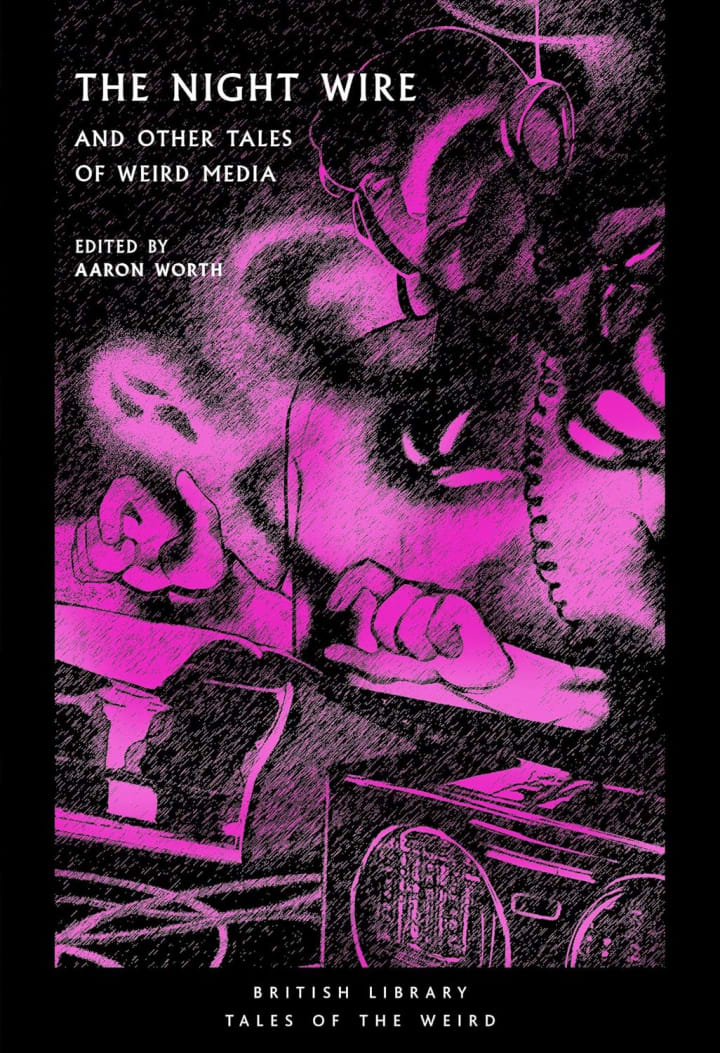
Full Title: The Night Wire and Other Tales of Weird Media edited by Aaron Worth
New technology has always been scary at first. My personal favourite aspect of scary new technology is when I was in high school and the first person to have an iPhone was treated like an outcast because back then, touching your screen with your finger seemed like a pretty demonic thing to do. But, at the turn of the 20th century, more than one hundred years before my own anecdote would occur, technology and science were spinning out from the industrial revolution and into a whole new age of things. Factories, machinery, communication by telephone and so much more - possibilities during the Victorian Era seemed endless. Just think of what those people who had grown up in the Victorian Era felt when they saw the kinds of technology being used in World War One. It must have been confounding.
The Night Wire and Other Tales of Weird Media deals with some of these anxieties that people had during those years about the way media, technology, machinery and new age science were heading. Like in Dr Jekyll and Mr Hyde, scientific anxieties were common, but we shouldn't believe they were limited to theory alone. For every new invention there was an anxiety or a horror story to go along with it. Even today, in the world of AI and ChatGPT, we are witnessing the rise of Sci-Fi/Horror in relation to the new science of our age.
In this book there are a grand total of seventeen stories and each of them has their own take on the horrors of the time of inventions and science. In the story Poor Lucy Rivers by Bernard Capes for example, we witness a woman who comes in with a typewriter because the place she has brought it from may have sold her a lemon. However, when they simply pretend to give her a different one and yet, return the same typewriter, Lucy Rivers will get more than she bargained for as the problem may not be the typewriter itself, but the person who owned it before she did. A critique of how typewriters gave women means of independent living, this story gives all the atmosphere and horrors of a new age of independence caused by technology and its advantages.
Another story is by the great writer of the book Angel Pavement, which was made into the BBC Series of the same name, JB Priestley offers his hand at the technology-based ghost story with Uncle Phil on TV. After deciding to buy a television with the money from the death of Uncle Phil, the Fleming family reveal their true colours as they have just spent an insane amount of money on one channel that broadcasts for only a few hours here and there. After a while of enjoying the TV, one of the family members notices someone who looks like Uncle Phil in the background of a show, and he's getting closer each time.
A tale of wit, revenge and a critique of the materialistic society that was so prevalent at the time, commercialism may not always be a good thing even if the economy is booming. Why? It folds our moral compass in half and doesn't give us room to pause and think. In his classic style of teaching people a damn lesson, Priestley evokes the ghosts of his plays to fix the moral compass of its characters whilst the audience look on in defiance.
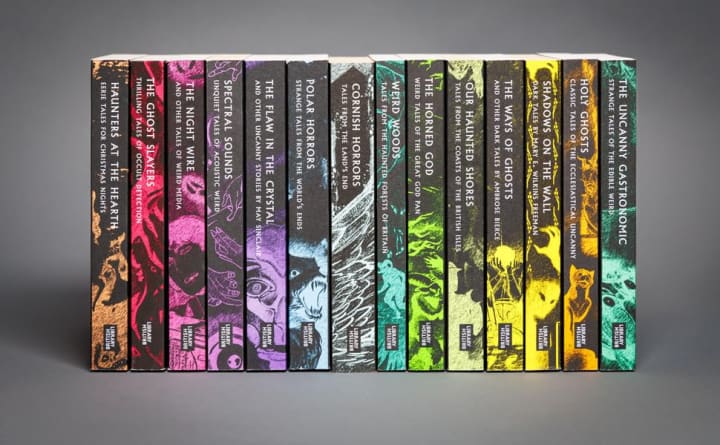
With stories by the likes of Rudyard Kipling, Oliver Onions, H.F Arnold, Louis Golding and Mary Treadgold, there are stories by our usual writers (though not of this genre) and stories by lesser known names. I believe that from the British Library Tales of the Weird, this may be one of the more successful ones since it has so many different stories and yet sticks to the theme meticulously.
All in all, I found this the perfect chilling read for Halloween, with modern anxieties and atmospheres of ghouls and ghosts, this has been one of the better reads of the series whilst also adding something new - a timeless quality in which the reader of the 21st century can definitely understand why we should be very afraid of what comes next.
About the Creator
Annie Kapur
I am:
🙋🏽♀️ Annie
📚 Avid Reader
📝 Reviewer and Commentator
🎓 Post-Grad Millennial (M.A)
***
I have:
📖 280K+ reads on Vocal
🫶🏼 Love for reading & research
🦋/X @AnnieWithBooks
***
🏡 UK
Keep reading
More stories from Annie Kapur and writers in Geeks and other communities.
Silver Screen Magic with Mae West
American actress and singer Mae West became a popular film actress during the Great Depression. She started entertaining in vaudeville, then performed on Broadway, and finally went to Hollywood. She signed up with Paramount Pictures and made her debut in the 1932 film “Night After Night.” She also starred in musicals, comedies, and crime dramas. The American Film Institute named her one of the best classic Hollywood actresses.
By Rasma Raisters9 days ago in Geeks
"Beyond Silence": A Short Film that Speaks Volumes
Always fight for your voice. "Beyond Silence" is a Dutch short film directed by Marnie Blok. Eva, a young deaf student, fights with the higher authorities about a traumatic situation that happened at her university. Two women of different generations share a similar tragedy and story, but one decides to stay silent, while the other woman fights for justice.
By Marielle Sabbag2 days ago in Geeks


Comments
There are no comments for this story
Be the first to respond and start the conversation.