
Book Review: "The Drinking Den" by Émile Zola
5/5 - one of Zola's darkest and most insightful tragedies...

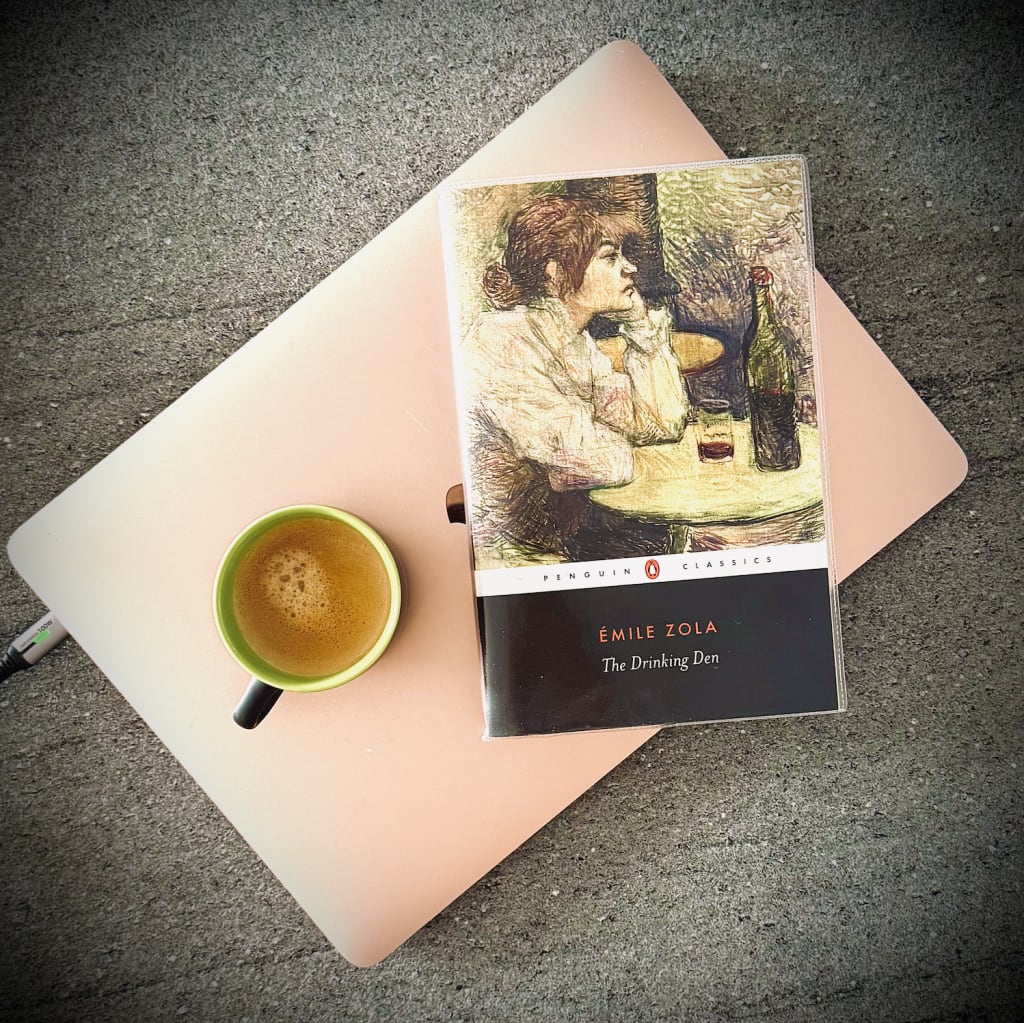
I've read countless books by Emile Zola, including the famed Therese Raquin which is basically a really messed up dark romance novel. But I think my favourite novel by this particular writer has to be The Beast Within because of the psychological terror it insinuates. I wrote about it about five years' ago in my 'reading experiences' series which has been turned slowly into 'why it's a masterpiece' and so, expect it to return soon since I loved it so much. The book The Drinking Den is written in this same psychological style even though it is not obvious straight away. Emile Zola uses descriptions, especially those concerning poverty and squalor to force the reader to confront the atmosphere and realities of those who do not have. It's more rustic and gritty than Dickens, I believe. So, let's get on with what makes this novel so great.
Gervaise Macquart, a young laundress from Plassans, arrives in Paris with her lover Lantier and their two kids. She is optimistic for her future in the capital, but her dreams are quickly slashed by her lover finds another woman and she is left to fend for herself with their two children. Gervaise is adamant that even though she has been left by her lover, she will not descend into alcoholism like the people she sees around her in the city. The speed at which the book descends into darkness is typical of Zola as he tries his readers with all of the harshest of realities of Paris during this time.
Gervaise wants a modest life with a husband who wants what she wants. She doesn't want riches, just an orderly and neat lifestyle which has a certain amount of dignity and for this, Zola often paints her as the sympathetic character. She finds a roofer to marry - his name is Coupeau and he too, is clean and sober. This is a completely different thing to what she sees around her, which is a society in the throws of decay and immorality.
She manages to take some initiative after her husband has a fall at work and is injured, unable to work as he gets better. She takes a loan from a man named Goujet who has been secretly in love with her for a while. She then opens her own laundry business. For some time, she seems to achieve her dream of independence and manages her new-found prosperity well. She manages to hire workers and raise her children on the side whilst her husband gets better. But, her husband soon becomes idle and jealous of her success - noting the oddity of Goujet's support for her. Zola shows us these characters changing, often not always for the better - but he also shows us the reality of Paris. The city is unforgiving of newcomers at this time and the reader can almost sense the tiptoes of tension as our main character works to fulfill her dreams.
Coupeau was a man who was once proud of his work and wanted to do the best he possibly could and now, he refuses to return to work. He slips slowly but surely into alcoholism and thus, becomes more and more abusive towards his wife. He frequents a bar called Assommoir and thus, changes his character for the worse. Zola's documentation of the slow slip into this disease of the mind is so detailed and upsetting that it even begins to grind down Gervaise. She starts to find excuses for his behaviour in order to maintain the quality of life in the household.
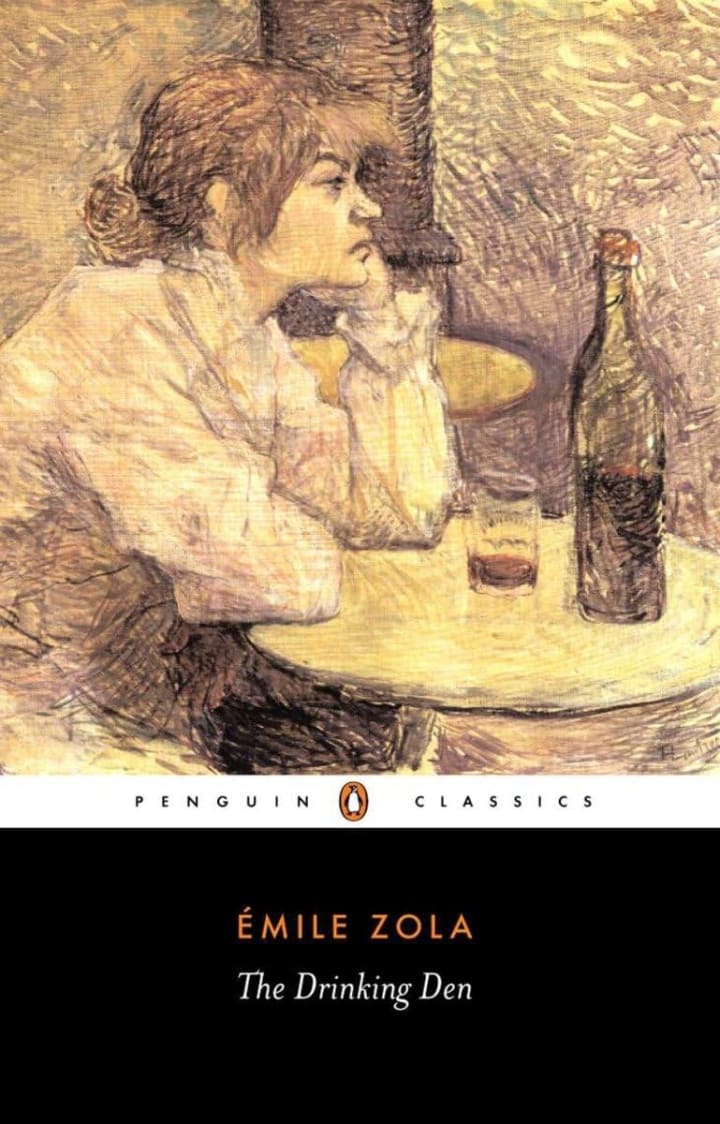
Gervaise’s old lover, Lantier, re-enters her life. Coupeau, now drunk and passive, allows him to move in with them. The men form a toxic alliance, exploiting Gervaise and draining her resources. As the laundry business falters under the financial strain of the two men, Gervaise also gives into drink as a means of coping. Zola's depiction of her downfall is not just through her own drinking, but of the decay of society around her which basically backs her into a literary symbolic corner. It is fantastically written as a horrific tragedy of the self.
Now dependent on alcohol, Gervaise begins frequenting the very drinking den she once feared. She loses her business, pawns her belongings, and sinks into extreme poverty. Zola’s naturalist style portrays her physical and moral degradation with unflinching detail: her body becomes broken, her home squalid, and her spirit disintegrates. Former friends and customers abandon her, and society begins to judge her more harshly. Zola's biggest critique of society by the time the novel ends in horror and tragedy is that whilst we blame the individual for their struggle, we don't take a close look at what put them in the place where they are. Sometimes, the mind can conjure terrible things and sometimes, the weight of maintaining face with no support can lead a person to their breaking point.
There's so much more in this novel as it gets more and more upsetting. If you have a chance to read Zola's novels then I definitely recommend it. They are so dark when it comes to how society has basically failed the individual and well, you could really apply it to today as well.
***
Join my unofficial challenge!
About the Creator
Annie Kapur
I am:
🙋🏽♀️ Annie
📚 Avid Reader
📝 Reviewer and Commentator
🎓 Post-Grad Millennial (M.A)
***
I have:
📖 280K+ reads on Vocal
🫶🏼 Love for reading & research
🦋/X @AnnieWithBooks
***
🏡 UK
Keep reading
More stories from Annie Kapur and writers in Geeks and other communities.
A Way of Life, Like Any Other by Darcy O'Brien
Darcy O’Brien’s A Way of Life, Like Any Other was first published in 1977, drawing heavily on the author’s personal experiences. O’Brien was born into a Hollywood dynasty: his father, George O’Brien, was a silent film star, and his mother, Marguerite Churchill, was a leading actress in early talkies. The novel is widely regarded as a thinly veiled autobiographical account of his unconventional upbringing in the glamorous yet turbulent world of mid-20th-century Los Angeles.
By Annie Kapur6 months ago in Geeks
Silver Screen Magic with Mae West
American actress and singer Mae West became a popular film actress during the Great Depression. She started entertaining in vaudeville, then performed on Broadway, and finally went to Hollywood. She signed up with Paramount Pictures and made her debut in the 1932 film “Night After Night.” She also starred in musicals, comedies, and crime dramas. The American Film Institute named her one of the best classic Hollywood actresses.
By Rasma Raisters6 days ago in Geeks
Millie Bobby Brown Debuts New Bob on Vacation
Millie Bobby Brown Takes a Stylish Break in the Sun Millie Bobby Brown is enjoying some fun in the sun and showing off a new ‘do. The Stranger Things actress is on vacation and is free to have any hairstyle she chooses.
By Dena Falken Esq5 days ago in Geeks



Comments (2)
Ah, Zola. I have avoided so much French realism of that era for too long (no one seems to meet the high standards I see in Flaubert or Maupassant). But just maybe... ;) P.S. Assommoir means 'Drinking Den'!
Your review really brings Gervaise’s story to life, raw, real, and so heartbreakingly human. Thanks for sharing such a thoughtful take.