
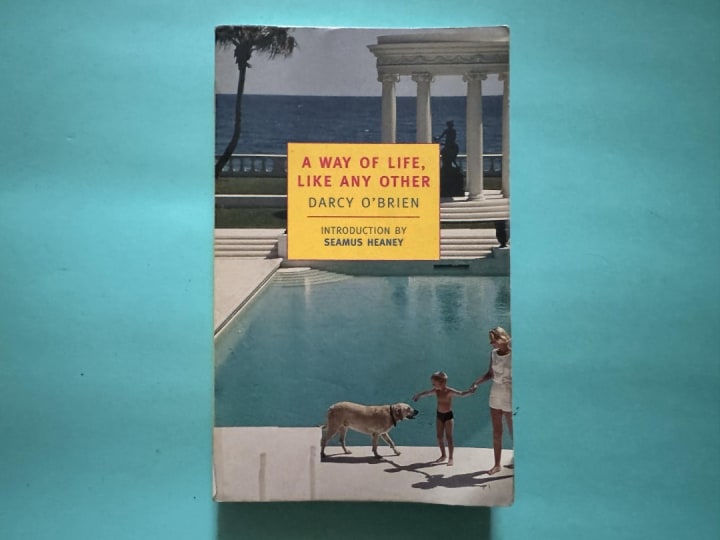
A Way of Life, Like Any Other by Darcy O'Brien
Why It's a Masterpiece (Week 72)

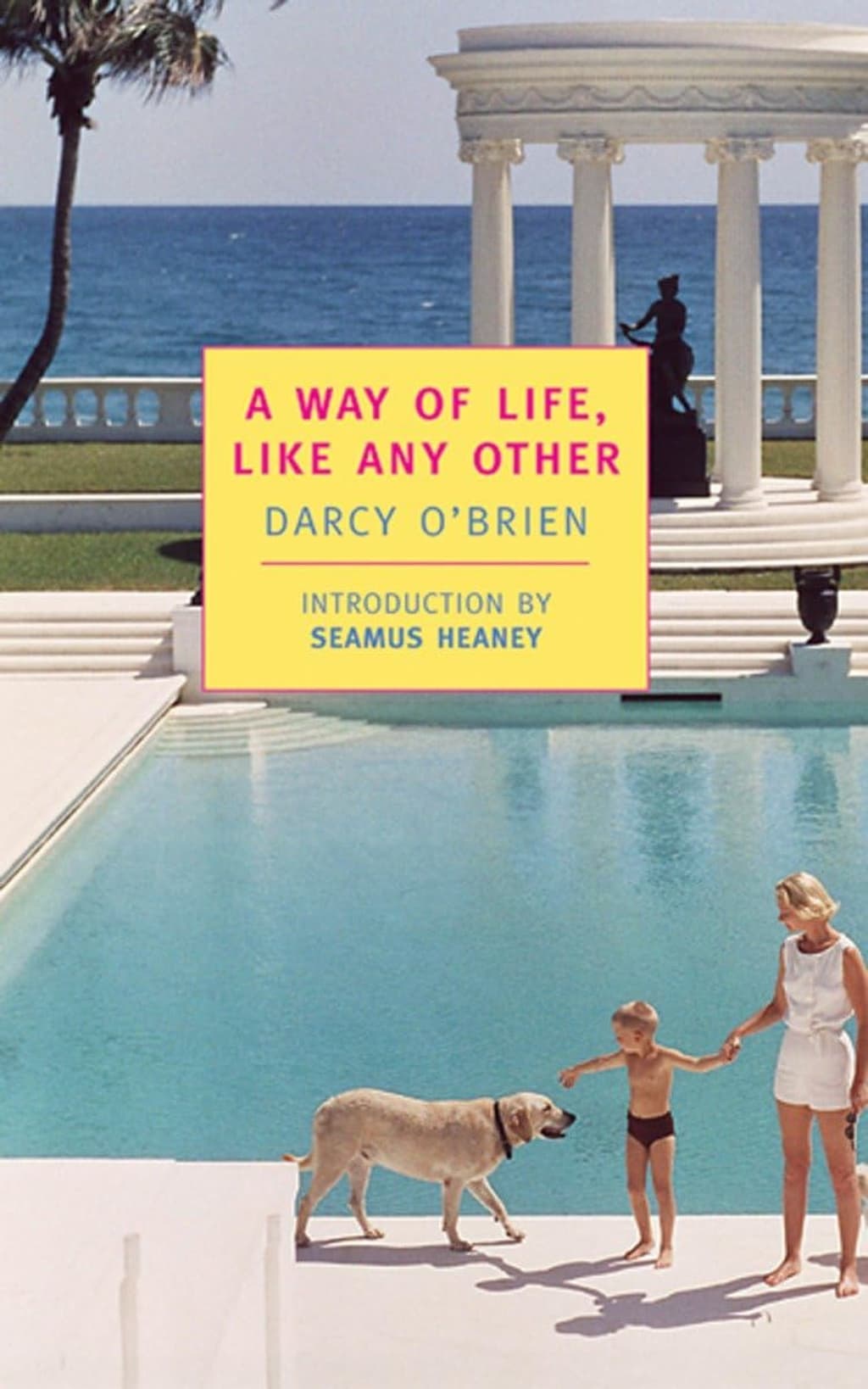
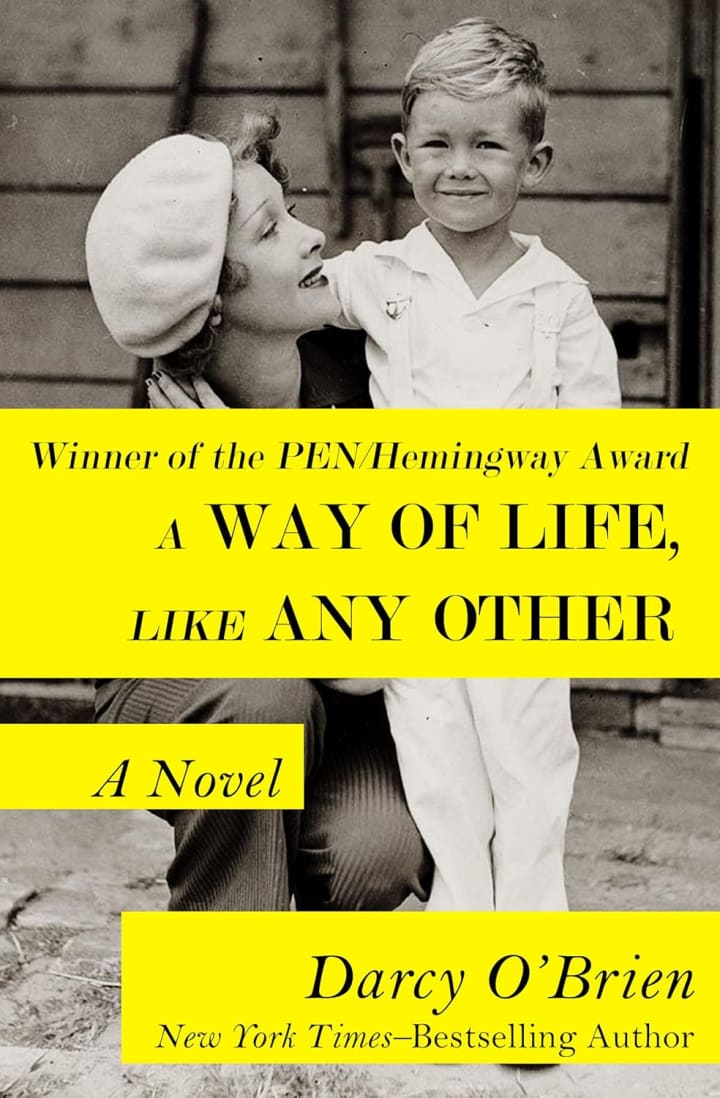
Darcy O’Brien’s A Way of Life, Like Any Other was first published in 1977, drawing heavily on the author’s personal experiences. O’Brien was born into a Hollywood dynasty: his father, George O’Brien, was a silent film star, and his mother, Marguerite Churchill, was a leading actress in early talkies. The novel is widely regarded as a thinly veiled autobiographical account of his unconventional upbringing in the glamorous yet turbulent world of mid-20th-century Los Angeles.
The story captures the contradictions of Hollywood life during its golden age, exploring themes of familial dysfunction, disillusionment, and identity. While O’Brien had previously gained recognition as a literary scholar and later as a crime writer, A Way of Life, Like Any Other stands out for his personal tone and sharp, ironic wit. The novel, written with a blend of nostalgia and cynicism, paints a vivid picture of the highs and lows of being raised amidst the Hollywood elite.
Plot
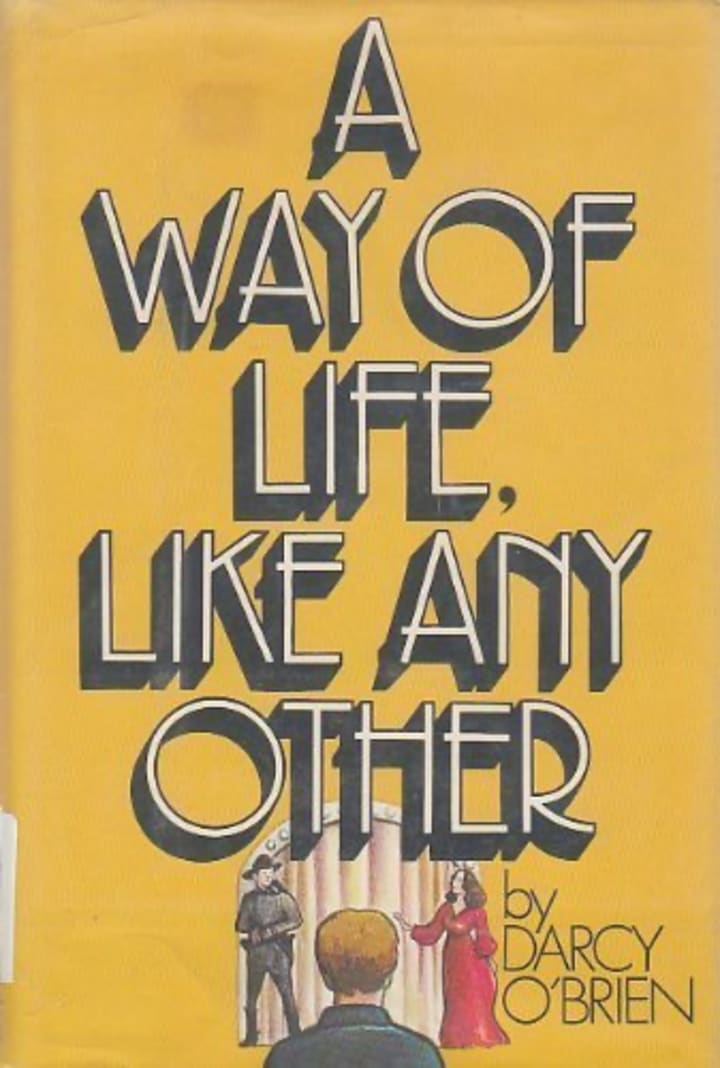
The narrator’s father is a former silent film star who has faded into obscurity. Despite his diminished career, he clings to his rugged cowboy persona, embodying a stoic masculinity that often alienates his family. In contrast, the narrator’s mother, a vivacious actress who has struggled to maintain her relevance, is flamboyant and emotionally volatile. Their marriage is marked by dysfunction, resulting in a tumultuous home life for the narrator.
As the parents’ marriage deteriorates, the narrator is shuttled between the two, experiencing vastly different lifestyles. His father retreats to a rural ranch, where the narrator is exposed to a simple, rugged existence far removed from the glitz of Hollywood. Meanwhile, his mother remains in the city, embodying the excesses of Hollywood society with lavish parties, financial instability, and a string of fleeting romances.
Through a series of vignettes, the narrator recounts the absurdities and contradictions of his upbringing, such as his father’s stoic refusal to adapt to modern life and his mother’s extravagant yet often desperate attempts to remain relevant. The novel alternates between moments of humour and heartbreak, capturing the narrator’s struggle to reconcile his love for his parents with their glaring imperfections.
As the story progresses, the narrator grows increasingly disillusioned with both his parents and the Hollywood lifestyle they represent. The novel ends on a reflective note, as he acknowledges the impact of his unconventional upbringing on his own identity and values.
Into the Book
Familial Dysfunction:
At its core, A Way of Life, Like Any Other is a study of familial dysfunction and its effects on a child’s emotional development. The narrator’s parents are both deeply flawed individuals, their volatile relationship creating a chaotic environment for their son.
The father’s stoic yet detached persona epitomises his inability to engage emotionally with his family. His retreat to the countryside symbolises his desire to escape the pressures of Hollywood, but it also isolates him from his son. In one poignant scene, the narrator reflects, “I admired my father’s strength, but I could never understand why it came at the cost of affection.” This tension between admiration and emotional estrangement permeates their relationship.
Alternatively, the narrator’s mother embodies the excesses of Hollywood life, her flamboyant behaviour masking deep insecurities. Her emotional volatility and erratic parenting force the narrator to assume a level of independence at a young age. Despite her shortcomings, the narrator observes her with a mix of frustration and compassion, remarking, “She was both dazzling and exhausting, a constant reminder of the price of living a life in the spotlight.”
Through these complex familial relationships, O’Brien explores the lasting impact of parental flaws on a child’s sense of self. The narrator’s retrospective tone conveys a lingering ambivalence, illustrating how love and resentment often coexist in such circumstances.
"This was my inheritance—a bankrupt household with a tarnished name."
- A Way of Life, Like Any Other by Darcy O'Brien
A Critique of Hollywood:
The novel offers a biting critique of Hollywood’s glamour, exposing the disillusionment that lies beneath its glittering surface. The narrator’s parents represent two sides of the same coin: his father, a faded star clinging to a bygone era, and his mother, a socialite desperate to maintain her relevance.
Hollywood, as depicted in the novel, is a world of contradictions, where success is fleeting and authenticity is often sacrificed for appearances. The narrator observes this dichotomy through his mother’s desperate attempts to maintain her status, noting, “In Hollywood, reinvention was a necessity, but it came at the cost of everything that made you real.” This critique is further emphasised by the absurdities of Hollywood society, from extravagant parties to superficial friendships.
As the narrator matures, he grows increasingly disillusioned with the world his parents inhabit. The stark contrast between his father’s rural retreat and his mother’s urban extravagance symbolises his struggle to reconcile these opposing influences. Ultimately, the novel portrays Hollywood as a microcosm of societal excess, where the pursuit of fame and fortune often leads to personal ruin.
"My father believed in charm as others believed in God."
- A Way of Life, Like Any Other by Darcy O'Brien
Self-Discovery:
The narrator’s journey is also one of identity and self-discovery, as he navigates the conflicting values and lifestyles of his parents. His father’s rugged individualism and his mother’s glamorous superficiality represent two opposing ideals, forcing the narrator to carve out his own path.
Throughout the novel, the narrator reflects on the impact of his upbringing on his sense of self, observing, “I was a product of two worlds, neither of which felt entirely mine.” This duality is a recurring theme, highlighting the tension between inherited values and personal agency.
O’Brien uses the narrator’s retrospective tone to explore the process of self-discovery, illustrating how he comes to terms with the contradictions of his past. The novel’s bittersweet ending suggests that while the narrator has made peace with his parents’ flaws, their influence remains a defining aspect of his identity.
"Hollywood's greatness had passed, and so had ours."
- A Way of Life, Like Any Other by Darcy O'Brien
Why It's a Masterpiece
The novel’s strength lies in its ability to balance satire with genuine emotional depth. O’Brien’s portrayal of the narrator’s parents is both critical and compassionate, illustrating their flaws without diminishing their humanity. His sharp wit and keen observational skills create a vivid picture of mid-20th-century Hollywood, while his introspective tone adds layers of complexity to the narrative.
Critics have praised O’Brien’s skill in capturing the nuances of family relationships, particularly the tension between love and resentment that defines the narrator’s experiences. The novel’s episodic structure allows for a rich exploration of character and theme, creating a mosaic of moments that collectively paint a compelling portrait of a unique upbringing.
A Way of Life, Like Any Other is a masterpiece for its themes and distinctive voice. O’Brien’s ability to convey the complexities of human experience with humour and pathos ensures the novel’s timelessness, both as a memoir of Hollywood’s golden age and as a universal meditation on family and identity.
Conclusion
Darcy O’Brien’s witty narrative captures the complexities of human relationships and the contradictions of Hollywood life, offering us an insight that resonate beyond its specific setting. With its sharp humour and emotional depth, the novel retains its power to entertain, provoke thought, and connect with all kinds of audiences, especially those who have experienced some kind of disillusionment of character.
Next Week: Pale Fire by Vladimir Nabokov
***
Join my unofficial challenge!
About the Creator
Annie Kapur
I am:
🙋🏽♀️ Annie
📚 Avid Reader
📝 Reviewer and Commentator
🎓 Post-Grad Millennial (M.A)
***
I have:
📖 280K+ reads on Vocal
🫶🏼 Love for reading & research
🦋/X @AnnieWithBooks
***
🏡 UK
Keep reading
More stories from Annie Kapur and writers in Geeks and other communities.
Book Review: "The Only Story" by Julian Barnes
I've read quite a bit by Julian Barnes and every time I pick up a book by him I just know it is going to contain a big moral and philosophical question that we never really get entirely answered. Instead, we have about three or four different ways of thinking about it. In Before She Met Me we are forced to confront this through dark humour and narcissism. The Lemon Table definitely has many of these questions alongside characters who are friends with rather odd conditions from time to time. However, this book being reviewed does not change the fact that Julian Barnes' magnum opus in all respects is still The Man in the Red Coat. A book which to this day, I have not been able to forget.
By Annie Kapur6 months ago in Geeks
Silver Screen Magic with Mae West
American actress and singer Mae West became a popular film actress during the Great Depression. She started entertaining in vaudeville, then performed on Broadway, and finally went to Hollywood. She signed up with Paramount Pictures and made her debut in the 1932 film “Night After Night.” She also starred in musicals, comedies, and crime dramas. The American Film Institute named her one of the best classic Hollywood actresses.
By Rasma Raisters7 days ago in Geeks
How to Succeed at the Benson Directory®
Congratulations and welcome to the Benson Directory® employee #22391! As our newest call handler, you will have the privilege of speaking with dozens of unique and interesting people on a daily basis as well as the opportunity to earn bonuses for high performance. Contained within this handbook you will find a set of ease to follow instructions designed to help you settle in to your new role and begin paving the way to success.
By S. A. Crawford3 days ago in Fiction



Comments
There are no comments for this story
Be the first to respond and start the conversation.