
"The Beast Within" by Emile Zola
A Reading Experience (Pt.36)

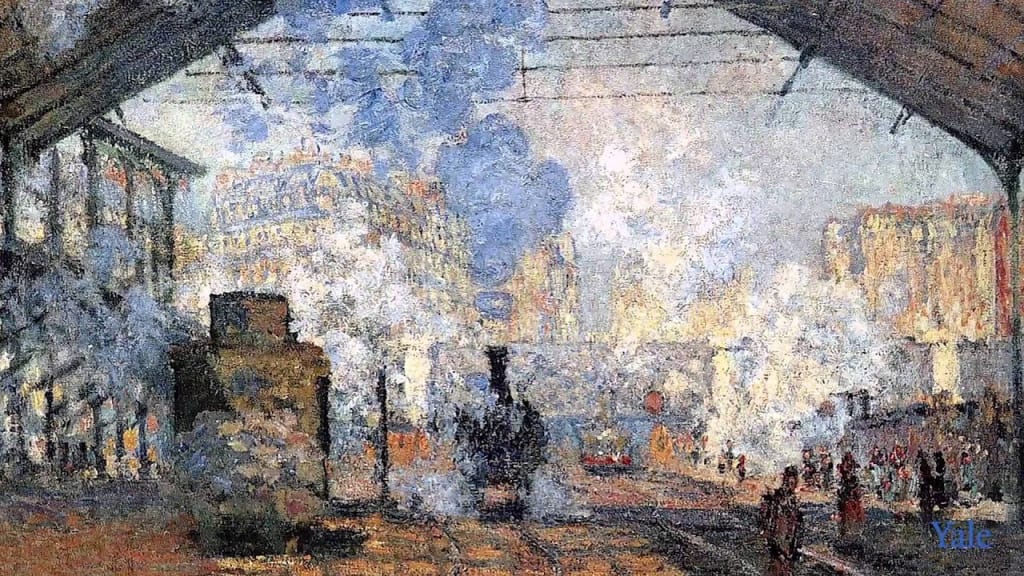
This book was one of my favourite books when I was a teen purely because I thought it was a raucous and raging event of pure irony. It really made me fall in love with Emile Zola’s works, even more than “Therese Raquin” and that’s saying something. It’s a deliciously dark book that you cannot help but love. It’s psychological, at moments it can be terrifying and in some parts it can even make you emotional. I think that this is possibly Zola’s greatest effort at the novel and has a brilliant sense of futurism to it that many fail to recognise. It is Zola’s magnum opus and I’ve read it quite a few times since. It’s a brilliant novel in which you learn a new thing about the psychological aspect every time you revisit it.
All about the will of the human monster, it can even rival “Frankenstein” by Mary Shelley in its introspection and the character controls his mania with another key character. This is what stops him from a murderous rampage that he seems to talk about exclusively. Affairs and trains take over the novel in symbols and themes as we see murder and robbery take over the human mind. Investigations are launched, there are prime suspects we don’t expect and on the way, we never really see what is right there in front of us - motive for the arrest and motive for the crime. Murders remain unsolved, affairs widen the gap between characters and money is stolen from right under the noses of certain characters. Whilst Grandmorin gets his way and Roubaud begins to deteriorate mentally, we see the characters who are basically hindering the progress of other characters - criminals vs. the changing world. Property dealings, money laundering - all on the scale of a dark Dostoevsky novel. Lantier deteriorates and Severine awakens to great realisation. Whilst Roubaud seeks to get himself out of this alive, manic depression, manic salvation and manic insanity seek to destroy friendships, relationships and get those secrets out in the open. But may the trains always go on.
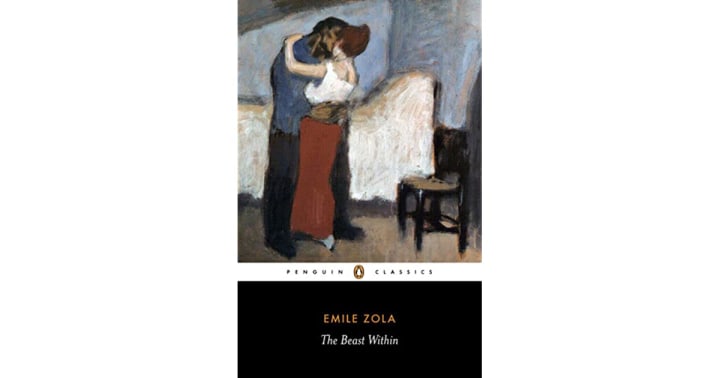
The themes of this novel are typical of a Zola, but written in an atypical style. The themes can be thought of as the following: love, death, violence, madness, retribution, psychology, terror, robbery and crime, motives and innocence, imprisonment and money. Murder seems to be at the centre of the way in which we read the novel, it makes absolutely no sense to think of it any other way. When I read it for the first time, I thought that I wanted to look at it from a violent, flagrant and murderous point of view and it reads like its a tale of a set of people who are just becoming a part of the human condition of not getting what they want in times of great desperation. The money and property involved are at the centre and often, these are at the centre of novels about people wanting to kill each other, committing affairs and crimes etc. But, when we look at the atypical things about a Zola novel, we see that the psychological torture is there but then there seems to be an element of the want to be good throughout it. There are people that want to get ‘better’ whereas, in other Zola novels, this doesn’t seem to be the case. Severine seems to want a calm and peaceful life, but then she goes back on herself until Lantier is injured. Only then does she come back to the calm.
The symbol of trains is so strong in this novel that its almost unreal. The train journeys are as is in other Zola novels and I think that it really makes a difference to the way you see the novel. For example: this is the way in which we tell that the psychological problems are more modern than others. The trains going by shows us the sheer depth of the situation and the way in which it is ingrained into the very heart of the changing times. We suddenly have property law and monetary inheritance. It is a mad book with dangerous attitudes towards war but it is typical Zola in every sense of the word. It is brilliant in every way.
I think more people should read this novel because there are so many things to discover through the madness of the characters and so many things to rediscover upon you’re next read on the laws, morals etc. that govern their lives. I would recommend this to everyone who loves gothic novels, irony, modernity, dystopias and romanticism. It is a beautiful novel that I wish to read again someday for its pure darkness. It is amazingly dark.
About the Creator
Annie Kapur
I am:
🙋🏽♀️ Annie
📚 Avid Reader
📝 Reviewer and Commentator
🎓 Post-Grad Millennial (M.A)
***
I have:
📖 280K+ reads on Vocal
🫶🏼 Love for reading & research
🦋/X @AnnieWithBooks
***
🏡 UK
Keep reading
More stories from Annie Kapur and writers in Geeks and other communities.
“The House of the Spirits” by Isabel Allende
I first read this book whilst I was in university, I was about 20 years’ old and it was the first semester of the new year. I spent a lot of time reading this book and so, I got it completed in just under two days. The reading experience of it was absolutely brilliant and so very immersive. For the next year and half I could not stop talking about it. I kept recommending it to everyone and everyone I knew who had read it, loved it so very much. I was completely enamoured with the characters, the atmosphere and the whole rich cultural history of the book. I read it more than once obviously because this book changed my perception of the entire aspect of Latin American Fiction altogether. It was one of those books which allowed my scope to expand ten-fold and after that, I proceeded to read everything by Isabel Allende. But nothing was quite as an experience as “The House of the Spirits”.
By Annie Kapur6 years ago in Geeks
Silver Screen Magic with Mae West
American actress and singer Mae West became a popular film actress during the Great Depression. She started entertaining in vaudeville, then performed on Broadway, and finally went to Hollywood. She signed up with Paramount Pictures and made her debut in the 1932 film “Night After Night.” She also starred in musicals, comedies, and crime dramas. The American Film Institute named her one of the best classic Hollywood actresses.
By Rasma Raisters7 days ago in Geeks
Freezing Rain and Ice Disrupt Travel Across Central and Eastern Europe
Dangerous winter weather brings chaos to roads, rails, and airports as authorities urge caution A powerful wave of freezing rain and ice storms has swept across large parts of central and eastern Europe, bringing daily life to a near standstill and creating hazardous travel conditions for millions. From Germany and Austria to Poland, the Czech Republic, and parts of the Balkans, ice-coated roads, grounded flights, and disrupted rail services have turned routine journeys into dangerous ordeals. Meteorologists warn that freezing rain — one of the most treacherous winter weather phenomena — poses a greater risk than snowfall because it creates an invisible glaze of ice that is nearly impossible to detect until it is too late. What Is Freezing Rain and Why Is It So Dangerous? Freezing rain occurs when rain falls through a layer of warm air and then passes into sub-zero temperatures near the ground. Instead of freezing mid-air like snow, the rain remains liquid until it hits a cold surface, where it instantly turns to ice. The result is black ice — a thin, transparent layer that covers roads, sidewalks, power lines, aircraft wings, and railway tracks. Unlike snow, it offers no traction and is extremely difficult to remove. Experts describe freezing rain as one of winter’s most dangerous hazards, capable of crippling transport networks within hours. Travel Chaos Across the Region Across central and eastern Europe, the effects have been swift and severe. Major highways have reported multi-vehicle accidents, while local roads have become impassable in rural and mountainous areas. In several countries, authorities temporarily closed sections of motorways after trucks jackknifed on ice-slick surfaces. Rail networks were also hit hard. Ice accumulation on overhead lines caused power failures and signal disruptions, forcing trains to run at reduced speeds or be canceled altogether. Thousands of passengers were stranded at stations as operators struggled to keep services running safely. Air travel faced similar challenges. Airports in Germany, Poland, and the Czech Republic reported delays and cancellations as aircraft required repeated de-icing. Even a thin layer of ice can dramatically affect an aircraft’s lift, making safety checks essential but time-consuming. Emergency Services Under Pressure Emergency responders across the region were stretched thin as calls surged. Ambulances struggled to reach patients on icy streets, while fire brigades responded to accidents, fallen trees, and damaged power lines. Hospitals also reported a rise in slip-and-fall injuries, particularly among older residents. Broken bones, head injuries, and hypothermia cases increased as people attempted to navigate frozen sidewalks. Authorities urged residents to avoid non-essential travel and to remain indoors whenever possible. Power Outages and Infrastructure Damage Beyond transport, the ice storm also affected energy infrastructure. Ice-laden power lines sagged and snapped under the weight, leading to localized power outages in several regions. In rural areas, repair crews faced dangerous conditions as they worked to restore electricity. Icy roads slowed response times, leaving some communities without power for extended periods during freezing temperatures. Telecommunications networks also experienced disruptions, further complicating emergency response efforts. Economic Impact and Business Disruptions The freezing rain has had an immediate economic impact. Delivery services were delayed, factories reduced shifts due to staff shortages, and retailers reported lower foot traffic as customers stayed home. Logistics companies warned that prolonged icy conditions could disrupt supply chains, particularly for food and medical supplies that rely on just-in-time delivery systems. Tourism was also affected, with winter destinations reporting canceled bookings and delayed arrivals, even as ski resorts benefited from colder temperatures at higher elevations. Climate Change and Extreme Winter Weather Scientists point out that climate change may be contributing to more frequent freezing rain events. As winters become warmer overall, temperatures often hover around the freezing point — the exact conditions needed for freezing rain. This creates a paradox where regions experience fewer snowstorms but more ice storms, which can be far more destructive. Climatologists warn that infrastructure across Europe was largely designed for snow, not prolonged ice events, leaving cities vulnerable as weather patterns evolve. Authorities Urge Vigilance Governments and meteorological agencies issued repeated warnings, advising drivers to reduce speed, increase braking distance, and equip vehicles with winter tires and emergency kits. Pedestrians were encouraged to wear non-slip footwear and use handrails whenever possible. Schools in several areas shifted to remote learning to reduce travel risks. Officials emphasized that patience and caution save lives, reminding citizens that even experienced drivers cannot control a vehicle on black ice. Looking Ahead Forecasts suggest that temperatures may gradually rise in some areas, easing icy conditions, while others could face additional freezing rain before the system moves on. Cleanup and repairs are expected to continue for days, even after the weather improves. The freezing rain sweeping across central and eastern Europe serves as a stark reminder that winter’s most dangerous storms are not always the most visible. As climate patterns continue to change, authorities and citizens alike may need to rethink how they prepare for — and respond to — ice, not just snow.
By Fiaz Ahmed Brohi6 days ago in Geeks
A Dart at Dusk
Seconds ago, the sullen sun set on the two of us… my exuberant furry companion and me. A fresh breeze embraces us, delivering welcome relief from the day’s oppressive heat. His typical stumbling and staggering along — apace with a sloth — has turned into trip-trapping, high-stepping, almost skipping along.
By Angie the Archivist 📚🪶6 days ago in Petlife


Comments
There are no comments for this story
Be the first to respond and start the conversation.