
Book Review: "Surrounded by Vampires" by Thomas Erikson
3/5 - yes, I'm still reading this series despite thinking it has huge problems...

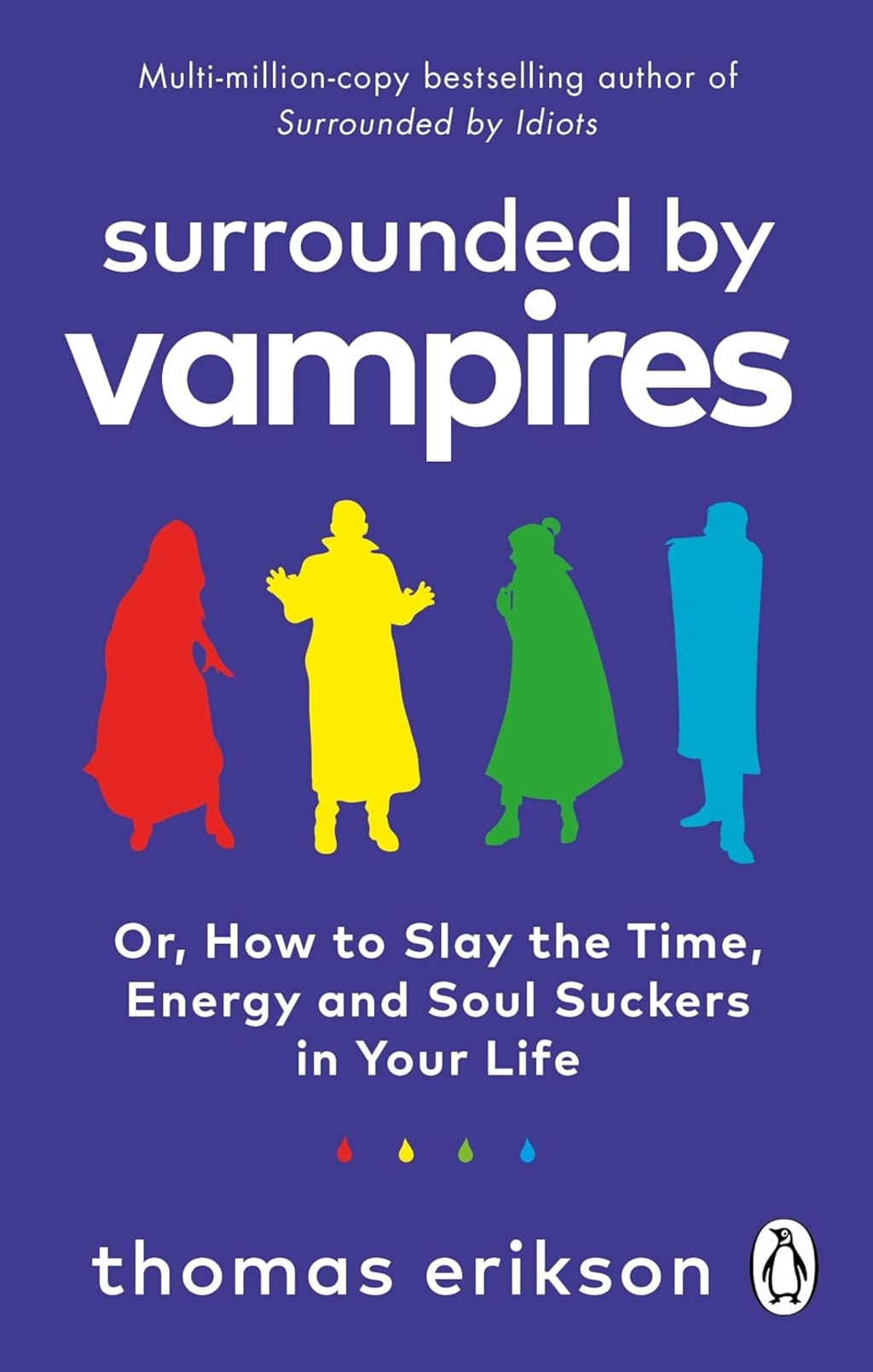
I know what you're thinking: she had such bad things to say about the data problems in the other books of this series, why the hell is she still reading them? Well, that's the problem - they may have data problems but my gosh, are they addictive to read. I do not think I have yet read them all, but here are some of the other reviews I have written about them:
Here's Surrounded by Narcissists
So, I think you can see why I have actually continued reading this series. To be honest, it just seems right at the moment. Filled with anecdotes and often narratives that are long and convoluted just to make a very small point, these books do have a huge data problem. But, there is something about these books that have a pull on me. This includes the weird coloured disc theory that he keeps doing in each book, applying the colours red, green, yellow and blue to different personality types.
Erikson introduces the concept of “energy vampires”—individuals who drain the energy, focus, and positivity of those around them. These people can take many forms, from overly needy friends and manipulative colleagues to overbearing family members. Erikson helps readers identify such individuals by outlining their behaviours, such as constant complaints, emotional manipulation, and a lack of accountability. This has no data, obviously, but I like the relatability of it. I can think of about four energy vampires I know in my workplace. I will not, however, mention who they are.
The book delves into the psychological toll of dealing with energy vampires. Erikson explains how prolonged exposure can lead to stress, anxiety, burnout, and a diminished sense of self-worth. By using anecdotes and research, he highlights the subtle ways in which these individuals can undermine confidence and create toxic environments, both personally and professionally. The pedantic nature of an energy vampire means that whatever we do, as the book states, we cannot meet the demands of the energy vampire as they continue to shovel useless work on to those who actually have to do it.

Erikson revisits his framework of four behavioural types—Reds, Blues, Yellows, and Greens—and explores how each type interacts with energy vampires. He explains the specific vulnerabilities of each type:
- Reds may fall prey to vampires who manipulate through flattery or ambition.
- Blues are susceptible to guilt trips and perfectionist demands.
- Yellows might struggle to set boundaries with overly negative individuals.
- Greens often give too much of themselves to maintain peace, making them easy targets.
This is what I was talking about in the introduction and I believe this is why I keep coming back to these books even though I have expressed not taking them too seriously. I'm probably a mixture between blue and yellow myself, but I think that there is room to say that I know a lot of people who are reds and therefore, experience those weird emotional burnouts.

Erikson provides a detailed breakdown of emotional manipulation tactics, such as gaslighting, guilt-tripping, and passive-aggressiveness. He teaches readers to spot these behaviours early, emphasising the importance of recognising patterns rather than isolated incidents. Real-world examples illustrate how energy vampires use these tactics to control others subtly. If I could count how many people in my life that I know of to be absolute energy vampires (not just have work), I would run out of fingers on my hands and toes on my feet. Honestly, it is strange how many people are actually energy vampires.
The workplace is a common setting for energy vampires, and Erikson dedicates a section to dealing with difficult colleagues, bosses, and clients. He outlines strategies such as documenting interactions, using assertive communication, and seeking support from HR or management. He also advises on how to protect one’s professional reputation while maintaining boundaries. When talking about this for the first time earlier in the book, the author goes through the way in which he was surrounded with them in the workplace a while ago. Assertiveness might work, but I think that if you are too low on the pecking order and the energy vampire is somewhere at the top, you are wading into unknown waters and possibly, putting yourself at risk of being fired for offending the idiot who is getting in your way.
All in all, Erikson concludes by encouraging readers to cultivate a supportive, positive environment in their lives. This includes surrounding oneself with uplifting people, fostering healthy relationships, and practising self-care. He highlights the importance of focusing on what can be controlled, letting go of toxic influences, and prioritising personal growth and happiness. Though this is great on paper, I cannot see this always working in practice.
About the Creator
Annie Kapur
I am:
🙋🏽♀️ Annie
📚 Avid Reader
📝 Reviewer and Commentator
🎓 Post-Grad Millennial (M.A)
***
I have:
📖 280K+ reads on Vocal
🫶🏼 Love for reading & research
🦋/X @AnnieWithBooks
***
🏡 UK
Keep reading
More stories from Annie Kapur and writers in Geeks and other communities.
Book Review: "The Human Mind" by Paul Bloom
As you know I'm on a binge-read of all things mental health nonfiction and in fiction, I'm reading about disasters on the sea (this is as of the 13th of December and today is the 20th of December). It's getting closer to Christmas and I'm proud to be saying that in a couple of days I will be returning to my hometown for a bit in order to spend time with my family. This is where my Kindle can come in handy because it has everything I would like to read in that time on there. I even read this book on my Kindle entitled: The Human Mind by Paul Bloom. Taking a deeper dive into the brain, this book is the perfect accompaniment to reading about mental health and its sufferings. It really does explain everything.
By Annie Kapurabout a year ago in Geeks
The Rachels - 2025
Much to my surprise, I have kept a list of the films I‘ve seen this year. I daresay it isn’t complete. There will be films that snuck in on a late night in front of the TV that I would’ve forgotten to note. Or others, that I went to watch at the cinema, but then had a red wine and promptly forgotten about. But it’s not a bad approximation of the films I’ve seen this year. In total, there are 53 films listed, so an average of one a week and one for good luck.
By Rachel Robbins26 days ago in Geeks


Comments
There are no comments for this story
Be the first to respond and start the conversation.