
Book Review: "Stone Yard Devotional" by Charlotte Wood
5/5 - death, chaos and grief within a narrator's unquiet mind...

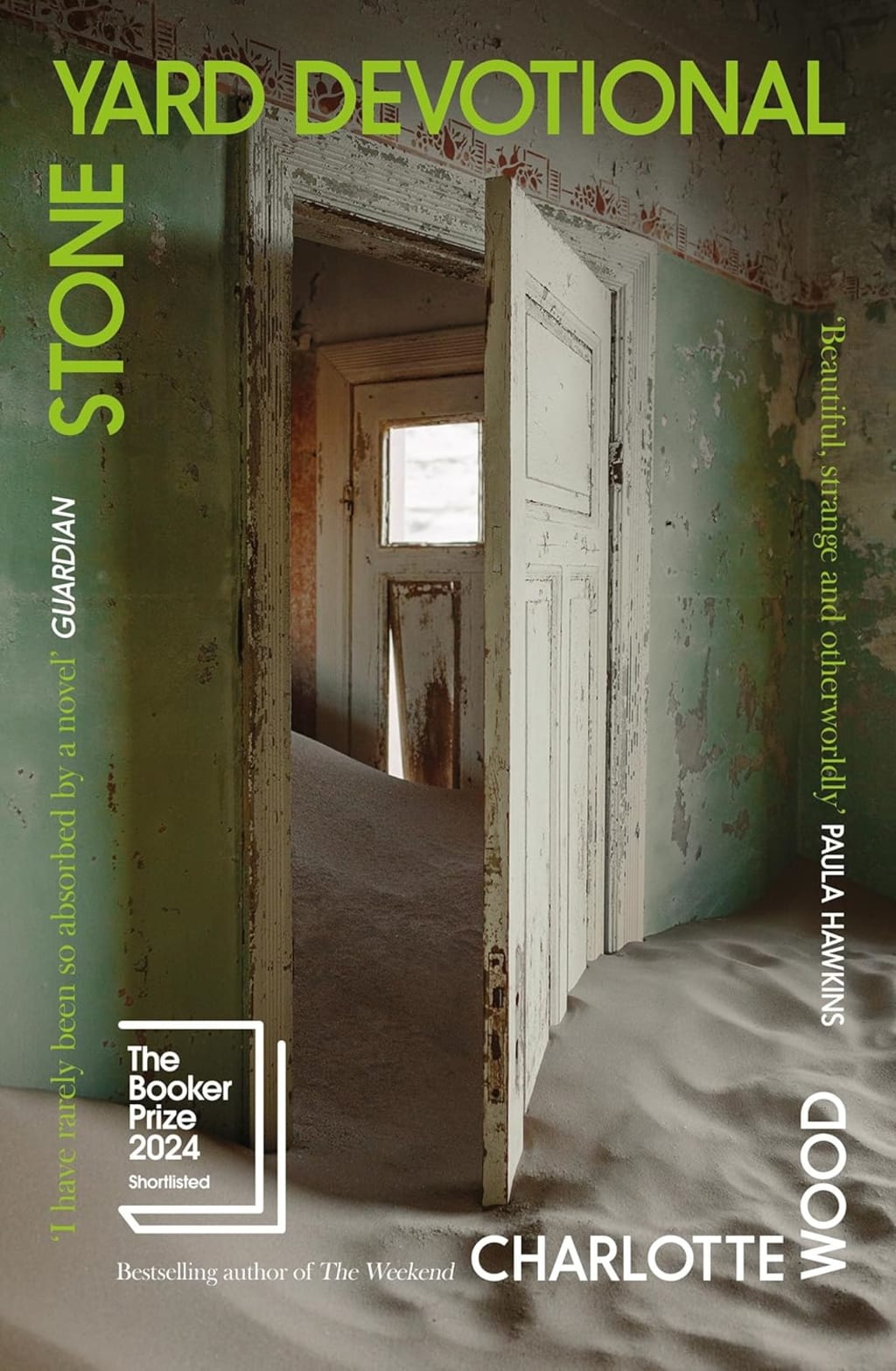
I was trying to read as many of the Booker Prize nominees as I could and now that I've learnt that Orbital has won, I can honestly say...what the hell is going on? It was probably by far, the worst choice out of the whole shortlist and yet, here we are. I was very upset that James by Percival Everett didn't win because it is objectively a much better book. I have a feeling that there have been things further than literary prowess that made the win for Samantha Harvey's pointless novel. Even this book, entitled Stone Yard Devotional, deserved it more.
The novel begins with the unnamed narrator’s return to her parents’ graves, which she visits for the first time in more than thirty years. Standing at the grave sites, she feels a wave of complex emotions she had tried to bury. In the quiet of the cemetery, she sees the nuns from a nearby convent performing their daily tasks with quiet dedication, a scene that catches her attention as she contemplates her own life.
Once a passionate conservationist, she is now overwhelmed by despair, weighed down by the futility she feels in her efforts to protect wildlife and address looming environmental crises. Despite her dedication, her work at the Threatened Species Rescue Centre feels ineffective in the face of an impending climate catastrophe. This crisis and the feeling of powerlessness push her to make a life-altering decision, leaving her career and her husband to join the convent in New South Wales.

Now, the opening to the text presents us with the immediate theme of death, but it also presents us with much more subtle themes such as grief and regret which will be explored when we meet the character of Helen Parry in the text and the narrator becomes to feel sorry for her previous treatment. The book does well to misdirect the reader slightly into thinking this will simply be a novel about feeling sad about people dying - instead it is more introspective than that. It becomes a novel more about how death and loss changes us more than anything else.
The peace of the convent is disrupted by the arrival of Sister Jenny’s body, sent back to the convent for reburial. Sister Jenny, who had been murdered while working in Thailand, is accompanied by Helen Parry, the convent’s most famous nun, who is also a well-known environmental and human rights activist. The narrator recognises Helen Parry as a former schoolmate whom she and others had bullied.
Seeing her now as a confident and accomplished woman, the narrator is confronted with feelings of shame and regret over her past behaviour. Helen Parry’s presence is unsettling not only because of their shared history but also because she brings troubling news of the escalating climate crisis—precisely the kind of distressing information the narrator had hoped to escape by coming to the convent.
The delusional sense of reality the narrator has about wanting to escape all forms of life by joining a convent is met with the actual realities of being in a convent through the consistent reminders she gets about the feelings she had initially about visiting her parents' graves.
First and foremost, there's the reminder that all life is chaos, then we have the regret and grief over not doing something (visiting the graves vs. apologising to Helen Parry) and finally, we have the confrontation with death which comes in the form of Sister Jenny. The narrator slowly realises that trying to escape herself by trying and trying for routines to let her ignore it won't help and, as the mice populate the novel, this becomes more and more apparent.
I won't say entirely what happens at the end but it is something hugely symbollic. I will say this however: do not go into this novel with a closed mind just because you feel like nothing is happening from time to time. There is something about the quiet inside the actions vs. the chaos in the narrator's head that is supposed look like a juxtaposition. I'm sure that the more you get into the book, the more you will come to understand why it is written the way it is. To be perfectly honest, it is very, very clever.
About the Creator
Annie Kapur
I am:
🙋🏽♀️ Annie
📚 Avid Reader
📝 Reviewer and Commentator
🎓 Post-Grad Millennial (M.A)
***
I have:
📖 280K+ reads on Vocal
🫶🏼 Love for reading & research
🦋/X @AnnieWithBooks
***
🏡 UK
Keep reading
More stories from Annie Kapur and writers in Geeks and other communities.
Book Review: "Why Read?" by Will Self
I like to read books about reading but I'm not someone who usually likes to read Will Self because I find him self-indulgent. He's like David Foster Wallace if all David Foster Wallace did was wrote about himself. In the book 'Why Read?', Will Self discusses everything from shelving to Chernobyl and gives us an insight into his thoughts no matter how purposefully obtruse he is with them. Some of these points I can get on board with whilst others are slow, and then again others can also be beyond stupid. It's probably good that this book frustrated me because it has made me understand why I don't read books by Will Self.
By Annie Kapurabout a year ago in Geeks
Marvel Zombie
The last entry into our 2025 superhero projects catalogue is Marvel Zombies. This was a show that was anticipated by absolutely no one and it disappeared from the public consciousness as quickly as it was released. There was nothing special about the project that made it a must see, or a must remember. In fact if anything it's a must forget.
By Alexandrea Callaghan25 days ago in Geeks
Sabrina Carpenter To Appear In Her First-Ever Super Bowl Ad
Sabrina Carpenter will appear in her first-ever Super Bowl advertisement during the big game in early February. Carpenter is featured in a Pringles campaign, to be aired during Super Bowl LX on February 8.
By Dena Falken Esqabout 17 hours ago in Geeks




Comments
There are no comments for this story
Be the first to respond and start the conversation.