
Book Review: "Why Read?" by Will Self
2.5/5 - It would've been better if it wasn't written by Will Self...

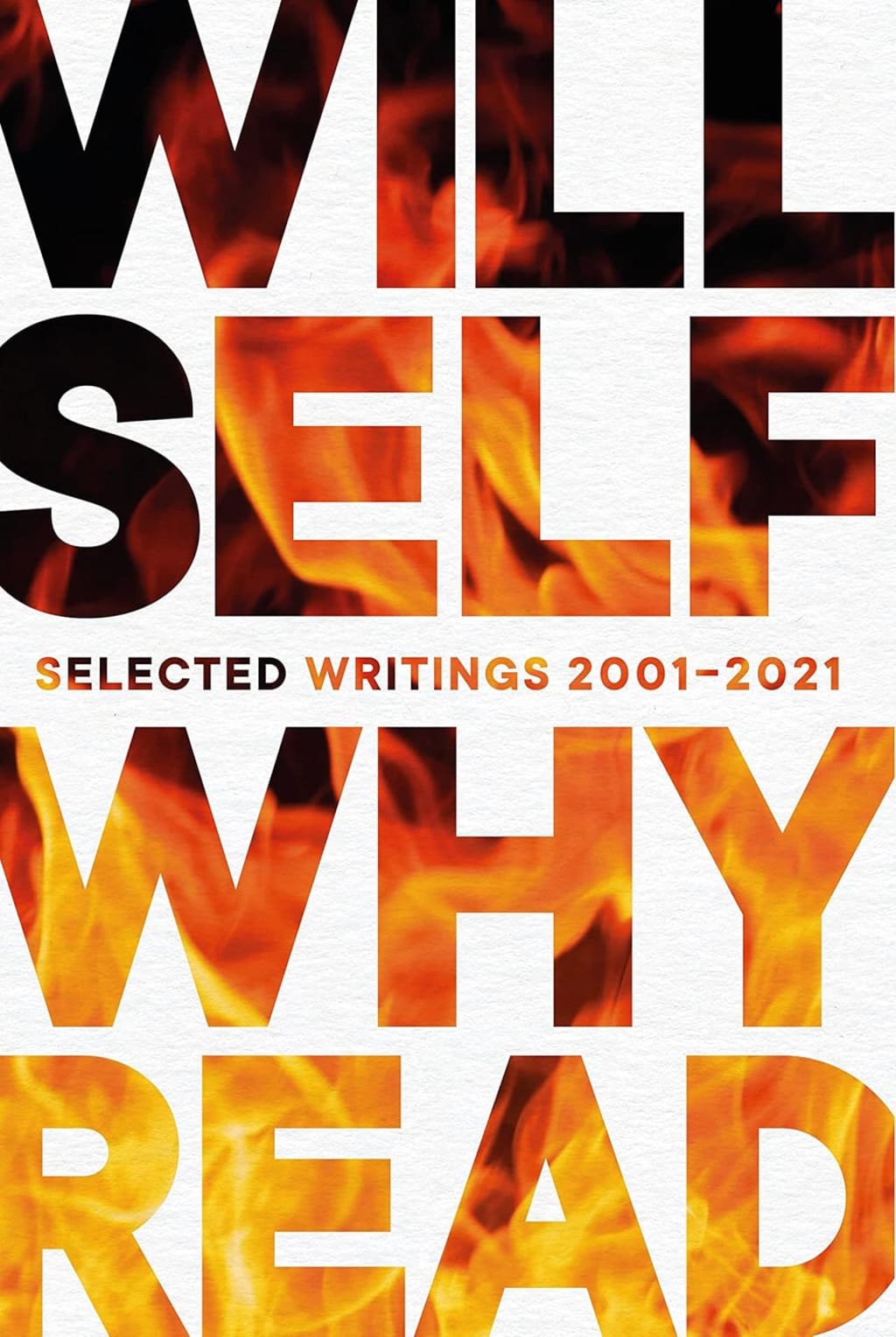
I like to read books about reading but I'm not someone who usually likes to read Will Self because I find him self-indulgent. He's like David Foster Wallace if all David Foster Wallace did was wrote about himself. In the book 'Why Read?', Will Self discusses everything from shelving to Chernobyl and gives us an insight into his thoughts no matter how purposefully obtruse he is with them. Some of these points I can get on board with whilst others are slow, and then again others can also be beyond stupid. It's probably good that this book frustrated me because it has made me understand why I don't read books by Will Self.
Self emphasises that reading is more than absorbing information; it’s an intimate journey into the self. He argues that engaging with literature can stimulate introspection, allowing readers to confront and examine their own values, emotions, and beliefs. By encountering diverse narratives, readers can expand their understanding of the world and develop a more nuanced sense of identity. Self suggests that this process of self-discovery is critical for personal growth, as it requires readers to wrestle with complex ideas and differing perspectives.
Literature, according to the author, offers a mirror that reflects both the reader’s conscious and unconscious thoughts, making it an essential tool for inner exploration and intellectual growth. Now, this is something I can agree with. We should all be reading as a journey of discovering our own beliefs, our own modes of comprehension and to challenge and wrestle with things we once thought to be truths. This is the whole process of learning and though it's badly written, I agree with him here.
He advocates for an approach to reading that is unhurried and open-ended. He suggests that readers should allow themselves to drift through books, rather than seeking immediate comprehension or closure. This approach encourages a curiosity-driven reading experience, where the emphasis is on exploration rather than mastery. Self believes that this openness fosters a deeper connection to the text, as readers engage more personally with each story’s ambiguity and complexity. By reading without rigid expectations, readers can appreciate the richness of literature and make discoveries that resonate on a personal level.
He contrasts this with a culture that increasingly demands instant understanding and certainty, which can strip reading of its deeper, meditative qualities. I want to completely agree with this but what I don't agree with is his tendency to believe that he is the great mediator and voice of why we should be reading. Curiosity-driven experiences are great when you're reading for pleasure, but there are times when perhaps you have to read in order to understand concepts or your work. These should be driven by the requirement to comprehend and pleasure and curiosity should come second. Be that as it may, I somewhat agree with the meditative qualities related to reading that we should allow ourselves to return to.
In essays like “The Death of the Shelf,” Self reflects on the decline of physical bookshelves and the role they once played in homes as symbols of intellectual curiosity and conversation starters. He describes the bookshelf as a cultural artefact that represented a person’s reading history and interests, acting as a physical repository of knowledge. Now, as e-books and digital collections replace physical libraries, Self believes that some of the intimacy and reverence associated with physical books are lost.
He worries that without the tangible presence of books, society may lose an important connection to literature’s legacy and cultural weight. He implies that the shift to digital reading may make reading a more solitary, less communal activity, changing how we interact with literature and with each other. Well, seeing as reading is meant to be a solitary activity, I don't think this is a problem. I also think as a reading community, e-readers move us away from the ableist attitude to reading which previously existed (and still exists in the realms of Instagram).
On the whole, I think this was not a bad book but some of the arguments were just badly presented. Purposefully obtruse and riddled with archaic terminology and outdated language, this book would only be accessible to people like you and me who regularly read. Someone who would want to get into reading would not find this as accessible and therefore, does this book not cease to serve its key purpose - making people want to read more consciously? I think it does.
About the Creator
Annie Kapur
I am:
🙋🏽♀️ Annie
📚 Avid Reader
📝 Reviewer and Commentator
🎓 Post-Grad Millennial (M.A)
***
I have:
📖 280K+ reads on Vocal
🫶🏼 Love for reading & research
🦋/X @AnnieWithBooks
***
🏡 UK
Keep reading
More stories from Annie Kapur and writers in Geeks and other communities.
Book Review: “The Barn” by Wright Thompson
I heard about this book through my recent reading of nonfiction books and scrolling endlessly through nonfiction pages on publishing house websites. I think I have always been interested in the story of Emmett Till because there seems to be a lot of details that people remember differently, or details that have simply been left out - but almost 70 years' on, the story is more relevant than ever. This is not just because of the terrors of racism, but because of the fact we often forget that this was a child. Wright Thompson does a brilliant job of piecing together a story that is much bigger than a horrific night in 1955 - it was in fact, the cradle of American Racism.
By Annie Kapurabout a year ago in Geeks
The Rachels - 2025
Much to my surprise, I have kept a list of the films I‘ve seen this year. I daresay it isn’t complete. There will be films that snuck in on a late night in front of the TV that I would’ve forgotten to note. Or others, that I went to watch at the cinema, but then had a red wine and promptly forgotten about. But it’s not a bad approximation of the films I’ve seen this year. In total, there are 53 films listed, so an average of one a week and one for good luck.
By Rachel Robbins25 days ago in Geeks
How Old Is Usha Vance? Everything to Know About JD Vance’s Wife
How Old Is Usha Vance? Everything to Know About JD Vance’s Wife Usha Vance has become a well-known public figure in the United States. As the wife of Vice President JD Vance and the Second Lady of the United States, she often appears at important public events and official ceremonies. Many people are now curious about her age, background, family, and life story. This article shares those details in a clear and respectful way. Who Is Usha Vance? Usha Vance, whose full name is Usha Bala Chilukuri Vance, is the wife of JD Vance. Since her husband entered national office, she has gained public attention for her calm personality and supportive role. She is often seen attending official events, community programs, and national ceremonies. One of her most visible appearances was during the 2025 presidential inauguration, where many people began searching online to learn more about her. Usha is not only known for her public role. She is also a trained lawyer with a strong academic background. Her education and career have helped shape her reputation as an intelligent and thoughtful public figure. How Old Is Usha Vance? One of the most common questions people ask online is: How old is JD Vance’s wife? Usha Vance is currently 40 years old. She was born on January 6, 1986. Her husband, JD Vance, is 41 years old. He was born on August 2, 1984. Their close ages and shared life journey make their story relatable to many couples. How Did JD Vance and Usha Vance Meet? JD Vance and Usha Vance met while studying at Yale Law School. Their friendship grew during their time as students, and over time their relationship became stronger. They got married in 2014 after completing their studies. Many people find their story inspiring because it began with education, respect, and shared goals. Their Interfaith Marriage Usha Vance practices Hinduism, while JD Vance practices Christianity. When they married, they chose to honor both traditions by holding an interfaith wedding ceremony. This part of their story is often appreciated by people from different backgrounds, as it shows mutual respect and understanding between cultures. Usha Vance’s Role as Second Lady As the Second Lady of the United States, Usha Vance attends public events, supports social causes, and represents the nation alongside her husband. She has become a familiar face at official programs and national gatherings. Many people describe her public presence as calm, respectful, and thoughtful. Her professional background as a lawyer also adds to the public’s respect for her role. She is seen not just as a political spouse, but as someone with her own identity, education, and experience. Do JD Vance and Usha Vance Have Children? Yes, JD and Usha Vance are parents. They currently have three children and often speak about how important family is to them. In January 2026, the couple announced that they are expecting their fourth child. This news was warmly received and showed that, even with busy public lives, family remains a top priority for them. Why Are People Interested in Usha Vance? Public interest in Usha Vance continues to grow for several reasons: She is the Second Lady of the United States She is a lawyer with a strong educational background She supports her husband at major public events She represents a respectful interfaith marriage She is raising a growing family in the public eye Many readers find her story inspiring because it reflects balance between career, family, and public life. Final Thoughts Usha Vance’s journey from law student to Second Lady of the United States has attracted attention across the country. At 40 years old, she balances many roles — wife, mother, professional, and public figure — with grace and confidence. Her background, education, and family life make her someone many people are interested in learning about. As her public role continues to grow, it is clear that Usha Vance is becoming known not only as JD Vance’s wife, but as a respected public figure in her own right.
By Farhan Khanabout 7 hours ago in Geeks




Comments (1)
The reason why I don't read Will Self is that he cannot write. I thank you for this one, and I think I may still look through it...without adding it to my shelf. ;)