
Book Review: "Saving Agnes" by Rachel Cusk
3.5/5 - ...the dystopian mindset cannot possibly perceive authenticity, but why?...

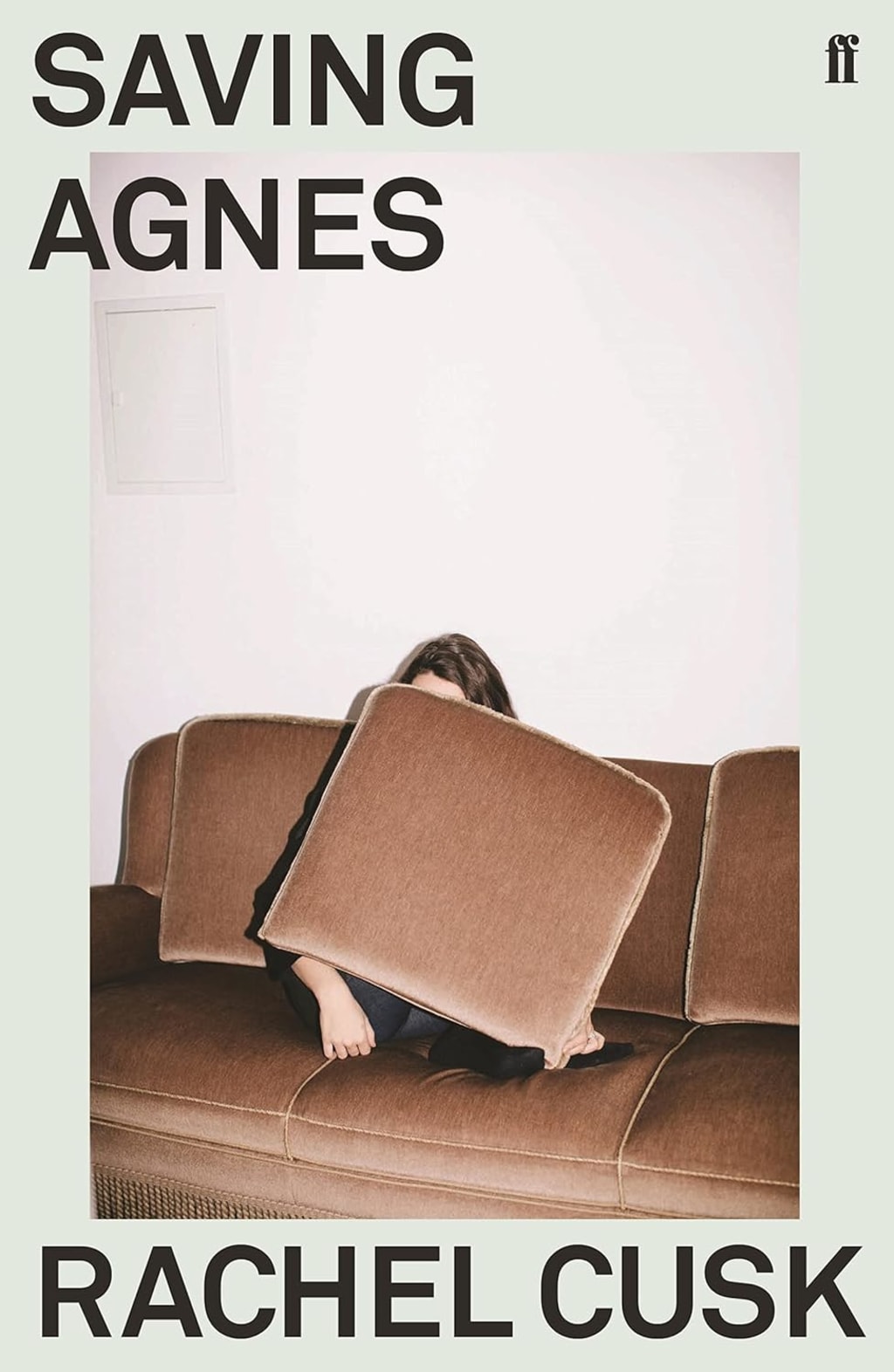
I've read some of Rachel Cusk's autobiographical novels in my time. One of the more recent and more positive ones was called Transit - you can read the 5/5 review here if you wish. I've also read books like Parade, Outline and some others. It can be a hit and miss for me if I'm in the wrong mood and so, I have to be in a very certain way to read her books. Sometimes, I will read them at the wrong moment and it will kind of let it down a bit for me. It's only proof that time of reading also matters. Let's take a look at Saving Agnes, another Rachel Cusk novel...
The novel opens with Agnes Day, a young woman in her early twenties, living in London. She has a job in publishing, a boyfriend, and friends, but she feels disconnected from it all, as though she is inhabiting someone else’s life. This is a clear comment about modern work culture and how eventually, we just disconnect. Agnes narrates her experiences with a kind of defensive distance, as though she is both observing and mocking her own participation in life. Her dissatisfaction is subtle but all-encompassing: she cannot connect with her surroundings or with herself. This is something so prevalent in modern life that I actually believe that until we are confronted with it in someone else, we can't actually fully understand it in ourselves.
Agnes is highly literate, often well-versed in cultural references and observations, but her intelligence isolates her. She sees through the artifice of social interaction, which prevents her from engaging fully. Instead of intimacy, she lives in a state of perpetual commentary, translating events into witty detachment. I'm not going to lie to you, but this is a thing I found a bit rubbish about the character. Agnes truly believes that she is super-different and unique because of her individual observations on life that must be somehow, more intelligent and precise than anyone else's. I mean, she's just a random Reddit user at this point because they all think like that. No, Agnes honey, you're not quirky and individual, you're not perceptive and profound - your observations are just rather annoying after a while.
Agnes has a boyfriend, but the relationship is described with the same ironic detachment she applies to everything else. Their intimacy is performative rather than genuine; she cannot shed her layer of irony long enough to allow for vulnerability. At this point, the 'everything is ironic' thing is getting a bit dull. But at the same time, she envies those who seem capable of passion and belief. Her inability to commit to relationships mirrors her inability to commit to life as she hovers, observes, and withdraws, unable to risk real emotional investment. Even though it is getting dull, as I have said, it is still a direct reflection of the detachment that many experience in modern society. The belief that whatever it is, it is never-ending. There is always something ridiculous to deal with next, always another headache. If you just switch off, then you won't experience the emotions attached to it - especially, if they are negative.
Throughout the novel, Agnes is haunted by a desire for something authentic, something real that cuts through her ironic defences. This again, is something that many people are missing from their lives. She occasionally glimpses it in fleeting moments: a glance, a fragment of conversation, an atmosphere. The lack of appreciation for the real world and the actual authenticity that is out there is something that I definitely believe, like Agnes, plagues us all. I personally don't understand terms like 'authentic' and 'present' but I don't find them ironic or intolerable. They just aren't concepts to me. But whatever Agnes is looking for, she never holds on to it. Her pursuit of authenticity therefore becomes paradoxical: the more she seeks it, the more her self-consciousness prevents her from grasping it. This tension is central to her crisis. As I understand it therefore, Agnes wants the authenticity of reality but is unable to have it because she can't let it in. Her brain has become part of the 21st century landscape - constantly looking to escape something that isn't actually there.
I enjoyed this novel even though it probably wasn't as good as some of the other Rachel Cusk books I have read. It seems that Agnes is a perfect reflection of the middle class, mid-life struggles of a woman who is basically not all there because of life getting in the way of everything. Our modern day is probably much worse than this now and though this isn't a book of warning, it is definitely interesting to see the dystopian mindset dialled back.
About the Creator
Annie Kapur
I am:
🙋🏽♀️ Annie
📚 Avid Reader
📝 Reviewer and Commentator
🎓 Post-Grad Millennial (M.A)
***
I have:
📖 280K+ reads on Vocal
🫶🏼 Love for reading & research
🦋/X @AnnieWithBooks
***
🏡 UK
Keep reading
More stories from Annie Kapur and writers in Geeks and other communities.
Book Review: "Behave" by Robert Sapolsky
I read this a while ago and I decided I would give it another go. I had it on my phone and one thing I found is that I was just in a terrible mood when I read it, which means of course that because it is a nonfiction book, I was trying to find holes in everything. Well, now that I'm in a better mood, I'm going to go through this book properly and comment on the things I found particularly intriguing. And yes, I do actually find it intriguing.
By Annie Kapur4 months ago in Geeks
Silver Screen Magic with Mae West
American actress and singer Mae West became a popular film actress during the Great Depression. She started entertaining in vaudeville, then performed on Broadway, and finally went to Hollywood. She signed up with Paramount Pictures and made her debut in the 1932 film “Night After Night.” She also starred in musicals, comedies, and crime dramas. The American Film Institute named her one of the best classic Hollywood actresses.
By Rasma Raisters6 days ago in Geeks
Allu Arjun and Lokesh Kanagaraj to collaborate on a high-budget film? Director reportedly offered Rs 75 crore
Allu Arjun has been making headlines after speculation suggested that he would be joining hands with director Lokesh Kanagaraj for a film. Now, it appears that the project might go on floors soon, with reports claiming that the filmmaker will be paid a massive remuneration.
By Dena Falken Esq7 days ago in Geeks
Miss Persephone's Manual to a Seemingly Ordinary Life
Miss Persephone was found at the dining table, her blue eyes swollen, her tears arriving and retreating like the tides of the ocean. Earlier that day, her family had visited her in the retirement home where she had lived for eight years. It was her eightieth birthday.
By Imola Tóth4 days ago in Fiction


Comments (2)
Oh my, I don't think I could tolerate Agnes. She seems very annoying, lol. Loved your review!
Good Let Suport each other