
Book Review: "Transit" by Rachel Cusk
5/5 - a novel which reflects the true anxieties of unwelcome change...


Now, I've read a few novels by Rachel Cusk in the last few years and it really has been a mixed bag. Sometimes they can be fantastic and other times they brutally annoying. That might be more down to me than her though seeing as I've found out that perhaps, when reading Rachel Cusk at the right time, I can really sink into her novels of female experience. As I say again, I have read many Rachel Cusk novels over the last few years and so, I'm quite sure that her writing is really good - at least it is in Transit, the novel we will have a look at today...
Following her divorce, Faye moves to London with her two sons, purchasing a dilapidated house in an unfamiliar neighbourhood. The novel unfolds as a series of conversations and observations, revealing the shifting nature of Faye’s relationships, her evolving sense of self, and the subtle ways in which transition affects those around her. Unlike a traditional plot-driven novel, Transit is composed of fragmented interactions that collectively form a meditation on life’s uncertainties. Rachel Cusk's writing is often emotive and filled with these almost still life images that are dynamic in nature. It's like watching a modernist painting where things slowly come to life.
One of the novel’s central motifs is Faye’s crumbling new house, which serves as both a literal and metaphorical space of transition. The house, in need of significant repair, mirrors Faye’s own fractured life following her divorce. As she navigates the challenges of renovation; dealing with disruptive builders, financial strain, and an unwelcoming neighbourhood, her home becomes a reflection of her attempt to reconstruct her identity.
The process of renovation is slow, frustrating, and at times chaotic, much like the process of personal transformation. Through this symbol, Cusk suggests that rebuilding a life is neither linear nor straightforward, but rather a continuous negotiation between the past and the future. I love this symbolism because it feels extremely realistic. Who can say they have not been in a situation in their lives where things such as renovations, decorating or even simply mending things, keep going wrong and thus become tiresome?
A particularly significant element of the novel is the presence of the builders working on Faye’s house. They are loud, invasive, and unpredictable, disrupting her sense of stability. They represent the uncontrollable forces that shape our lives, reminding Faye (and the reader) of the precarious nature of existence.
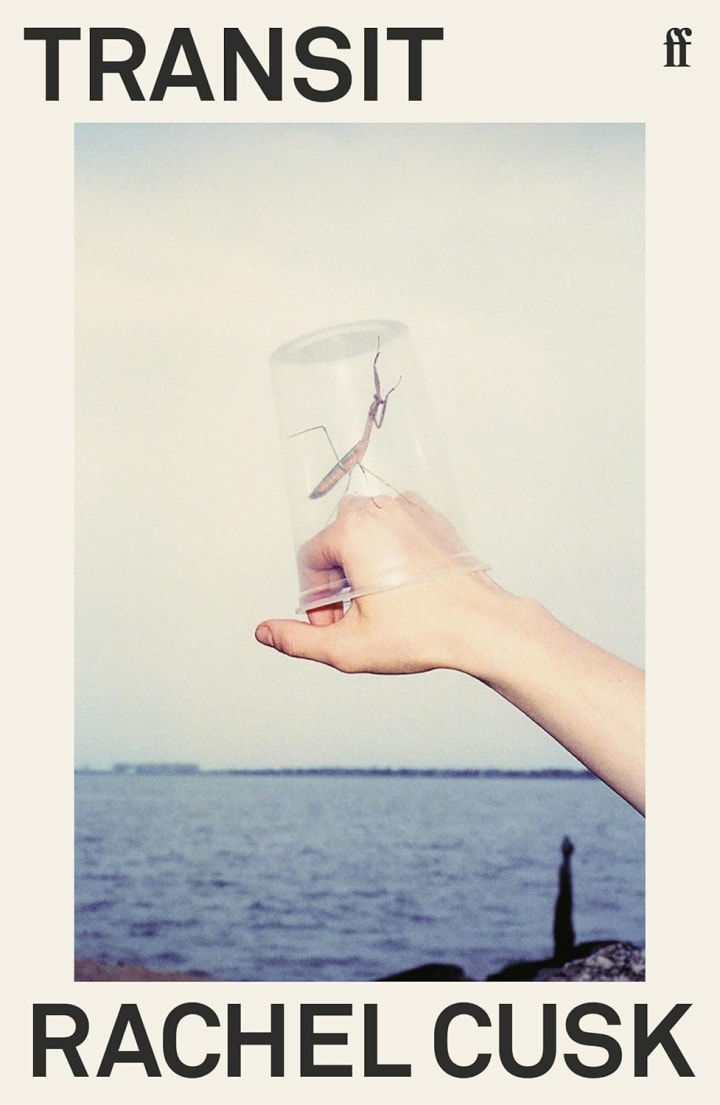
Their interactions with Faye are often tense, as they ignore her wishes and impose their own chaotic presence upon her space. This dynamic highlights themes of powerlessness and intrusion, as well as the struggle to assert agency over one’s surroundings. Now, we all hate it when builders are working on our properties but they are necessary. However, when it comes to these interactions, they had anxiety written all over them. The dialogue is often terse and halting. The stability and equilibrium are all off - it feels as though you the reader, wants to scream. The question now is about how Faye is feeling.
Faye’s transition is not just physical but also psychological. She is caught between different versions of herself: the woman she was before her divorce, the mother she is now, and the writer she is becoming. This sense of in-betweenness permeates the novel, as many of the people she encounters also seem to be in flux: moving homes, changing careers, reassessing relationships.
This theme extends beyond the personal and touches on broader cultural anxieties. The novel’s London setting, marked by gentrification and economic disparity, reflects a wider sense of instability, where people are constantly negotiating their place in an ever-shifting landscape. Let us also notice that London as a city is its own chaotic character and it changes when the life of Faye changes - it shifts with her perspective in its size and volume. Its chaos though never seems to go away, it just becomes part of the adaptation of her identity.
All in all, this is probably one of the better novels by Rachel Cusk I have read. It is highly reflective of the constant anxiety that comes with intense amounts of change and mirrors that sense of unease when the change is forced rather than wanted.
About the Creator
Annie Kapur
I am:
🙋🏽♀️ Annie
📚 Avid Reader
📝 Reviewer and Commentator
🎓 Post-Grad Millennial (M.A)
***
I have:
📖 300K+ reads on Vocal
🫶🏼 Love for reading & research
🦋/X @AnnieWithBooks
***
🏡 UK
Keep reading
More stories from Annie Kapur and writers in Geeks and other communities.
Vile Bodies by Evelyn Waugh
Vile Bodies by Evelyn Waugh was published in 1930, marking a sharp and satirical depiction of Britain’s “Bright Young Things” – a generation of wealthy, hedonistic youth who revelled in London’s party scene during the interwar years. Following his debut novel, Decline and Fall (1928), Vile Bodies solidified Waugh's reputation as a keen social commentator with a cutting sense of humour.
By Annie Kapur11 months ago in Geeks
Series To Watch
I am certainly no stranger to a tv series and everybody knows that in my life. The amount of time I have spent in my existence watching shows on the television or my computer is honestly embarrassing considering I'm not getting paid for it. Maybe someone should be paying me for it. However, it does mean I get to share it with you, dear people. I will do a list order first, don't worry.
By Lyvia Jacka day ago in Geeks
Becca
"Everything is so... flat." Denille said stupidly as she looked around her new neighborhood. She looked around at the muted desert where even the smallest sign of life seemed to have given up. The plant life was shrubs that were half cooked by the heat and where there should have been a lawn, a mess of white rocks laid glistening in the sun. Even the sky looked stretched thin, like the sun had ironed it smooth. She’d moved from Riverside, where at least there were hills, but here in Barstow, everything felt baked and brittle.
By Sara Wilson7 days ago in Fiction


Comments
There are no comments for this story
Be the first to respond and start the conversation.