
Book Review: "Behave" by Robert Sapolsky
5/5 - an intriguing book about our behaviours...


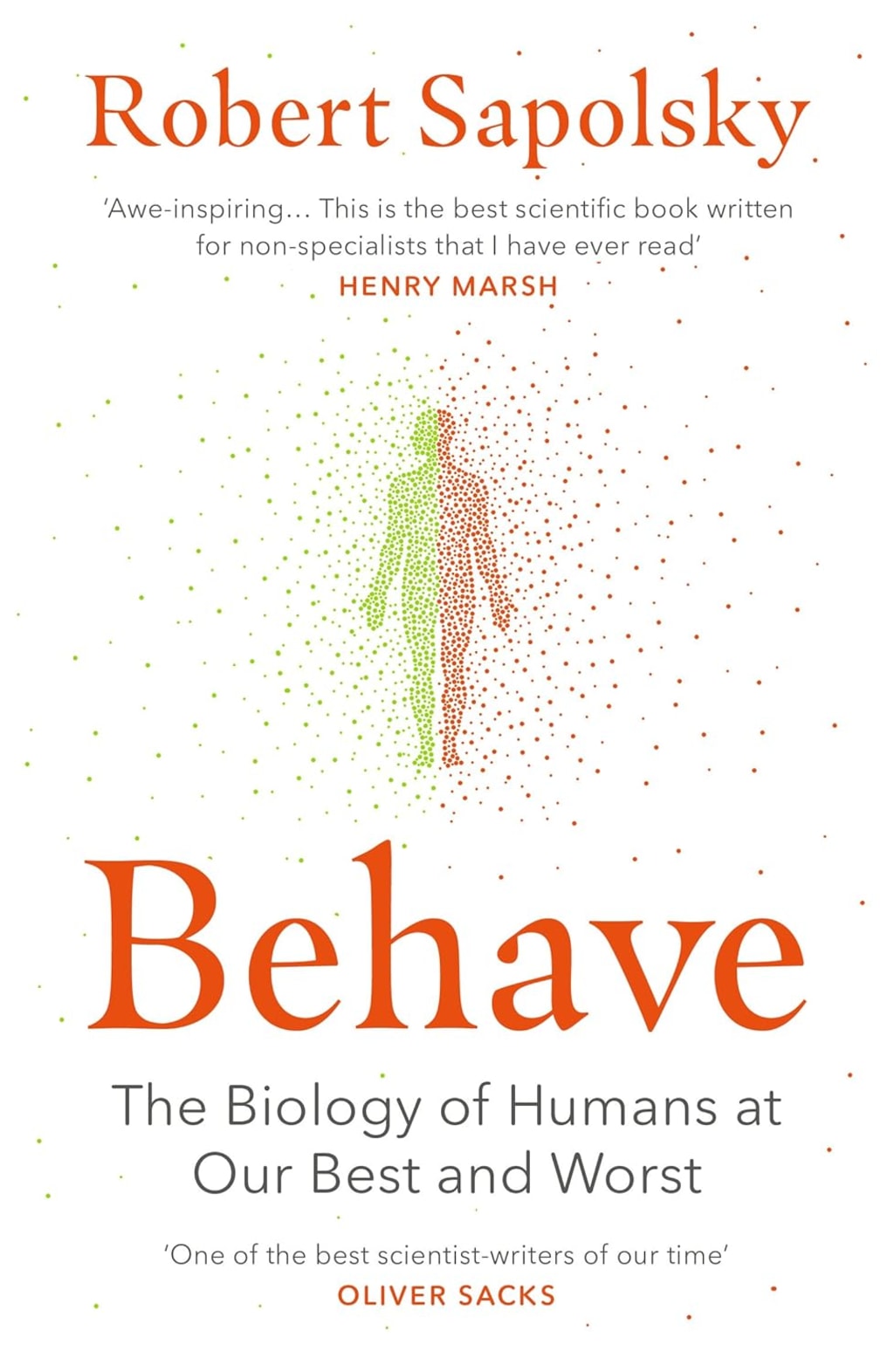
I read this a while ago and I decided I would give it another go. I had it on my phone and one thing I found is that I was just in a terrible mood when I read it, which means of course that because it is a nonfiction book, I was trying to find holes in everything. Well, now that I'm in a better mood, I'm going to go through this book properly and comment on the things I found particularly intriguing. And yes, I do actually find it intriguing.
Sapolsky begins with the moment just before a behaviour occurs. The questions we are met with are: what is firing in the brain, what neurons, what synapses? He explains how the prefrontal cortex, amygdala, and other brain regions are in charge of impulse, aggression, or restraint. He then emphasises the split-second nature of choices, showing how something like pulling a trigger or showing kindness is the result of electrical activity. I believe that something this author is doing is breaking down each of the concepts to make them easier step-by-step concepts to understand for the average reader. I am already aware of the different parts of the brain, but when it comes to electrical activity and how they 'decide' and 'do' things, I am pretty much in the dark. This book makes it into a sort of instructional guide alongside the author's own research.
He rewinds to the minutes leading up to behaviour, focusing on hormones circulating in the bloodstream. These include: cortisol, testosterone, oxytocin, dopamine. These chemical messengers influence whether we are primed for aggression, bonding, or fear. For example, testosterone can increase aggression only in certain contexts, and oxytocin, often idealised, can also increase xenophobia by promoting in-group bias. I honestly had no idea that oxytocin, which I thought was a pretty good thing, can actually be a bad thing in certain contexts. I don't think anyone is surprised that testosterone is the 'aggressive' one. But the things I have learned in this chapter about oxytocin definitely make me think about the way we interact with others a bit more, especially on a brain-chemistry level.
Sapolsky also dives into how repeated experiences shape the brain. This is something that has been very prominent in our own modern culture as we learn more about the subject of brain psychology. Learning rewires synapses; trauma or chronic stress alters the amygdala and hippocampus. Our patterns of thought and reaction are not fixed but sculpted by what we encounter repeatedly. He emphasises neuroplasticity: kindness, cruelty, fear, and resilience are built into circuits through reinforcement, practice, and environment. I often think about how I am in all of this. For example: what causes me to not be very social? It kept me thinking but honestly, I don't think I want to know.

Beyond the individual - culture, norms, and society shape what behaviours are possible or acceptable. Sapolsky therefore examines: religion, politics, and social hierarchies. He shows how they amplify or inhibit aggression, empathy, and cooperation. For example, collectivist versus individualist societies condition people to see fairness and morality differently. Even our moral “intuitions” are heavily influenced by cultural training. I've never really thought about this on this level before (which is ironic since if you've been keeping up with the blog, I was literally just reading Rousseau and 'morality' and 'justice' is his whole deal even though he too, was a pretty awful person if you really look at things).
But I definitely think that collectivist thinking inspires us to treat others as subhuman or the 'out-group' - which is something I have believed for a while. This can be nationalism looking at foreign folk with a bad eye, or religion encouraging men to beat and r*** women and children. Collectivism is by far the worse thing that can happen in terms of behaviour because it takes away all of the perceived responsibility away from the individual.
All in all, I actually quite enjoyed this book because it made me think far more than I thought I would about the way in which cultures and subcultures, societies and especially, social media, shape our worldviews and therefore our behaviours.
About the Creator
Annie Kapur
I am:
🙋🏽♀️ Annie
📚 Avid Reader
📝 Reviewer and Commentator
🎓 Post-Grad Millennial (M.A)
***
I have:
📖 300K+ reads on Vocal
🫶🏼 Love for reading & research
🦋/X @AnnieWithBooks
***
🏡 UK
Keep reading
More stories from Annie Kapur and writers in Geeks and other communities.
Book Review: "Reveries of the Solitary Walker" by Jean-Jacques Rousseau
The last time I dipped into Jean-Jacques Rousseau's Reveries of the Solitary Walker I was in university. I have to admit, I didn't actually find too much enjoyment in it and that was probably because I was reading it during some examination period so I was likely stressed out. Recently, I found a copy for free on Kindle (or at least discounted, I don't remember) and I decided to give it another go. Four years' ago I did read The Confessions by Rousseau and if you want to read my ramblings about why it's important, then click here. Otherwise, let's continue...
By Annie Kapur6 months ago in Geeks
A Knight of the Seven Kingdoms Series Review (Season 1)
As one of the biggest properties in fantasy, A Song of Ice and Fire remains immensely popular with audiences. After reaching far into the past with House of the Dragon, a second spin-off was on the cards. A Knight of the Seven Kingdoms serves up a bite-sized slice of action and drama, but it still claims a spot among the best small-screen titles.
By Robert Cain14 days ago in Geeks
Lycan Lore
As the students of my 10am mythology class take their seats, I decide to steer the day's curriculum away from Greek and dive into a Western European discourse on the misaligned beliefs of the Werewolf. A tale of truth or fiction. No one really knows.
By Lamar Wigginsabout 15 hours ago in Fiction


Comments (4)
Biology
lemme check on amazon, thanks for sharing
Back to say congratulations on your Top Story! 🎉💖🎊🎉💖🎊
Oh wow, oxytocin increases xenophobic? That's shocking for me. Loved your review!