
Book Review: "Rites of Passage" by William Golding
4/5 - a fantastically written novel on the madness of life at sea...

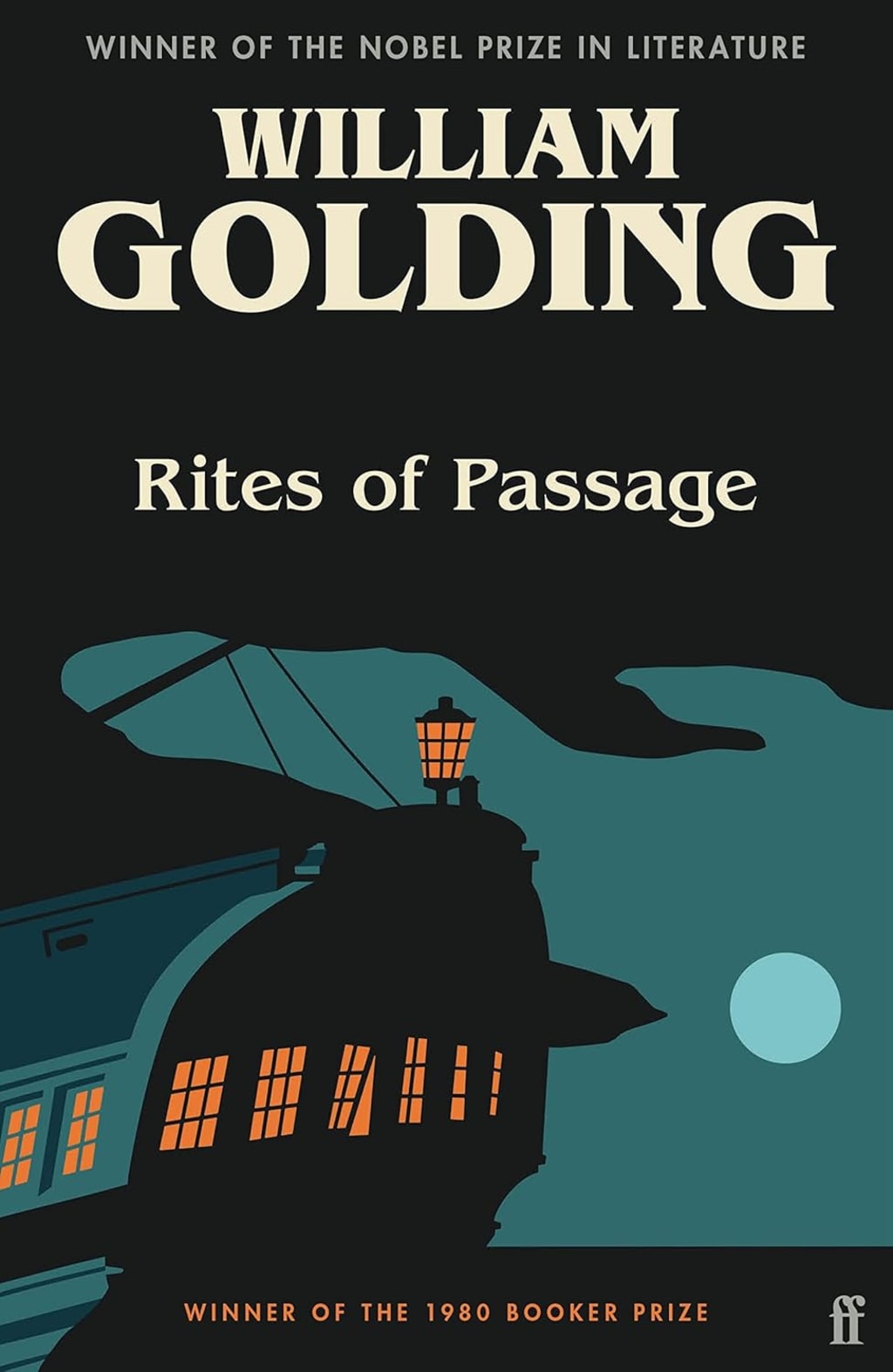
Yes, before you ask I have read Lord of the Flies. I have actually read it so much I can quote the book. There is a lot to learn from that book but I don't think I have managed to delve into the other works of William Golding until now - seeing as they too, have moral lessons within. Rites of Passage, I have heard, is the first of a trilogy written about the madness of being on sea. I mean, I love those kinds of stories but whatever you write about this topic will automatically get compared to Billy Budd, Sailor and you're simply not going to win. Be that as it may, this book did fairly well.
The story is presented through the journal of Edmund Talbot, a young, aristocratic Englishman making a voyage to Australia. The ship, an ageing vessel crowded with a mix of passengers and crew, is a microcosm of 19th-century British society, with rigid class distinctions and palpable tensions. Talbot is tasked with documenting his journey for his godfather, who is financing his voyage. His narrative voice is initially haughty and self-assured, reflecting the privilege and entitlement that accompany his social rank. Yes, it reminded me of the start of Frankenstein as well. There is something about rich people writing journals on ships that makes a great beginning (see: Cloud Atlas, The South Pacific Journal).
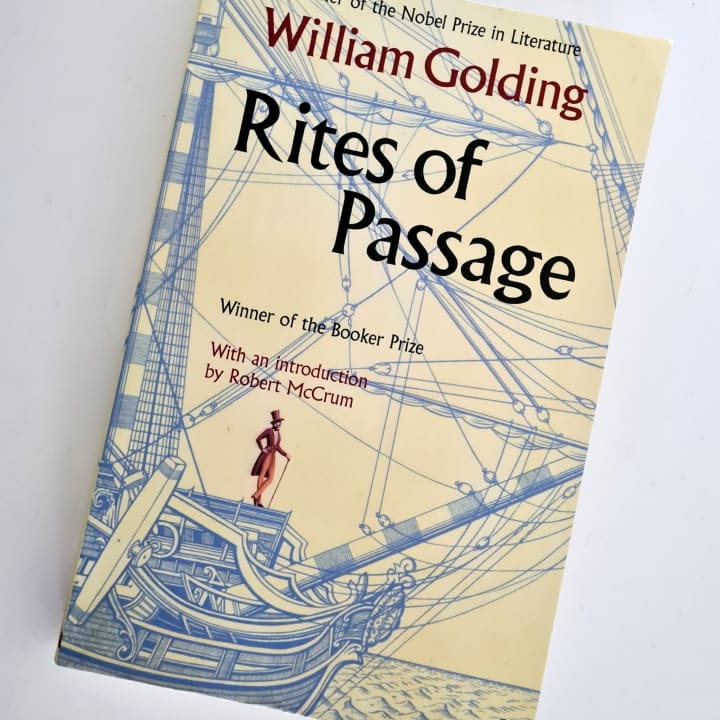
Reverend Robert James Colley is introduced as a humble and devout clergyman. Colley’s awkwardness and deference make him an easy target for ridicule, especially among the passengers who look down on him due to his lower social standing and lack of sophistication. Talbot’s initial portrayal of Colley is dismissive, depicting him as overly pious and out of touch. However, as the story progresses, Colley’s vulnerabilities become more apparent, and his experiences expose the cruelty and hypocrisy of those around him. Then there's also that theme of religion that seems to creep into all beginnings which not only start at sea, but also have an edging madness in them: something that foreshadows an undeniable evil.
Talbot initially views the captain as a figure of power and authority, someone worthy of admiration. However, as he spends more time with him, Talbot begins to see the darker aspects of the captain’s personality—his ruthlessness, manipulative tendencies, and the moral compromises he makes to maintain order. This relationship becomes a mirror for Talbot’s own struggle with privilege and responsibility. This is something that carries on for the rest of the book but really at the time presents us with the character development we require to see that Talbot is not actually a bad human being - he is just someone who has not been exposed to the real world like others have.
During a drunken celebration known as a "Crossing the Line" ceremony, Colley becomes the subject of a cruel joke by the crew and passengers. The event escalates into an act of humiliation that traumatises him deeply. Talbot witnesses the scene with a mix of curiosity and passive detachment, failing to intervene. This pivotal moment exposes the darker side of human nature—how group dynamics can descend into cruelty when social norms are stripped away. It also reveals Talbot’s moral shortcomings, as he remains a passive observer rather than taking a stand against the injustice. This is not where the book peaks but rather, where it starts to become something more than it was previously. We see a ball rolling towards a possible fixing of character - especially where Talbot is concerned. He is definitely now becoming a character of deep moral reflection even though at this point, he is still passive. It will take a lot more than a joke to move him. It will take something horrific.
As the book goes on, we realise what it takes for Talbot to commit to a life of morality and even though it is a horrible event, there is something in the writing that makes the madness keep on edge until the end of the book. It is again, one of those books where I read the final line many, many times before putting the book down because even though it was the end of the book - I don't know whether that was closure or not. It definitely confirmed something about life at sea.
About the Creator
Annie Kapur
I am:
🙋🏽♀️ Annie
📚 Avid Reader
📝 Reviewer and Commentator
🎓 Post-Grad Millennial (M.A)
***
I have:
📖 280K+ reads on Vocal
🫶🏼 Love for reading & research
🦋/X @AnnieWithBooks
***
🏡 UK
Keep reading
More stories from Annie Kapur and writers in Geeks and other communities.
Movie Review: "Niagara" (1953)
Henry Hathaway’s Niagara (1953) is a striking example of film noir infused with a Technicolor brilliance that elevates it to an entirely different plane. Set against the breathtaking backdrop of Niagara Falls, the film uses its natural setting as a metaphor for the tumultuous emotions and treacherous relationships that drive the story. Coupled with outstanding performances, especially from Marilyn Monroe and Joseph Cotten, Niagara is a cinematic triumph that masterfully blends suspense, drama, and visual splendour.
By Annie Kapurabout a year ago in Geeks
Marvel Zombie
The last entry into our 2025 superhero projects catalogue is Marvel Zombies. This was a show that was anticipated by absolutely no one and it disappeared from the public consciousness as quickly as it was released. There was nothing special about the project that made it a must see, or a must remember. In fact if anything it's a must forget.
By Alexandrea Callaghan25 days ago in Geeks
Sabrina Carpenter To Appear In Her First-Ever Super Bowl Ad
Sabrina Carpenter will appear in her first-ever Super Bowl advertisement during the big game in early February. Carpenter is featured in a Pringles campaign, to be aired during Super Bowl LX on February 8.
By Dena Falken Esqabout 16 hours ago in Geeks




Comments
There are no comments for this story
Be the first to respond and start the conversation.