
Movie Review: "Niagara" (1953)
5/5 - dark, paranoid and tense...one of Marilyn Monroe's greatest performances...

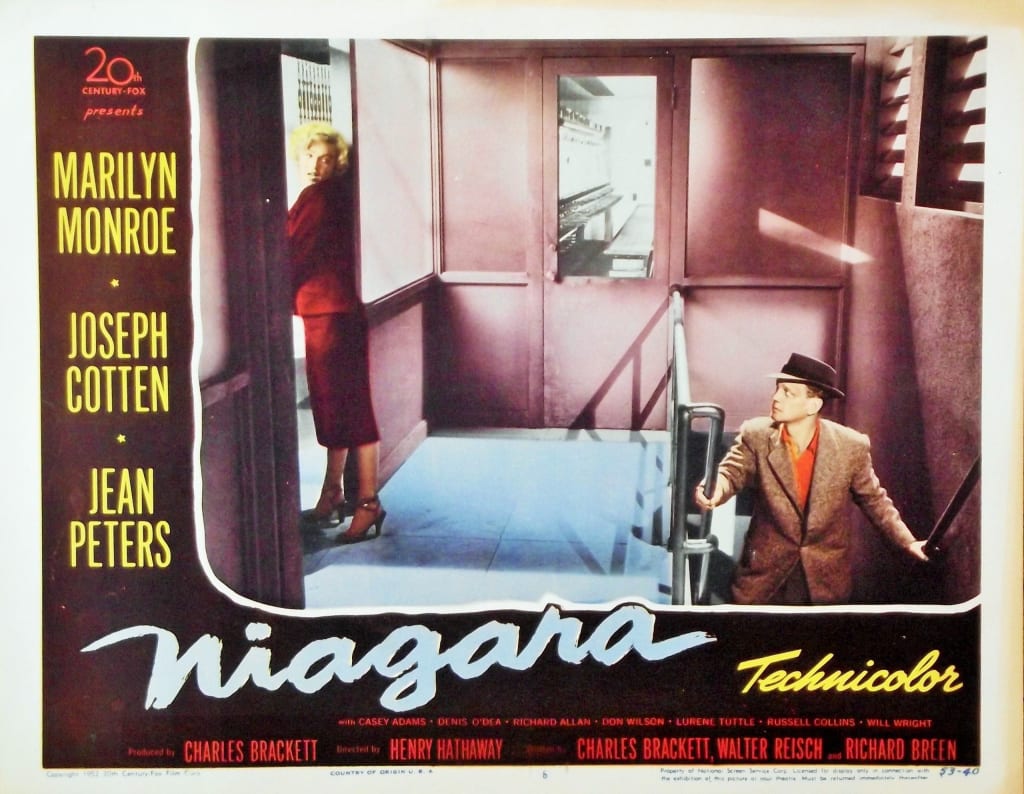
Henry Hathaway’s Niagara (1953) is a striking example of film noir infused with a Technicolor brilliance that elevates it to an entirely different plane. Set against the breathtaking backdrop of Niagara Falls, the film uses its natural setting as a metaphor for the tumultuous emotions and treacherous relationships that drive the story. Coupled with outstanding performances, especially from Marilyn Monroe and Joseph Cotten, Niagara is a cinematic triumph that masterfully blends suspense, drama, and visual splendour.
The film’s use of Niagara Falls as a setting is not merely decorative but integral to the story’s atmosphere and themes. The falls serve as both a visual spectacle and a symbol of the characters’ inner turmoil. Their relentless, roaring power mirrors the escalating tension between the protagonists and the dark forces at play within the narrative. Hathaway’s direction makes full use of this natural wonder, with sweeping shots of the falls creating a sense of grandeur and unease. The constant presence of the cascading water, whether seen or heard in the background, adds a layer of menace and inevitability to the unfolding drama.
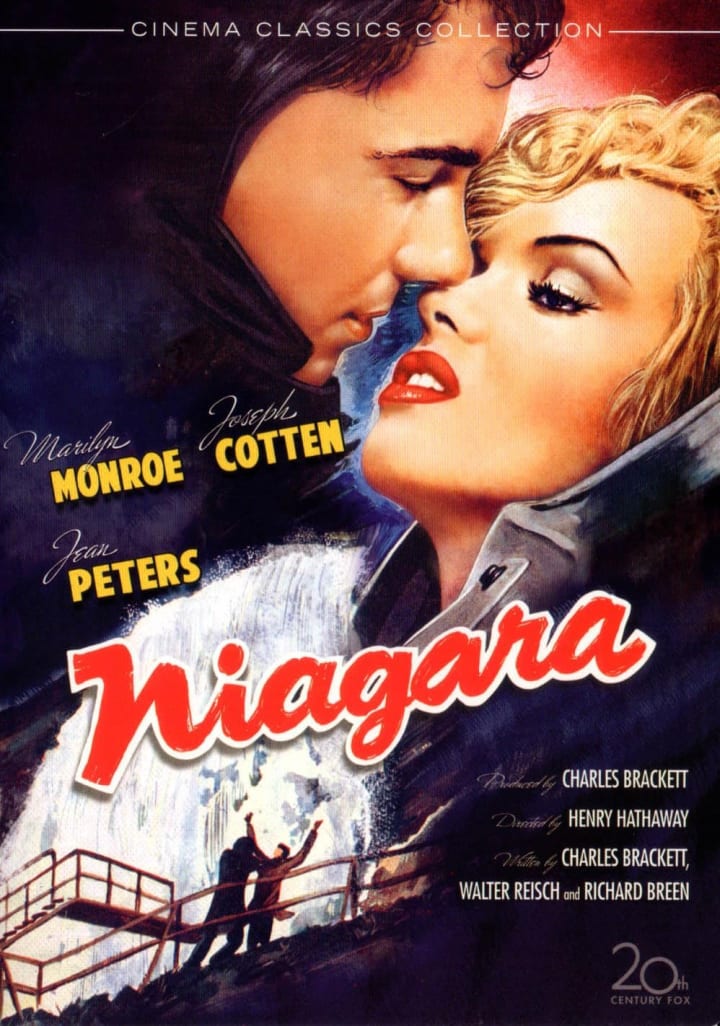
The interplay between the setting and the story is particularly evident in the way Hathaway frames his shots. The falls are often used as a backdrop for moments of tension and confrontation, their raw energy heightening the stakes. In one memorable scene, the falls become a silent witness to betrayal and murder, their beauty contrasting starkly with the human ugliness on display. The mist and spray from the falls create an almost dreamlike quality in certain scenes, blurring the line between reality and deception. This clever use of setting not only enhances the film’s visual appeal but also deepens its emotional resonance.
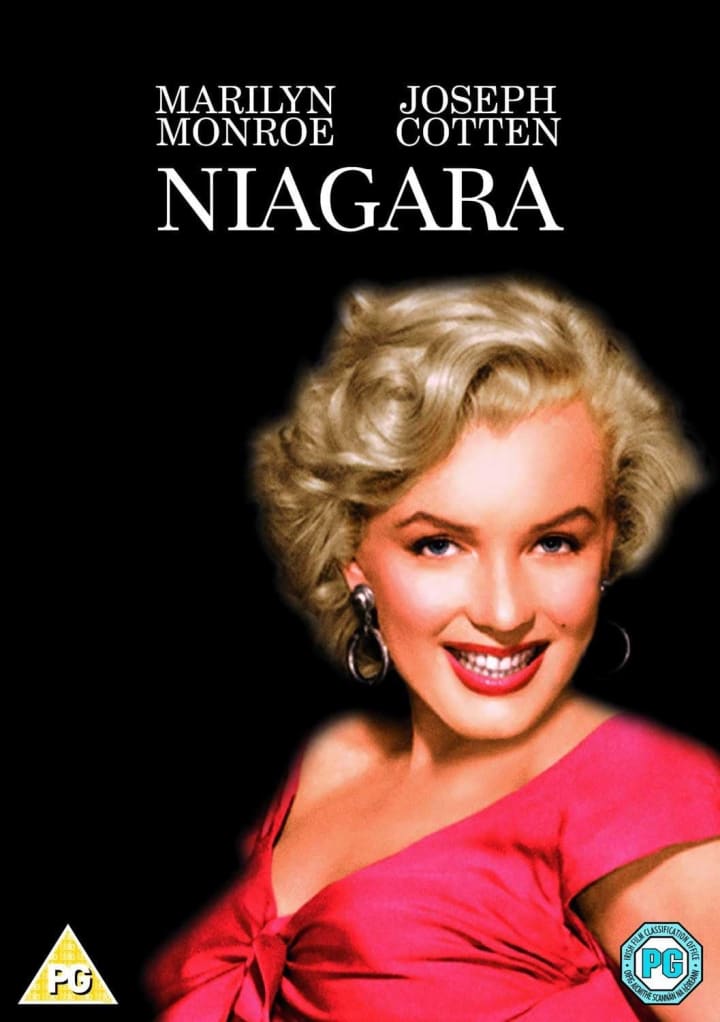
Equally impressive are the performances that anchor the film. Marilyn Monroe, in one of her early starring roles, delivers a performance that is both sultry and emotionally complex. As Rose Loomis, Monroe exudes a seductive charm that masks her character’s darker intentions. Her portrayal of a femme fatale is captivating, with every glance and gesture adding to the character’s allure and menace. Monroe’s ability to convey vulnerability and manipulation simultaneously is remarkable, making Rose a compelling and multi-dimensional character. Her performance in Niagara cemented her status as a rising star and showcased her range as an actress.
Joseph Cotten, as Rose’s husband George, delivers an equally powerful performance. Cotten’s portrayal of a man teetering on the edge of sanity is both important and unsettling. George’s descent into paranoia and desperation is depicted with a raw intensity that makes his character sympathetic despite his flaws. Cotten’s chemistry with Monroe is palpable, their interactions crackling with tension and resentment. The contrast between Rose’s calculated coolness and George’s emotional volatility adds depth to their relationship, making their scenes together some of the film’s most compelling moments.
The supporting cast also deserves recognition, particularly Jean Peters as Polly Cutler, a young woman who becomes unwittingly entangled in the Loomises’ drama. Peters’s performance is understated yet effective, providing a counterpoint to Monroe’s flamboyance. Polly’s innocence and decency make her a relatable and sympathetic character, and her growing awareness of the danger around her adds to the film’s suspense. Max Showalter, as Polly’s husband Ray, provides moments of comic relief without detracting from the film’s tension. His light-heartedness serves as a reminder of the normalcy that exists outside the Loomises’ dark world, making the contrast even more striking.

The film’s pacing is another strength, with the story unfolding in a way that keeps the audience engaged from start to finish. Hathaway expertly builds tension, using both the setting and the characters to create a sense of impending doom. The screenplay, by Charles Brackett, Walter Reisch, and Richard L. Breen, is tightly constructed, with every scene serving a purpose. The dialogue is sharp and evocative, revealing the characters’ motivations and conflicts without unnecessary exposition. The interplay between the characters is rich with subtext, adding layers of complexity to the story.
The use of colour in Niagara is also worth noting, as it plays a significant role in shaping the film’s mood and tone. The vibrant Technicolor palette contrasts with the darker themes of the story, creating a visual tension that mirrors the characters’ struggles. The vivid reds of Rose’s wardrobe, for example, underscore her fiery and dangerous nature, while the muted tones of the Cutlers’ clothing reflect their innocence and ordinariness. This careful attention to colour enhances the film’s visual storytelling, making it as much a feast for the eyes as it is for the mind.
In conclusion, Niagara is a masterful blend of setting, performance, and storytelling that stands as a testament to the power of cinema. The film’s use of Niagara Falls as both a visual and thematic element is ingenious, creating a sense of grandeur and unease that permeates the narrative. The performances, particularly those of the leading actors, are exceptional, bringing depth and nuance to their characters. With its stunning visuals, gripping story, and memorable performances, Niagara is a film that continues to captivate audiences decades after its release.
About the Creator
Annie Kapur
I am:
🙋🏽♀️ Annie
📚 Avid Reader
📝 Reviewer and Commentator
🎓 Post-Grad Millennial (M.A)
***
I have:
📖 280K+ reads on Vocal
🫶🏼 Love for reading & research
🦋/X @AnnieWithBooks
***
🏡 UK
Keep reading
More stories from Annie Kapur and writers in Geeks and other communities.
Book Review: "Men We Reaped" by Jesmyn Ward
I had never heard of this book until I started looking for something to read in the nonfiction section. As I had recently completed a book called The Barn by Wright Thompson, this ended up in my suggested reading list on Amazon. I thought I would check it out because I'm not going to lie, I enjoyed The Barn so much, I was immersed from start to finish and wanted that kind of reading experience again. So, without further introduction - let me suggest that you read this great book entitled Men We Reaped by Jesmyn Ward.
By Annie Kapurabout a year ago in Geeks
The Rachels - 2025
Much to my surprise, I have kept a list of the films I‘ve seen this year. I daresay it isn’t complete. There will be films that snuck in on a late night in front of the TV that I would’ve forgotten to note. Or others, that I went to watch at the cinema, but then had a red wine and promptly forgotten about. But it’s not a bad approximation of the films I’ve seen this year. In total, there are 53 films listed, so an average of one a week and one for good luck.
By Rachel Robbins25 days ago in Geeks
Soon-Young (Shownal) Han: The Casting Director Redefining Global Collaboration
In an era where content knows no borders, casting has become more than selecting faces for the screen—it has become an act of cultural translation. Few understand this better than Soon-Young Han, also known professionally as Shownal Han, a global casting director whose work is quietly reshaping how Hollywood, Korean content, and international brands collaborate.
By Dena Falken Esqabout 4 hours ago in Geeks


Comments
There are no comments for this story
Be the first to respond and start the conversation.