
Book Review : Rich Dad Poor Dad by Robert Kiyosaki
Work to Learn, Not to Earn What the Rich Teach Their Kids About Money That the Poor and Middle Class Do Not

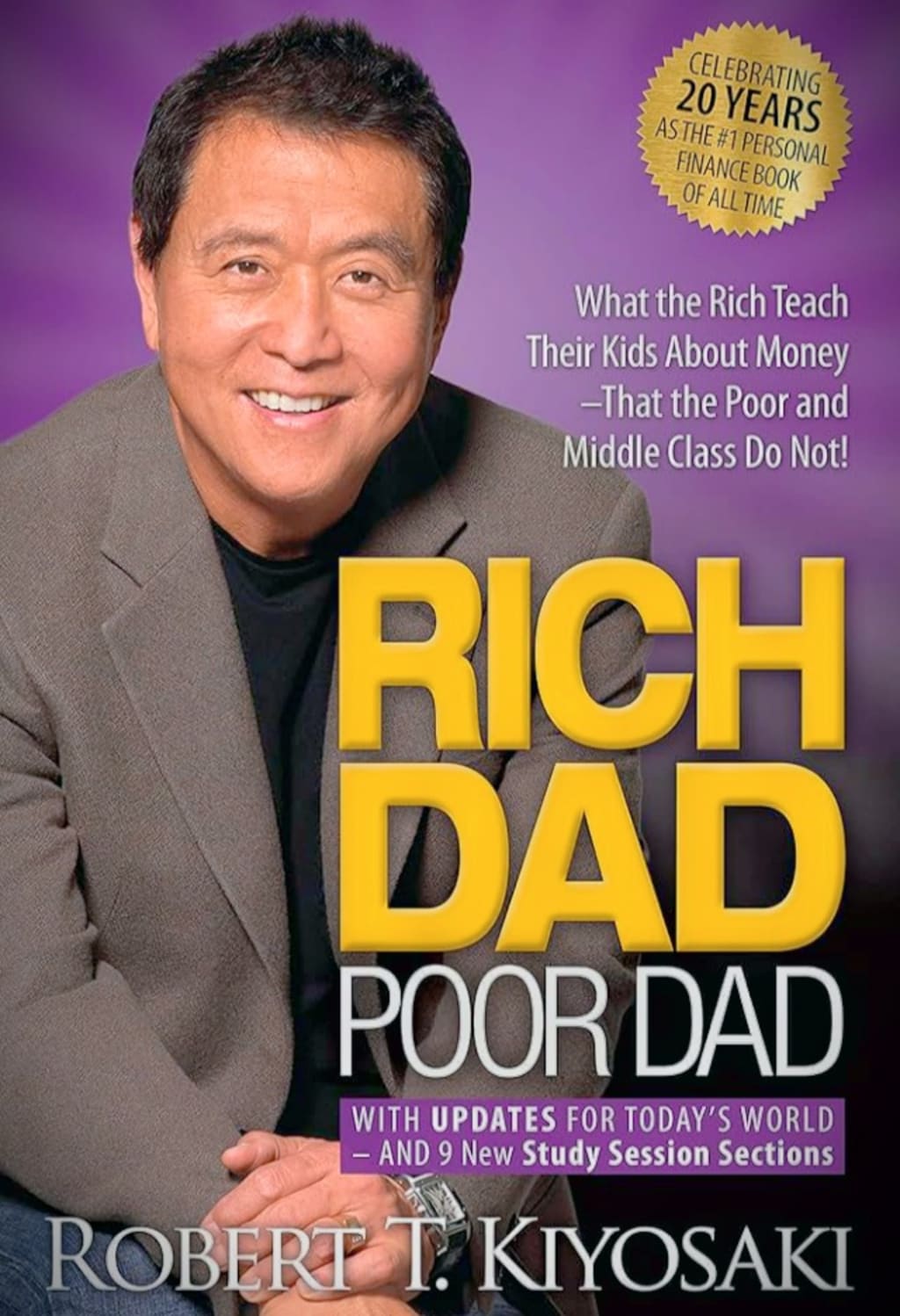
The Impact of Rich Dad Poor Dad on Personal Finance
Rich Dad Poor Dad, co-authored by Robert Kiyosaki and Sharon Lechter, is a personal finance book that has transformed how millions approach money, wealth, and financial independence. First published in 1997, it has sold over 32 million copies worldwide and remains a cornerstone for those seeking financial literacy. The book contrasts two perspectives: the "poor dad," who represents traditional thinking about money—emphasizing job security and saving—and the "rich dad," who advocates for financial education, investing, and building passive income streams. Its conversational style and relatable storytelling make complex financial concepts accessible to readers of all backgrounds. 😊
The book's core message is that financial education is more valuable than academic success alone. Poor Dad, a well-educated but financially struggling parent, believes in working hard for a stable job. In contrast, Rich Dad, a mentor figure, teaches the importance of understanding assets versus liabilities, entrepreneurship, and making money work for you. This dichotomy resonates with readers, encouraging them to rethink societal norms about wealth. The book’s emphasis on assets—things that put money in your pocket, like real estate or stocks—versus liabilities—things that take money out, like car loans—has become a foundational principle for personal finance enthusiasts. 🏠📈
Rich Dad Poor Dad has sparked debates. Critics argue it oversimplifies investing and lacks actionable steps, while supporters praise its mindset shift, urging readers to take control of their financial futures. Its influence extends beyond bookshelves, inspiring seminars, board games, and a financial education empire. For many, it’s a wake-up call to prioritize financial independence over a paycheck-to-paycheck lifestyle. The book’s lasting appeal lies in its ability to challenge conventional wisdom and inspire action, making it a must-read for anyone aiming to build wealth. 💡
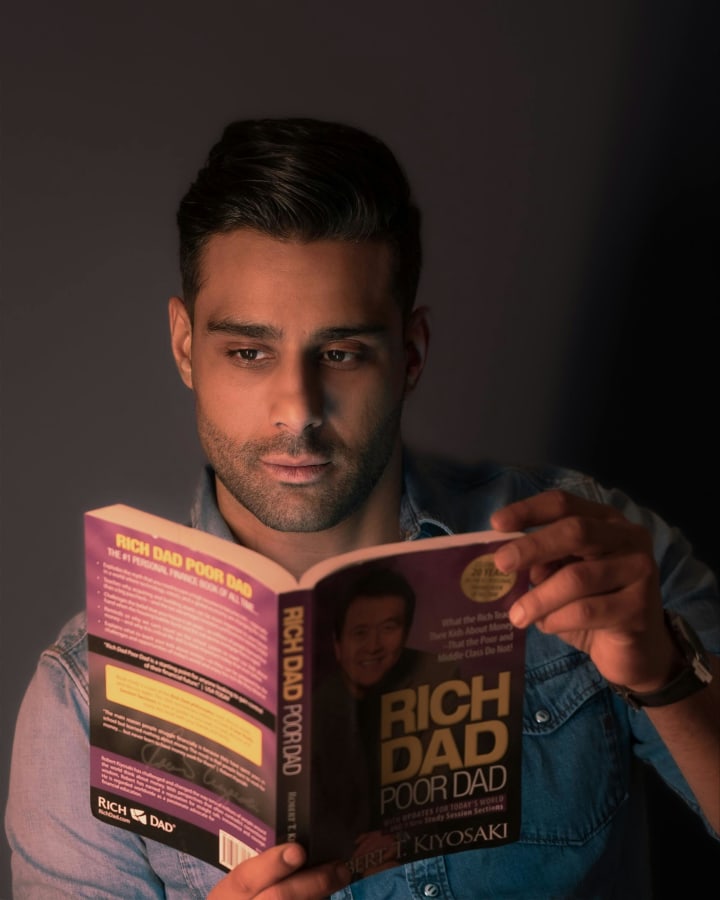
Story: A Lesson from Rich Dad
Imagine young Robert, a curious 9-year-old growing up in Hawaii, caught between two worlds. His biological father, Poor Dad, was a highly educated school superintendent who preached, “Go to school, get good grades, and land a secure job.” Despite his Ph.D., Poor Dad struggled with debt, living paycheck to paycheck. Across town lived Rich Dad, the father of Robert’s best friend, Mike. Rich Dad, an entrepreneur with only an eighth-grade education, owned businesses and invested wisely, amassing wealth without a corner office or fancy degree.
One day, Robert and Mike, eager to learn about money, asked Rich Dad to teach them. He agreed but with a twist: no lectures, only real-world lessons. Their first task? Working at one of his stores for 10 cents an hour, cleaning shelves. 😓 The boys toiled for weeks, frustrated by the low pay. When they complained, Rich Dad seized the moment. “You’re thinking like employees,” he said. “The rich don’t work for money—they make money work for them.” He introduced them to the concept of assets, like rental properties, that generate income without constant labor.
Inspired, Robert began small. He started a comic book library, charging kids to borrow his collection, turning a hobby into a mini-business. Over time, Rich Dad’s lessons—buying assets, avoiding liabilities, and seeking financial education—shaped Robert’s path to wealth. Poor Dad’s advice, while well-meaning, kept him trapped in a cycle of earning and spending. This tale of two dads became the heart of Rich Dad Poor Dad, showing that mindset, not just money, determines financial success. 🌟
Summary of Rich Dad Poor Dad
Rich Dad Poor Dad is structured around six key lessons, each dismantling myths about money and offering practical insights. Here’s a detailed summary of its core ideas:
The Rich Don’t Work for Money 💸
The book opens with the idea that chasing a paycheck traps people in the “rat race.” Rich Dad teaches that fear and desire—fear of not paying bills, desire for nice things—keep people working for money. Instead, the wealthy focus on creating systems (businesses, investments) that generate income. The lesson: prioritize financial independence over job security.
Why Teach Financial Literacy? 📊
Kiyosaki emphasizes understanding assets and liabilities. A house, often seen as an asset, can be a liability if it drains money (e.g., mortgage payments). True assets, like stocks or rental properties, generate income. The book urges readers to learn basic accounting to track cash flow and build wealth.
Mind Your Own Business 💼
While employees work to build someone else’s business, the rich build their own. This doesn’t always mean starting a company—it can mean investing in income-generating assets. The goal is to create a personal financial empire, not just climb the corporate ladder.
The History of Taxes and Corporations 🏦
Rich Dad explains how the wealthy use corporations to reduce taxes and protect assets. While not everyone can (or should) start a corporation, understanding tax laws and financial tools can save money and increase wealth.
The Rich Invent Money 💡
Creativity and opportunity drive wealth. Rich Dad encourages thinking outside the box—whether starting a business or spotting undervalued investments. Financial intelligence, not just hard work, creates opportunities.
Work to Learn, Not to Earn 📖
The final lesson stresses acquiring skills like investing, sales, or leadership over chasing a bigger salary. Continuous learning builds the confidence to take calculated risks.
The book weaves these lessons with anecdotes from Robert’s life, contrasting Poor Dad’s risk-averse mindset with Rich Dad’s entrepreneurial approach. It doesn’t provide a step-by-step guide but aims to shift how readers think about money. Critics note its lack of specifics, especially for complex topics like real estate, but its strength is in motivating readers to seek knowledge and take action. The book concludes with practical tips, like setting financial goals, reducing debt, and starting small investments. 🤑
Why It Resonates
Rich Dad Poor Dad endures because it speaks to universal desires: freedom, security, and control over one’s future. Its simple language and storytelling make it relatable, while its bold ideas—questioning traditional education and job security—challenge readers to think differently. Whether you’re a student, professional, or retiree, the book’s call to prioritize financial education and asset-building offers a roadmap to wealth. It’s not perfect, but its impact is undeniable, sparking a global conversation about what it means to be truly rich. 🚀
About the Creator
Am@n Khan
I'm educational storyteller passionate about turning knowledge into engaging narratives.
I write about topics like science, history and life skills.
Contact
WhatsApp : +923336369634
Silver Screen Magic with Mae West
American actress and singer Mae West became a popular film actress during the Great Depression. She started entertaining in vaudeville, then performed on Broadway, and finally went to Hollywood. She signed up with Paramount Pictures and made her debut in the 1932 film “Night After Night.” She also starred in musicals, comedies, and crime dramas. The American Film Institute named her one of the best classic Hollywood actresses.
By Rasma Raisters5 days ago in Geeks
Grant Gustin's Chances Of Returning As The DC Universe's Flash Have Just Increased After New Update
The Flash has yet to be cast for the new DC Universe, and after a new update, the rumors of Grant Gustin's return as Barry Allen in the new franchise have gained strength once again. Gustin made history by playing Barry for The Flash's nine seasons. The actor also starred in multiple Arrowverse crossovers, becoming one of the franchise's fan-favorites.
By Dena Falken Esq3 days ago in Geeks



Comments (1)
I read this book years ago. It really made me think differently about money. The idea of assets vs liabilities clicked for me. It's not perfect, like you said, but it definitely gets you to question the norm. What did you find most eye-opening in it?