
Book Review: "Olive Kitteridge" by Elizabeth Strout
5/5 - Elizabeth Strout writes a character-centric masterpiece of development and grief...

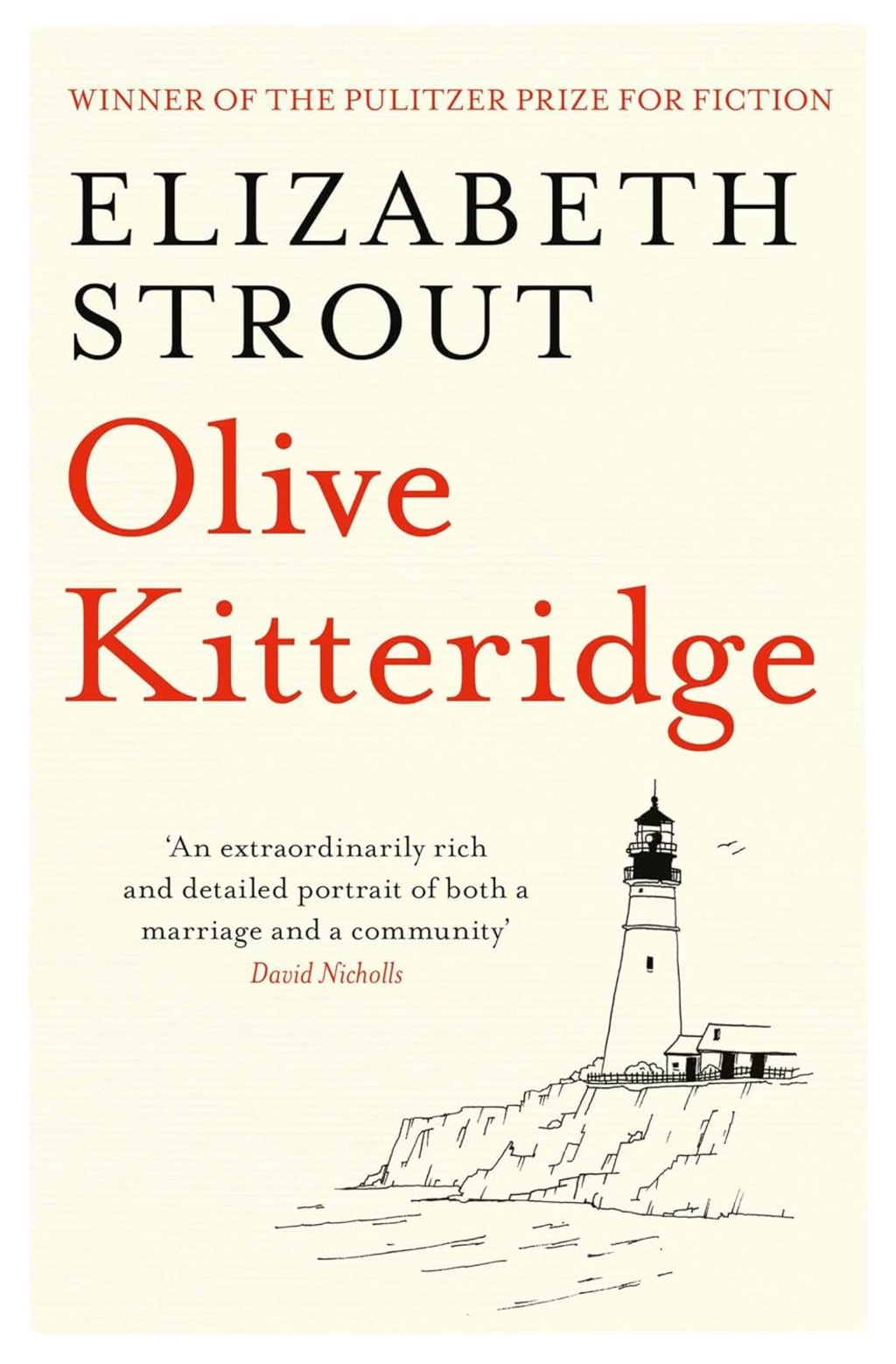
You're probably thinking what led me to read this book and I'll tell you. I was on the internet as we all are and I was asking around for some book recommendations that included some sort of saga and were character-centric - something that was perhaps like The Turning by Tim Winton. The most popular recommendation I received in terms of how many people gave it to me was Olive Kitteridge by Elizabeth Strout. Now, I had encountered this book before and had put it down a number of times in bookshops due to a lack of interest and its price. But, I picked it up on my phone for a discount. So, let's have a look at what went on...
The novel opens with a focus on Olive Kitteridge and her husband Henry. Olive is a retired schoolteacher with a sharp, often critical personality, while Henry is a warm, gentle man who runs the town pharmacy. Their relationship is defined by deep contrasts: Henry’s kindness is a counterbalance to Olive’s prickliness, though her domineering tendencies often overshadow his warmth. A subtle tension develops when Henry hires Denise, a cheerful young woman who becomes a surrogate daughter to him after the death of her husband.
This obviously makes the prickliness of Olive stand out a lot more due to the tensions that arise in the marriage. I think we can feel a certain amount of sympathy for both Denise and Olive even though they are different characters entirely. However, the character of Henry is perhaps the one I became most attached to seeing as he reminds me of the Chinese man who runs the grocery store in Cannery Row by Steinbeck. He's not there for the money, he just wants to ensure people are having a good time.

Kevin Coulson, who fled Crosby after his mother’s suicide, returns to settle her estate. Haunted by his past, Kevin reflects on the emotional scars left by his mother’s mental illness and the town’s judgment. Olive crosses paths with Kevin and, in her blunt way, acknowledges his pain. This interaction reveals Olive’s hidden empathy, even as she remains tactless. This is another thing that perhaps makes us feel even more sympathy for Olive even as she remains an upright and somewhat emotionally distant character. She does actually try to help to some degree and notes how people are feeling.
Olive’s only son, Christopher, marries Suzanne, a woman Olive immediately dislikes. At the wedding, Olive’s passive-aggressive remarks and open disapproval create tension with her son and his new wife. When Christopher and Suzanne move to California, Olive feels abandoned and resents Suzanne for taking her son away. Their relationship deteriorates further after Olive’s poorly received visit to their home, during which her critical nature alienates both Christopher and Suzanne. This storyline reveals Olive’s deep-seated fears of being unloved and her difficulty navigating motherhood with warmth or humility. Now we start to see why she is so emotionally distant and presents herself as upright and strict - because she is afraid of getting hurt and knows that she probably will. It just makes us feel even more pity towards her as her son gets married.
Henry suffers a debilitating stroke, leaving him incapacitated and requiring constant care. Olive is thrust into the role of caregiver, a responsibility that exhausts her physically and emotionally. Despite her outward resentment and frustration, Olive’s dedication to Henry demonstrates her deep, if flawed, love for him. As Henry’s condition deteriorates, Olive confronts the inevitability of loss and the loneliness that will follow. Now without her son, no relationship with her daughter-in-law and her husband practically on his deathbed, we feel this grief alongside Olive. Elizabeth Strout's biggest asset is making us believe that Olive is actually a real human being that we need to make friends with to ensure she is not alone.

A tragedy strikes the Larkin family when one of their daughters is murdered. Olive steps into the grieving family’s life, offering a rare moment of comfort to the bereaved mother. Though Olive often struggles with her own personal connections, her ability to provide solace during moments of crisis illustrates her latent compassion. This chapter showcases Olive’s role as both a flawed individual and an essential part of the community’s fabric, navigating the shared burden of loss. This is where we start to see the artifice of the harsh schoolteacher fade away into something more human even though she holds grief with her constantly. I just adore the character development. It is fantastic.
As the book moves on, we see more of this character development which comes to give us a new perspective on Olive, who she is and her role in the world. We see romance, confrontation and more as Olive begins to face reality and develop even more into a woman who is no longer afraid to be alone.
About the Creator
Annie Kapur
I am:
🙋🏽♀️ Annie
📚 Avid Reader
📝 Reviewer and Commentator
🎓 Post-Grad Millennial (M.A)
***
I have:
📖 280K+ reads on Vocal
🫶🏼 Love for reading & research
🦋/X @AnnieWithBooks
***
🏡 UK
Keep reading
More stories from Annie Kapur and writers in Geeks and other communities.
Book Review: "Brensham Village" by John Moore
I know what you're thinking: why the hell did she read this? Well, the answer is because I didn't have anything else to read and I thought that a good orange Penguin in my pocket that I had dug out of my mother's house would probably get me through the day or so. It did and it also surprised me because I ended up quite enjoying it. Brensham Village has such incredible descriptions of rural life and such lovely scenes of idyllic countrysides that I got a bit lost for a time. I've never heard of the author before this, I have never heard of the book before - I just randomly found it and here we are...
By Annie Kapurabout a year ago in Geeks
Marvel Zombie
The last entry into our 2025 superhero projects catalogue is Marvel Zombies. This was a show that was anticipated by absolutely no one and it disappeared from the public consciousness as quickly as it was released. There was nothing special about the project that made it a must see, or a must remember. In fact if anything it's a must forget.
By Alexandrea Callaghan28 days ago in Geeks
Sabrina Carpenter To Appear In Her First-Ever Super Bowl Ad
Sabrina Carpenter will appear in her first-ever Super Bowl advertisement during the big game in early February. Carpenter is featured in a Pringles campaign, to be aired during Super Bowl LX on February 8.
By Dena Falken Esq4 days ago in Geeks




Comments
There are no comments for this story
Be the first to respond and start the conversation.