
Book Review: "Brensham Village" by John Moore
5/5 - a nostalgic, idyllic text filled with vivid descriptions of rural life...

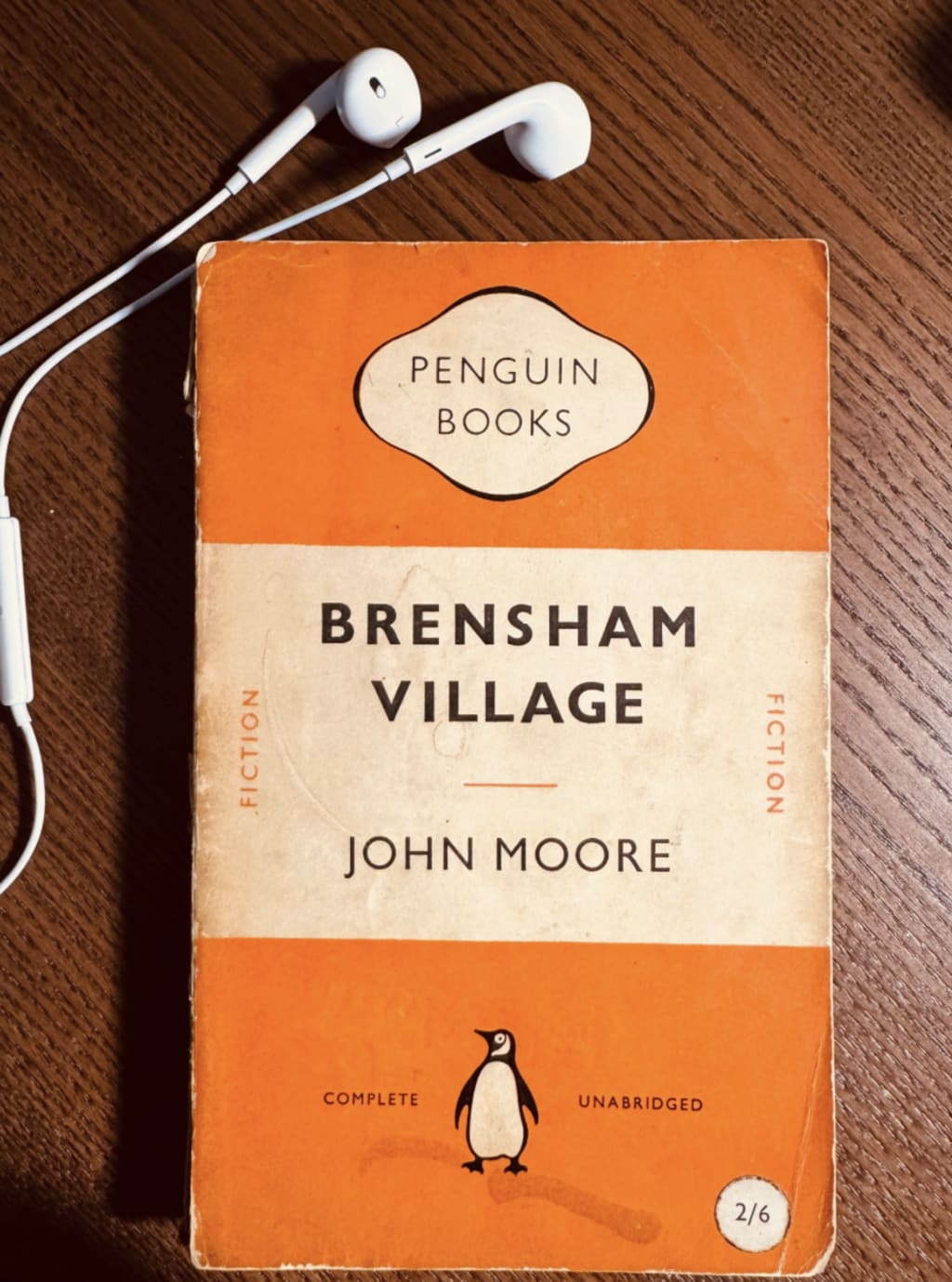
I know what you're thinking: why the hell did she read this? Well, the answer is because I didn't have anything else to read and I thought that a good orange Penguin in my pocket that I had dug out of my mother's house would probably get me through the day or so. It did and it also surprised me because I ended up quite enjoying it. Brensham Village has such incredible descriptions of rural life and such lovely scenes of idyllic countrysides that I got a bit lost for a time. I've never heard of the author before this, I have never heard of the book before - I just randomly found it and here we are...
The narrator, John, returns to Brensham Village, a fictional yet vividly portrayed rural community in the Severn Valley. Through his reflective and nostalgic lens, the reader is introduced to the village's timeless charm. Brensham’s landscape is described in loving detail, with its orchards, meadows, and winding lanes, embodying the essence of an idyllic English countryside untouched by time. The narrative establishes a tone of fond reminiscence, presenting the village as a symbol of stability and continuity. When I say it is beautiful, I mean it is beautiful. Seriously, the opening descriptions are something you can breathe in.
At the heart of village life is the schoolmaster, Mr. Chorlton, an unconventional but deeply respected figure. Known for his wit and wisdom, he educates the children of Brensham not just in academics but also in morality, storytelling, and an appreciation of nature. His classroom becomes a microcosm of the village’s values, and his influence extends beyond the school walls. Through Chorlton’s teaching, Moore celebrates the role of rural education in shaping character and preserving local traditions. This is like the opposite of Hard Times in the way of its images even though the idea of it being a microcosm for the rest of society in the text remains a similar force.
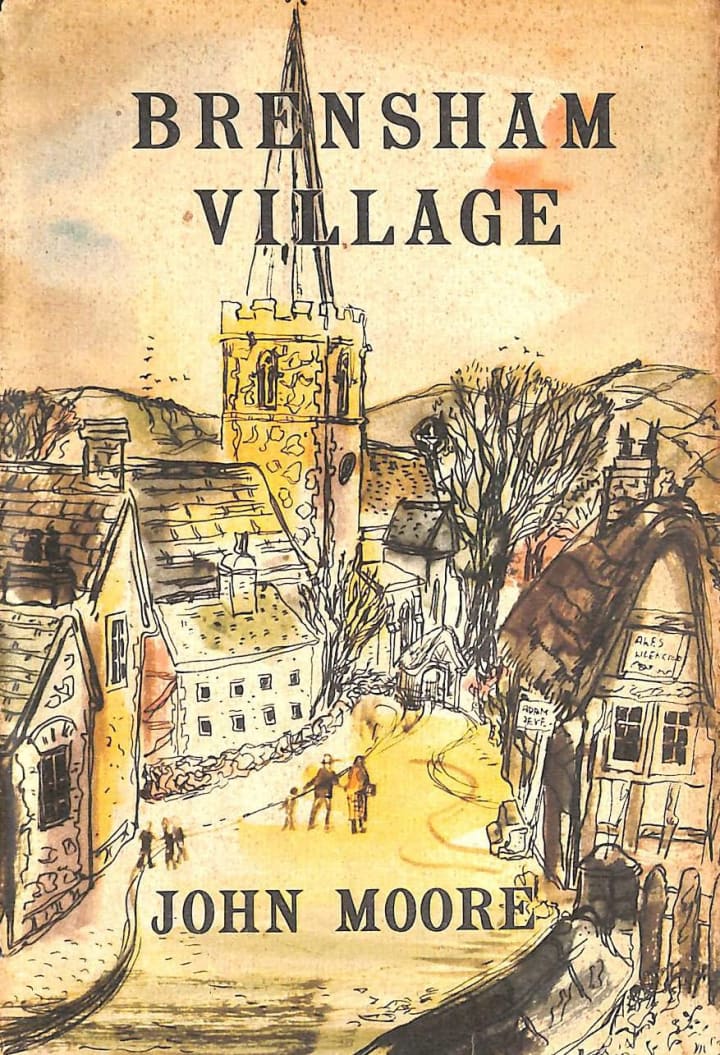
Brensham is teeming with eccentric personalities, each contributing to the village’s unique character. Reverend Groves, the vicar, is more absorbed in his beekeeping than his congregation, reflecting a quiet rebellion against conventional expectations. Captain Jarvis, a retired naval officer, regales the villagers with exaggerated tales of his past adventures. Mrs. Wetherby, the gossip, ensures that no secret in Brensham remains hidden for long. These characters’ quirks provide humor and texture to the narrative, illustrating the diversity of human behavior in close-knit communities. Oh I just loved learning about all the little characters from inside the communities of the village. They were actually really interesting people and this just goes to show that sometimes, you find some really great stuff when you're not even looking for it.
The Brensham Arms, the local pub, is the epicentre of social life. Managed by the affable Mr. Deverill, the pub serves as a meeting place where villagers gather to share stories, debate politics, and bond over shared experiences. It is here that the complexities of village relationships come to light, from alliances to rivalries. The pub is both a sanctuary and a stage, reflecting the collective spirit of Brensham while highlighting the interplay of individual lives. This is a place where we get to witness some cohesion and often, some lack of cohesion and obviously, it is just swarming with life and relationships. I absolutely enjoyed encountering our well-known characters in all these different situations, giving the reader snapshots of what their everyday lives are really like.
Throughout the narrative, John shares personal stories and anecdotes that bring Brensham’s history and folklore to life. These tales range from humorous incidents, like a mishap involving a pig, to poignant moments of reflection on love, loss, and human folly. And one thing he is trying to teach us is that these rural people are not backward or out of touch with evolving societies that are modernising. In fact, they are just like every other community. They too have their factions, their social gatherings, their industry (farming) and they too, have their traditions and their ways of life like any other.
I will have to say that as the novel moves on, it becomes more and more sad to see that modernisation threatens this community and this way of life they have for themselves. As the war rages on, they are forced to grow or die. The nostalgia that pounds throughout the text becomes a battle cry for perhaps, something simpler than what we all succumbed to.
About the Creator
Annie Kapur
I am:
🙋🏽♀️ Annie
📚 Avid Reader
📝 Reviewer and Commentator
🎓 Post-Grad Millennial (M.A)
***
I have:
📖 280K+ reads on Vocal
🫶🏼 Love for reading & research
🦋/X @AnnieWithBooks
***
🏡 UK
Keep reading
More stories from Annie Kapur and writers in Geeks and other communities.
My Aims for 2025
As we know, I have moments where I go in and out of deep-dives when it comes to literature. You only have to look at what I'm publishing to know whether I am in the midst or have just raised my head above the water of a in-depth analysis of some niche and odd topic such as: disasters on the sea, 18th Century French Enlightenment Politics, marketing, books about female friendship, books about men at war and many other things that have made their way into the last year or so.
By Annie Kapurabout a year ago in Geeks
Marvel Zombie
The last entry into our 2025 superhero projects catalogue is Marvel Zombies. This was a show that was anticipated by absolutely no one and it disappeared from the public consciousness as quickly as it was released. There was nothing special about the project that made it a must see, or a must remember. In fact if anything it's a must forget.
By Alexandrea Callaghan29 days ago in Geeks




Comments
There are no comments for this story
Be the first to respond and start the conversation.