
Book Review: "How We Break" by Vincent Deary
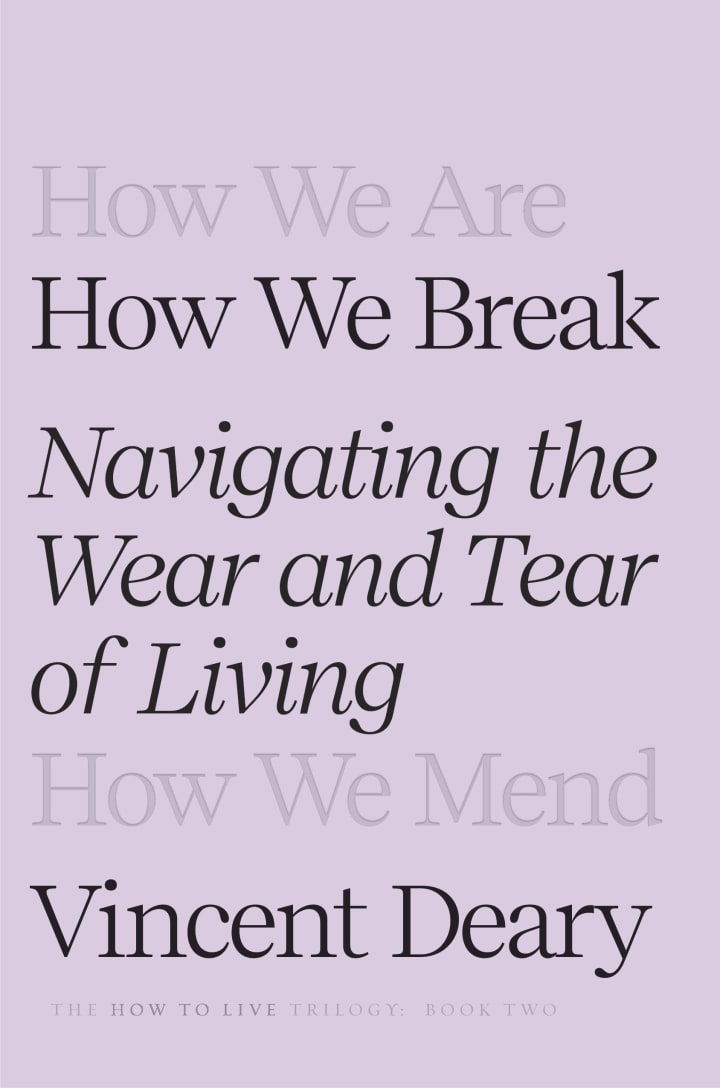
5/5 - a compelling and insightful book which teaches us self-compassion...


I spent a while thinking about whether I actually wanted to read this. I usually get Penguin Nonfiction texts as ebooks because they work out cheaper and yet, I still had to think it over. Well, this is one of the situations where I am glad that I did actually read it because it turned out to be just what I needed right now. My mental health is in the gutter, my lifestyle choices have not been wise and I'm even on medication - so here we are. Here we are, about the dive into the book How We Break by Vincent Deary. Thankfully, this doesn't feel like an 'instagram positive vibes' book. Instead, there's a lot of science here.
Deary begins by acknowledging that breaking: experiencing physical, emotional, or mental collapse, is a universal aspect of the human condition. He emphasises that everyone, regardless of background or circumstance, is susceptible to reaching their limits. This breaking can manifest suddenly due to a significant trauma or gradually through the accumulation of daily stresses. By recognising the inevitability of breaking, the author sets the stage for a compassionate exploration of how individuals can understand and navigate these experiences. I think that the way in which this is expanded upon in the book is fantastic. We get bits and pieces of everything from science to anecdotes in which the author builds the bigger picture for us.
Central to the thesis is the metaphor of the "capacity bucket," which represents an individual's ability to manage life's demands. Each person has a finite capacity, and various stressors (be they work-related pressures, personal relationships, or health issues) add to this bucket. When the bucket overflows, breaking occurs. Deary illustrates that while some individuals may experience a single overwhelming event that causes their bucket to overflow, more commonly, it is the gradual accumulation of smaller stressors that leads to breaking. This metaphor underscores the importance of monitoring one's capacity and recognising the cumulative impact of stress. I really identified with this metaphor because well, you know, just look at where I am right now (right now = the start of February 2025).
Modern work culture, with its relentless demands and expectations, is identified as a significant contributor to personal breaking. Deary discusses how the pressures of prolonged working hours, high performance expectations, and the blurring of boundaries between work and personal life can deplete an individual's capacity. He introduces the mantra "Work needs rest and rest takes work," emphasising that rest is not merely the absence of work but an active process that requires intentional effort. By prioritising rest and setting boundaries, individuals can replenish their capacity and prevent breakdowns. This is where I draw the damn line - I will never take the majority of my work into my home unless there is a work from home thing going on. I don't mind taking small tasks that might take ten or fifteen minutes, but the constant 'take this home, take that home' is simply offensive.

Chronic stress is highlighted as a pervasive factor that erodes an individual's capacity over time. Deary explains how continuous exposure to stressors can lead to a range of health issues, including cardiovascular diseases, weakened immune function, and mental health disorders like depression and anxiety. He emphasises the importance of recognising the signs of chronic stress early and implementing strategies to mitigate its effects, such as mindfulness practices, physical activity, and seeking social support. As someone who has finally become sick from stress, I can tell you that there is a certain truth to this that you won't believe until you read it.
Societal and cultural factors play a significant role in how individuals experience and respond to breaking. Deary discusses how cultural norms that value productivity over well-being can pressure individuals to ignore their limits, leading to burnout. He advocates for a cultural shift that prioritises well-being and recognises the importance of rest and self-care. By challenging societal expectations and redefining success, individuals and communities can create environments that support resilience and prevent breaking. And this does not mean those dumb career development sessions which include 'resilience training' but instead, having some personal reflection time and having some autonomy over life that many people in the modern day have been disallowed.
All in all, the author underscores the importance of embracing vulnerability as a pathway to resilience. He reminds readers that breaking is a natural part of the human experience and that acknowledging one's limitations is a strength, not a weakness. By accepting vulnerability, practising self-compassion, and implementing proactive strategies for rest and recovery, individuals can navigate the wear and tear of living more effectively and emerge stronger from their breaking points.
About the Creator
Annie Kapur
I am:
🙋🏽♀️ Annie
📚 Avid Reader
📝 Reviewer and Commentator
🎓 Post-Grad Millennial (M.A)
***
I have:
📖 280K+ reads on Vocal
🫶🏼 Love for reading & research
🦋/X @AnnieWithBooks
***
🏡 UK
Keep reading
More stories from Annie Kapur and writers in Geeks and other communities.
Book Review: "Open When" by Dr Julie Smith
I think that this book was recommended to me by someone but I don't remember who. If we put it into context, there's a whole thing about people recommending people self-help books when they know you well enough to do so. I think I have been recommended Atomic Habits more times than I can count and yet, I have no intention of reading it. For me, there is a fine line between self-help that actually works and self-help that comes off as taken straight from a 'positive affirmations' Instagram post. Unfortunately, this book by Dr Julie Smith toes that line and toes it carefully - sometimes it does fall into the latter and so, you know it isn't going to get the full marks from me.
By Annie Kapur10 months ago in Geeks
Marvel Zombie
The last entry into our 2025 superhero projects catalogue is Marvel Zombies. This was a show that was anticipated by absolutely no one and it disappeared from the public consciousness as quickly as it was released. There was nothing special about the project that made it a must see, or a must remember. In fact if anything it's a must forget.
By Alexandrea Callaghan28 days ago in Geeks
Silver Screen Magic with Ingrid Bergman
Swedish actress Ingrid Bergman became a Hollywood icon, starring in many memorable movies. During her acting career, she won three Academy Awards. The actress excelled in a wide range of portrayals in drama, film noir, comedy, and period pieces.
By Rasma Raisters3 days ago in Geeks



Comments (1)
This sounds like an insightful book. I’ve reached my breaking point at times ! I will add this to my reading list! Great review’