
Book Review: "How the Classics Made Shakespeare" by Jonathan Bate
5/5 - an in-depth compelling dive into Shakespeare's classical education...

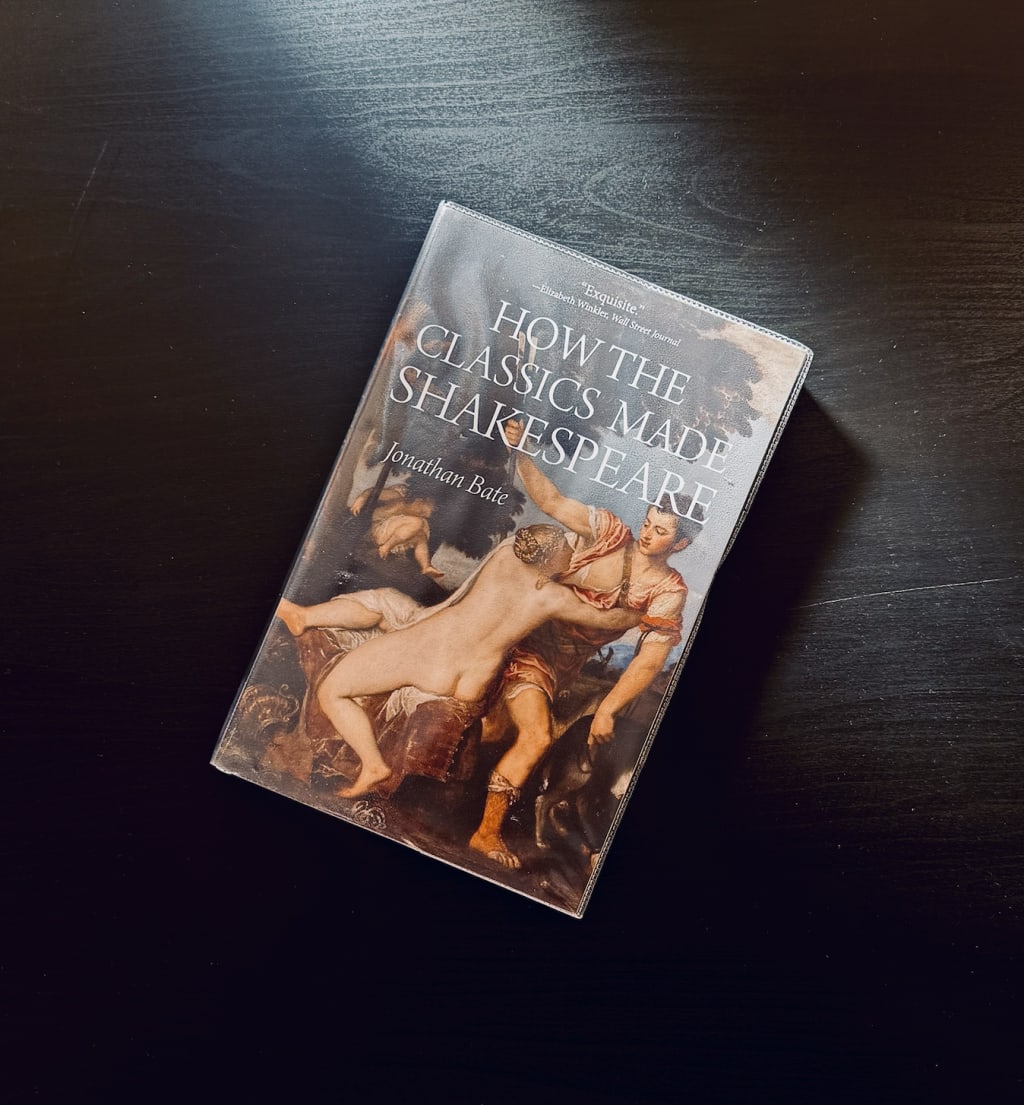
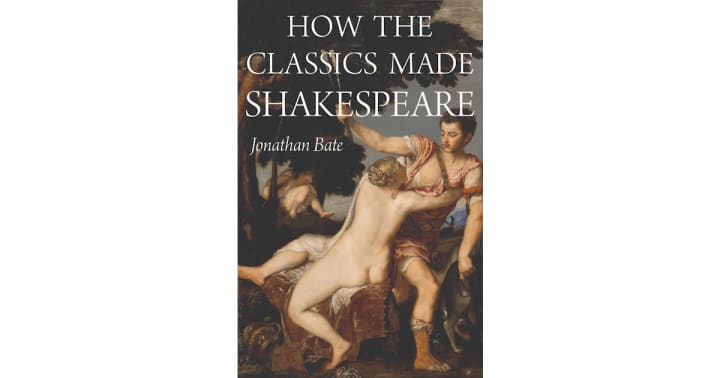
I love reading about Shakespeare and that's been true for more than fifteen years. As of March 2025, that has not changed. If you've loved the articles I've written about Shakespeare then I think you'll quite enjoy that there are books and readings behind them. As I've constantly said, you should always be exploring those secondary source lists to gain access to some really insightful books. One of these books is called How the Classics Made Shakespeare by Jonathan Bate. It is a fantastic work of nonfiction that does a deep-dive exploration into how Shakespeare's classical education in his stint at Grammar School influenced parts of his writing and the philosophies expressed in them.
The author argues that Ovid’s Metamorphoses was Shakespeare’s most significant classical source. The theme of transformation pervades Shakespeare’s plays, from Bottom’s literal metamorphosis in A Midsummer Night’s Dream to the symbolic transformations of identity in Twelfth Night. Ovid’s tales of doomed love, supernatural punishment, and poetic beauty find echoes in Titus Andronicus, The Tempest, and Venus and Adonis. Ovidian storytelling’s emphasis on fluidity and change inspired Shakespeare’s dynamic characterisation and his ability to blend comedy with tragedy. When I was at university and reading Ovid's Metamorphoses this is one of the things I thought about: his influence on Shakespeare's plays. It took me a while to make the connection between this text and Bottom's transformation, but it has been a great thing to read about and so interesting to explore.
Bate highlights the Roman playwright Seneca’s impact on Shakespeare’s approach to tragedy. I wrote an article about Seneca's influence on Shakespeare as well. You can read it here. Seneca’s works, which were widely read in Elizabethan England, influenced Hamlet, Macbeth, and Titus Andronicus with their themes of revenge, supernatural interventions, and rhetorical monologues. Senecan tragedy emphasised violent spectacle and introspective soliloquies, elements that Shakespeare adapted to heighten dramatic intensity. The ghost in Hamlet and the psychological torment of Macbeth bear clear traces of Seneca’s tragic philosophy. I absolutely loved reading Seneca and, whilst at university, I would make full use of the university library and online journals to pack in as much reading as I could before I left and lost my access. I was always cautious. I was surprised that I had not read this book in its entirety though. Thankfully, the library had a copy.
The author also illustrates how Shakespeare absorbed the principles of classical rhetoric, particularly those of Cicero. The eloquent arguments in Julius Caesar, especially Mark Antony’s funeral speech, showcase Shakespeare’s mastery of persuasion, irony, and logical appeal. The use of rhetorical devices such as: anaphora, parallelism, and antithesis in Richard III and Othello further demonstrate how deeply Shakespeare engaged with Roman oratorical traditions. In the past, I have read a few great books about Cicero but none of which mentioned this great power he had in Shakespeare's writing of rhetoric and, if you're like me, then it seems so obvious now. I kind of have to sit back and wonder about how I never saw this before.
Rather than blindly venerating the classical past, Shakespeare often critiques its ideals. Jonathan Bate notes that Shakespeare’s Rome is not a utopia but a flawed society plagued by corruption, civil strife, and moral ambiguity. In Troilus and Cressida, he deconstructs the heroic myths of the Trojan War, portraying the Greek and Trojan leaders as self-serving and cynical. This ironic approach suggests Shakespeare’s skepticism about the classical world’s relevance to Renaissance England. I think this is an interesting angle to take because of Shakespeare's obvious appreciation for the stories and narratives that came out of the Roman world. Shakespeare is known for having seen the humanity in these stories, which is why his plays still endure today. But, I think it is much more than that - it possible he saw the ironies presented by the different perspectives of morality, the humanity of people is therefore essentially flawed and deserves its punishment. I just loved delving into that world.
All in all, I think this book has been a really informative read. If you love reading about classical literature and/or Shakespeare then this book is for you. It is so accessible and the book is written less like a bland academic text and more like a deep-dive, an analysis and a compelling piece of research, rich in its ability to make connection and embrace the world of Shakespeare on a new level.
About the Creator
Annie Kapur
I am:
🙋🏽♀️ Annie
📚 Avid Reader
📝 Reviewer and Commentator
🎓 Post-Grad Millennial (M.A)
***
I have:
📖 280K+ reads on Vocal
🫶🏼 Love for reading & research
🦋/X @AnnieWithBooks
***
🏡 UK
Keep reading
More stories from Annie Kapur and writers in Geeks and other communities.
Silver Screen Magic with Mae West
American actress and singer Mae West became a popular film actress during the Great Depression. She started entertaining in vaudeville, then performed on Broadway, and finally went to Hollywood. She signed up with Paramount Pictures and made her debut in the 1932 film “Night After Night.” She also starred in musicals, comedies, and crime dramas. The American Film Institute named her one of the best classic Hollywood actresses.
By Rasma Raisters4 days ago in Geeks
Freezing Rain and Ice Disrupt Travel Across Central and Eastern Europe
Dangerous winter weather brings chaos to roads, rails, and airports as authorities urge caution A powerful wave of freezing rain and ice storms has swept across large parts of central and eastern Europe, bringing daily life to a near standstill and creating hazardous travel conditions for millions. From Germany and Austria to Poland, the Czech Republic, and parts of the Balkans, ice-coated roads, grounded flights, and disrupted rail services have turned routine journeys into dangerous ordeals. Meteorologists warn that freezing rain — one of the most treacherous winter weather phenomena — poses a greater risk than snowfall because it creates an invisible glaze of ice that is nearly impossible to detect until it is too late. What Is Freezing Rain and Why Is It So Dangerous? Freezing rain occurs when rain falls through a layer of warm air and then passes into sub-zero temperatures near the ground. Instead of freezing mid-air like snow, the rain remains liquid until it hits a cold surface, where it instantly turns to ice. The result is black ice — a thin, transparent layer that covers roads, sidewalks, power lines, aircraft wings, and railway tracks. Unlike snow, it offers no traction and is extremely difficult to remove. Experts describe freezing rain as one of winter’s most dangerous hazards, capable of crippling transport networks within hours. Travel Chaos Across the Region Across central and eastern Europe, the effects have been swift and severe. Major highways have reported multi-vehicle accidents, while local roads have become impassable in rural and mountainous areas. In several countries, authorities temporarily closed sections of motorways after trucks jackknifed on ice-slick surfaces. Rail networks were also hit hard. Ice accumulation on overhead lines caused power failures and signal disruptions, forcing trains to run at reduced speeds or be canceled altogether. Thousands of passengers were stranded at stations as operators struggled to keep services running safely. Air travel faced similar challenges. Airports in Germany, Poland, and the Czech Republic reported delays and cancellations as aircraft required repeated de-icing. Even a thin layer of ice can dramatically affect an aircraft’s lift, making safety checks essential but time-consuming. Emergency Services Under Pressure Emergency responders across the region were stretched thin as calls surged. Ambulances struggled to reach patients on icy streets, while fire brigades responded to accidents, fallen trees, and damaged power lines. Hospitals also reported a rise in slip-and-fall injuries, particularly among older residents. Broken bones, head injuries, and hypothermia cases increased as people attempted to navigate frozen sidewalks. Authorities urged residents to avoid non-essential travel and to remain indoors whenever possible. Power Outages and Infrastructure Damage Beyond transport, the ice storm also affected energy infrastructure. Ice-laden power lines sagged and snapped under the weight, leading to localized power outages in several regions. In rural areas, repair crews faced dangerous conditions as they worked to restore electricity. Icy roads slowed response times, leaving some communities without power for extended periods during freezing temperatures. Telecommunications networks also experienced disruptions, further complicating emergency response efforts. Economic Impact and Business Disruptions The freezing rain has had an immediate economic impact. Delivery services were delayed, factories reduced shifts due to staff shortages, and retailers reported lower foot traffic as customers stayed home. Logistics companies warned that prolonged icy conditions could disrupt supply chains, particularly for food and medical supplies that rely on just-in-time delivery systems. Tourism was also affected, with winter destinations reporting canceled bookings and delayed arrivals, even as ski resorts benefited from colder temperatures at higher elevations. Climate Change and Extreme Winter Weather Scientists point out that climate change may be contributing to more frequent freezing rain events. As winters become warmer overall, temperatures often hover around the freezing point — the exact conditions needed for freezing rain. This creates a paradox where regions experience fewer snowstorms but more ice storms, which can be far more destructive. Climatologists warn that infrastructure across Europe was largely designed for snow, not prolonged ice events, leaving cities vulnerable as weather patterns evolve. Authorities Urge Vigilance Governments and meteorological agencies issued repeated warnings, advising drivers to reduce speed, increase braking distance, and equip vehicles with winter tires and emergency kits. Pedestrians were encouraged to wear non-slip footwear and use handrails whenever possible. Schools in several areas shifted to remote learning to reduce travel risks. Officials emphasized that patience and caution save lives, reminding citizens that even experienced drivers cannot control a vehicle on black ice. Looking Ahead Forecasts suggest that temperatures may gradually rise in some areas, easing icy conditions, while others could face additional freezing rain before the system moves on. Cleanup and repairs are expected to continue for days, even after the weather improves. The freezing rain sweeping across central and eastern Europe serves as a stark reminder that winter’s most dangerous storms are not always the most visible. As climate patterns continue to change, authorities and citizens alike may need to rethink how they prepare for — and respond to — ice, not just snow.
By Fiaz Ahmed Brohi4 days ago in Geeks


Comments (1)
Good