
The 10 Greatest Shakespeare Characters
It's Shakespeare's Big Day!

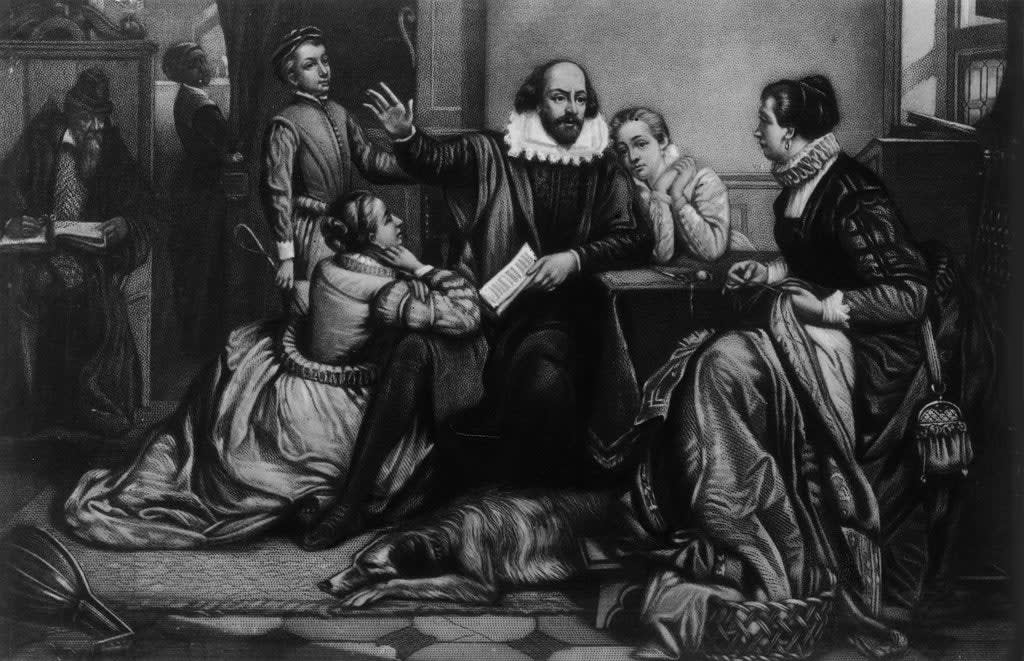
Happy Birthday to William Shakespeare. Yes, I know that it's a contentious issue of about when his birthday actually was but it is commonly taken as this date and so, let's keep it easy.
At 461 years' old and 409 years since his death, Shakespeare is still one of the most-read most-critiqued and even more importantly, most respected figures in literary history. His writing has touched the hearts of millions, it has also given us as Shakespeare super-fans, a therapeutic retreat where we might find solace in his words. But I think you've read enough about me talking about Shakespeare (even though there is more to come!). Here's a list of my ten favourite characters from his plays. Let's take a look at them and what's so amazing about these figures.
Note:
This is an opinion article. If you do not like my opinions, that is fair. But please keep the conversation respectful and don't insult my character or the characters of other people. Everyone is entitled to their opinion. Let's keep our diversity of thought open, and more importantly, kind.
Thank you.
The 10 Greatest Shakespeare Characters
10. Duke Vincentio (Measure for Measure)
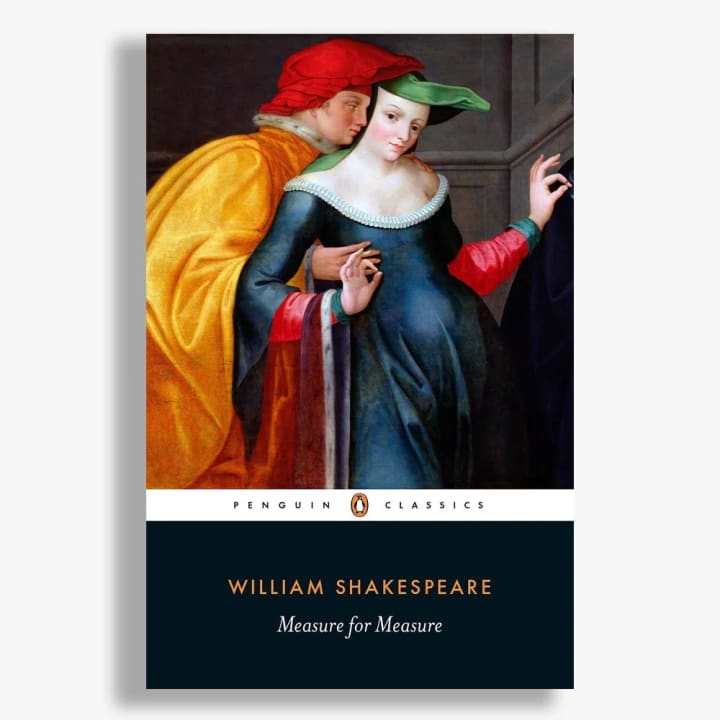
Twice treble shame on Angelo,
To weed my vice, and let his grow.
O, what may man within him hide,
Though angel on the outward side!
- The Duke in 'Measure for Measure'
The Duke from Measure for Measure is one of the most machiavellian characters in all of Shakespeare's plays. He exits the city in order to re-enter and spy on it whilst the dark and weird Angelo takes over. As Isabella begs for justice on behalf of her brother, the Duke analyses how his city falls apart underneath a corrupt man and his desires. Not only this, but the Duke does some questionable stuff when he reveals himself. Measure for Measure might be a play about hidden motives and identities, but the Duke really takes the cake for being one of the most deceptive characters ever.
9. Hamlet (Hamlet, Prince of Denmark)
"My father's brother, but no more like my father
Than I to Hercules: within a month:
Ere yet the salt of most unrighteous tears
Had left the flushing in her galled eyes,
She married. O, most wicked speed, to post
With such dexterity to incestuous sheets!
It is not nor it cannot come to good:
But break, my heart; for I must hold my tongue.”
- Hamlet in 'Hamlet, Prince of Denmark'
I think I can speak for everyone when I say that Hamlet as a character has some of the best lines in any of Shakespeare's plays. My personal favourite has to be the long speech he makes at the end of Act 2, Scene 2 or the conversation he has with the actors who will perform The Murder of Ganzago later on in the play. There's also the weird interaction he has with Polonius when he refers to the man as a fishmonger and of course, the fearful realisation he has when conversing with the ghost of his father. I could go on about this play forever, but I will say this: if you haven't read it or seen it, you are perhaps missing out on the greatest piece of theatre to ever come out of the English language.
8. Macbeth (Macbeth, King of Scotland)
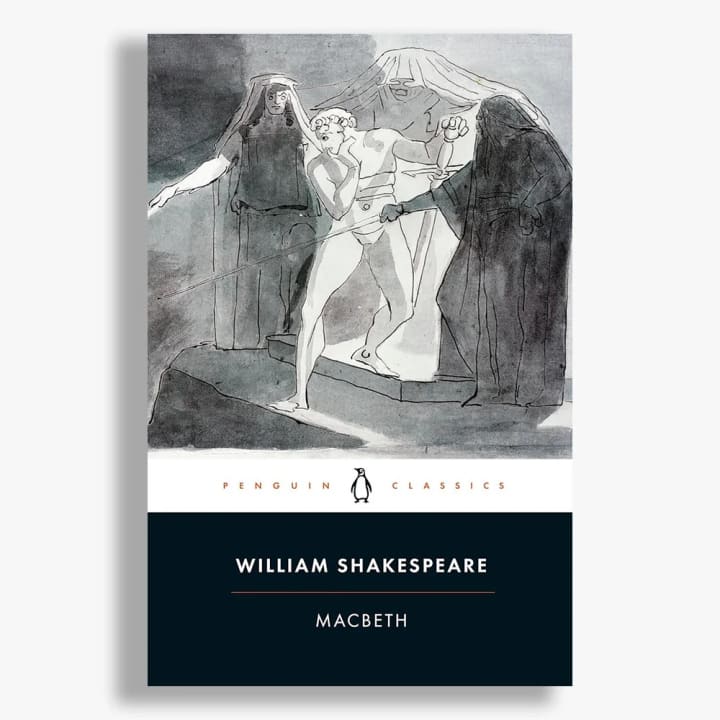
“To-morrow, and to-morrow, and to-morrow,
Creeps in this petty pace from day to day,
To the last syllable of recorded time;
And all our yesterdays have lighted fools
The way to dusty death. Out, out, brief candle!
Life's but a walking shadow, a poor player,
That struts and frets his hour upon the stage,
And then is heard no more. It is a tale
Told by an idiot, full of sound and fury,
Signifying nothing."
- Macbeth in 'Macbeth, King of Scotland
I have taught this play over and over again over the course of the last decade and honestly, it never gets old. Macbeth as a character is one of the most fascinating of Shakespeare's tragic protagonists. He is a man with ambition, but no resolve, a man with the want but without the courage to do what is necessary. He is both enraged and melancholic. There are so many emotions he portrays in the play that if you're reading it for the first time then I envy you because you're just beginning to scratch the surface of possibility. When you start to dig deeper into exactly what he's saying, especially in that soliloquy he does in Act 2, Scene 1 - then you really get sight of his character: and he's not a great guy at all.
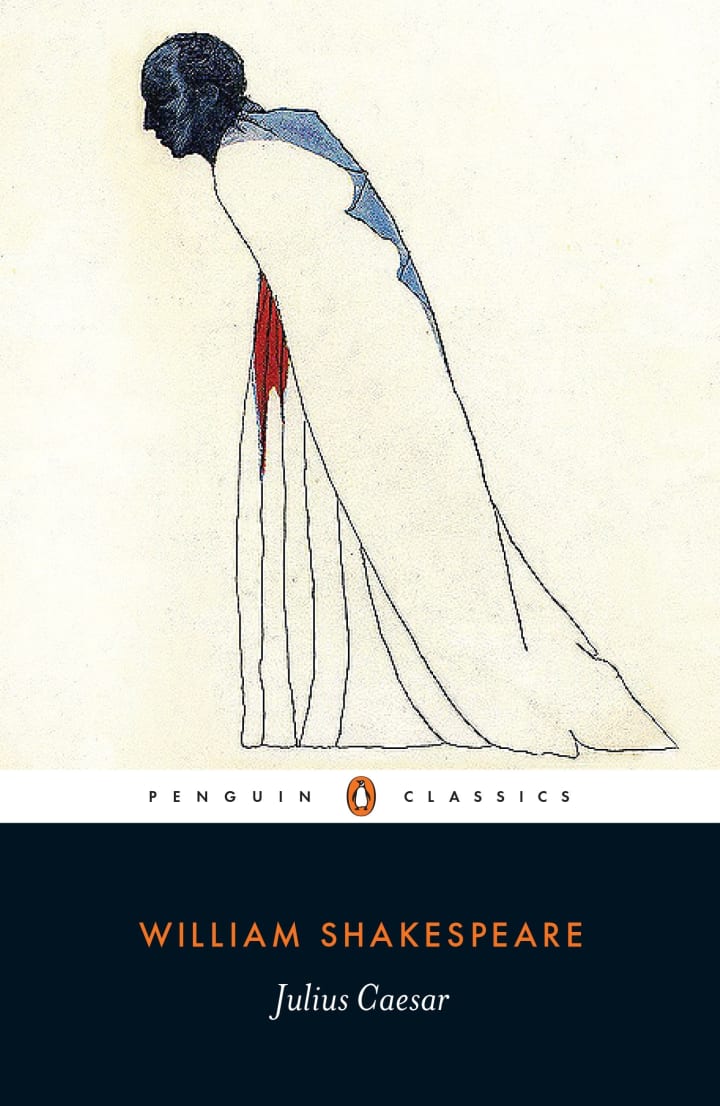
7. Cassius (Julius Caesar)
“Why, man, he doth bestride the narrow world
Like a Colossus, and we petty men
Walk under his huge legs and peep about
To find ourselves dishonorable graves.
Men at some time are masters of their fates.
The fault, dear Brutus, is not in our stars
But in ourselves, that we are underlings.”
- Cassius in 'Julius Caesar'
Cassius is one of those characters whom the audience are not keen on, but they don't know about either. It's like he's a shifty character. One moment you're quite supportive of his opportunistic plan in Brutus and the next moment it seems really deceptive and strange. Caesar makes an observation of Cassius early in the play and basically states that he doesn't like the way Cassius looks at him because it is off-putting and there's something in his eyes which isn't quite right. I think this sums up Cassius perfectly as a character. He's not a trustworthy guy and that is why he appears on this list. Shakespeare writes hidden motives very well, especially in a play like Julius Caesar.
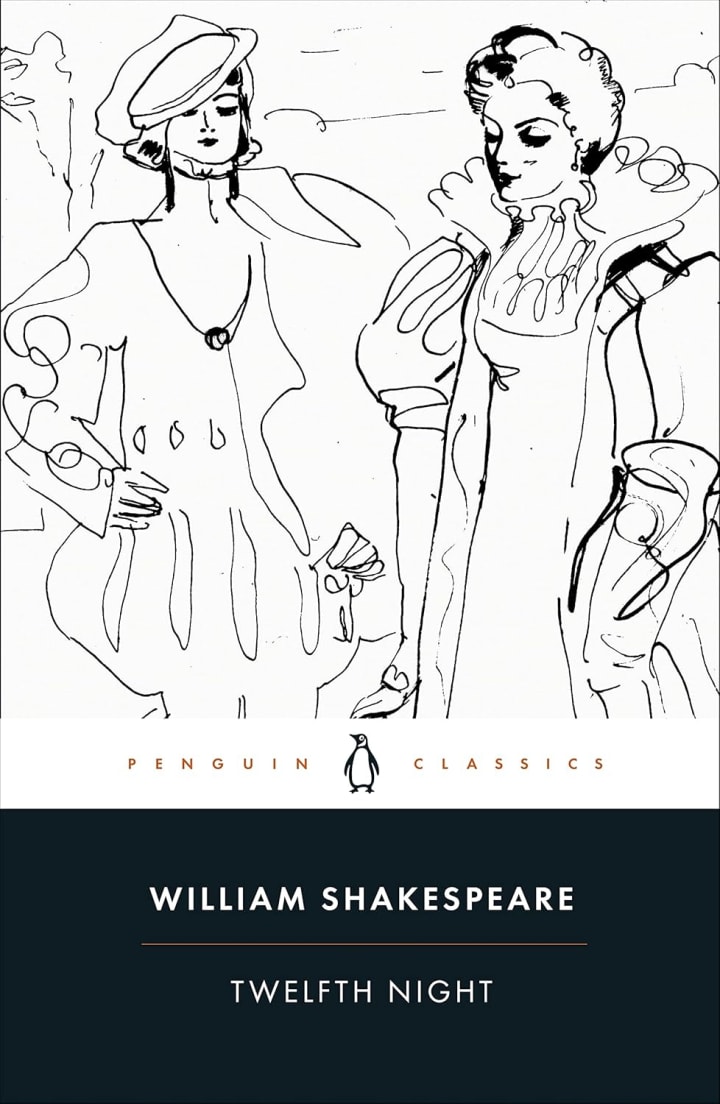
6. Feste/Clown (Twelfth Night)
"Why, 'some are born great, some achieve greatness,
and some have greatness thrown upon them.' I was
one, sir, in this interlude; one Sir Topas, sir; but
that's all one. 'By the Lord, fool, I am not mad.'
But do you remember? 'Madam, why laugh you at such
a barren rascal? an you smile not, he's gagged:'
and thus the whirligig of time brings in his revenges."
- Feste/Clown in 'Twelfth Night'
Okay, I have a soft spot for Feste because I love the way the character ends the play of Twelfth Night. There is something really satisfying about the closing to some of the comedies. For example: the closing to A Midsummer Night's Dream is the same in which one of the characters addresses the audience as the play comes to an end. Sometimes simply addressed as 'CLOWN', Feste is a jester and sings a song at the end of the play to mark the final day of the Christmas period.
5. Shylock (The Merchant of Venice)
"To bait fish withal: if it will feed nothing else,
it will feed my revenge. He hath disgraced me, and
hindered me half a million; laughed at my losses,
mocked at my gains, scorned my nation, thwarted my
bargains, cooled my friends, heated mine
enemies; and what's his reason? I am a Jew. Hath
not a Jew eyes? hath not a Jew hands, organs,
dimensions, senses, affections, passions? fed with
the same food, hurt with the same weapons, subject
to the same diseases, healed by the same means,
warmed and cooled by the same winter and summer, as
a Christian is? If you prick us, do we not bleed?
if you tickle us, do we not laugh? if you poison
us, do we not die? and if you wrong us, shall we not
revenge? If we are like you in the rest, we will
resemble you in that. If a Jew wrong a Christian,
what is his humility? Revenge. If a Christian
wrong a Jew, what should his sufferance be by
Christian example? Why, revenge. The villany you
teach me, I will execute, and it shall go hard but I
will better the instruction."
- Shylock in 'The Merchant of Venice'
Shylock is one of the most famous characters in all of Shakespearean history. I can't remember who wrote the book or who edited it, but there was a book in my university library from about a decade back. It was called 'Shylock' and was specifically a bunch of essays about this one character. It was huge and over 500 pages long. There is no doubt that Shakespeare wrote this character for a specific audience but I don't think he premeditated the change this character would undergo because of context. The post-1945 context of Shylock has become something of legend and alongside the performance of Al Pacino as the character in an adaptation of the play. I could go on about Shylock forever, but the character is simply one of the most interesting in all of literary history.
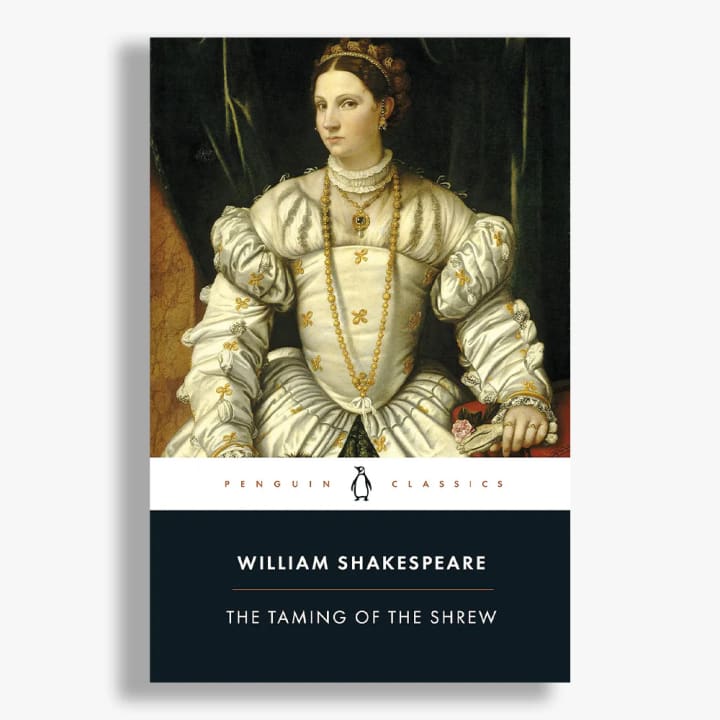
4. Katherina (The Taming of the Shrew)
"I'faith, sir, you shall never need to fear:
I wis it is not half way to her heart;
But if it were, doubt not her care should be
To comb your noddle with a three-legg'd stool
And paint your face and use you like a fool."
- Katherina in 'The Taming of the Shrew'
You have to admit that The Taming of the Shrew is one of Shakespeare's most hilarious comedies. Katherina is a character filled with anger and oddity. I love this character for her wit but more importantly for the fact that she simply takes no shit whatsoever. Her interactions with her father represent that she is not someone to be bossed around and so, that's why the end of the play is so baffling. I like to think that this play got more traction after the film 10 Things I Hate About You but it clearly had no more fame than when Clueless came out and Emma was still left on the shelf. Anyways, Katherina is probably the funniest Shakespeare character in my opinion and so that's why she's here.
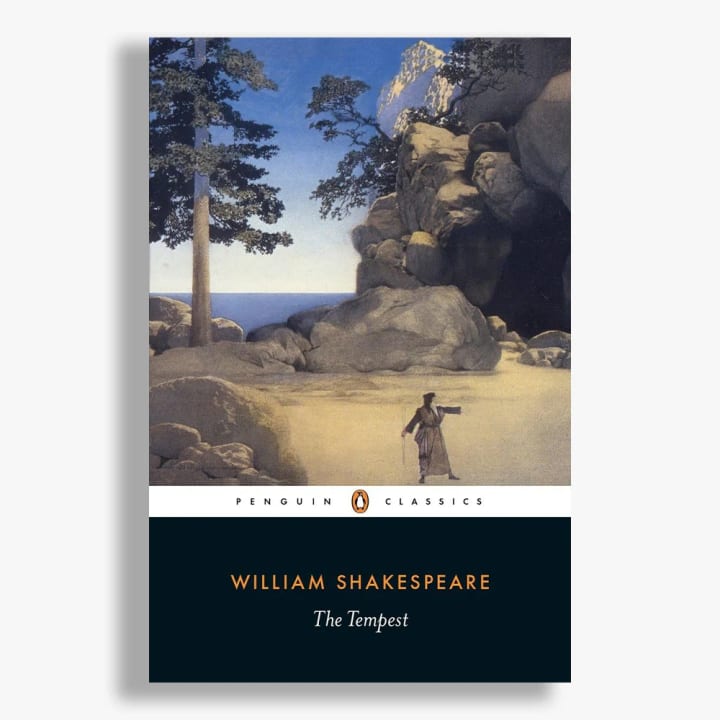
3. Prospero (The Tempest)
"...But release me from my bands
With the help of your good hands:
Gentle breath of yours my sails
Must fill, or else my project fails,
Which was to please. Now I want
Spirits to enforce, art to enchant,
And my ending is despair,
Unless I be relieved by prayer,
Which pierces so that it assaults
Mercy itself and frees all faults.
As you from crimes would pardon'd be,
Let your indulgence set me free."
- Prospero in 'The Tempest'
In a classic tale of how the victim became the abuser, Prospero is kicked off his land and then takes over another person's regardless of what they think. (Note: I don't think we should feel particularly sorry for Caliban as he did threaten to assault Miranda, but this is probably a result of having his land taken from him in the first place). Prospero is one of those morally ambiguous characters who we still support in getting home. When he orders Ariel to make the ship sink, there's something bubbling there and the audience can see there is a whole plan laid out in Prospero's mind. He spends the rest of the play tricking the men he knew from his original home until the very end - where he makes some of the most incredible speeches Shakespeare ever penned in his comedies.
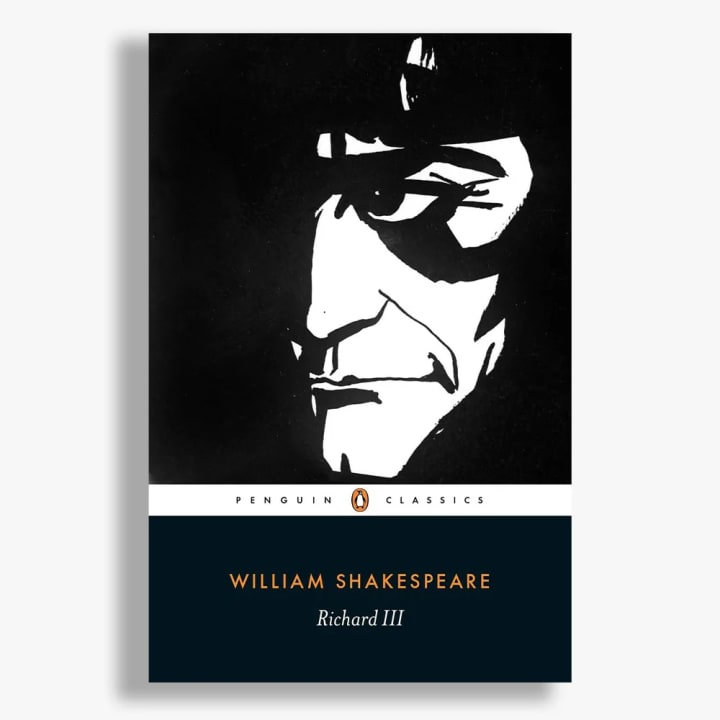
2. Earl Rivers (Richard III)
O Pomfret, Pomfret! O thou bloody prison,
Fatal and ominous to noble peers!
Within the guilty closure of thy walls
Richard the second here was hack'd to death;
And, for more slander to thy dismal seat,
We give thee up our guiltless blood to drink.
- Earl Rivers in 'Richard III'
Gosh, I've got a little obscure addition here but hear me out. Richard III is one of my favourite Shakespeare plays ever and yes, I understand that Anne has some great lines and so does Margaret Beaufort. But there is one scene in this play that always, undoubtedly moves me. It is Act 3, Scene 3 at Pomfret Castle where Earl Rivers makes a cry of justice, referring to when Richard II was killed in the same place where he and two others are about to be executed. The scene ends with the three characters embracing each other until they "meet again in Heaven". It is such a powerful scene and yet I hardly see anyone talking about it. If you can, read it today.
Honorable Mentions!
- King Lear (King Lear)
- Henry V (Henry V)
- Orlando (As You Like It)
- Cassandra (Troilus and Cressida)
- Puck (A Midsummer Night's Dream)
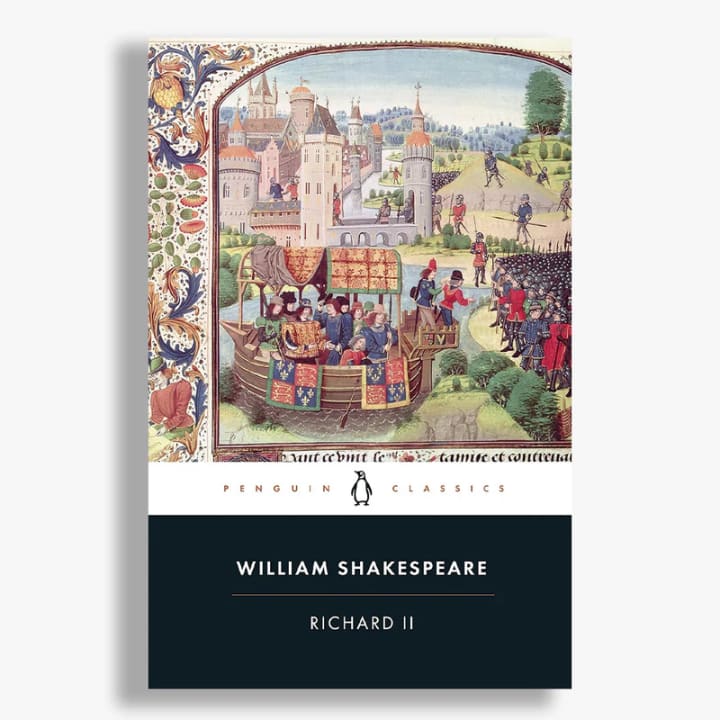
1. King Richard II (Richard II)
My crown I am; but still my griefs are mine:
You may my glories and my state depose,
But not my griefs; still am I king of those.
- King Richard II in 'Richard II'
There aren't many characters in Shakespeare's plays that have lines quite like this character. Richard II is one of the most articulate and insane characters in all of Shakespearean history. The fantastic metaphors and extended stories conducted in the speeches such as "let's talk of graves" are so moving that you barely notice the descending sanity of the main character as he does it.
Act 4, Scene 1 is also quite possibly one of the greatest scenes Shakespeare ever penned and I'm not going to lie, if there is one scene you need to read to learn about Shakespeare's style and fluency - then that is it. Richard II gives us so many great speeches that Act 4, Scene 1 is only one of the scenes that has quite a few of them. The crown itself is a character, a metaphor, a wonder, a poison. The havoc of destruction stretching over to the next play: Henry IV, Part 1
Conclusion
Thank you for coming on this journey with me and I hope you continue to read Shakespeare in your coming years. Just take a look at some of the plays listed if you have not already and dive into a Shakespearean experience, one of the greatest experiences you will have in all of your reading life. When someone asks me why people still read Shakespeare today, my response is simply this: "...because he's the greatest of all time..."
About the Creator
Annie Kapur
I am:
🙋🏽♀️ Annie
📚 Avid Reader
📝 Reviewer and Commentator
🎓 Post-Grad Millennial (M.A)
***
I have:
📖 280K+ reads on Vocal
🫶🏼 Love for reading & research
🦋/X @AnnieWithBooks
***
🏡 UK
Keep reading
More stories from Annie Kapur and writers in Geeks and other communities.
Book Review: "Carthage" by Joyce Carol Oates
My most recent read by Joyce Carol Oates before this was My Life as a Rat and honestly, I could not help but compare that to her novel The Book of American Martyrs when it comes to the morality argument and how our perception of what is good and right are challenged. This is probably also true for this novel entitled Carthage in which we must also have to face that perhaps, not knowing the whole story means that we will judge things at face value. It is only after that will we be taught the entirety of the story. Let's take a look...
By Annie Kapur9 months ago in Geeks
Silver Screen Magic with Mae West
American actress and singer Mae West became a popular film actress during the Great Depression. She started entertaining in vaudeville, then performed on Broadway, and finally went to Hollywood. She signed up with Paramount Pictures and made her debut in the 1932 film “Night After Night.” She also starred in musicals, comedies, and crime dramas. The American Film Institute named her one of the best classic Hollywood actresses.
By Rasma Raisters4 days ago in Geeks
The Devil's Cut
“Comrade, finally you’re awake.” The voice was smooth, sensual. A flickering incandescent bar was all that lit the white, sterile room. All Vladimir remembered was everything going black. He tried to move his arms and found them strapped to the gurney.
By Matthew J. Fromm4 days ago in Fiction


Comments (4)
Applause! Well done! Macbeth has always been a favorite even those 3 nasty witches.
I knew Katherina would make the cut!! Awesome list and tribute, Annie!
Annie, two of my faves--Macbeth and Shylock!
Nice