
Book Review: "He Died With His Eyes Open" by Derek Raymond
5/5 - ...London is a savage place and this book does not hold that back...

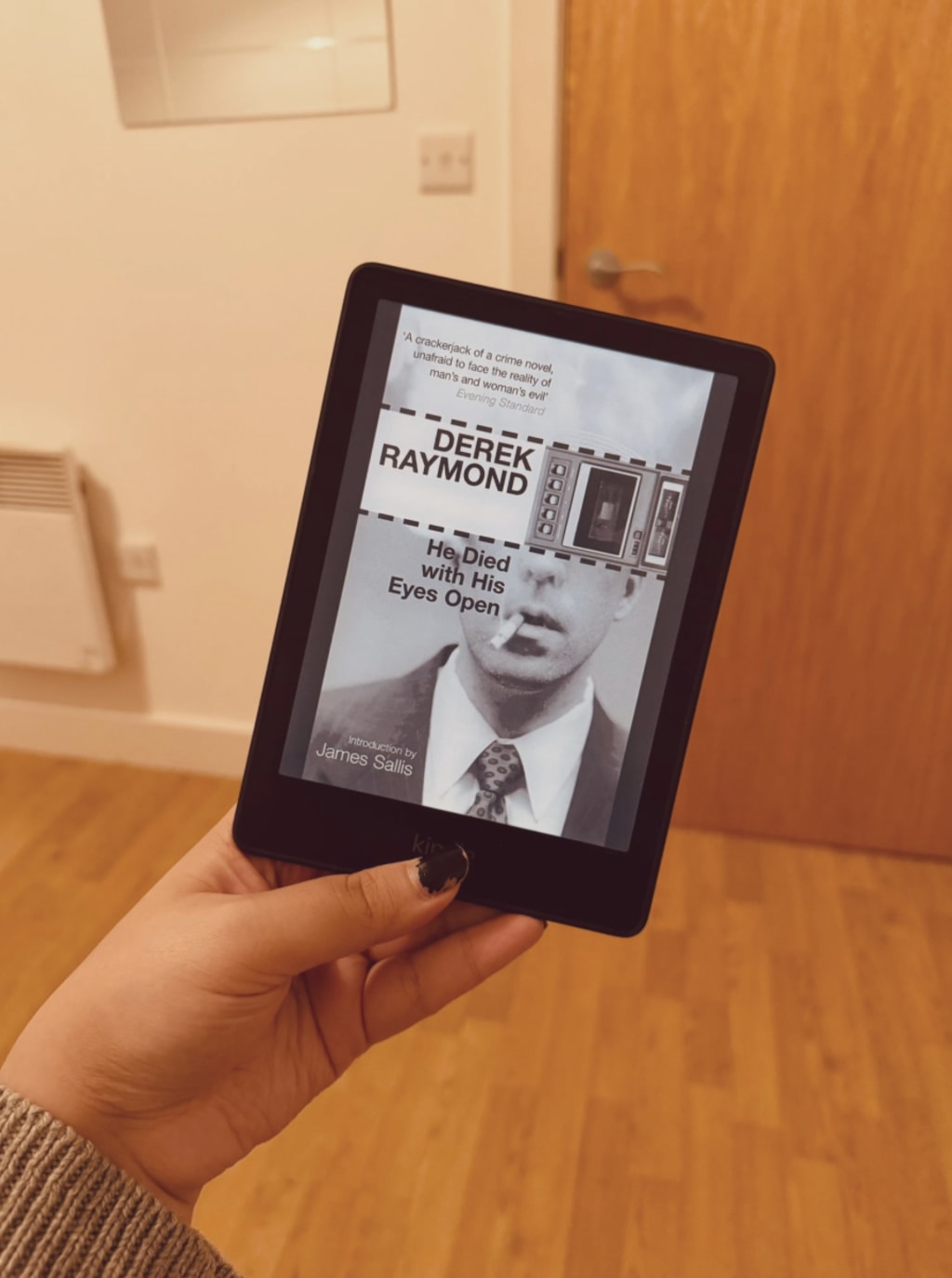
I don't know how I found this book but the blurb of it was absolutely compelling. This is another one of those books I have read for my New Year's Reading Resolution. I wanted to read more books by authors I hadn't heard of and I don't think I had ever heard of this guy before this point of reading the blurb to the book. I quite literally found it randomly when searching for cheap Kindle books. Again, this is going to one of those reviews where I go 'this was surprisingly really good...' and yes, it is part of a series so I just hope I don't get addicted to it. Here we go then...
The novel begins with the unnamed protagonist, a cynical and introspective detective from the Metropolitan Police’s Department of Unexplained Deaths, being assigned to investigate the brutal murder of an unidentified man. The department, colloquially known as the Factory, is a division dedicated to low-priority cases—murders that do not attract public attention or political pressure. These cases often involve victims from the fringes of society, and the Factory’s work is largely ignored by the rest of the police force.
The victim in question is found battered and lifeless on the side of the road, his body left in a state of horrific disarray. His death, violent and impersonal, reflects the harsh indifference of the city that surrounds him. As the detective begins to dig into the victim’s life, he discovers that the man, a middle-aged alcoholic named Charles Staniland, was not just a victim of a brutal crime but also a deeply complex and tormented individual.
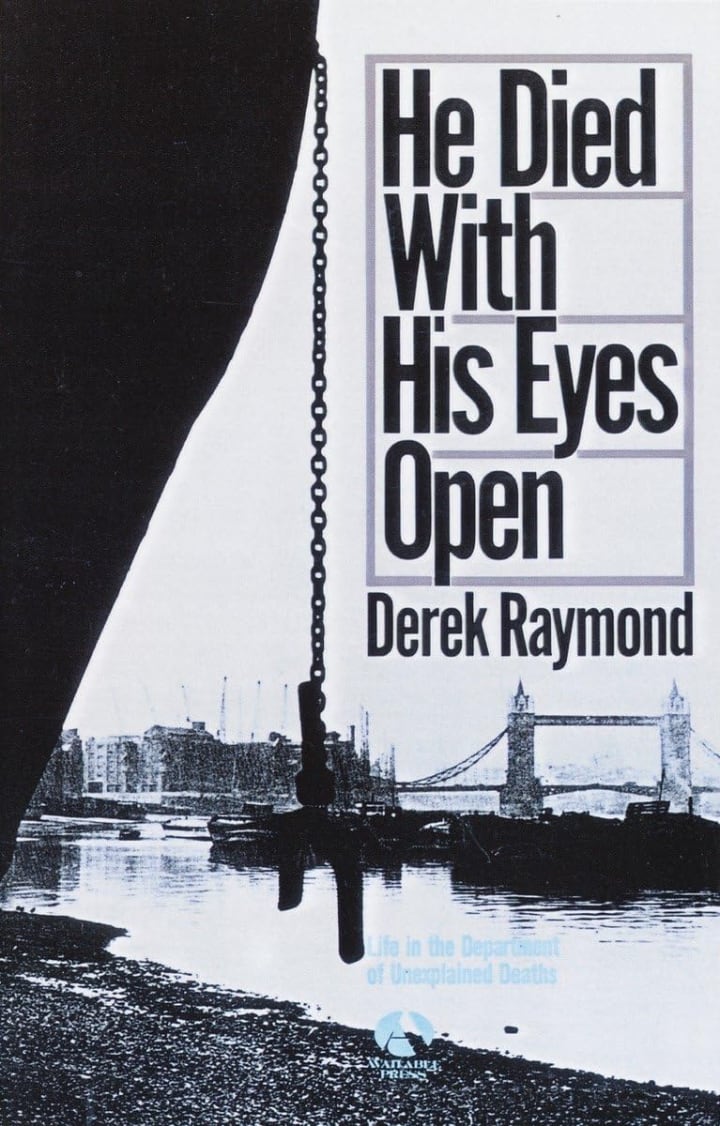
Through his investigation, the detective pieces together Staniland’s life, uncovering a tragic figure alienated from the world around him. Staniland was once a man of promise but had descended into despair, isolated from his family and trapped in the grip of alcoholism. He was a man who yearned for connection but was ultimately abandoned by those closest to him. His writings—intimate, raw, and brutally honest—provide the detective with a window into his thoughts, revealing his frustrations, regrets, and philosophical musings on the bleakness of modern existence.
The tapes Staniland left behind become central to the narrative, serving both as a clue to understanding his murder and as a profound commentary on the human condition. Through these writings, the detective begins to see Staniland not just as a victim but as a reflection of the suffering and alienation that permeates the society they both inhabit. The more the detective reads, the more he is drawn into Staniland’s world, blurring the line between investigator and participant. This is where it starts to become a whole new thing and even the reader thinks this is a bad situation. Honestly, I normally don't do these raggedy noir crime novels but this one is actually pretty interesting because of the weird ethics of the detective on the case.
The London of He Died With His Eyes Open is not the romanticised city of popular imagination but a dark, decaying labyrinth filled with poverty, vice, and despair. Raymond’s depiction of the city is unflinchingly bleak, painting a picture of urban life that is as oppressive as it is compelling. The settings—seedy pubs, grim housing estates, and shadowy alleyways—are described with vivid, visceral detail, creating an atmosphere of suffocating hopelessness.
The city itself becomes a character in the story, its harsh realities shaping the lives of its inhabitants. This environment mirrors the novel’s themes, emphasising the fragility of human connection and the destructive effects of societal neglect. Raymond’s London is a place where morality is ambiguous, and survival often comes at the expense of integrity. This is probably most clear when each person is being interrogated and the bartender mentions that people didn't like the murdered man. The whole case because of this one line has now widened.
As the detective delves deeper into Staniland’s life, he uncovers a web of betrayal, greed, and violence. The investigation leads him into the murky world of Staniland’s associates, revealing a cast of characters who embody the worst aspects of human nature. From manipulative lovers to ruthless criminals, these figures highlight the cruelty and exploitation that often go unnoticed in society’s margins.
The detective’s pursuit of truth is relentless, and his methods are unorthodox. He relies on intuition and empathy, immersing himself in Staniland’s experiences to better understand the events that led to his death. This approach blurs the boundaries between investigator and victim, as the detective’s identification with Staniland grows increasingly personal. Honestly, as it became more personal, I could kind of see where it was heading but it did take its time to get there - which I respected.
All in all, I thought that this book was a thought-provoking read which I think I'll continue to read the rest of the series of in some time. For now though, I would like to read something that is not so graphic and blunt with the acts of violence in which a man's brains have poured from his skull after a savage attack.
About the Creator
Annie Kapur
I am:
🙋🏽♀️ Annie
📚 Avid Reader
📝 Reviewer and Commentator
🎓 Post-Grad Millennial (M.A)
***
I have:
📖 280K+ reads on Vocal
🫶🏼 Love for reading & research
🦋/X @AnnieWithBooks
***
🏡 UK
Keep reading
More stories from Annie Kapur and writers in Geeks and other communities.
Book Review: "Twopence Coloured" by Patrick Hamilton
Someone online was reading Patrick Hamilton novels and within this, I realised that I had only read two books by him and it was obviously the two most famous ones. I was a little more concerned that even though I didn't find the novels unreadable, I didn't give the author another chance just believing it wasn't something important enough to pursue in the world of literature. So, as some of the books were reduced on Kindle, I opted back into the world of Patrick Hamilton novels and here we are - with the bleak and terrifying novel which I can only describe as Dickensian.
By Annie Kapur11 months ago in Geeks
Silver Screen Magic with Mae West
American actress and singer Mae West became a popular film actress during the Great Depression. She started entertaining in vaudeville, then performed on Broadway, and finally went to Hollywood. She signed up with Paramount Pictures and made her debut in the 1932 film “Night After Night.” She also starred in musicals, comedies, and crime dramas. The American Film Institute named her one of the best classic Hollywood actresses.
By Rasma Raisters3 days ago in Geeks
Irish Passports Recalled
Irish passports are widely respected around the world, offering their holders extensive travel freedom and a strong sense of national identity. So when news emerged about Irish passports being recalled, it naturally raised concern, confusion, and plenty of questions among citizens and travelers alike. While passport recalls are rare, they are not entirely unheard of, and understanding the reasons behind them helps separate facts from fear. This article explores why Irish passports were recalled, how the process works, who is affected, and what it means for those planning to travel. Understanding Passport Recalls A passport recall does not automatically mean a security crisis or widespread fraud. In most cases, recalls are precautionary actions taken by authorities to correct an error, protect document integrity, or maintain international trust. Governments treat passports as highly sensitive documents, and even small technical or printing issues can justify swift corrective measures. In the case of the Irish passports recalled, the action was taken to uphold quality standards and ensure compliance with international travel regulations. The Irish Department of Foreign Affairs (DFA), which oversees passport issuance, has emphasized that recalls are part of responsible governance rather than a sign of systemic failure. Why Were Irish Passports Recalled? The recall centered on a limited batch of recently issued passports that were found to contain technical defects. These issues were not related to the personal data of holders but rather to the physical or electronic features of the passport itself. Modern Irish passports include advanced security elements such as biometric chips, specialized inks, and machine-readable zones. If any of these features fail to meet strict international standards, border control systems in other countries may struggle to read the document properly. Even a minor defect can cause delays, questioning, or refusal at immigration checkpoints. To prevent Irish citizens from facing difficulties while traveling, authorities chose to recall the affected passports proactively. Who Was Affected? Importantly, not all Irish passport holders were impacted. The recall applied only to a specific group of passports issued within a defined timeframe. The DFA contacted affected individuals directly using the contact information provided during the application process. Those who did not receive official communication were advised not to panic, as their passports remained valid. This targeted approach helped minimize disruption while ensuring that the issue was resolved efficiently. What Should Affected Passport Holders Do? For individuals whose passports were recalled, the process was designed to be straightforward and free of charge. The general steps included: Official Notification – Affected holders received emails or letters confirming that their passport needed replacement. Return Instructions – Clear guidance was provided on how to safely return the recalled passport. Priority Replacement – New passports were issued on an expedited basis to reduce inconvenience, especially for those with upcoming travel plans. The Irish government reassured citizens that recalled passports would be replaced quickly and that no applicant would be financially penalized for an error beyond their control. Impact on Travel Plans One of the biggest concerns surrounding Irish passports recalled was the potential disruption to travel. While the situation was understandably stressful for some, authorities worked to limit negative impacts. Travelers with urgent plans were encouraged to contact the Passport Service directly. In many cases, emergency or fast-track solutions were made available. Airlines and foreign embassies were also informed, helping ensure smoother coordination. The key takeaway for travelers was simple: if your passport was recalled, do not attempt to travel with it. Doing so could result in delays or denial of entry, even if the passport appeared physically normal. Public Reaction and Trust Public reaction to the recall was mixed. Some expressed frustration, especially those preparing for holidays, work trips, or family visits abroad. Others praised the transparency and swift response of Irish authorities. Overall, trust in the Irish passport system remained strong. Many citizens recognized that recalling passports due to technical issues demonstrated a commitment to quality and international credibility rather than negligence. Lessons Learned The recall highlighted several important lessons for both governments and citizens: Technology Has Limits – As passports become more advanced, the risk of technical issues increases. Communication Is Key – Clear, direct communication helped prevent panic and misinformation. Preparation Matters – Travelers are reminded to check passport validity well in advance of travel. For Ireland, the incident reinforced the importance of rigorous quality checks before distribution. For passport holders, it served as a reminder that even official documents can occasionally require correction. Looking Ahead The issue of Irish passports recalled appears to have been contained effectively, with replacement documents issued and systems reviewed to prevent recurrence. The DFA has since reaffirmed its commitment to maintaining one of the world’s most reliable passport systems. While recalls can be inconvenient, they are sometimes necessary to protect citizens from greater problems down the line. In this case, proactive action helped preserve Ireland’s strong international reputation and ensured that travelers could continue to move confidently across borders. Final Thoughts Passport recalls are unsettling, but they are not always a cause for alarm. The recent recall of Irish passports demonstrated how responsible oversight, transparency, and quick action can turn a potential crisis into a manageable administrative task. For Irish citizens, the message was reassuring: your safety, mobility, and global access remain a top priority. Staying informed and responding promptly to official guidance is the best way to navigate such situations calmly and confidently.
By Saboor Brohi 7 days ago in Geeks


Comments (1)
What a happy and cheerful tome you've found... Good luck reading beyond your usual interests. I found a used copy of the Marquis de Sade's work and I am way over the line.