
Book Review: "Twopence Coloured" by Patrick Hamilton
4/5 - dark, bleak and yet, utterly fascinating...

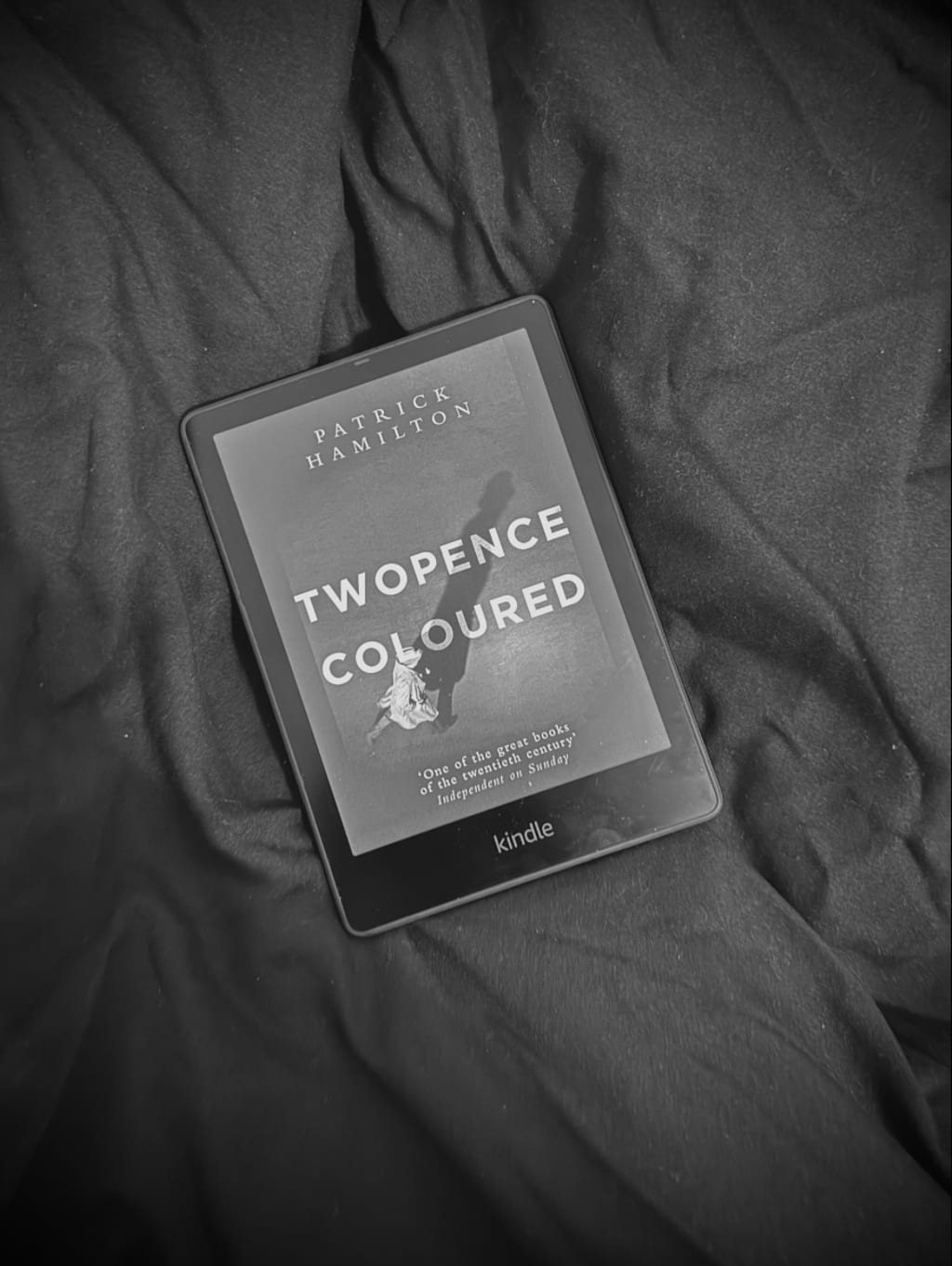
Someone online was reading Patrick Hamilton novels and within this, I realised that I had only read two books by him and it was obviously the two most famous ones. I was a little more concerned that even though I didn't find the novels unreadable, I didn't give the author another chance just believing it wasn't something important enough to pursue in the world of literature. So, as some of the books were reduced on Kindle, I opted back into the world of Patrick Hamilton novels and here we are - with the bleak and terrifying novel which I can only describe as Dickensian.
The story follows Jackie Mortimer, a young, idealistic woman with dreams of escaping her humdrum existence after the death of her father. Jackie’s life is constrained by her unremarkable existence and the suffocating dullness of her surroundings. From the outset, Hamilton depicts Jackie’s restless yearning for something more—a desire that propels her towards the glamour and excitement of the theatre.
Jackie’s aspirations are not merely rooted in a longing for fame but also in a deeper desire for independence and meaning. The theatre represents a world of beauty, creativity, and possibility, standing in stark contrast to her grey and monotonous daily life. However, her ambitions are tinged with naivety, as she underestimates the challenges and compromises required to succeed in such a competitive and exploitative industry.

I find this to be perhaps one of the better openings by Hamilton that I have read. It establishes very quickly the tragedy that is Jackie's life and yet, she keeps getting on with her life regardless. Her father has left her with basically nothing after his death and her mother passed away when she was younger. The opening goes through these things as a matter of fact and so, it is Jackie in the present that is the important and the essentially flawed person she is to the reader.
Hamilton’s depiction of the theatrical milieu is richly textured, capturing its allure and its seedier underbelly. London’s theatre world is portrayed as both magical and merciless, a place where bright lights and applause mask darker realities. Through Jackie’s life, the reader is introduced to the eccentric characters and volatile personalities that populate this world, from fading stars clinging to past glories to ambitious young actors willing to sacrifice everything for a chance at fame.
The novel also explores the precarious nature of theatrical success. Hamilton highlights the vast gulf between aspiration and achievement, with many characters living precarious lives on the fringes of the spotlight. For Jackie, the theatre becomes a microcosm of society’s inequalities, revealing how class, gender, and privilege shape one’s opportunities and outcomes. One of the ways it explores this is through the way it challenges the stereotypes of the theatrical world. One hand is that it is believed to be glamorous and amazing, but as soon as Jackie becomes involved in it, there is no glamour - it isn't even dark glamour as a similar cliché that we are so used to seeing in movies - it is gritty, horrid and just plain horrifying.
Central to the novel are Jackie’s relationships, particularly her interactions with two men who symbolise different aspects of her world. One is a charismatic but morally dubious impresario who promises to help her career, embodying the theatre’s seductive and exploitative nature. The other is a modest, unassuming young man from her previous life, who represents stability and the possibility of a simpler, more grounded existence. As the novel goes on, it becomes almost impossible for Jackie to decide what she wants. On the one hand she wants to stay true to her initial idea, but on the other hand she knows that she needs the stability of life in order to live at all.
All in all, it is a terrifyingly dark and bleak novel with this almost Bleak House style of writing in which scenes are described almost forever in a deeply intense way. There is one part that I had seen within the book that I thought was a great example of this. It is a scene where Jackie is observing other people on a train and she looks at a man who is well-dressed. He is compared to a conqueror who comes on to the train and changes the atmosphere of those who are already there. It is neither positive nor negative. It is almost just an accepted fact - getting us ready for others that Jackie may accept later even if they are not so nice.
About the Creator
Annie Kapur
I am:
🙋🏽♀️ Annie
📚 Avid Reader
📝 Reviewer and Commentator
🎓 Post-Grad Millennial (M.A)
***
I have:
📖 280K+ reads on Vocal
🫶🏼 Love for reading & research
🦋/X @AnnieWithBooks
***
🏡 UK
Keep reading
More stories from Annie Kapur and writers in Geeks and other communities.
'All the World's a Stage'
Note before reading: there's so much good stuff in the citations list at the end, don't skip out on it. I read a lot of it on my degrees but please feel free to peruse some of the books and enjoy. I wrote this a very long time ago but never published it. It was just hanging around in my Notes App (yes, I initially wrote it on my phone). But here we are...
By Annie Kapur11 months ago in Geeks
Silver Screen Magic with Mae West
American actress and singer Mae West became a popular film actress during the Great Depression. She started entertaining in vaudeville, then performed on Broadway, and finally went to Hollywood. She signed up with Paramount Pictures and made her debut in the 1932 film “Night After Night.” She also starred in musicals, comedies, and crime dramas. The American Film Institute named her one of the best classic Hollywood actresses.
By Rasma Raisters4 days ago in Geeks
Top 7 Oak Island Discoveries the Show Didn’t Air
The Curse of Oak Island has captivated audiences for over a decade, blending historical intrigue with reality TV drama. But what fans see on screen is only part of the story. Behind the edited episodes and dramatic voiceovers lies a treasure trove of discoveries that never made it to air — some due to time constraints, others possibly too speculative or controversial for mainstream broadcast.
By Rukka Novaabout 16 hours ago in Geeks



Comments
There are no comments for this story
Be the first to respond and start the conversation.