
Book Review: "Goodbye to All That" by Robert Graves
5/5 - Not the Robert Graves you've read before...

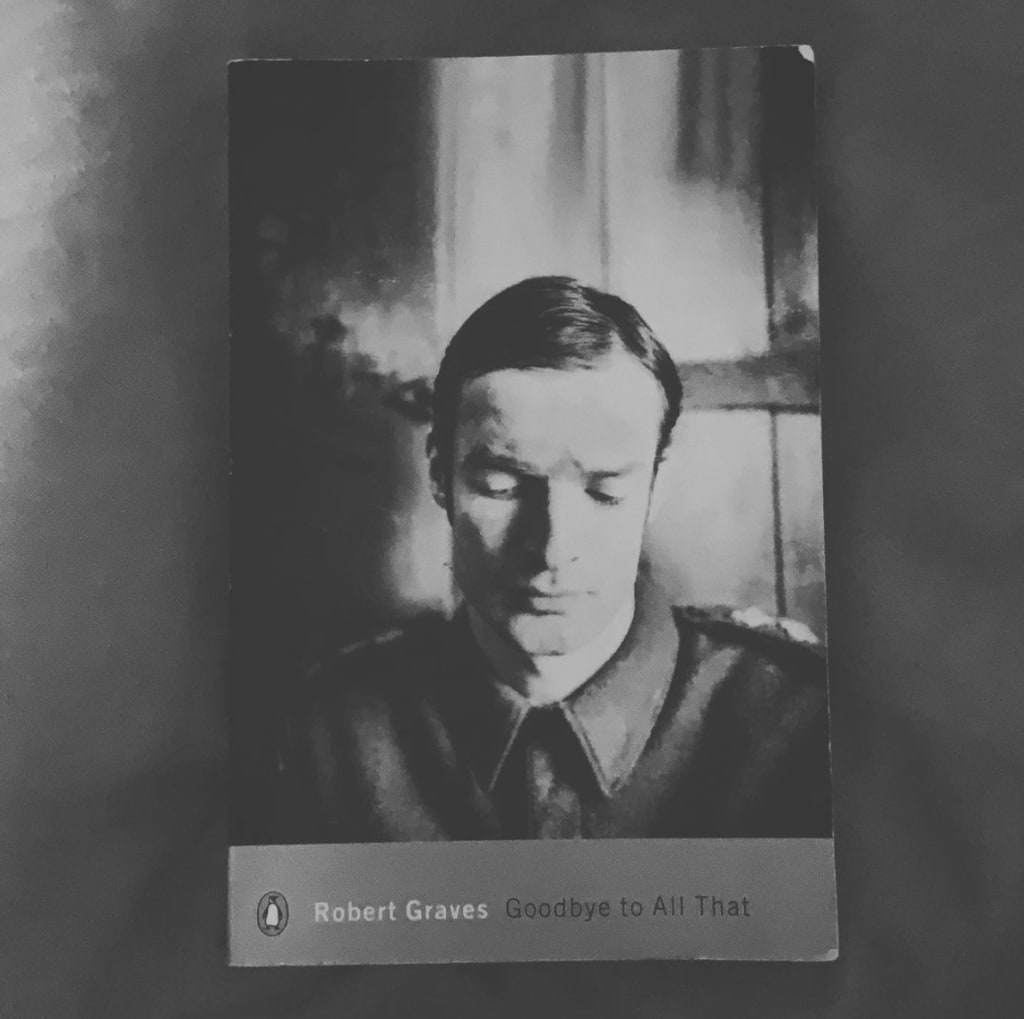
Robert Graves is possibly one of the most recognisable names in British fiction, especially when it comes to writing about the ancient empires and their increasingly disturbing stories. Graves’ novels are often compounded with writing excellence and metaphor whilst being embodied in a lengthy, yet stunningly beautiful narrative. Many people like myself often recall the first time we read any novel by Robert Graves, mine was “I, Claudius” and I have to say at fourteen years’ old, I had no bloody idea what was happening. I had to look up everything in another book and then I had a dictionary for all these archaic words. It was hell and took me just about a month to make it through, but by the end - I was able to write an essay on it. It was quite a wonderful book but I had no idea that Graves had written an autobiography until I was about twenty-one. Yes, before you ask, the autobiography “Goodbye to All That” has been on my ‘to be read’ list for four years, don’t tag me in your post, don’t blog about this incident, just know that I’m sorry. But it was well worth the wait, let me tell you why.
The very first thing I noticed about this novel was that it was nothing like anything I had ever read by Robert Graves in my life. There were not many archaic words and there was not any attempt to completely confuse me. It was far more calming than any Graves book I had encountered. I was quite concerned before I read this as well for the fact that he may have been a bit stuck up since he had once encountered my favourite musician, Bob Dylan, and not had very nice things to say about the way he presented himself. But no, I was wrong. This book was both witty and incredibly down to earth for something Robert Graves has written and I feel like he was far more comfortable with the reader in this book than anything he has written in his entire life.
There is one particular story in the text where Robert Graves and his friends have come back from the war and have gone skiing in the mountains. It is a whimsical scene with everything that you will never find in a Robert Graves novel. It has an intense amount of atmosphere, but it also has a great amount of jokes, laughter and anecdotes that are really very humanising. There is a section where his friend tells him not to break the stone on the mountain because other people in 500 years or so may need to use it and it is quite literally one of the funniest, if not the most humanising scenes in the whole book. I quite like that he doesn’t take himself so seriously here as he does in his other works.
Apart from being modest and fun, this book also has a number of anecdotes about the war. Graves takes an approach to war that it is for the old and rich to get rid of the poor and young in order to keep their ways of life strong in tradition and this is really hitting the nail on the head. Throughout this great book we have a number of things that criticise the yielding of power in war and how these people in power simply sit in their castles watching the young people be carried off in body bags etc. It really does, ironically, remind me of the song “Masters of War” by Bob Dylan - and that is something I don’t think Robert Graves would like to hear.
About the Creator
Annie Kapur
I am:
🙋🏽♀️ Annie
📚 Avid Reader
📝 Reviewer and Commentator
🎓 Post-Grad Millennial (M.A)
***
I have:
📖 280K+ reads on Vocal
🫶🏼 Love for reading & research
🦋/X @AnnieWithBooks
***
🏡 UK
Keep reading
More stories from Annie Kapur and writers in Geeks and other communities.
Book Review: "The Twelve Lives of Alfred Hitchcock" by Edward White
When I read about film - as someone who has a Master’s Degree in the subject, I like to read very specific things. The first type of book I enjoy is a critical analysis of the era or type of movie I have been watching. Books such as “The Big Goodbye” by Sam Wasson have normally done some good in my life. The next type of book I love to read about film are the ones about specific films and their directors, the analysis surrounding them and what they did for film. These are probably the most common film books people read and for this the most famous one I can think of from the top of my head is possibly “Stephen King at the Movies” by Ian Nathan. Finally, there are the books about filmmakers that are slightly different - they are a mix between the life of the filmmaker and the things they have made - no, they may not be those large books that come in cardboard covers about Tarantino, PTA and Wes Anderson, but they are just as good, if not far more detailed. One of the best books I have read in this category includes Simon Callow’s “One Man Band” and the current review on this book on Alfred Hitchcock is no different.
By Annie Kapur4 years ago in Geeks
Silver Screen Magic with Mae West
American actress and singer Mae West became a popular film actress during the Great Depression. She started entertaining in vaudeville, then performed on Broadway, and finally went to Hollywood. She signed up with Paramount Pictures and made her debut in the 1932 film “Night After Night.” She also starred in musicals, comedies, and crime dramas. The American Film Institute named her one of the best classic Hollywood actresses.
By Rasma Raisters7 days ago in Geeks


Comments
There are no comments for this story
Be the first to respond and start the conversation.