
Book Review: "Fake History" by Otto English
5/5 - a fantastic critical analysis of our past half-truths...

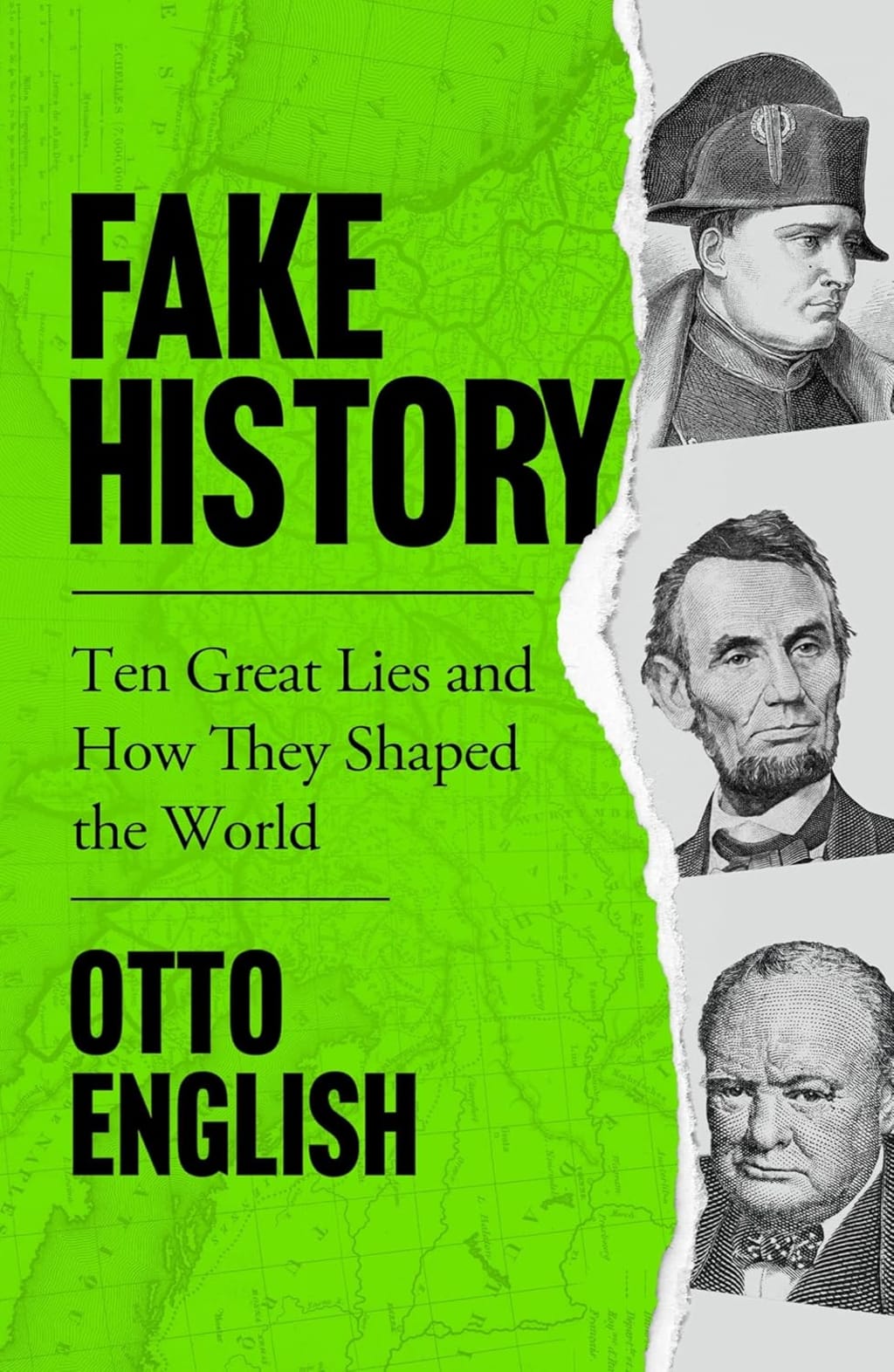
I was trying to keep myself from reading certain books like this because as much as I love history, reading 'pop history' is not for me. However, we should not judge a book by its cover and that's how I discovered that this is not actually a pop history book at all. Instead, this is an in-depth look at the lies we were told in history class and the ways in which myths and legends were made and constructed deliberately out of half-truths. We are forced to confront the lies and then, opened up to what the truths actually are no matter how estranged they are from what we have been made to believe over the years.
One of the key themes of Fake History is the way national identities are built on selective and misleading historical accounts. English takes on the myth of British exceptionalism, particularly the notion that Britain has always been a beacon of democracy, fairness, and global benevolence. He challenges the idea that Britain stood alone during World War II, showing that this narrative erases the contributions of millions from the Commonwealth and the role of the Soviet Union and the United States.
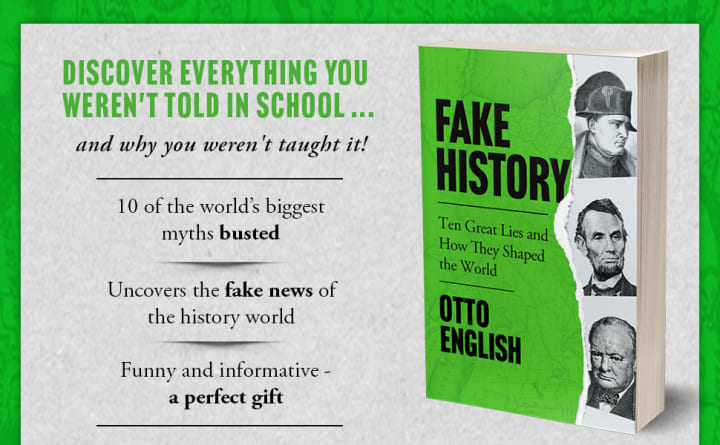
He also critiques the ‘stiff upper lip’ ideology, arguing that it was a Victorian invention used to justify empire and class divisions. This is exemplified by the ideology and narrative the British people have conjured up around the role of Winston Churchill. No matter how much I think he was pretty great, I am still forced to confront some oddities, some half-truths and some straight up lies.
The author argues that this heroic narrative formulated around the 'Greatest Briton' ignores his failures, controversial policies, and problematic views. He highlights Churchill’s disastrous handling of the Gallipoli campaign in World War I, his role in exacerbating the Bengal Famine of 1943, and his deep-seated belief in British imperial dominance. Rather than denying Churchill’s achievements, English seeks to complicate the simplistic hero-worship surrounding him, showing that he was a deeply flawed and often divisive figure. I think a lot of people overseas understand that more than the British people themselves - but one thing I did enjoy learning about is how Boris Johnson yet again, got so many things wrong about Churchill in his book.
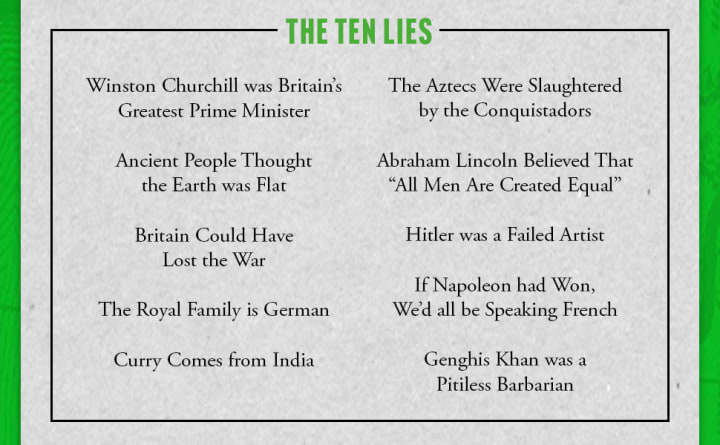
The author tackles the persistent myth that Nazi Germany was ruthlessly efficient and well-organised. He demonstrates that, in reality, the Nazi regime was riddled with incompetence, infighting, and chaotic bureaucracy. Far from being strategic masterminds, Hitler and his inner circle often made reckless, irrational decisions that led to their downfall. English also critiques the modern fascination with Hitler as an almost supernatural evil, arguing that portraying him as an aberration rather than a product of his time and ideology makes it harder to recognise and combat similar patterns today. I was quite surprised that there was a chapter on Hitler given how many documentaries and books there are already about him basically everywhere (especially now that a certain someone is in a certain office of a certain country). But it was still an insightful chapter.
One of the most deeply ingrained myths in Britain is that the British Empire was a civilising force that brought law, order, and progress to the world. English systematically dismantles this view, highlighting the brutality, exploitation, and racism that underpinned imperial rule. He discusses atrocities such as the Amritsar Massacre in India, the suppression of the Mau Mau uprising in Kenya, and the Opium Wars with China. The idea that the Empire was benevolent, he argues, is a comforting but false narrative that ignores the suffering it inflicted on millions. I think this is a myth that is slowly but surely being dismantled in our modern day - the right and the left are giving it up. The left because they are confronting the bad, the right because there is really no logical way to support it without being labelled as a fascist because that's basically what the Empire was all about: fascism.
All in all, I thought that this was a deeply educational book with some real points to be thought about - especially concerning the bigger players such as Winston Churchill. But I also think it is important because it touches on people who were erased from our histories. For example: some of us do not know our grandmother's maiden names even though they are only two generations away from us. It was a fascinating book.
About the Creator
Annie Kapur
I am:
🙋🏽♀️ Annie
📚 Avid Reader
📝 Reviewer and Commentator
🎓 Post-Grad Millennial (M.A)
***
I have:
📖 280K+ reads on Vocal
🫶🏼 Love for reading & research
🦋/X @AnnieWithBooks
***
🏡 UK
Keep reading
More stories from Annie Kapur and writers in Geeks and other communities.
The Phantom Dark Age
The Phantom Dark Age is a shifty historical theory proposing that approximately 300 years of early medieval European history—roughly between AD 614 and 911—were either fabricated or miscalculated. The theory, most notably advanced by German historian Heribert Illig in the 1990s, suggests that these centuries were artificially inserted into the historical record due to misinterpretations, calendar errors, or deliberate falsifications.
By Annie Kapur10 months ago in Geeks
Silver Screen Magic with Mae West
American actress and singer Mae West became a popular film actress during the Great Depression. She started entertaining in vaudeville, then performed on Broadway, and finally went to Hollywood. She signed up with Paramount Pictures and made her debut in the 1932 film “Night After Night.” She also starred in musicals, comedies, and crime dramas. The American Film Institute named her one of the best classic Hollywood actresses.
By Rasma Raisters5 days ago in Geeks
25 Years Ago The World Welcome Hobbits & Lord of The Rings into Theaters
Twenty-five years ago, a gamble reshaped cinema—and few people realized it in the moment. Where it all started! In December 2001, audiences stepped into Middle-earth with The Lord of the Rings: The Fellowship of the Ring, and something quietly seismic happened. This wasn’t just another fantasy movie arriving for the holiday season. It wasn’t a niche genre experiment or a disposable blockbuster meant to fade once the credits rolled. It was the opening chapter of a cinematic undertaking so ambitious that, even now, it feels borderline impossible that it worked at all.
By Lawrence Leasea day ago in Geeks
The Devil's Cut
“Comrade, finally you’re awake.” The voice was smooth, sensual. A flickering incandescent bar was all that lit the white, sterile room. All Vladimir remembered was everything going black. He tried to move his arms and found them strapped to the gurney.
By Matthew J. Fromm5 days ago in Fiction


Comments
There are no comments for this story
Be the first to respond and start the conversation.