

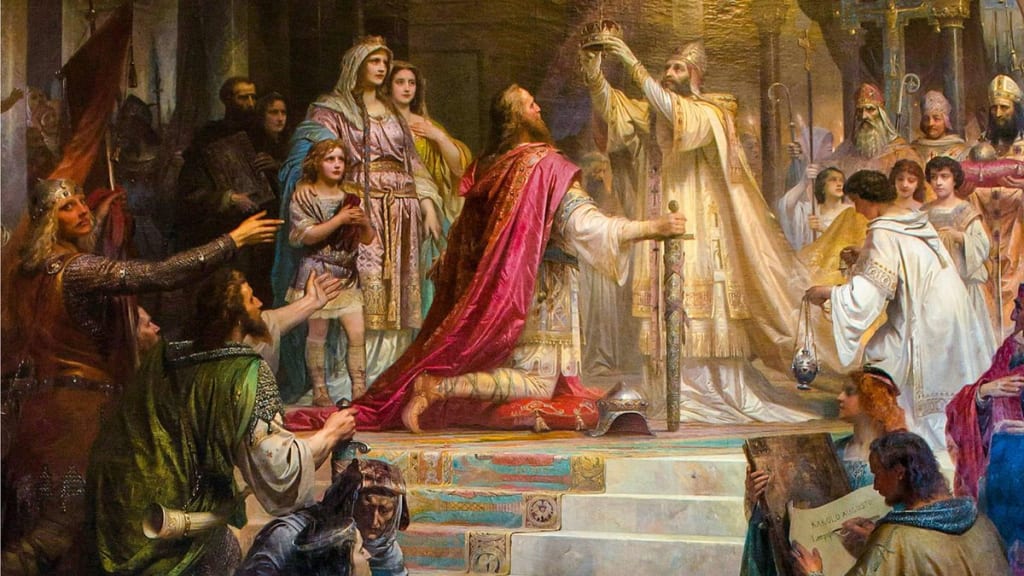
The Phantom Dark Age is a shifty historical theory proposing that approximately 300 years of early medieval European history—roughly between AD 614 and 911—were either fabricated or miscalculated. The theory, most notably advanced by German historian Heribert Illig in the 1990s, suggests that these centuries were artificially inserted into the historical record due to misinterpretations, calendar errors, or deliberate falsifications.
Illig’s hypothesis attributes this to errors in the transition from the Julian to the Gregorian calendar and alleged inconsistencies in architectural, archaeological, and documentary evidence. According to this view, historical records from this period are suspiciously sparse, and the technological and cultural stagnation attributed to the so-called "Dark Ages" might indicate that these years never actually occurred.
Mainstream historians overwhelmingly reject the Phantom Dark Age theory, citing extensive evidence from dendrochronology (tree-ring dating), astronomy, and contemporary sources that confirm the existence of these centuries. Critics argue that while medieval records can be incomplete or contradictory, this does not justify the claim that an entire period was fabricated. Let's take a look at it in some more detail...
Plot
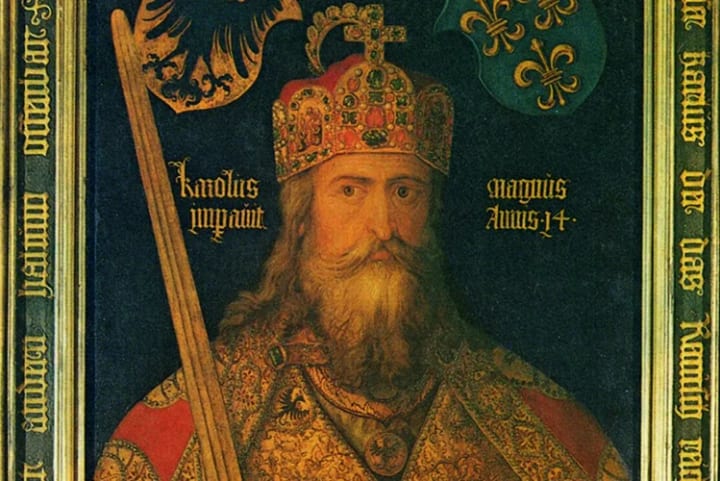
The theory was formulated primarily by German historian Heribert Illig in the 1990s. Illig proposed that approximately 300 years of early medieval European history (from AD 614 to 911) were either fabricated or miscalculated. His theory suggests that this period, particularly the reign of Charlemagne and the Carolingian dynasty, was largely invented due to errors in historical chronology or deliberate falsifications.
Illig’s ideas emerged from his work on historical revisionism, particularly concerning inconsistencies in medieval records. He argued that the transition from the Julian to the Gregorian calendar in the 16th century revealed a discrepancy of around 300 years. While the reform sought to correct a misalignment between the calendar and astronomical observations, Illig claimed that the correction was not as substantial as it should have been if all recorded centuries had truly existed. He also pointed to apparent gaps in archaeological and architectural developments, particularly the lack of new building styles or major innovations during the so-called "Dark Ages." To Illig, this suggested that the period was artificially inserted into history rather than a true, continuous development from late antiquity to the medieval era.
The historical period in question, commonly referred to as the Early Middle Ages or Dark Ages, was marked by the decline of the Western Roman Empire, significant political fragmentation, and frequent invasions from groups such as the Vikings, Magyars, and Saracens. It was also a time of slow cultural and technological development compared to the more dynamic classical and later medieval periods. While this era certainly lacked the grand architectural and literary achievements of Rome or the Renaissance, mainstream historians attribute this to economic and social turmoil rather than a chronological fabrication.
One of the key figures Illig targeted was Charlemagne, the founder of the Carolingian Empire and a ruler celebrated for his military conquests and efforts to revive learning and governance. If Charlemagne and his empire never existed, then much of medieval European history would be based on a fiction. However, historical sources such as annals, legal codes, coinage, and surviving manuscripts consistently support the existence of Charlemagne and his era.
Into the Theories
Political Manipulation and Prestige
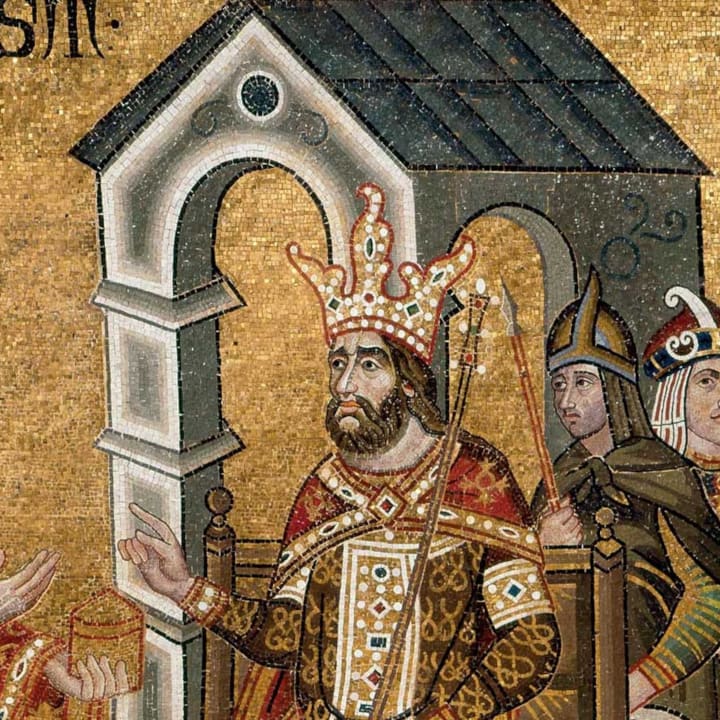
One of the most well-known claims comes from our familiar Heribert Illig, who argued that the Holy Roman Emperor Otto III, along with Pope Sylvester II and the Byzantine Emperor Constantine VII, deliberately altered the calendar in the 10th century to make it appear as though they were living in the prestigious year AD 1000. The early medieval period was steeped in millennialism—the belief that the year 1000 held great religious significance, potentially marking the end of the world or a new divine order. By shifting the timeline forward, Otto III could portray his reign as part of a prophesied golden age, strengthening his legitimacy as a divinely ordained ruler.
Furthermore, by fabricating historical figures such as Charlemagne, Otto III could claim descent from a noble and powerful lineage, reinforcing his own authority. A manufactured past, complete with heroic ancestors and legendary rulers, would serve to validate Otto’s rule and that of future Holy Roman Emperors. This manipulation of history for political gain is not without precedent; rulers throughout history have altered records to strengthen their legitimacy.
Clerical Errors and Calendar Miscalculations
Another theory suggests that the missing centuries resulted not from deliberate fabrication but from errors in the way time was recorded and measured. The shift from the Julian calendar to the Gregorian calendar in the 16th century revealed that the Julian system had accumulated an error of about 10 days over more than a thousand years. Illig and other theorists argue that if such miscalculations were widespread in medieval record-keeping, it is possible that entire centuries were wrongly accounted for, leading historians to overestimate the duration of the Middle Ages.
In the early medieval period, record-keeping was inconsistent, with different regions using varying dating systems. Many historical events were not documented until centuries later, leading to errors and contradictions in the timeline. If scribes unknowingly repeated or misdated events, this could have created the illusion of an extended historical period that never actually occurred. The purpose of this unintentional "invention" of time would not be political but rather an accidental by-product of poor record-keeping and inaccurate chronological calculations.
A Means to Explain the Lack of Progress
The Early Middle Ages, often called the "Dark Ages," saw a significant decline in technological, architectural, and intellectual advancements compared to the Roman period. Cities shrank, trade routes collapsed, and literacy rates declined. To some revisionists, this lack of progress seems suspicious: why would Europe remain stagnant for so long when previous and later periods experienced rapid development?
The Phantom Dark Age theory provides a way to explain this apparent stagnation: if those centuries never existed, then the supposed gap in progress disappears. Instead of wondering why there were so few significant inventions or cultural achievements between the 7th and 10th centuries, revisionists argue that these centuries were simply inserted into history by mistake. If true, this would radically alter our understanding of historical development and collapse traditional narratives of European progress.
Why It's Shifty
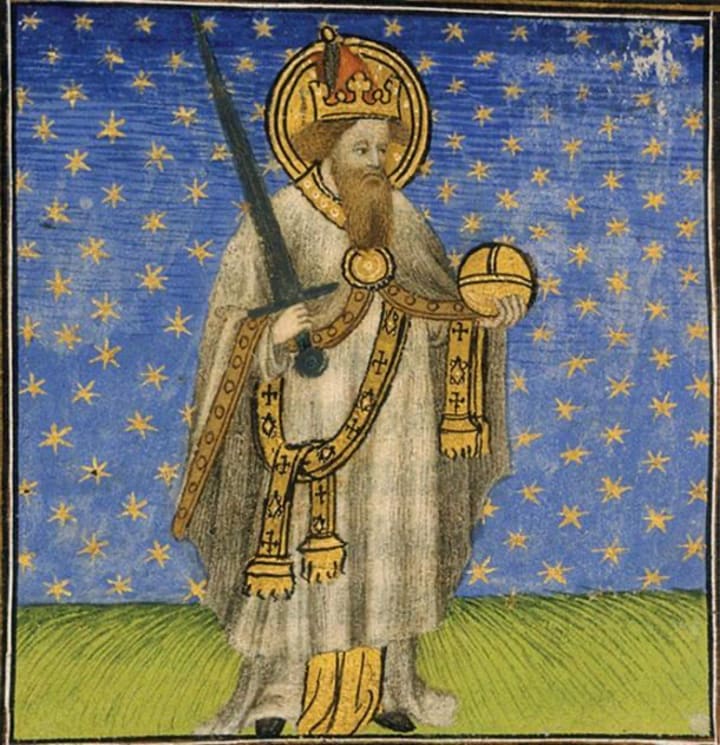
The Phantom Dark Age theory is highly controversial because it challenges the fundamental timeline of European history, suggesting that approximately 300 years between AD 614 and 911 were fabricated or miscalculated. If true, this would mean that key historical figures, such as Charlemagne, never existed and that much of what is considered medieval history is a fabrication. Such a claim directly contradicts centuries of academic research and well-established historical methodologies, making it a highly contentious idea.
One major reason for the controversy is the overwhelming body of evidence that disproves the theory. Archaeological discoveries, written records, and scientific dating methods, such as dendrochronology (tree-ring dating) and radiocarbon dating, support the existence of the period in question. Historical documents from multiple independent sources, including Islamic, Byzantine, and Chinese records, also confirm the passage of time. For the Phantom Dark Age theory to be true, all these records would have to be dismissed as either mistaken or intentionally falsified.
Also, the theory implies an unprecedented and unlikely conspiracy. The idea that medieval rulers, monks, and historians across different regions conspired to insert or alter centuries of history is widely considered implausible. Historians argue that while some errors and biases exist in historical records, they do not amount to the fabrication of entire centuries.
Conclusion
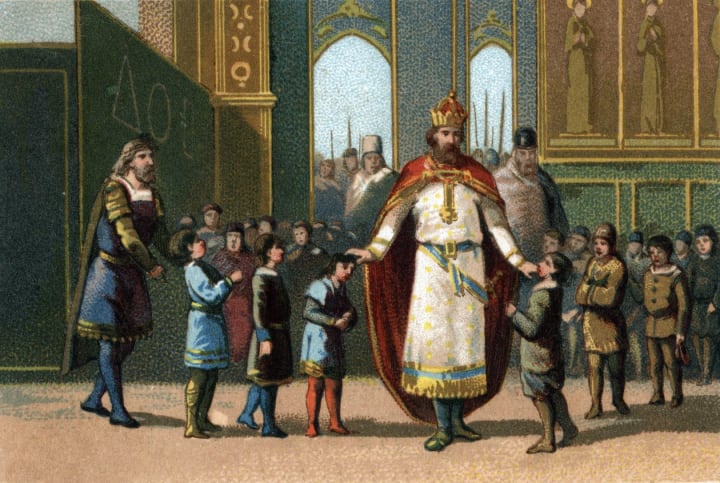
The most plausible explanation is that the Phantom Dark Age theory is unfounded, with overwhelming archaeological, scientific, and historical evidence confirming the existence of the period in question. Miscalculations in medieval chronology and gaps in historical records do exist, but they do not equate to a fabricated timeline. Instead, the Early Middle Ages were simply a time of slow cultural and technological progress. There may be other reasons that this happened but perhaps, we may never really know. See you next week...
Next Week: What Happened to Bobby Fuller?
About the Creator
Annie Kapur
I am:
🙋🏽♀️ Annie
📚 Avid Reader
📝 Reviewer and Commentator
🎓 Post-Grad Millennial (M.A)
***
I have:
📖 280K+ reads on Vocal
🫶🏼 Love for reading & research
🦋/X @AnnieWithBooks
***
🏡 UK
Keep reading
More stories from Annie Kapur and writers in Geeks and other communities.
Book Review: "The Rub of Time" by Martin Amis
Every now and again I will do a deep-dive into a book of essays because life is too short not to. Previously, I did a deep dive of Pulphead by John Jeremiah Sullivan which was perhaps, too long and so, I've learnt my lessons. Martin Amis' The Rub of Time is not nearly as good as that but is still interesting in many ways. Though the writing style meant I was reading it for far longer than I normally would. It took me a few weeks to go through and pick out the things I enjoyed but, it was well worth it if to also tell you the things I did not enjoy. I won't however be going through every single essay because there are absolutely tons in this anthology and not all of them are very good at all.
By Annie Kapur10 months ago in Geeks
Silver Screen Magic with Mae West
American actress and singer Mae West became a popular film actress during the Great Depression. She started entertaining in vaudeville, then performed on Broadway, and finally went to Hollywood. She signed up with Paramount Pictures and made her debut in the 1932 film “Night After Night.” She also starred in musicals, comedies, and crime dramas. The American Film Institute named her one of the best classic Hollywood actresses.
By Rasma Raisters6 days ago in Geeks
How to Watch Premier League?
The crown jewel of English football, Premier League soccer is back. The most- watched sports league in the world features 20 of UK’s best football clubs. Here are some of the ways you can watch and stream the 2025-26 season of Premier League. Don’t miss a match day.
By David Cook3 days ago in Geeks



Comments
There are no comments for this story
Be the first to respond and start the conversation.