
Book Review: "Eventide" by Kent Haruf
5/5 - an immersive experience of how loss can change us all and how loneliness is the worst feeling a person can feel...


The second book in the series beginning with Plainsong had to be one of the weirdest discoveries of books I've had in a while. I waltzed through Amazon, looking at how Plainsong had gone back up in price and slowly giggling to myself about getting it on sale. Slowly scrolling down the page, I saw then that there were two more books in the series. I started to read the blurb to the next Eventide and began to panic. The two beloved characters of the first novel were now about to encounter 'tragedy'. I was beside myself. I purchased both books despite knowing I did not have the funds to do so. As of January 3rd (when this review is being written), I have finished the second book and it was incredible, heartbreaking and completely immersive. It was just as good as the first book...
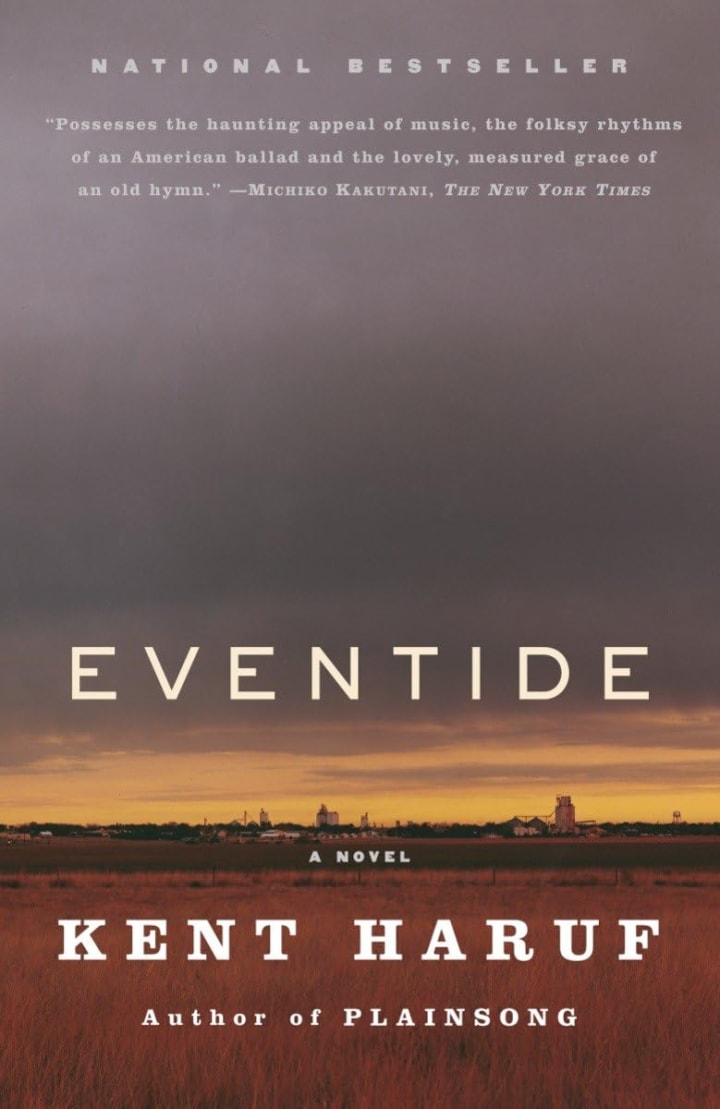
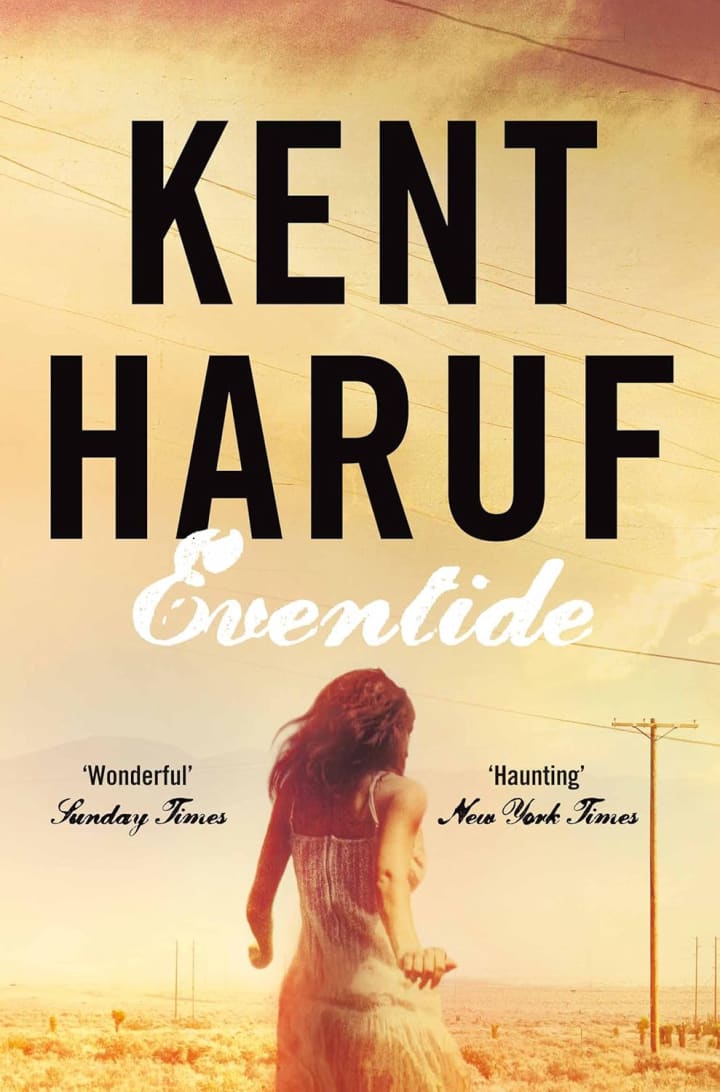
Eventide opens with the McPheron brothers, Raymond and Harold, elderly ranchers who are adjusting to life without Victoria Roubideaux, the young woman they took in during Plainsong. Victoria has left the ranch to attend college with her infant daughter, Katie. The brothers, who had found a new sense of purpose in caring for her, now feel the weight of her absence. Their relationship with Victoria remains strong, but the distance forces them to confront their own loneliness and the limitations of their simple, self-contained existence. Katie is now two years' old which means it has been two years since the events of Plainsong. If you haven't yet read Plainsong then I suggest that you should go back and read either the book or the review because you'll probably get a few spoilers here.
The Wallaces, a struggling couple with two young children, Joy Rae and Richie, represent another thread in the tapestry of Holt. Haruf paints a heartbreaking portrait of a family teetering on the edge of poverty and neglect. Luther, well-meaning but ineffectual, and Betty, volatile and overwhelmed, struggle to provide stability for their children in the face of economic hardship and personal failings. When a social worker, Rose Tyler, intervenes, the Wallaces’ plight becomes a window into the fragility of family life and the systemic challenges faced by those on society’s margins.
Rose’s involvement is driven by compassion, but it also underscores the limitations of institutional support in addressing deep-seated problems. Haruf’s depiction of the Wallaces is unflinching yet empathetic, refusing to offer easy solutions or cast judgment. Betty Wallace is a character who I find fascinating. She cries and she's clearly scared. She's got this classic motherly style against this very human sense of terror of having her anything unknown happening to her children. I freaking hated Hoyt - I was definitely wishing he would die in a horrible way in the book. I am not sorry for that.
Another central narrative follows DJ Kephart, a young boy living with his ailing grandfather after his mother abandoned them. DJ is a quiet, introspective child who shoulders responsibilities far beyond his years. Despite the hardships of his life, including bullying at school and the physical decline of his grandfather, DJ demonstrates remarkable resilience and resourcefulness. The author captures DJ’s quiet strength and yearning for connection, particularly in his tentative friendship with Dena, a neighbour girl who offers him glimpses of childhood normalcy. I found DJ to be just as loveable and innocent as Bobby and Ike from the first book. He has a kind and nice disposition for a young boy trapped in a position of responsibility at an age he isn't supposed to be.
Kent Haruf also turns his lens to Mary Wells and Louise Harker, two elderly women living in Holt who grapple with the loneliness of old age. Mary, a widow, seeks companionship and begins a tentative relationship with a man she meets through a classified ad. Their interactions are filled with awkwardness and vulnerability, reflecting the challenges of seeking intimacy later in life. Louise, on the other hand, is a recluse, bitter and estranged from the world around her. Her isolation serves as a stark contrast to Mary’s tentative efforts to reach out, underscoring the different ways people cope with solitude and loss. These two juxtapositions on loneliness prove to be important when we see all the other characters as well.
Tom Guthrie and Maggie Jones, recurring characters from Plainsong, are shown building a life together after the tumultuous events of the earlier novel. Their relationship, while not without its challenges, provides a sense of stability and hope amidst the struggles of other characters. Haruf uses their story to explore the possibility of second chances and the quiet joys of companionship. Tom Guthrie is such an incredible character. I adored him in the first book. He is a quiet and good man who often stands up for those who cannot stand up for themselves. Like how he stood up for his young sons in the first book by taking on the Beckman family.
All in all, this is another great book of interwoven narratives now separated into 'parts' and just as heartbreaking as the first book - possibly more. We encounter a huge change in the midst of the book that, if you had read the first book, is tragic and horrifying. By delving into themes of loss, resilience, and the enduring power of community, Eventide reaffirms Haruf’s belief in the redemptive possibilities of human connection whilst also showing the depths of loneliness and isolation.
About the Creator
Annie Kapur
I am:
🙋🏽♀️ Annie
📚 Avid Reader
📝 Reviewer and Commentator
🎓 Post-Grad Millennial (M.A)
***
I have:
📖 280K+ reads on Vocal
🫶🏼 Love for reading & research
🦋/X @AnnieWithBooks
***
🏡 UK
Keep reading
More stories from Annie Kapur and writers in Geeks and other communities.
Book Review: "Engleby" by Sebastian Faulks
Now, let's start off with the tone of this review. I appreciate what Sebastian Faulks was attempting to do here but I did find I had some issues with the book. It was not as 'mesmerising' as the reviews would have me believe and I felt like I couldn't lose myself in the narrative because I didn't care too much about our main character: Mike Engleby. Though the premise is promising and it definitely has some strengths where Sebastian Faulks showcases his classic writing style which is both descriptive and existential - I geniunely found some problems with the route this book took. I simply could not immerse myself in it. Let's explore why...
By Annie Kapur11 months ago in Geeks
Marvel Zombie
The last entry into our 2025 superhero projects catalogue is Marvel Zombies. This was a show that was anticipated by absolutely no one and it disappeared from the public consciousness as quickly as it was released. There was nothing special about the project that made it a must see, or a must remember. In fact if anything it's a must forget.
By Alexandrea Callaghan26 days ago in Geeks
5 Years Of 'WandaVision': Revisiting The Series Most Memorable Moments
It's hard to believe that it's already been five years since WandaVision, Marvel Studios' very first TV series, premiered on Disney Plus. A hit with both fans and critics, WandaVision was praised during it's run for expertly juggling so many elements, being both a love letter to classic sitcoms and a bittersweet exploration of grief before exploding into the usual MCU spectacle. The series is still widely considered among the best content Marvel Studios has produced, not just for television, but overall.
By Kristy Anderson3 days ago in Geeks
Autonomy Is The Real Privilege
Good morning, freedom-seekers! Today we’re gonna be looking at autonomy. A strange word, I know; one many would probably look at blankly and run away from on sight. We’re gonna figure out what it actually means, consider how it’s achieved, and decipher just how deeply most of us are tangled up in dependence without realising it.
By That ‘Freedom’ Guya day ago in Humans




Comments
There are no comments for this story
Be the first to respond and start the conversation.