
Book Review: "Engleby" by Sebastian Faulks
3/5 - Sebastian Faulks is a fantastic writer...but this book has one big problem I couldn't get around...

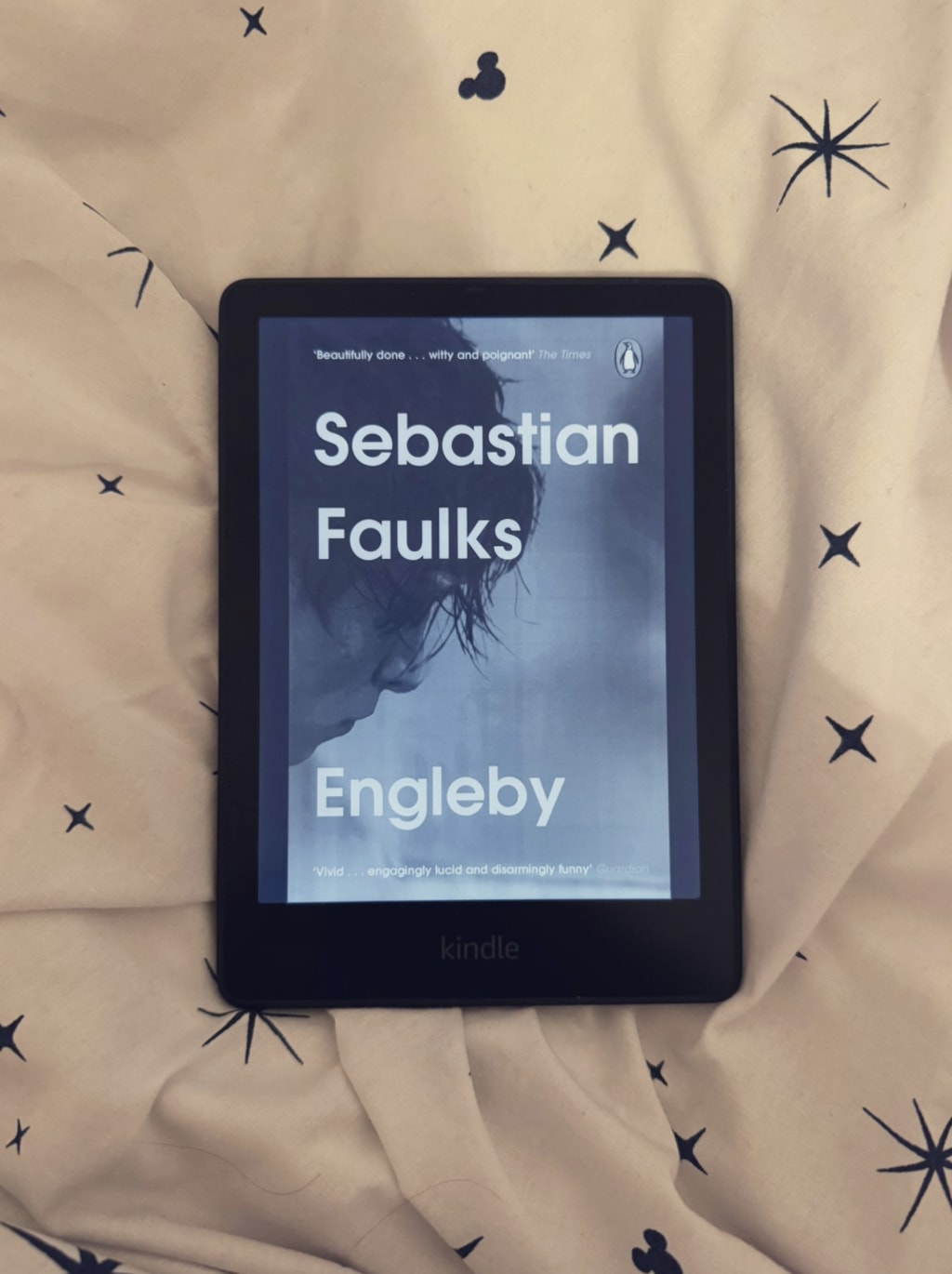
Now, let's start off with the tone of this review. I appreciate what Sebastian Faulks was attempting to do here but I did find I had some issues with the book. It was not as 'mesmerising' as the reviews would have me believe and I felt like I couldn't lose myself in the narrative because I didn't care too much about our main character: Mike Engleby. Though the premise is promising and it definitely has some strengths where Sebastian Faulks showcases his classic writing style which is both descriptive and existential - I geniunely found some problems with the route this book took. I simply could not immerse myself in it. Let's explore why...
The novel opens with Mike Engleby as a university student in 1970s England, recounting his life in first-person narration. From the outset, it becomes clear that Engleby is not a conventional narrator. His tone is detached, analytical, and often unnervingly candid. He reveals details of his difficult upbringing, marked by an abusive father and an oppressive boarding school experience. These early experiences shape his sense of alienation and his deep mistrust of others. Engleby’s time at Cambridge is marked by his obsessive interest in Jennifer Arkland, a fellow student. His interactions with her, initially casual, take on a more sinister undertone as his fixation grows. I found that though this first part is interesting to read from a perspective of learning about the character's narrative quirks - it does not allow us to become involved with the character in any meaningful way. It is as though we are looking at him through frosted glass rather than standing in front of him.

Engleby’s narrative is infused with a profound sense of alienation. He perceives himself as an outsider, disconnected from the social norms and emotional connections that bind others. His disdain for his peers and society at large is palpable, and he frequently critiques the superficiality and hypocrisy he observes. This detachment extends to his own life; he often recounts events with clinical precision, devoid of emotional engagement. Faulks portrays Engleby’s alienation as both self-imposed and circumstantial. His intelligence and sharp wit isolate him from others, but so do his inability to form genuine connections and his refusal to conform to societal expectations. Now, please do not judge me but I didn't really find our main character to be more intelligent than the other characters. Even though he is intelligent, we are not taking that away from him - he is not more intelligent than anyone else. And so, this profound alienation though it sticks through his personality - simply portrays him as the 'edgy loner' rather than the sociopath he is proven to be.
The turning point of the novel is Jennifer’s disappearance, an event that casts a shadow over the narrative. Engleby’s involvement is implied but never explicitly confirmed, adding to the novel’s sense of ambiguity. He becomes a suspect in the police investigation, but his lack of emotional response to Jennifer’s absence is what truly unsettles. Faulks uses this central mystery to explore themes of guilt, denial, and moral ambiguity. Engleby’s detachment raises questions about his involvement and his capacity for empathy. Now, the problem with having the 'capacity for empathy' question right from the beginning of the text is that the reader fails to latch on to the character because they appear to not have a quintessential human quality. However, it makes for a good pattern not to add it in randomly later. Perhaps it is simply something that I do not like when reading. I need something to connect me with the character so that I may go on the journey with them. Mike Engleby does not do that.

Sebastian Faulks’ Engleby is a masterful exploration of identity, memory, and morality, told through the lens of an enigmatic and deeply flawed protagonist. Through its fragmented narrative and unreliable narration, the novel challenges readers to confront uncomfortable truths about human nature and the ways individuals construct their own realities. The issue with the book for me was simply that I didn't think Engleby being the narrator was a great idea. The level of detachment Faulks works into the narrative holds back the reader from involving themselves with him on any deep and emotional level and thus, leaves the ending predictable and cold.
About the Creator
Annie Kapur
I am:
🙋🏽♀️ Annie
📚 Avid Reader
📝 Reviewer and Commentator
🎓 Post-Grad Millennial (M.A)
***
I have:
📖 280K+ reads on Vocal
🫶🏼 Love for reading & research
🦋/X @AnnieWithBooks
***
🏡 UK
Keep reading
More stories from Annie Kapur and writers in Geeks and other communities.
Book Review: "The Shepherd's Hut" by Tim Winton
Tim Winton is perhaps one of my favourite writers of the last year or so because when I read the novel “Cloudstreet” I was completely taken by his writing style. After this, I started to pay more attention to his novels including books such as: “Dirt Music” and “The Riders”. I read his short story anthology entitled “The Turning” and his attempt at a gothic novella entitled “In the Winter Dark”. So far, I have been fascinated by his output and have thus moved on to reading “The Shepherd’s Hut” and yes, I am looking on reading his novel “Juice” in the near future. If you don’t believe that his output is fantastic then please, go back to where you read about “Cloudstreet” and go and read that book.
By Annie Kapur11 months ago in Geeks
The Rachels - 2025
Much to my surprise, I have kept a list of the films I‘ve seen this year. I daresay it isn’t complete. There will be films that snuck in on a late night in front of the TV that I would’ve forgotten to note. Or others, that I went to watch at the cinema, but then had a red wine and promptly forgotten about. But it’s not a bad approximation of the films I’ve seen this year. In total, there are 53 films listed, so an average of one a week and one for good luck.
By Rachel Robbins26 days ago in Geeks
Ikkis and Dhurandhar Should Co-Exist in a Democracy’: Writers on Facing Trolls and Working With Dharmendra
In an era where social media commentary often overshadows artistic discourse, the creators of the upcoming film Ikkis have opened up about navigating public scrutiny, collaborating with Bollywood legend Dharmendra, and defending the democratic spirit of storytelling. The film, which blends political satire with action-driven drama, has sparked discussions not only about its cinematic merit but also about the broader responsibilities of filmmakers in a politically aware society.
By Fiaz Ahmed Brohi6 days ago in Geeks


Comments
There are no comments for this story
Be the first to respond and start the conversation.