
Book Review: "Ending Up" by Kingsley Amis
4/5 - a brilliant comedy-of-errors with darker, more serious undertones on the truths of ageing and decline...


About two years' ago, I thought I would try out a random novel by Kingsley Amis called The Old Devils and I was completely sold. Finally, a Kingsley Amis novel I could actually enjoy! After this, I definitely became more confident with my reading of this author because I'm not going to lie - I have read many more books by his son. I picked up a short book called Ending Up from a used bookstore recently and well, it's time to really get stuck in. I was surprised. I enjoyed it, and it was pretty much over before it even began - so you can imagine how short it was.
Age, loneliness and meddling litter this text as our novel is set in a dilapidated country house called Tuppenny-hapenny Cottage, where a small group of elderly people live together in uneasy coexistence. One way we can therefore interpret the title is the fact that they have quite literally 'ended up' together whether they like it or not. The household consists of five elderly folk: Adela, a snobbish and controlling woman and her brother Bernard, a once-brilliant but now cantankerous invalid. Shorty, a former RAF officer with a bawdy sense of humor and Marigold, a gentle but increasingly senile spinster. Finally, there's Egbert, an ineffectual, mild-mannered man dominated by Adela. It is very much a comedy-of-errors situation. I've been reading quite a few of these funny and satirical works lately especially with my rereads of Evelyn Waugh.
Adela is obviously the matriarch - but she has a lot of social pretensions about her that often puts her at odds with the other characters. She thrives on controlling others, particularly her brother Bernard and her partner Egbert, whom she patronises relentlessly. But beneath her control lies a fear of death, irrelevance, and loss of status. This, I believe, shows that the author is trying to depict the nature of ageing and how it intensifies old habits of vanity, power, and denial rather than erasing them. Adela is just a personification of all of this.
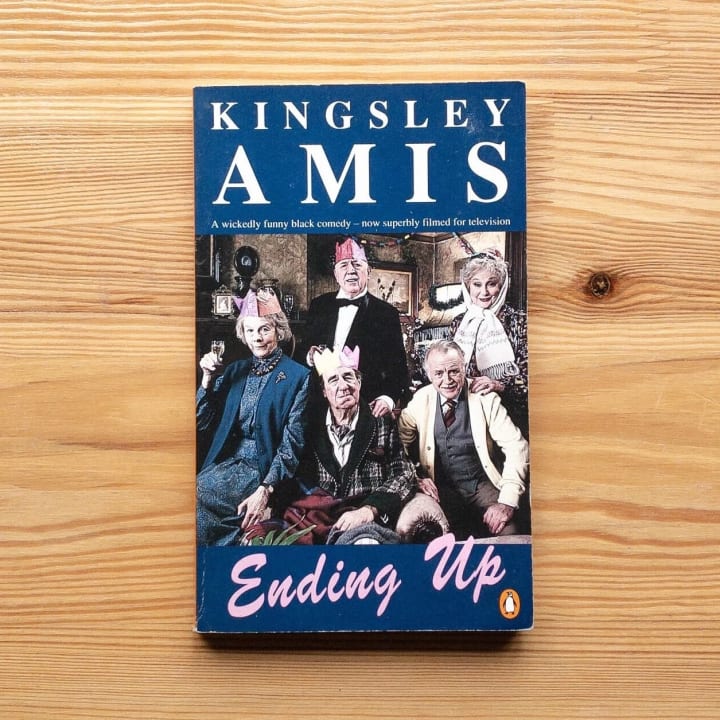
Bernard however, once a scholar or professional of some standing, now suffers from partial paralysis and bitterness toward his dependency. His wit is sharp, but it often comes out as cruelty, sarcasm, and pedantry. He quarrels with Adela, resenting her dominance while needing her care. It's quite a complex relationship but I think anyone who has ever depended on anyone else for care can relate (I hope). I often think of it as being grateful whilst also being jealous of the fact that the other person is able to do things they are not able to do. Bernard is a character in direct juxtaposition to Shorty. Shorty is a retired military man, copes with aging through denial and coarse humour. He drinks, reminisces about the war, and flirts with the women in the house, using bravado to mask loneliness and physical decline.
Another character we see is Marigold. She is a kind-hearted but increasingly senile, represents the novel’s most vivid portrait of decline. Her confusion, forgetfulness, and childlike behaviour contrasts with the others’ bitterness. She is both the victim and a nuisance, pitied one moment, mocked the next. Of course, the author is using Marigold to show the true vulnerability of age and how it manifests as a fragility of personality itself. Marigold’s loss of self is rendered without sentimentality but it becomes a stark reminder of the decline that may encompass some of us one day. It also starts that ball rolling towards how we understand that as these residents decline further and further, they actually need each other more and more, no matter how much they complain. Even though it is a comedy of errors in its ways, it also has some darker, more essential truths about the quality of our lives as we get older.
All in all, I think this book can definitely make you think differently about age, especially where decline and neediness are concerned. I remember once I had to explain why older people moved so slowly to a teenager and I told them that it's because they are usually in pain when they move. It puts a lot of things into perspective. I mean I consider myself (as a millennial) still young but even my bones and joints aren't what they used to be.
About the Creator
Annie Kapur
I am:
🙋🏽♀️ Annie
📚 Avid Reader
📝 Reviewer and Commentator
🎓 Post-Grad Millennial (M.A)
***
I have:
📖 280K+ reads on Vocal
🫶🏼 Love for reading & research
🦋/X @AnnieWithBooks
***
🏡 UK
Keep reading
More stories from Annie Kapur and writers in Geeks and other communities.
The Magic Mountain by Thomas Mann
Thomas Mann’s The Magic Mountain (Der Zauberberg) was published in 1924 after more than a decade of writing and revision. The original thought was to write a short story in 1912. It was inspired by Mann’s visit to a Swiss tuberculosis sanatorium where his wife was recovering, and the novel grew into a philosophical and symbolic epic, exploring themes of: time, illness, and the intellectual and ideological conflicts of pre-World War I Europe.
By Annie Kapur2 months ago in Geeks
Marvel Zombie
The last entry into our 2025 superhero projects catalogue is Marvel Zombies. This was a show that was anticipated by absolutely no one and it disappeared from the public consciousness as quickly as it was released. There was nothing special about the project that made it a must see, or a must remember. In fact if anything it's a must forget.
By Alexandrea Callaghan20 days ago in Geeks
Irish Passports Recalled
Irish passports are widely respected around the world, offering their holders extensive travel freedom and a strong sense of national identity. So when news emerged about Irish passports being recalled, it naturally raised concern, confusion, and plenty of questions among citizens and travelers alike. While passport recalls are rare, they are not entirely unheard of, and understanding the reasons behind them helps separate facts from fear. This article explores why Irish passports were recalled, how the process works, who is affected, and what it means for those planning to travel. Understanding Passport Recalls A passport recall does not automatically mean a security crisis or widespread fraud. In most cases, recalls are precautionary actions taken by authorities to correct an error, protect document integrity, or maintain international trust. Governments treat passports as highly sensitive documents, and even small technical or printing issues can justify swift corrective measures. In the case of the Irish passports recalled, the action was taken to uphold quality standards and ensure compliance with international travel regulations. The Irish Department of Foreign Affairs (DFA), which oversees passport issuance, has emphasized that recalls are part of responsible governance rather than a sign of systemic failure. Why Were Irish Passports Recalled? The recall centered on a limited batch of recently issued passports that were found to contain technical defects. These issues were not related to the personal data of holders but rather to the physical or electronic features of the passport itself. Modern Irish passports include advanced security elements such as biometric chips, specialized inks, and machine-readable zones. If any of these features fail to meet strict international standards, border control systems in other countries may struggle to read the document properly. Even a minor defect can cause delays, questioning, or refusal at immigration checkpoints. To prevent Irish citizens from facing difficulties while traveling, authorities chose to recall the affected passports proactively. Who Was Affected? Importantly, not all Irish passport holders were impacted. The recall applied only to a specific group of passports issued within a defined timeframe. The DFA contacted affected individuals directly using the contact information provided during the application process. Those who did not receive official communication were advised not to panic, as their passports remained valid. This targeted approach helped minimize disruption while ensuring that the issue was resolved efficiently. What Should Affected Passport Holders Do? For individuals whose passports were recalled, the process was designed to be straightforward and free of charge. The general steps included: Official Notification – Affected holders received emails or letters confirming that their passport needed replacement. Return Instructions – Clear guidance was provided on how to safely return the recalled passport. Priority Replacement – New passports were issued on an expedited basis to reduce inconvenience, especially for those with upcoming travel plans. The Irish government reassured citizens that recalled passports would be replaced quickly and that no applicant would be financially penalized for an error beyond their control. Impact on Travel Plans One of the biggest concerns surrounding Irish passports recalled was the potential disruption to travel. While the situation was understandably stressful for some, authorities worked to limit negative impacts. Travelers with urgent plans were encouraged to contact the Passport Service directly. In many cases, emergency or fast-track solutions were made available. Airlines and foreign embassies were also informed, helping ensure smoother coordination. The key takeaway for travelers was simple: if your passport was recalled, do not attempt to travel with it. Doing so could result in delays or denial of entry, even if the passport appeared physically normal. Public Reaction and Trust Public reaction to the recall was mixed. Some expressed frustration, especially those preparing for holidays, work trips, or family visits abroad. Others praised the transparency and swift response of Irish authorities. Overall, trust in the Irish passport system remained strong. Many citizens recognized that recalling passports due to technical issues demonstrated a commitment to quality and international credibility rather than negligence. Lessons Learned The recall highlighted several important lessons for both governments and citizens: Technology Has Limits – As passports become more advanced, the risk of technical issues increases. Communication Is Key – Clear, direct communication helped prevent panic and misinformation. Preparation Matters – Travelers are reminded to check passport validity well in advance of travel. For Ireland, the incident reinforced the importance of rigorous quality checks before distribution. For passport holders, it served as a reminder that even official documents can occasionally require correction. Looking Ahead The issue of Irish passports recalled appears to have been contained effectively, with replacement documents issued and systems reviewed to prevent recurrence. The DFA has since reaffirmed its commitment to maintaining one of the world’s most reliable passport systems. While recalls can be inconvenient, they are sometimes necessary to protect citizens from greater problems down the line. In this case, proactive action helped preserve Ireland’s strong international reputation and ensured that travelers could continue to move confidently across borders. Final Thoughts Passport recalls are unsettling, but they are not always a cause for alarm. The recent recall of Irish passports demonstrated how responsible oversight, transparency, and quick action can turn a potential crisis into a manageable administrative task. For Irish citizens, the message was reassuring: your safety, mobility, and global access remain a top priority. Staying informed and responding promptly to official guidance is the best way to navigate such situations calmly and confidently.
By Saboor Brohi 6 days ago in Geeks


Comments (2)
Another addition to my list! The themes in this one sound really striking, the way you talk about them here.
On my shelf! On my list...now!