
Book Review: "The Last Witch of Scotland" by Philip Paris
5/5 - an incredible narrative concerning the true nature of the witch-hunt hysteria...


I've been wanting to read this for some time and for some reason have only got around to it now. I'm actually not that bright because listen to this: I've had the ebook for as long as I've wanted to read it and then kept complaining to myself that I wanted to read it. I had the book the entire time but for some reason just never actually opened it. Ugh, there is so much to unpack in my life at the moment. The Last Witch of Scotland is a story that intertwines religion, mystery and passion to create a grand narrative and a really enjoyable reading experience. Let's take a look at it.
The novel is set in 1727 in the remote Scottish Highlands, a landscape both breathtaking and harsh, where tight-knit communities live in isolation from wider society. Despite the growing influence of the Enlightenment in the cities, rural areas remain deeply entrenched in superstition and religious dogma. Many villagers still believe in the power of witchcraft, blaming misfortune, such as illness, crop failures, and livestock deaths—on the supernatural rather than natural causes. The period is also marked by legal and religious shifts. Though Scotland’s Witchcraft Act of 1563 had been repealed in 1736, the fear of witches still lingers, leading to the tragic events that unfold in the novel. The author immerses the reader in this hostile world, where being a widow, an outsider, or even simply eccentric can be enough to invite deadly suspicion. Honestly, you can probably tell why I got this novel in the first place. It is imbued with folk horror.
In the midst of the story is the relationship between Janet Horne and her daughter, Aila. Janet is an aging widow, struggling with signs of dementia, which manifests in her erratic behaviour and increasingly disjointed speech. Aila, on the other hand, is a young woman marked by physical deformities: severe burns and scarring from a childhood fire that killed her father. Because of her mother’s eccentricity and her own disfigurement, Aila has spent her life as an outsider, shunned and whispered about by villagers who associate their misfortunes with supernatural curses. Despite their hardships, Aila remains fiercely loyal to her mother, even as the weight of suspicion begins to close in on them. Their bond is at the novel’s emotional core, making the impending tragedy all the more devastating.

Reverend McNeil, a temporary minister newly arrived in the parish, is a pivotal figure in the growing hysteria. Unlike his predecessor, who was more measured in his beliefs, McNeil is an unyielding zealot who sees the Devil’s hand in everything. He immediately fixates on Janet and Aila, interpreting their differences as evidence of dark forces at work. Through fiery sermons and strategic manipulation, McNeil fans the flames of suspicion, rallying the village against the two women. His character represents the dangerous blend of power, religion, and personal vendetta that historically led to so many witch trials. His growing influence over the town ensures that no rational defence will be able to save Janet once accusations take root. This part felt very much like the show Midnight Mass for me because we've got a guy who comes in to replace another guy and he keeps banging on about something important in the book that we think isn't too important before we begin to see what's actually happening.
Reverend McNeil’s campaign against Janet and Aila escalates when minor misfortunes: sick cattle, a failed harvest, unexplained fevers, are linked to the two women. The villagers, desperate for someone to blame, seize upon the idea that they are witches. McNeil fuels their paranoia, twisting biblical scripture to justify their condemnation. When a child falls gravely ill, the community’s fear turns to rage, and accusations quickly solidify into a demand for justice. The novel powerfully illustrates how mob mentality takes hold, transforming former neighbours into vengeful persecutors. This definitely echoes back to the days of the witch hunts in the 1590s and shows us that this fear is still alive and kicking 150 years' or so later. One thing this writer can definitely do well is write in mass hysteria.
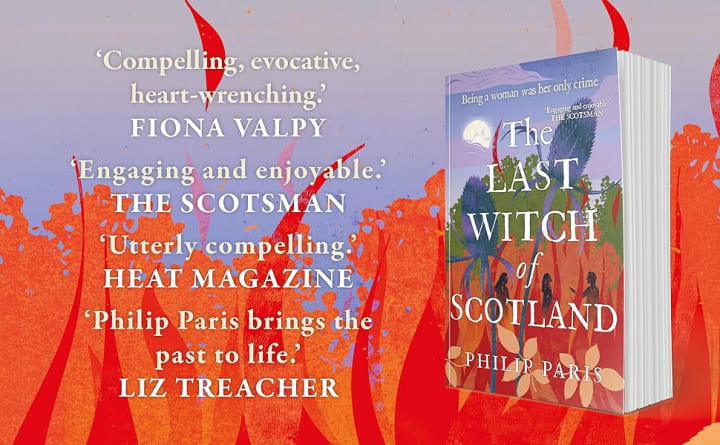
All in all, this is a tale of pervading fear and the corruption of power, it is a story that involves mass hysteria and a religious law that though it was repealed, still walked amongst society and perhaps, still does today in other forms.
About the Creator
Annie Kapur
I am:
🙋🏽♀️ Annie
📚 Avid Reader
📝 Reviewer and Commentator
🎓 Post-Grad Millennial (M.A)
***
I have:
📖 280K+ reads on Vocal
🫶🏼 Love for reading & research
🦋/X @AnnieWithBooks
***
🏡 UK
Keep reading
More stories from Annie Kapur and writers in Geeks and other communities.
Bad Books and We Who Write About Them...
I was perusing social media (yes, I said perusing) when I came across a strange question about books: what do we do about bad books? Now, my opinion of this has changed over time so let's go through what the author of the post meant to start off with. The question we want to answer is about the exact wording of the question which, by the way, I have been thinking about since.
By Annie Kapur10 months ago in Geeks
Silver Screen Magic with Mae West
American actress and singer Mae West became a popular film actress during the Great Depression. She started entertaining in vaudeville, then performed on Broadway, and finally went to Hollywood. She signed up with Paramount Pictures and made her debut in the 1932 film “Night After Night.” She also starred in musicals, comedies, and crime dramas. The American Film Institute named her one of the best classic Hollywood actresses.
By Rasma Raisters9 days ago in Geeks
Quannapowitt Players' "The Seagull": A Riveting and Driven Performance
“In all the universe, nothing remains permanent and unchanged but the spirit.” - Anton Chekhov, “The Seagull.” As its first show in 2026, Quannapowitt Players presents “The Seagull,” a tragicomedy by Anton Chekhov. The play follows a group of artists at a country estate, where creative ambitions and unrequited love affairs collide. A question strikes them - what is the pursuit of happiness?
By Marielle Sabbag6 days ago in Geeks


Comments
There are no comments for this story
Be the first to respond and start the conversation.