
A Deep Dive into Agile Workflow: An Efficient Way of Software Development
A detailed understanding of how agile workflow works and how it should be implemented.

In an age of innovation, businesses need to keep up with the changes in their specific industries. Businesses must recognise the changes and clients’ needs to grow and prosper. According to a report published by Agile Business Consortium, in 2022, 70% of businesses with efficient agile cultures achieve a faster time to market. As a result, these businesses reported a 237% increase in commercial performance.
While most industries are exploring innovations, it’s only justified for businesses to take the agile approach. With that thought, we have presented a comprehensive guide on agile workflow.
What Is Agile Workflow?
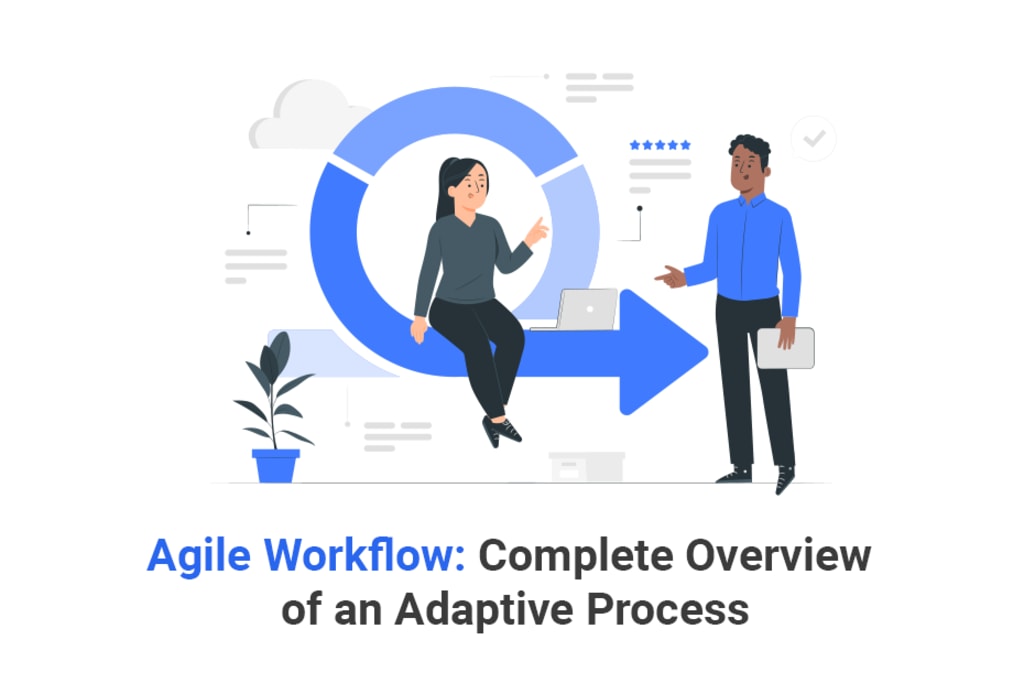
The agile workflow involves managing and completing projects with an emphasis on collaboration, flexibility and continuous improvement. It’s based on the agile software development methodology. Additionally, it’s responsible for incremental and iterative delivery, adaptive planning, and delivery of working software.
This approach enables software developers to detect issues early on and fix them on time. It also elevates the efficiency of a project and ensures that the final output meets the demands of the clients and stakeholders.
Various Forms of Agile Workflow Processes
Agile methodology is synonymous with a conceptual framework. There are multiple Agile workflows which have been built keeping different project needs in mind. Each of these types has distinct approaches and characteristics. Presented below are some of the most common Agile workflows.
Scrum
Scrum is a popular and preferred form of the agile workflow used by custom software development teams. It’s flexible, fast and easily adaptable. Working in a scrum, the activities are completed in fixed timeframes also called sprints.
Each of these sprints consists of several iterations and can last at least two to four weeks. Scrum follows a set of roles which come with specific responsibilities such as scrum master, scrum team, and product owner. Each sprint includes multiple meetings at different stages of the development lifecycle such as daily scrum, sprint planning, sprint review and so on.
Feature Driven Development (FDD)
This approach is used for organising software development features as the development process continues. Although it’s a rapid development approach, it’s not efficient for smaller projects.
It involves a customer-centric approach with pre-defined development standards but limited documentation which may result in confusion among developers.
Kanban
As opposed to Scrum, Kanban is more fluid and relaxed. Unlike scrum, kanban doesn’t require specific roles and responsibilities to be assigned. It doesn’t come with a set timeline to accomplish a specific task. However, kanban tracks the amount of time the work is in progress. This ensures a seamless and continuous flow of tasks and reveals any delays.
This approach drives continuous improvement as the workflows become more efficient. This way, the time taken to deliver the solution is reduced.
Crystal
You can implement this methodology to focus on the members and their interactions. It presents a colour-coded workflow that uses dynamic methods. The method comes with adaptive approaches which don't require a lot of documentation.
It’s more suitable when there’s a need for frequent delivery and reflective improvement. It generally adopts prescribed which may differ based on the needs of a project.
Extreme Programming (XP)
The goal of this methodology is to utilise high-quality software and highly skilled development teams. XP leans on a more engineering side of software development.
XP isn’t usually the chosen agile method for developers and is only used in specific cases. Mentioned below are instances where XP is useful.
Using new technologies to mitigate risks within a fixed timeline
When there are dynamically shifting software requirement scenarios in the project
When the development team is small
Scrumban
It’s a hybrid method that merges the fluidity of kanban and the rigidity of scrum. In this approach, scrum teams are replaced by the Work In Progress (WIP) limits to ensure fluidity. On the other hand, kanban teams need to go through daily scrum meetings which brings structural rigidity and ensures the whole team is on the same page.
Scrumban is most suited for creative or development projects. Those who use scrum but have issues with deadline can work with scrumban.
Essential Steps To Optimise Agile Workflow
Efficient optimisation of agile workflow requires an unrelenting commitment to constant progress and teamwork. To enhance the agile workflow, the following strategies may be helpful.
- Define the Process of the Workflow
Start by highlighting the objectives and requirements of the project. Based on that determine a suitable workflow process. This approach ensures that team members have a clear understanding of their roles and responsibilities, thus maintaining productivity and accountability.
- Utilise Agile Tools
There are many sophisticated agile tools to streamline workflow and boost the overall efficiency of projects. Platforms such as Jira, Trello and Asana enable teams to effectively manage tasks, monitor progress and collaborate seamlessly.
- Maintain Continuous Communication and Collaboration
It’s imperative to follow a culture of communication and collaboration among team members. Facilitating regular engagement is possible through daily stand-up meetings, sprint reviews, and retrospectives, which helps maintain focus and alignment on project goals.
- Aim for Continuous Improvement
The commitment to growth is a cornerstone of agile methodology. As such it’s crucial to routinely monitor the workflow process and highlight areas that require improvement.
Teams can ensure that their agile workflow remains responsive and adaptable to the changing project requirements by refining methodologies and practices.
The Difference Between Traditional and Agile Workflow
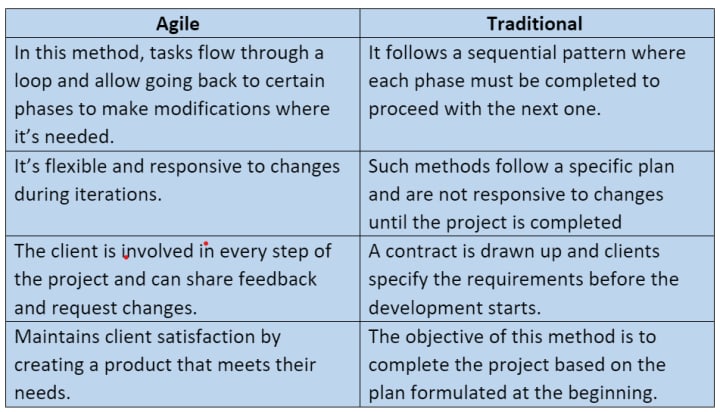
Working with conventional workflow processes is a lot like cooking a full-course meal without a recipe. In the waterfall workflow, work is managed in a sequential order. A phase begins only after the previous one is completed.
The traditional waterfall workflow is considered outdated and inefficient. It allows scope for only one feedback cycle and manages only one release every six months. This approach hampers the efficacy of the product and makes way for scope creep.
However, agile methods frequently involve feedback and improvement in the process. It enables teams to include user feedback at the end of each cycle and promotes more visibility. This empowers development teams to build a value-based process that fulfils the specific demands of the customers.
Steps To Create an Agile Workflow
There are crucial steps that must be followed to create an efficient agile workflow.
Follow the Appropriate Agile Practices
The agile method isn’t only about following a process. It requires a shift in the mindset and an understanding of Agile principles. The development team needs to decipher the rationale behind this method to adapt to it quickly.
Select a Framework
There are multiple types of agile workflow software you can utilise including Scrum and Kanban. Understand which framework is most suitable for your specific project.
Prepare a Roadmap
Come up with a strategy that allows your sprint teams in achieving the project goals. Plan the process well, create product backlogs, and prepare agile workflow tools. Additionally, it’s important to prioritise tasks and define timelines.
Assign Sprint Teams
Put together sprint teams and carefully determine the roles of each member. Assign specific tasks and responsibilities. Each team must possess the expertise to complete their sprint.
Integrate the Agile Workflow
Once the product requirements and sprint teams are ready, it’s time to implement the agile development workflow. The goal should be to aim for continuous improvement and swift delivery of the final product.
Parting Thoughts,
Change is the only constant. This applies to businesses as much as it does to everything else in the world. To stay relevant in this ever-evolving business landscape, organisations are leaning towards the agile approach. Adopting an agile workflow for your software development processes provides more flexibility and ensures exponential growth in future.
About the Creator
Toolagen
Toolagen is a UK based bespoke software development company with close to two decades of experience in the field. The company has partnered with many distinguished firms to provide unmatched customised solutions. Visit Toolagen.com
Silver Screen Magic with Mae West
American actress and singer Mae West became a popular film actress during the Great Depression. She started entertaining in vaudeville, then performed on Broadway, and finally went to Hollywood. She signed up with Paramount Pictures and made her debut in the 1932 film “Night After Night.” She also starred in musicals, comedies, and crime dramas. The American Film Institute named her one of the best classic Hollywood actresses.
By Rasma Raisters7 days ago in Geeks




Comments
There are no comments for this story
Be the first to respond and start the conversation.