
1984 by George Orwell
Why It's a Masterpiece (Week 14)

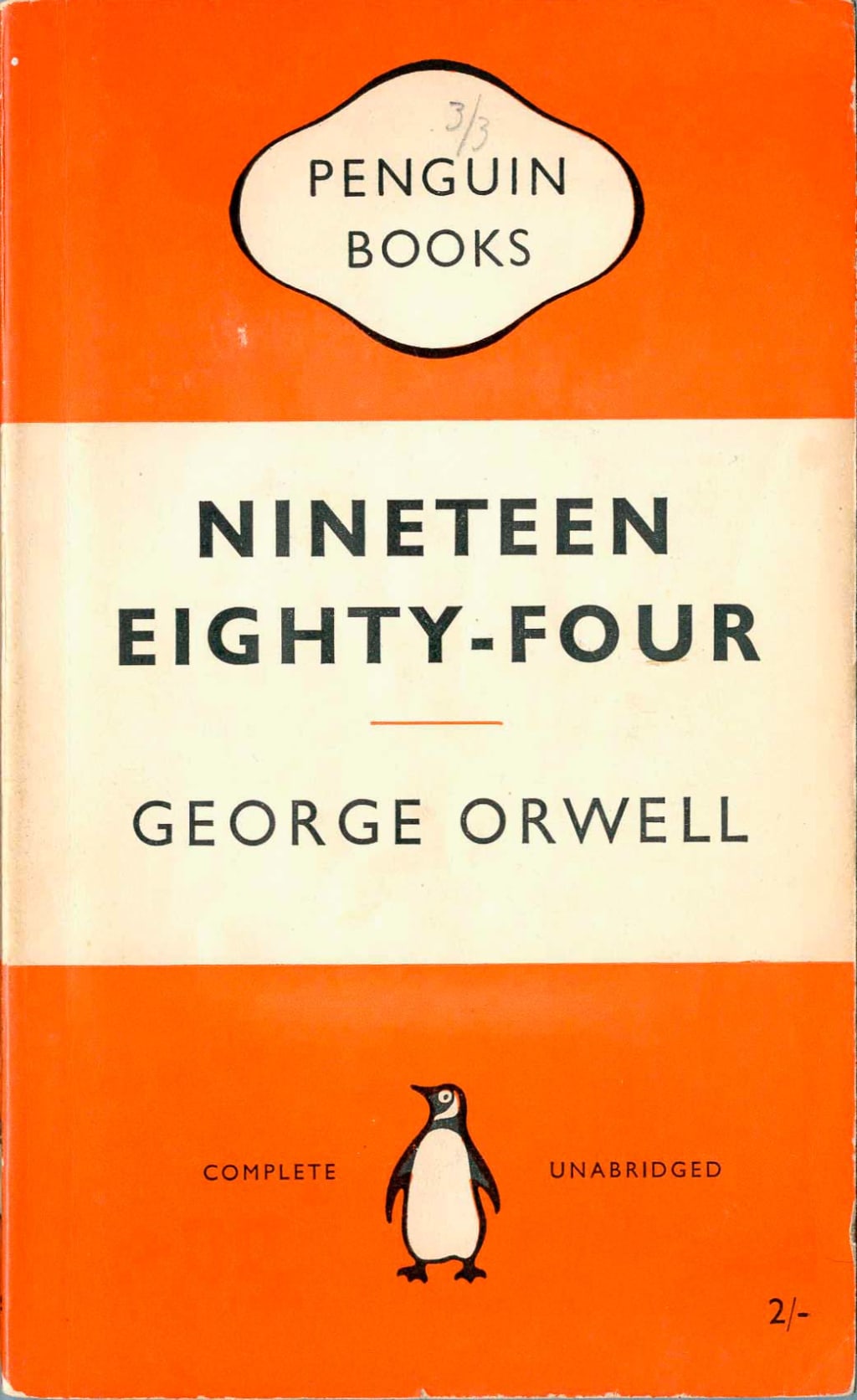
Published in the 8th of June 1949, George Orwell’s novel ‘1984’ is possibly one of the most famous novels of all of 20th century literature. Described as a dystopian novel and a cautionary tale against totalitarianism and surveillance, the repressive society of a superstate called Oceania takes shape as being a form of Great Britain in perpetual war. The constant propaganda and the requirement to obey certain messages and discard known histories plays on similar themes to Orwell’s earlier novel ‘Animal Farm’ when it comes to how knowledge and language is manipulated for the sake of maintaining power. Known for his messages criticising both extremes of the political stratosphere, George Orwell was a passionate democratic socialist who wove into his books the characters and plot lines which represent the abuses of power which have only unfolded into our modern times as a reality. Aren’t we all just Winston Smith?
Plot
Winston Smith returns home to his apartment (which seems to smell of boiled cabbage). He lives in the Victory Mansions and serves his society by working in the Ministry of Truth in which the collective consciousness of the whole system is controlled, including the people within it. Winston is still better off though than the proles, who work hard physically but achieve basically nothing on a larger scale. The ball of the story really gets rolling when Winston’s buys a diary and starts writing hateful messages about the party and Big Brother within, hiding within a hole in his wall. Winston begins to get worried that he has committed a thought-crime - a word that we know has woven its way into our modern day through the domains of the internet and social media.
As Winston begins to push against the party, worried that they might be catching up with him but having no real proof for the situation, he meets a woman named Julia which he feels destined to be in love with. She too is a deflector and as Winston stands against the corrupt party politics which has led to the demonisation of a figure called Emmanuel Goldstein, he thinks about whether anyone would possibly know the thoughts that are going through his head right at that moment: the questions, the anarchy, the propensity to think independent of the party. From waking with the word ‘Shakespeare’ on his lips and not knowing where it came from, he wants to know more about life away from the party, but he cannot escape the superstate or its methods of maintaining power - however Machiavellian it may seem.
As Winston and Julia become more involved with each other, they become scared that people may be gaining on them and again, they have no proof of this. They hide the tele screens away from their gaze, they try to escape the gathering darkness where they believe they are being watched and they finally find a place to hide. A place, a room with a painting where there is nothing else but to be themselves and talk about a revolution.
The book is laced with weird dream sequences about a possible freedom or maybe a past that may have been there - but whether it is past, future or entirely made up - the reader will never actually find out. O’Brien tells them that everything they know about the revolution is the complete and utter truth and that Emmanuel Goldstein is somewhere out there and he is alive. Winston and Julia take this as a respect to continue their revolution and possibly succeed over the party and over Big Brother. But just as they seem to be gaining on making a plan, something else is gaining on them and Winston will have to risk everything, even his love for Julia, to secure a freedom - whatever that means.
The ending to this book is probably one of the most famous things about it and has for a long time been known as the one and only thing that teaches us about the ways of machiavellian power in the modern world’s superstates. Nowadays, we look towards corporate overlords and political evildoers for these archetypes, but instead I think we need to switch our views to another idea instead: social media. Social media: where the rules are written by the loudest people with the most privilege. And unfortunately, those people are not always the cleverest or the most trustworthy.
Into the Book
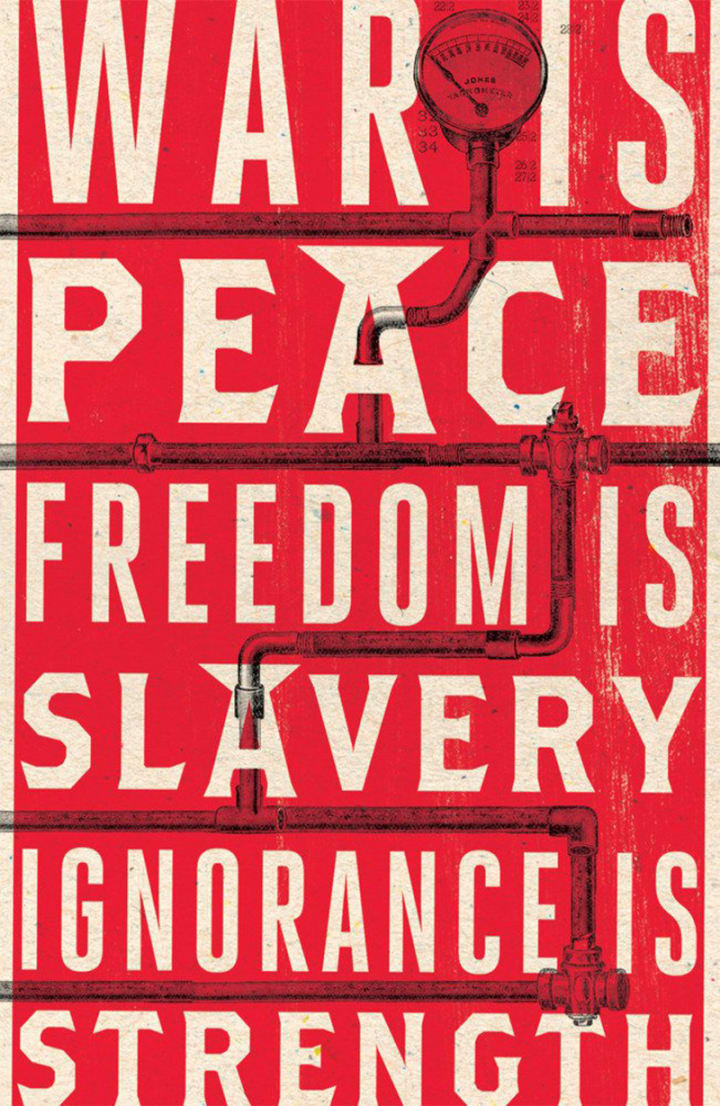
This book has a number of great themes, motifs and symbols that we can analyse, and some are more obvious than others. The first and foremost symbol (that is probably a personal favourite of mine) is that of Emmanuel Goldstein. A figure of propaganda, he is used by the media for the two-minute hate in order to detract from the party doing things wrong. He is, the this society, a visceral hatred on which to project ignorance, anti-social behaviours and discrimination - someone that the public can hate for reasons that they are told such as: he is a figure against the current regime. Emmanuel Goldstein even has a book attributed to him because of his rebellion and so, Winston goes seeking out this book and wants to know more. The deeper Winston gets into rebellion and the more he wants to escape this current way of life the more he realises the truth about Emmanuel Goldstein. Goldstein is almost used as a trap that lures in the unsuspecting revolutionary and thus, tries to set them straight again. I think that this is something that Orwell has done brilliantly in order to show us how our own political parties make us fight against each other in order to ignore the real problems at hand: the stuff they themselves are doing wrong.
“If you want a picture of the future, imagine a boot stamping on a human face—for ever.”
- 1984 by George Orwell
A great theme within this book is surveillance. I like to think of this as being like Shakespeare’s ‘Hamlet’ in a sense that the people watching Hamlet are trying to see whether he is really mad, trying to set traps for him that eventually he overcomes by pure chance. This mirrors that same state of affairs in which Winston Smith is being watched from everywhere he turns except for that one hole in the wall. As he becomes more accustomed with what he is doing and more secure within himself, he starts to talk to others such as Julia and O’Brien.
After a while, he finds that room with Julia which has that painting on the wall and everything is safe. The problem is, everything is not safe and Winston probably should not have been so proud. Just like Hamlet - there are people watching from the outside, trying to track Winston’s every move and yet, Winston is someone who is not as lucky as Hamlet is - he is simply a man, not a prince. Surveillance in this book is so much more than just the political state of observation of its residents for compliance, it is also about the invasion of personal space which edges the narrative throughout the story. As characters get closer together, so does the surveillance over them - whether they realise it or not.
“Doublethink means the power of holding two contradictory beliefs in one's mind simultaneously, and accepting both of them.”
- 1984 by George Orwell
Another theme I think is very important is truth. There are so many lies and cover ups in this book that even Winston struggles to tell truth from fiction. First of all we have those weird dreams he keeps having of pasts that even the reader does not actually know existed. Then we have the plants of people around Winston put there in order for the party to keep an eye on him. And I think one of the most telling parts of how this book is about truth is when we learn of what Winston does for work: he works for the Ministry of Truth where he is deleting things from the collective memory - things that deflect attention away from the party or manipulate/go against the message that the party puts out. I have always found it weird that Winston does not question this at all until one particular moment and then, when he does, he does not think that the party would be watching him from every angle. He gets a bit too bold at the end of chapter 1, when he opens the door and its not the thought police but just his neighbour.
As someone who works for the Ministry of Truth, you would think that Winston would have been sent on these missions in order to bring people in as well - not just his neighbours and friends. However, you can’t blame him for getting ahead of himself. From each and every crevice, there is someone watching him and, though he cannot tell truth from fiction - he cannot tell friends from watchers either. And that’s the point. These people are trained to hide the truth. The fact that Winston works for the Ministry of Truth, controlling the public consciousness about their own history is only a part of that although we can see why it would be ironic.
"Power is not a means; it is an end. One does not establish a dictatorship in order to safeguard a revolution; one makes the revolution in order to establish the dictatorship. The object of persecution is persecution. The object of torture is torture. The object of power is power. Now you begin to understand me.”
- 1984 by George Orwell
Why It’s a Masterpiece
Apart from being my older brother’s favourite book, ‘1984’ has been chosen as one of the greatest books ever written by a large variety of people. I think that the greatest thing I have ever read which counts as proof as to why ‘1984’ is a masterpiece is what the author and defector Czesław Miłosz had to say about it. He explains how difficult it was to get the book past the Iron Curtain and how it was a secret only bestowed upon a few. Christopher Hitchens explains the ironies behind this in connection with what the book is about - a secret which only a few know. He would go on to state that this is probably the greatest compliment an author can receive.
To me, this book is a representation - not a warning - of what could happen to a society like ours. I think we don’t really do anything with calling our societies ‘Orwellian’ and then proceed to do absolutely nothing about it because of the fact ‘1984’ is ultimately a tragedy. I think it would be better of us to look at this novel as being the extreme of both the left and the right, take Orwell as saying that whatever wing you’re on, if you go far enough you will end up coming full circle. This type of extremism will not happen, but bites of it can be implemented into our societies without us even noticing. More so on social media than anywhere else. Why? The loudest people on social media are often the ones leading the crowd, they represent the most privileged ruling party and they control the narratives and voices out there. If you would want to get political then you better be on one of the wings where they are tipping into coming full circle - or else you shouldn’t get political at all. When we ask whether we are all just Winston Smith - some of us are. Some people are actually fighting the narrative of even getting political at all and so, we try to stay out of it. But ultimately, we are caught and forced to choose.
Conclusion
‘1984’ has become such a widely read and misunderstood novel that everyone starts applying the opposite political party to Big Brother and the ruling class. But here’s the deal. If you are on social media and you have a large following because of your political rants and you force others to comply to your standard of political speech whilst silencing the speech of any criticisms whatsoever, whichever side you are on of that fence you are on - you are part of that too. You are not apart from it, you are not different or special, you are that ruling party. It doesn’t matter whether you are on the left or the right. You have just come full circle.
Next Week: Cannery Row by John Steinbeck
About the Creator
Annie Kapur
I am:
🙋🏽♀️ Annie
📚 Avid Reader
📝 Reviewer and Commentator
🎓 Post-Grad Millennial (M.A)
***
I have:
📖 280K+ reads on Vocal
🫶🏼 Love for reading & research
🦋/X @AnnieWithBooks
***
🏡 UK
Keep reading
More stories from Annie Kapur and writers in Geeks and other communities.
Book Review: "Calling Bullshit" by Carl T. Bergstrom and Jevin D. West
“Nothing that you will learn in the course of your studies will be of the slightest possible use to you, save only this, that if you work hard and intelligently you should be able to detect when a man is talking rot, and that, in my view, is the main, if not the sole, purpose of education.” - "Calling Bullshit" by Carl T. Bergstrom and Jevin D. West
By Annie Kapur2 years ago in Geeks
Silver Screen Magic with Mae West
American actress and singer Mae West became a popular film actress during the Great Depression. She started entertaining in vaudeville, then performed on Broadway, and finally went to Hollywood. She signed up with Paramount Pictures and made her debut in the 1932 film “Night After Night.” She also starred in musicals, comedies, and crime dramas. The American Film Institute named her one of the best classic Hollywood actresses.
By Rasma Raisters9 days ago in Geeks
Emma Watson shortlisted for British Diversity Awards 2026
Harry Potter star Emma Watson has reached a significant milestone in her professional career, having been nominated for the British Diversity Awards 2026 alongside some of the most influential public figures in the United Kingdom. The ceremony, which will be held at the JW Marriott Grosvenor House in London on March 25, 2026, honours individuals and organisations that are making a genuine impact on diversity and inclusion across Britain. Emma Watson has been nominated for the Media Personality of the Year award, which recognises celebrities who utilise their platforms to promote constructive social change. The Beauty & the Beast actor faces fierce competition from a list of high-profile figures, including Sir Elton John, Sir Lenny Henry, Nicola Coughlan, Vicky McClure, Dr Alex George, Cat Burns and Sam Thompson. The British Diversity Awards are among the most prominent honours for inclusion in the UK, highlighting those who look beyond their celebrity status to drive long-lasting societal advancement. Major figures from the worlds of entertainment, sports and business are expected to attend this year’s ceremony, which will be hosted by Dr Ranj Singh and Charlene White.
By Dena Falken Esqabout 22 hours ago in Geeks


Comments (3)
Interesting novel.
Rereading this one right now for the first time in a long time, and it’s been great. Definitely a classic for a reason.
I love that final paragraph, and I will admit that this is the first Orwell book I read as a teenager. I don't think that it his best novel, but it is the best description of the age we are (almost) living in...and it needs to be read by the very people who think they know what the word 'Orwellian' is. You have made me want to go back to his 'Complete Essays' (I have the complete set)! I thank you, Annie!