Historical
REASONS TO BE GLAD YOU DIDN’T LIVE IN THE 19th CENTURY
If you are unhappy with the standard of medical care at present, it’s still a million miles away from the dark days of the Victorian era. While the most significant breakthroughs in medicine have come from experimentation, it was more often than not a torturous and unsuccessful affair in the 19th century.
By Paul Asling4 years ago in FYI
VICTORIAN SURGERY WAS OFTEN A DEATH SENTENCE
VICTORIAN SURGERY WAS OFTEN A DEATH SENTENCE From the first cut to the severed limb dropping into a box of sawdust, surgeon Robert Liston could remove a leg in 25 seconds. His operations at University College Hospital in London in the early 1840s were notorious for their speed and intensity.
By Paul Asling4 years ago in FYI
VICTORIAN CHILD LABOUR
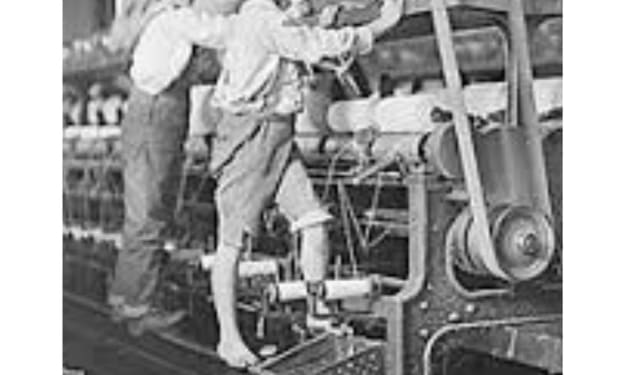
The average age at which children started work in early 19th-century Britain was ten years old. In London and other industrial areas, children started work earlier, on average at eight and a half years old. Many of the young workers started in factories, crawling beneath the machinery to clear it of dirt, dust, or anything else that might interrupt the workings of the machines. Most children worked under the same disadvantages, working for low pay, performing work that was dirty, dangerous, and working long hours.
By Paul Asling4 years ago in FYI
Legendary People That Influenced The World Were From Ex-Yugoslavia
The Balkans is my favourite region. Especially Serbia. There, I said it. For a long time, Serbia was known for wars and lots of other negative things. Unfortunately, that is how Serbians were portrayed by the BBC and other Western media.
By Oberon Von Phillipsdorf4 years ago in FYI
The History of Asian Jewelry
Asian jewelry originated in many parts of the world, including India, China, and other Southeast Asian countries. This jewelry is characterized by its unique design and techniques. It has become popular in recent decades thanks to the efforts of artists from these regions. The pieces are often made with traditional techniques and combine contemporary elements. As a result, they are incredibly diverse and represent different cultures. This diversity makes them particularly interesting to collectors. However, when choosing your new Asian jewelry piece, it's important to be mindful of its history.
By camila thomas4 years ago in FYI
The Real-Life Disney's "Mulan" Comes From Serbia
The role of women in the history of war is largely ignored. They are often behind the scenes to support their men on the battlefield. During the Balkan War in 1912, in a scene straight out of Disney’s Mulan, one Serbian woman took it upon herself to head straight for the frontlines, risking her life for her family and country.
By Oberon Von Phillipsdorf4 years ago in FYI
National Constitution Day: Facts, Quotes, Speech, Celebration, History
Contribution of Babasaheb Ambedkar to Constitution The first description of the Indian Constitution was given by Granville Austin to achieve social revolution. Babasaheb Ambedkar’s lasting contribution towards the Indian Constitution is a great help to all the citizens of India. The Indian Constitution was adopted to constitute the country as an independent communist, secular, autonomous and republic to secure Indian citizens, justice, equality, liberty and union. When the Constitution of India was adopted, the citizens of India entered a new constitutional, scientific, self-government and modern India with peace, decency and progress. The Constitution of India is very unique in the whole world and it took almost 2 years, 11 months and 17 days to pass by the Constituent Assembly.
By Samachar Khabar News4 years ago in FYI
Women as Queen Bees in Antiquity
Women in antiquity: a topic scarcely studied and, in many accounts, misunderstood. While the study of women in antiquity is only just now beginning to gain momentum, it has the ability to provide connections not only to the ancient societies of the Mediterranean and to the marginalized daily life of women within the patriarchy, but to issues of modern feminism. Within the city-states of ancient Athens and Rome, women were undoubtedly an integral component of social unity, and the vital importance of their central and organizational role inside the busy structure of a given household provides a context for the success of entire city-states. I will therefore be looking at the head woman/wife within the average household in antiquity and likening her to a queen bee in a hive. For the purpose of this discussion, imagine each household as a hive filled with workers and drones (often, in antiquity, slaves), presided over by the foremost woman as queen bee. While this analogy appears to stumble when taking into account the head man/husband within each respective household (commonly referred to as paterfamilias [in Rome] and kyrios [in Greece]), I have decided to liken this central male figure to the beekeeper. Like a beekeeper, the man is dependent on the success of the hive, but is not as influential within the hive as the queen bee herself.
By JC Dunsmore Bennett4 years ago in FYI
Before Joseph Stalin Was Dictator, He May Have Been A Spy For The Tsar
In the final years of the dying Russian Empire, the Tsar’s intelligence agency, known as the Okhrana, were working around the clock uncovering assassination plots, arresting revolutionaries, and keeping an eye on dangerous characters.
By R P Gibson4 years ago in FYI