space
Space: The Final Frontier. Exploring space developments and theorizing about how humans fit into the universe.
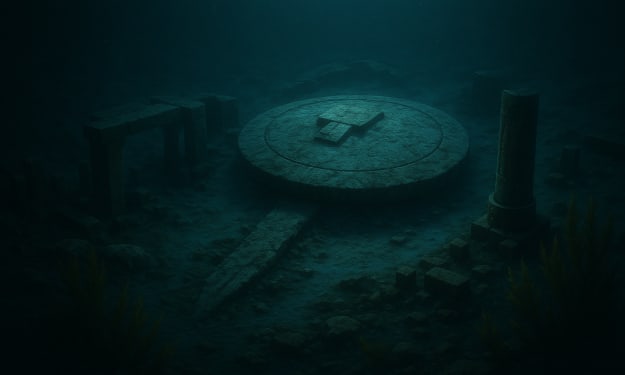
The Baltic Sea Anomaly: A Sunken UFO or a Forgotten Truth Beneath the Waves?
The Object That Shouldn't Exist Beneath the icy, dark waters of the northern Baltic Sea lies a mystery as deep and unfathomable as the ocean itself. Hidden about 300 feet below the surface, resting silently on the seabed between Sweden and Finland, is an object that defies explanation.
By The Secret History Of The World7 months ago in Futurism
Closed-Loop Air and Water Recycling: How to Survive in a Sealed World
When humans venture into the extremes whether on long-term space missions, deep sea stations, or remote Arctic outposts survival depends on more than just stored supplies. In such environments, we need systems that can sustain life by endlessly recycling air and water. Closed-loop life support systems are no longer science fiction. They are essential technologies of the future, not only for space exploration but also for survival on Earth in harsh or resource scarce environments.
By Holianyk Ihor7 months ago in Futurism
Modular Space Cities: The First Step Toward Life Beyond Earth
The idea of settling space has long transcended the realm of pure science fiction. Today, more engineers, architects, and researchers are seriously considering the concept of modular space cities as a realistic vision for humanity’s future. These won’t just be simple colonies on the Moon or Mars but autonomous, evolving settlements capable of growing, adapting, and even relocating depending on the needs of their inhabitants and the conditions of outer space.
By Holianyk Ihor7 months ago in Futurism
Space Warehouses and Hubs: The Future of Orbital Logistics
As the space industry evolves at an unprecedented pace, familiar concepts from Earth bound logistics are finding bold new applications beyond our planet. Space warehouses and orbital hubs are no longer the stuff of science fiction. They represent the next logical step in developing a sustainable infrastructure for long term space missions and off world exploration. But why do we need them, how do they work, and what challenges lie ahead in building these orbital outposts?
By Holianyk Ihor7 months ago in Futurism
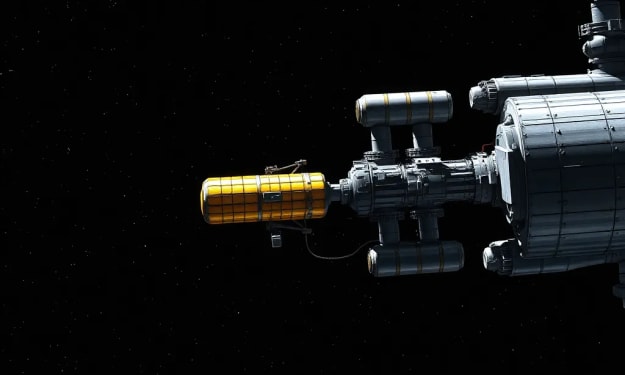
Orbital Docking Stations: The Next Leap in Space Exploration
In the not so distant future, space will no longer be reserved solely for scientific experiments or rare manned missions. It is evolving into a bustling highway filled with cargo vessels, tourist shuttles, and research stations. In this new chapter of space exploration, orbital docking stations will play a vital role. These multifunctional platforms will serve as critical junctions between Earth, the Moon, Mars, and the far reaches of the cosmos.
By Holianyk Ihor7 months ago in Futurism
A Personal Reflection on the Coming Shift And Behind The Scenes
A Personal Reflection on the Coming Shift Something extraordinary is happening, and you can feel it in your gut. You sense it in the way the world is beginning to shake off old illusions. For a long time, I've been following the whispers in the dark, those strange threads that intertwine history, religion, politics, and the stars. Now, more than ever, it feels like all those threads are pulling tight into one powerful revelation. The truth is no longer hiding in the shadows; it is emerging right before our eyes.
By The Secret History Of The World7 months ago in Futurism
Nano-Satellites for Educational Launches: How Students Are Reaching for the Stars
Once upon a time, space exploration was a dream reserved for governments and billion dollar corporations. But that era is fading fast. With the rapid development of technology and the miniaturization of electronics, even high school and university students now have the power to reach orbit all thanks to nano-satellites, the small but mighty tools of a new educational revolution.
By Holianyk Ihor7 months ago in Futurism
The 120-Million-Year-Old Map: The Final Proof of a Lost Ancient Civilization?
Carved in Stone, Etched in Time High in the Ural Mountains of Russia, a stone slab was unearthed, a silent behemoth pulsing with the awe-inspiring mystery of its existence. Initially mistaken for a mere fragment of rock, it revealed its true nature upon closer inspection: a complex relief, a window into an ancient world, a topographical map etched into its surface.
By The Secret History Of The World7 months ago in Futurism
Thrust Modulation for Multistage Rockets: The Future of Adaptive Spaceflight
In the evolving world of space technology, sheer engine power is no longer the sole defining factor of success. Today, flexibility and precision are just as critical. Traditionally, rocket stages operate in a binary mode full thrust or complete shutdown. But a new and powerful concept is emerging: thrust modulation, or the ability to dynamically adjust engine power mid-flight. For multistage rockets, this innovation could be a true game-changer.
By Holianyk Ihor7 months ago in Futurism
Light Launch Vehicles for Microsatellites: Ushering in a New Era of Space Access
In recent years, the space industry has undergone a dramatic transformation. Gone are the days when building and launching a satellite meant massive budgets, years of preparation, and hardware the size of a car. Today, we are witnessing the rise of microsatellites compact, lightweight, and relatively inexpensive spacecraft, some no bigger than a shoebox. These tiny machines are capable of performing sophisticated tasks, from monitoring climate patterns to providing internet connectivity in remote regions. But with this miniaturization came a new challenge: how to get these small satellites into orbit quickly, affordably, and independently?
By Holianyk Ihor7 months ago in Futurism
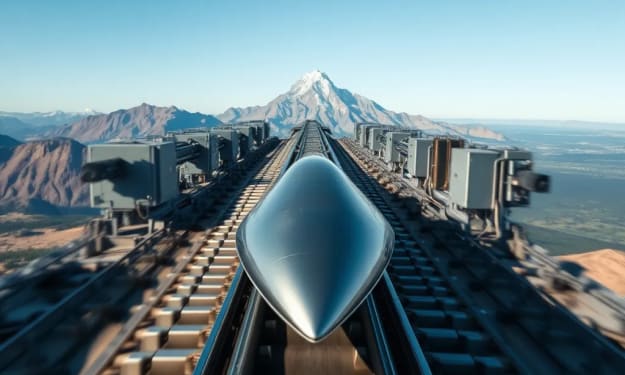
Electromagnetic Catapults: A Breakthrough in Space Logistics
A rocket launch is one of the most dramatic spectacles of modern science. Fire, thunder, and sheer force dominate the moment—but behind the awe lies an expensive truth. Sending just one kilogram of cargo into orbit can cost anywhere from several thousand to tens of thousands of dollars. Rockets are incredibly complex, mostly single-use machines that require tons of fuel and meticulous planning. For decades, engineers and scientists have been searching for cheaper, more efficient ways to reach orbit. One of the most promising alternatives? Electromagnetic catapults.
By Holianyk Ihor7 months ago in Futurism