
Light Launch Vehicles for Microsatellites: Ushering in a New Era of Space Access
Space

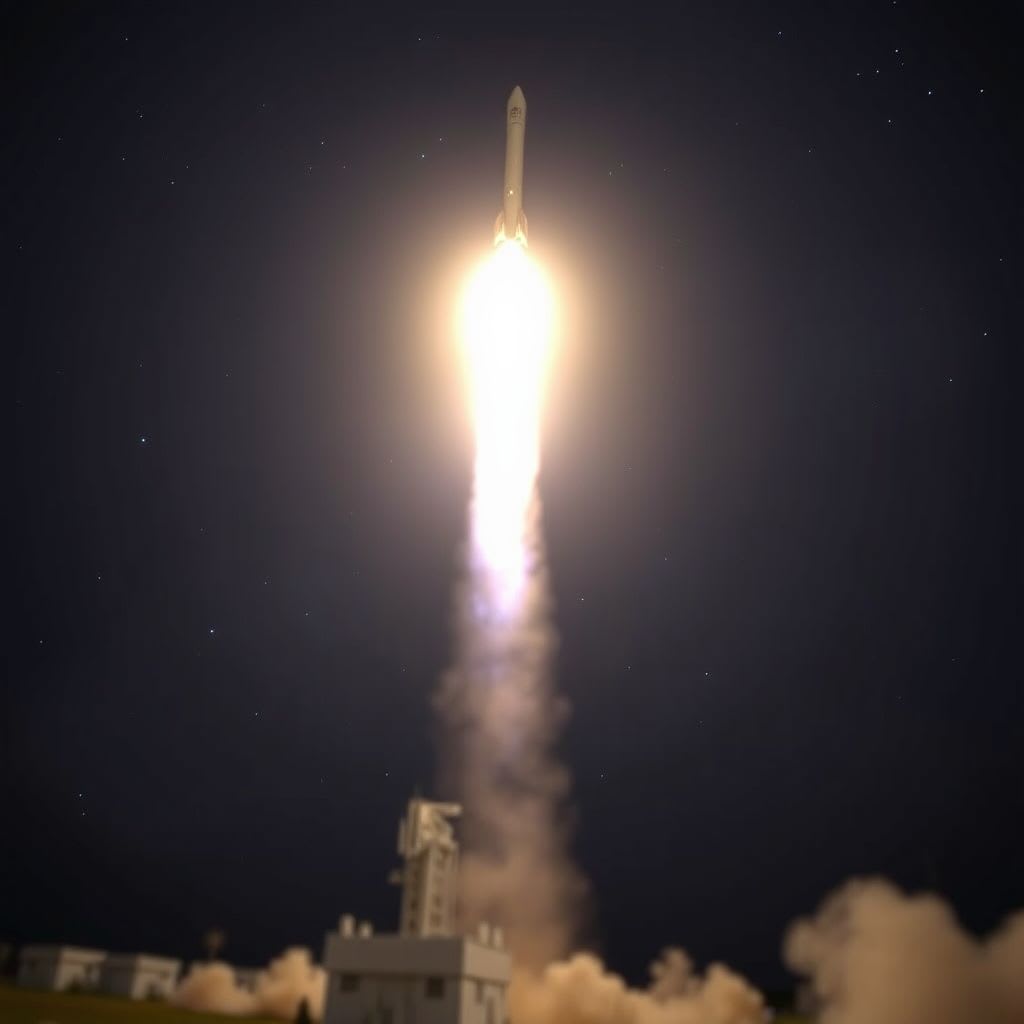
In recent years, the space industry has undergone a dramatic transformation. Gone are the days when building and launching a satellite meant massive budgets, years of preparation, and hardware the size of a car. Today, we are witnessing the rise of microsatellites compact, lightweight, and relatively inexpensive spacecraft, some no bigger than a shoebox. These tiny machines are capable of performing sophisticated tasks, from monitoring climate patterns to providing internet connectivity in remote regions. But with this miniaturization came a new challenge: how to get these small satellites into orbit quickly, affordably, and independently?
The answer lies in a new generation of rockets: light launch vehicles.
What Are Light Launch Vehicles?
A light (or small) launch vehicle is a rocket designed specifically to carry small payloads typically under 500 kg into orbit. Unlike traditional heavy-lift rockets such as SpaceX’s Falcon 9 or Russia’s Proton, which are built to launch tons of equipment at once, these smaller systems prioritize speed, flexibility, and cost-efficiency.
Instead of waiting months for a ride-share on a large rocket often heading to a pre-set orbit operators of microsatellites can now choose a tailored, on-demand ride to space. It’s the difference between catching a crowded bus and calling your own taxi: faster, more convenient, and customized to your destination.
Why Light Launchers Matter
There are several compelling reasons why light launch vehicles are revolutionizing the microsatellite market:
- Speed & Availability
Traditional launches are scheduled months or even years in advance. Light launchers reduce this to weeks, sometimes even days, enabling rapid deployment.
- Orbital Flexibility
Shared rides on heavy rockets force satellites to compromise on orbital destination. With light vehicles, satellites can be deployed into custom orbits for specific missions.
- Lower Costs
Launch prices with light vehicles start in the hundreds of thousands of dollars, making them accessible to universities, startups, and even student-led research programs.
- Mission Independence
A single malfunctioning payload on a large rocket can compromise an entire mission. In contrast, light launches are typically dedicated flights, reducing inter-mission risk.
Who's Leading the Light Launch Revolution?
A global race is underway to dominate the small launch market. Here's a snapshot of key players:
- Rocket Lab (USA/New Zealand)
Their Electron rocket has become a proven workhorse, conducting regular missions for both private and government clients.
- Firefly Aerospace (USA)
With its Alpha rocket, Firefly is focused on increasing launch cadence and lifting capacity within the light-class segment.
- Virgin Orbit (USA)
Its LauncherOne system is air-launched from a modified Boeing 747, allowing for greater launch site flexibility and rapid deployment.
- Skyrora and Orbex (UK)
Both are developing eco-friendly, small-scale rockets aimed at serving Europe’s growing microsatellite sector.
- ISAR Aerospace (Germany)
One of Europe’s leading contenders in the private launch scene.
- Real-World Missions
Several notable missions have demonstrated the effectiveness of light launch vehicles:
- Capstone
A NASA CubeSat that was successfully delivered into lunar orbit by Rocket Lab’s Electron rocket. This mission proved that even small rockets can support deep space operations.
- Mars Cube One (MarCO)
A pair of CubeSats that accompanied NASA’s InSight lander to Mars. Though launched aboard a larger rocket, their success highlighted the growing importance of microsatellites in interplanetary exploration.
Challenges and Future Outlook
Despite their potential, light launch vehicles still face hurdles. Reliability is a major concern small rockets have a higher failure rate compared to their larger counterparts. Additionally, regulatory challenges and orbital traffic management are becoming more complex as space becomes increasingly crowded.
Nevertheless, the future looks bright. Universities, research institutions, and aerospace startups are already leveraging these systems to test technologies, gather scientific data, and even support commercial services. In the next decade, we might see schools, local governments, and even private individuals commissioning their own satellite missions something unimaginable just 20 years ago.
Conclusion: Small Rockets, Big Future
Light launch vehicles for microsatellites are not just another innovation they represent a fundamental shift in how we access and utilize space. As the barriers to entry continue to fall, space is no longer the exclusive domain of billion dollar agencies and corporate giants. It’s becoming personal, flexible, and open to innovation like never before.
In the same way mobile apps exploded once smartphones became widespread, we may soon see a boom in orbital activity driven by small teams and individuals. And it will all begin with a compact rocket slicing through the sky, carrying the next big idea in a box no larger than a briefcase.
About the Creator
Keep reading
More stories from Holianyk Ihor and writers in Futurism and other communities.
Electromagnetic Catapults: A Breakthrough in Space Logistics
A rocket launch is one of the most dramatic spectacles of modern science. Fire, thunder, and sheer force dominate the moment—but behind the awe lies an expensive truth. Sending just one kilogram of cargo into orbit can cost anywhere from several thousand to tens of thousands of dollars. Rockets are incredibly complex, mostly single-use machines that require tons of fuel and meticulous planning. For decades, engineers and scientists have been searching for cheaper, more efficient ways to reach orbit. One of the most promising alternatives? Electromagnetic catapults.
By Holianyk Ihor7 months ago in Futurism
About Binding Prometheus
I want to start actively advocating on behalf of my own work, and the most valuable part of my canon is, without a doubt, Binding Prometheus, the play I have been working on since 2019 and only finished in 2023 as part of my MA. The play itself is an amalgamation of a million different inspirations. On one end, it evokes the Ancient Greek myth-play, deriving its own title from the earliest extant work of Western drama we have, Aeschylus’s Prometheus Bound. On the other end, it borrows significantly from the sci-fi bulwarks from over the years, namely Mary Shelley’s Frankenstein and Karel Capek’s Rossum’s Universal Robots. The play could be an episode of Black Mirror, I fear. I don’t know. I’ve only ever seen one episode of Black Mirror.
By Steven Christopher McKnight16 days ago in Futurism
United States Tissue Paper Market Size and Forecast 2025–2033
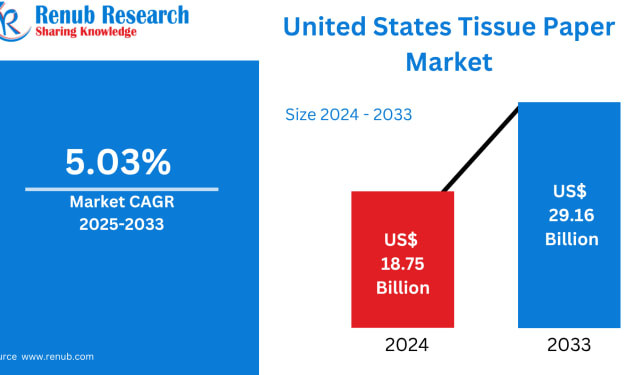
United States Tissue Paper Market Outlook The United States Tissue Paper Market is expected to reach US$ 29.16 billion by 2033, growing from US$ 18.75 billion in 2024, at a compound annual growth rate (CAGR) of 5.03% from 2025 to 2033. This steady expansion reflects increasing hygiene awareness, rising demand for disposable products across households and institutions, and strong innovation in eco-friendly and premium tissue paper offerings. As lifestyles become more convenience-oriented and sustainability becomes a key purchasing factor, tissue paper products are evolving from basic commodities into branded, value-added essentials.
By Aaina Oberoi7 days ago in Futurism



Comments
There are no comments for this story
Be the first to respond and start the conversation.