
Closed-Loop Air and Water Recycling: How to Survive in a Sealed World
Space

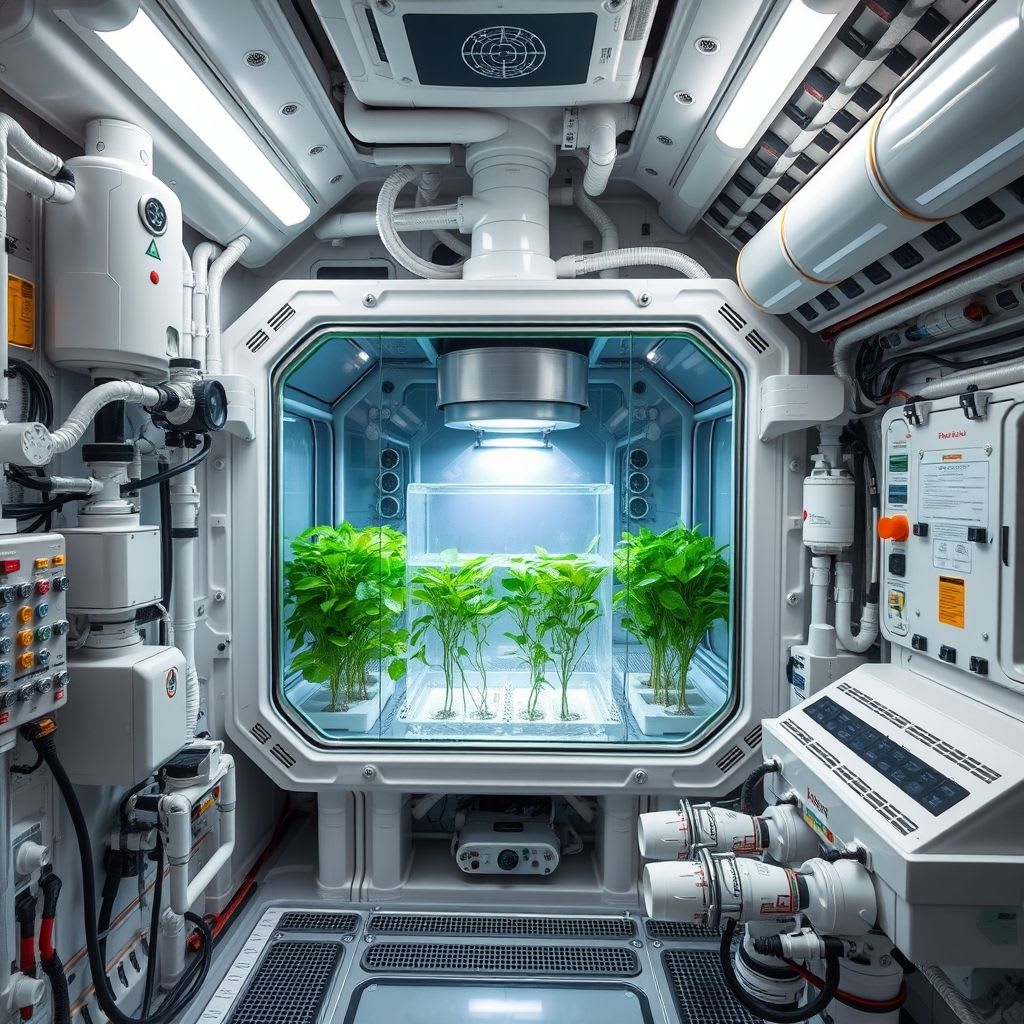
When humans venture into the extremes whether on long-term space missions, deep sea stations, or remote Arctic outposts survival depends on more than just stored supplies. In such environments, we need systems that can sustain life by endlessly recycling air and water. Closed-loop life support systems are no longer science fiction. They are essential technologies of the future, not only for space exploration but also for survival on Earth in harsh or resource scarce environments.
Breathing Through Engineering
Oxygen is fundamental to life, and in closed environments, every breath is the result of carefully engineered systems. Since the early days of the International Space Station (ISS), astronauts have relied on closed loop air regeneration systems that maintain breathable air inside the station.
Oxygen is produced through the electrolysis of water, a process that splits water molecules into hydrogen and oxygen. The oxygen is released into the cabin, while the hydrogen is either vented into space or reused in other chemical reactions.
Carbon dioxide, which we exhale with every breath, is removed using chemical absorbents or lithium based scrubbers. Some systems, like the Sabatier Reactor, take it a step further by combining carbon dioxide with hydrogen to produce methane and water. This not only eliminates excess CO₂ but also regenerates water for reuse.
Looking ahead, scientists are exploring biological solutions such as growing algae or plants onboard spacecraft. These organisms naturally absorb carbon dioxide and release oxygen through photosynthesis. In addition to air purification, they could also be used for food production and psychological benefits in long-term missions.
Recycling Water: Every Drop Counts
The human body is composed of roughly 60 to 70 percent water, and even at rest, we lose 2 to 3 liters of water per day through sweat, breathing, and waste. On Earth, we often take clean water for granted. In space, however, every drop must be accounted for.
The ISS uses a sophisticated Water Recovery System (WRS) that turns waste water including urine, sweat, and moisture from breath into clean drinking water. It operates in multiple stages.
First, humidity from the cabin air is condensed and collected. Wastewater is then filtered through a combination of biological, mechanical, and chemical processes. After that, it undergoes ultraviolet or ionic disinfection to kill any remaining microbes. Finally, the purified water is tested for quality down to microscopic levels. The result is water that is as clean or cleaner than bottled water on Earth.
Astronauts like to joke that today's coffee might be yesterday's sweat. But in truth, this technology represents one of the most important advances in sustainable life support.
Why Closed Loop Systems Matter
Closed-loop recycling is about more than just convenience. It is a necessity for long duration missions, such as a crewed journey to Mars or the establishment of a Moon base. Transporting extra water or oxygen from Earth is extremely costly. Each kilogram sent into orbit can cost tens of thousands of dollars.
Besides the savings, closed loop systems offer lessons for Earth-based applications. In drought prone regions or disaster zones, these technologies could revolutionize water and air purification. They can also play a crucial role in reducing our environmental footprint by promoting more efficient resource use in cities and remote facilities.
Ultimately, closed loop systems prepare us for a future in which self-sufficiency and sustainability go hand in hand.
Challenges and the Road Ahead
Creating a perfect closed loop life support system is far from easy. Over time, contaminants can build up in filters, biological systems may become unbalanced, and components wear out. But progress is being made on multiple fronts.
Next-generation bioreactors use algae to produce both oxygen and food while cleaning the air. 3D printing technology enables the rapid replacement of parts, even in space. Artificial intelligence is increasingly used to monitor and optimize system performance in real time, predicting maintenance needs and adjusting conditions for maximum efficiency.
These advancements are not just technical milestones they are stepping stones toward the long term habitation of space and the creation of sustainable ecosystems in extreme environments.
A Vision of the Future
Closed-loop recycling is more than a set of tools. It represents a new philosophy of living. One day, every skyscraper in a major city could be equipped with its own mini air and water recycling system, reducing its dependency on municipal infrastructure and natural resources.
For now, scientists and engineers continue to refine these systems, learning how to survive in sealed environments. Every improvement brings us closer to a future where we can live and thrive beyond the boundaries of our planet.
After all, the ability to breathe and drink in a self contained world is not just a matter of survival. It is the foundation of humanity’s next giant leap.
About the Creator
Keep reading
More stories from Holianyk Ihor and writers in Futurism and other communities.
Modular Space Cities: The First Step Toward Life Beyond Earth
The idea of settling space has long transcended the realm of pure science fiction. Today, more engineers, architects, and researchers are seriously considering the concept of modular space cities as a realistic vision for humanity’s future. These won’t just be simple colonies on the Moon or Mars but autonomous, evolving settlements capable of growing, adapting, and even relocating depending on the needs of their inhabitants and the conditions of outer space.
By Holianyk Ihor7 months ago in Futurism
About Binding Prometheus
I want to start actively advocating on behalf of my own work, and the most valuable part of my canon is, without a doubt, Binding Prometheus, the play I have been working on since 2019 and only finished in 2023 as part of my MA. The play itself is an amalgamation of a million different inspirations. On one end, it evokes the Ancient Greek myth-play, deriving its own title from the earliest extant work of Western drama we have, Aeschylus’s Prometheus Bound. On the other end, it borrows significantly from the sci-fi bulwarks from over the years, namely Mary Shelley’s Frankenstein and Karel Capek’s Rossum’s Universal Robots. The play could be an episode of Black Mirror, I fear. I don’t know. I’ve only ever seen one episode of Black Mirror.
By Steven Christopher McKnight16 days ago in Futurism
United States Kitchen Appliance Market Size and Forecast 2025–2033
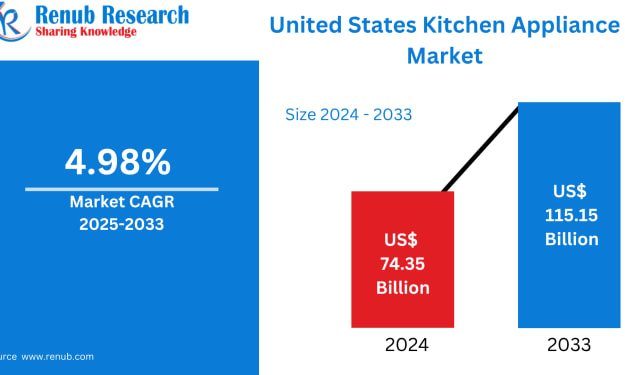
The United States kitchen appliance market is entering a defining decade shaped by innovation, sustainability, and evolving consumer lifestyles. According to Renub Research, the market is projected to reach US$ 115.15 billion by 2033, rising from US$ 74.35 billion in 2024, at a compound annual growth rate (CAGR) of 4.98% during 2025–2033.
By Marthan Sira day ago in Futurism



Comments
There are no comments for this story
Be the first to respond and start the conversation.