
Space Warehouses and Hubs: The Future of Orbital Logistics
Space

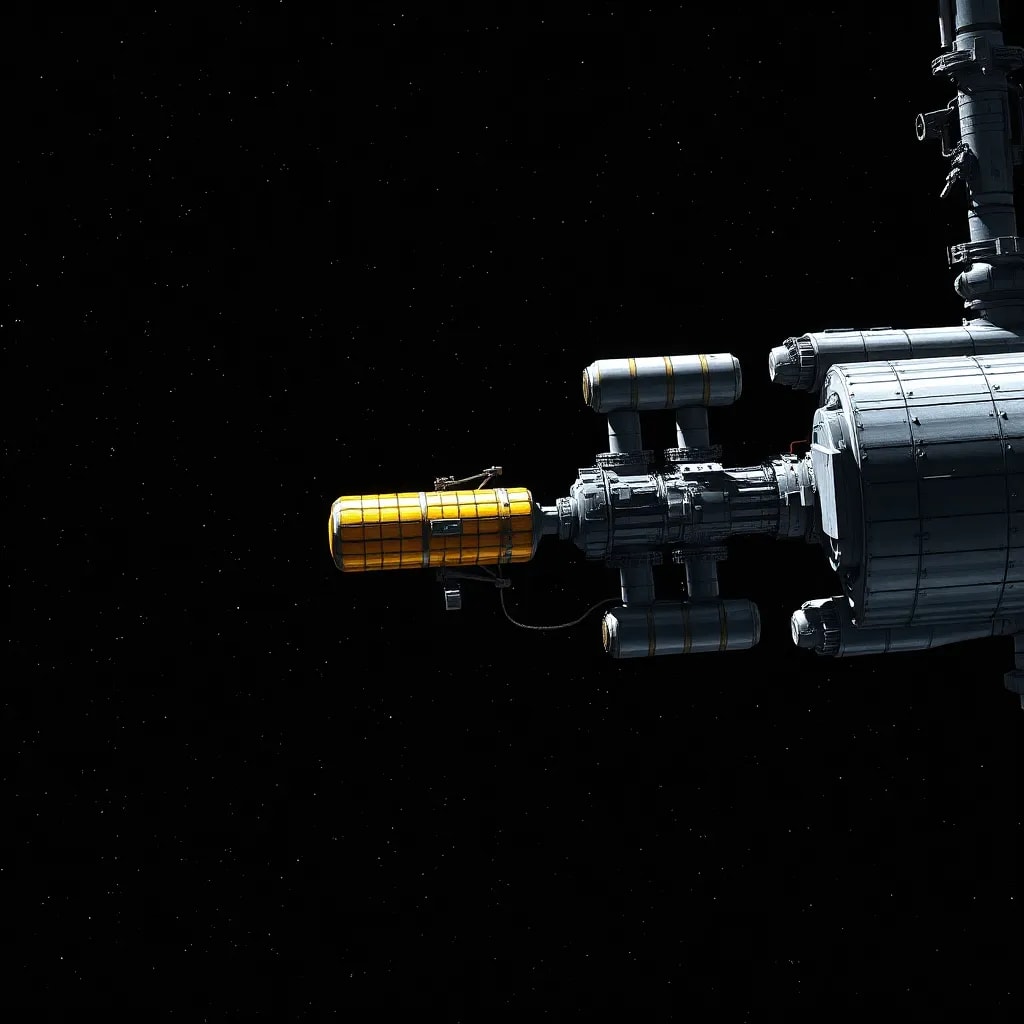
As the space industry evolves at an unprecedented pace, familiar concepts from Earth bound logistics are finding bold new applications beyond our planet. Space warehouses and orbital hubs are no longer the stuff of science fiction. They represent the next logical step in developing a sustainable infrastructure for long term space missions and off world exploration. But why do we need them, how do they work, and what challenges lie ahead in building these orbital outposts?
Why Do We Need Space Warehouses?
Here on Earth, warehouses are a critical part of supply chains. They store goods, redistribute materials, and serve as emergency reserves. In space, the same principles apply, but the stakes and complexities are vastly higher.
Space warehouses are essential for several reasons:
- Supporting Long Term Missions
Future missions to the Moon, Mars, and even deeper into the solar system will require long term storage of equipment, tools, food, fuel, and spare parts. With distances measured in millions of kilometers, real time resupply is impossible. Pre positioned storage hubs close to destinations could be the key to mission success.
Emergency Preparedness
Orbital outposts or spacecraft can experience unexpected equipment failures or supply shortages. Having spare parts or emergency supplies in orbit, nearby and ready for use, can save lives and keep missions on track.
Cost Efficiency
As launch frequency increases and the cost per kilogram to orbit drops, it becomes economically viable to stockpile equipment and resources in orbit ahead of time, rather than launching them on demand.
Satellite Service Revolution
With more than 7,000 satellites in orbit and many more planned, the idea of servicing, refueling, or upgrading them in space is gaining momentum. Space hubs will play a vital role in enabling this shift by hosting tools, modules, and robotic assistants.
How Would Space Hubs Work?
A space hub is essentially an orbital logistics platform capable of storing, sorting, and potentially repairing cargo. These hubs could be positioned in low Earth orbit (LEO), at geostationary points, or even at Lagrange points areas of gravitational stability in the Earth-Moon system.
A functional space hub could include:
- Storage Modules equipped with temperature and radiation control systems to preserve delicate equipment and materials.
- Robotic Arms and Drones for autonomous loading, unloading, and sorting of cargo.
- Docking Ports for spacecraft delivering or retrieving supplies.
- Onboard Manufacturing Units, such as 3D printers, to produce components directly in space, reducing the need for full parts to be launched from Earth.
Think of it as a futuristic version of a port or warehouse, but operating hundreds or thousands of kilometers above Earth’s surface.
Who Is Building These Systems?
Multiple organizations, both public and private, are actively working on the technologies and platforms required for orbital logistics.
NASA is developing the Gateway, a space station that will orbit the Moon and serve as a waypoint for lunar and deep space missions.
Sierra Space and Blue Origin are creating new generation space stations that could evolve into multipurpose hubs for logistics, research, and tourism.
Astroscale and Orbit Fab are pioneering satellite servicing and in-orbit refueling technologies. Their vision includes orbital "gas stations" that will require strategically placed depots.
Roskosmos and the European Space Agency (ESA) have also proposed orbital platforms as part of international cooperation in future space infrastructure.
- Major Challenges
Building and maintaining space hubs is no small task. Several critical challenges need to be addressed:
- Orbital Mechanics
If a hub is placed in the wrong orbit, it may be too expensive or inefficient to reach. Precise placement is vital to ensure accessibility and functionality.
- Extreme Conditions
Space is harsh. Hubs must withstand drastic temperature swings, from minus 150 to plus 120 degrees Celsius, as well as constant exposure to radiation.
- Radiation Protection
Without adequate shielding, stored materials or electronics can degrade before they’re ever used. Protecting cargo is as important as protecting astronauts.
- Economic Viability
Currently, space launches are still expensive. Until costs come down significantly, large scale space logistics remain financially challenging.
- Looking Ahead
In the next few decades, space warehouses may become as common and essential as maritime ports or major shipping centers on Earth. They will serve not only orbital stations but also lunar outposts, Mars bases, and perhaps even the first permanent space settlements.
As we begin building a space based economy, these hubs will become the beating heart of logistics in space, enabling trade, travel, science, and industry far beyond Earth.
Conclusion
Space warehouses and orbital hubs are no longer just an exciting idea. They are the necessary infrastructure for our future in space. Just as humanity once built ports, caravans, and trade routes across oceans and continents, we are now laying the foundation for movement and commerce among the stars. The age of space logistics has begun and it is nothing short of revolutionary.
About the Creator
Keep reading
More stories from Holianyk Ihor and writers in Futurism and other communities.
Orbital Docking Stations: The Next Leap in Space Exploration
In the not so distant future, space will no longer be reserved solely for scientific experiments or rare manned missions. It is evolving into a bustling highway filled with cargo vessels, tourist shuttles, and research stations. In this new chapter of space exploration, orbital docking stations will play a vital role. These multifunctional platforms will serve as critical junctions between Earth, the Moon, Mars, and the far reaches of the cosmos.
By Holianyk Ihor7 months ago in Futurism
About Binding Prometheus
I want to start actively advocating on behalf of my own work, and the most valuable part of my canon is, without a doubt, Binding Prometheus, the play I have been working on since 2019 and only finished in 2023 as part of my MA. The play itself is an amalgamation of a million different inspirations. On one end, it evokes the Ancient Greek myth-play, deriving its own title from the earliest extant work of Western drama we have, Aeschylus’s Prometheus Bound. On the other end, it borrows significantly from the sci-fi bulwarks from over the years, namely Mary Shelley’s Frankenstein and Karel Capek’s Rossum’s Universal Robots. The play could be an episode of Black Mirror, I fear. I don’t know. I’ve only ever seen one episode of Black Mirror.
By Steven Christopher McKnight17 days ago in Futurism
Top 10 Fintech Software Development Companies in USA 2026
In today’s rapidly evolving digital finance landscape, fintech companies and traditional financial institutions alike are investing heavily in advanced software solutions that enable secure transactions, seamless customer experiences, and robust compliance with regulatory standards. As we enter 2026, the demand for specialized fintech software development services continues to grow, driven by technologies such as blockchain, artificial intelligence (AI), machine learning (ML), and cloud-native architectures. Choosing the right development partner can make or break a fintech project, whether it’s launching a next-generation digital wallet, a mobile banking platform, a payment processing system, or a comprehensive financial analytics suite. This article profiles the top 10 fintech software development companies that stand out in the United States market for their innovation, technical expertise, industry experience, and ability to deliver scalable, secure solutions that meet the unique needs of finance organizations.
By Steve Waugh4 days ago in Futurism




Comments
There are no comments for this story
Be the first to respond and start the conversation.