
Nano-Satellites for Educational Launches: How Students Are Reaching for the Stars
Space

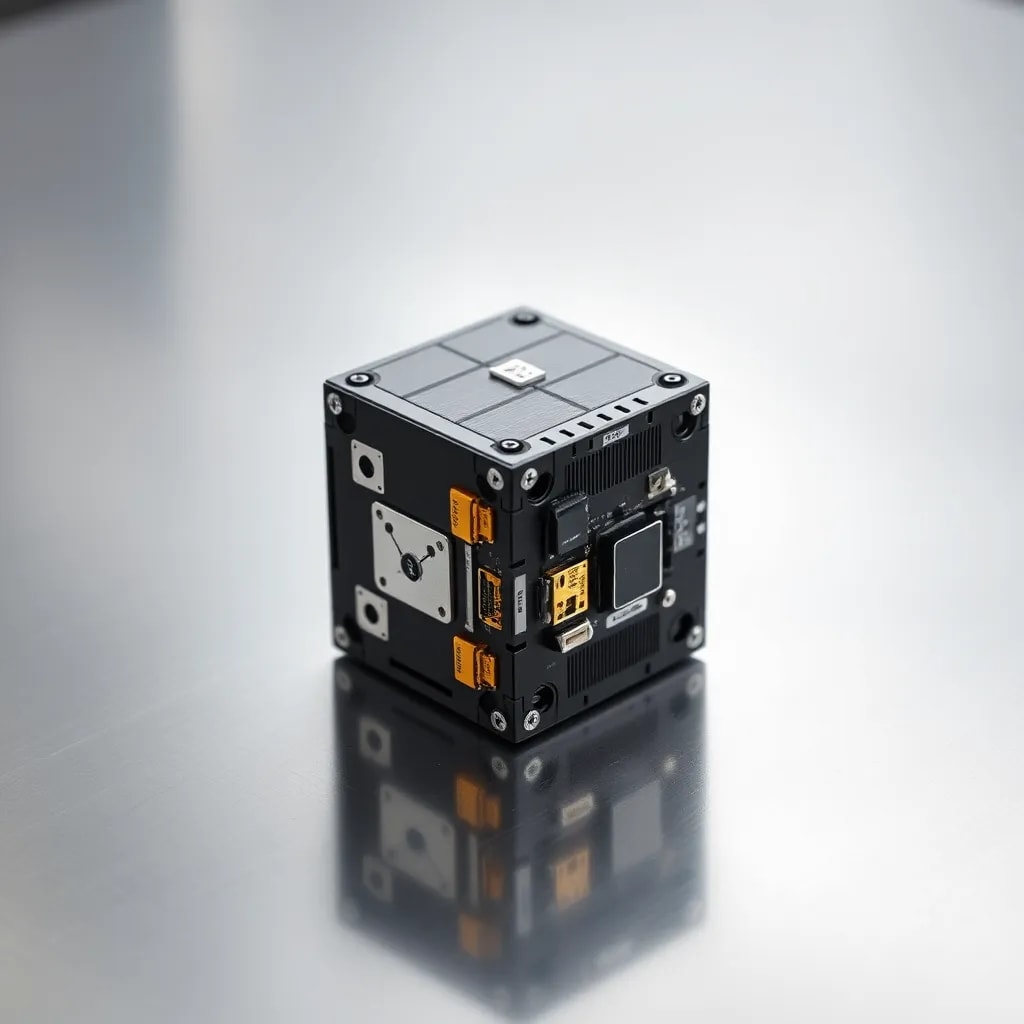
Once upon a time, space exploration was a dream reserved for governments and billion dollar corporations. But that era is fading fast. With the rapid development of technology and the miniaturization of electronics, even high school and university students now have the power to reach orbit all thanks to nano-satellites, the small but mighty tools of a new educational revolution.
What Are Nano-Satellites?
Nano satellites, or nanosats, are tiny spacecraft weighing between 1 and 10 kilograms. The most well known and widely used format is the CubeSat a modular cube measuring just 10x10x10 cm (known as 1U). These cubes can be combined into larger configurations like 3U, 6U, or even 12U units to suit different missions.
Despite their compact size, CubeSats are incredibly capable. They’ve been used for climate monitoring, Earth observation, communication, space weather studies, and even astronomy. And the best part? They’re affordable and achievable for educational institutions around the world.
Why Nano-Satellites Are Perfect for Education
1. Low Cost, High Reward
Building and launching a full scale satellite can cost hundreds of millions of dollars. In contrast, a student built CubeSat can be developed for a few thousand to tens of thousands of dollars, depending on complexity. That makes them accessible to universities, colleges, and even high school teams.
2. Hands-On Engineering Experience
Nano-satellite projects allow students to go beyond textbooks. From conceptual design and hardware integration to software programming and mission operations, students experience every stage of a real space mission. They work with electronics, telemetry systems, power management, structural engineering, and even learn how to communicate with their satellites once they’re in orbit.
3. Support from Space Agencies
Many student-led missions receive backing from space agencies and private aerospace companies. Organizations like NASA, ESA (European Space Agency), and JAXA (Japan Aerospace Exploration Agency) often offer launch opportunities, grants, and mentoring programs. Several startups even dedicate space aboard commercial rockets specifically for educational payloads.
Real Life Student Launches That Reached Space
- CanSat & CubeSat Projects in Japan and Germany
High school students have launched small scale satellites from weather balloons and suborbital rockets, performing real atmospheric experiments.
- NASA’s ELaNa Initiative (Educational Launch of Nanosatellites)
This program allows U.S. universities to launch their CubeSats for free aboard NASA rockets. Dozens of student built satellites have reached orbit through ELaNa.
- PolyITAN-1 by Ukrainian Students
In 2014, students from Kyiv Polytechnic Institute launched their own CubeSat, PolyITAN 1, into orbit. It became a symbol of student innovation and a milestone in Ukraine’s space education.
- What Can You Learn from a Nano Satellite?
A student built nanosatellite can open the door to a variety of experiments and discoveries, including:
- Testing material behavior in microgravity
- Measuring space radiation and solar activity
- Developing and testing autonomous control systems and AI algorithms
- Experimenting with satellite communication and data transfer
- Practicing navigation, stabilization, and orientation techniques
- Conducting environmental monitoring of Earth’s atmosphere, oceans, and ecosystems
These hands on experiences aren’t just engaging they’re career-launching opportunities for the next generation of engineers, scientists, and astronauts.
The Future in Their Hands
Nano satellites are making space personal. For the first time, students can literally build, launch, and command a spacecraft in orbit. It’s not just theoretical physics or engineering principles they’re creating something that actually flies above Earth at 28,000 kilometers per hour.
Educational programs that include nano satellite development empower students to become active participants in space exploration, not just observers. They learn how to collaborate, innovate, and solve complex problems the exact skills needed in today’s tech driven world.
Space in a Backpack
In the past, satellites were the size of buses. Today, a space mission can fit inside a backpack. That’s not just a metaphor it’s the clearest sign yet that the space age is democratizing. Students are no longer learning about the stars from dusty textbooks; they’re launching their own missions, capturing real time data, and turning dreams into reality.
The rise of nano-satellites in education signals a shift in how we prepare future generations for the cosmos. It’s not about waiting for the next rocket launch to inspire us it’s about building that rocket, coding that sensor, testing that solar panel. The future of space exploration doesn’t start at NASA. It starts in the classroom.
Nano satellites are more than tools they’re passports to the stars.
About the Creator
Keep reading
More stories from Holianyk Ihor and writers in Futurism and other communities.
Thrust Modulation for Multistage Rockets: The Future of Adaptive Spaceflight
In the evolving world of space technology, sheer engine power is no longer the sole defining factor of success. Today, flexibility and precision are just as critical. Traditionally, rocket stages operate in a binary mode full thrust or complete shutdown. But a new and powerful concept is emerging: thrust modulation, or the ability to dynamically adjust engine power mid-flight. For multistage rockets, this innovation could be a true game-changer.
By Holianyk Ihor7 months ago in Futurism
About Binding Prometheus
I want to start actively advocating on behalf of my own work, and the most valuable part of my canon is, without a doubt, Binding Prometheus, the play I have been working on since 2019 and only finished in 2023 as part of my MA. The play itself is an amalgamation of a million different inspirations. On one end, it evokes the Ancient Greek myth-play, deriving its own title from the earliest extant work of Western drama we have, Aeschylus’s Prometheus Bound. On the other end, it borrows significantly from the sci-fi bulwarks from over the years, namely Mary Shelley’s Frankenstein and Karel Capek’s Rossum’s Universal Robots. The play could be an episode of Black Mirror, I fear. I don’t know. I’ve only ever seen one episode of Black Mirror.
By Steven Christopher McKnight17 days ago in Futurism
Saudi Arabia Boiler Market: Clean Energy Transition, Vision 2030, Emission Control & Modern Heating Systems
Saudi Arabia's boiler market grows through Vision 2030-driven industrialization, with rising demand in petrochemicals and power plants. Innovations like energy-efficient and biomass-fired models support sustainability goals, while Aramco expansions boost adoption of advanced systems amid rapid infrastructure projects. According to IMARC Group's latest research publication, Saudi Arabia boiler market size reached USD 902.70 Million in 2024. The market is projected to reach USD 1,631.91 Million by 2033, exhibiting a growth rate (CAGR) of 6.10% during 2025-2033.
By Jeffrey Wilson5 days ago in Futurism


Comments
There are no comments for this story
Be the first to respond and start the conversation.