artificial intelligence
The future of artificial intelligence.
Mission: Impossible – The Final Reckoning
Mission: Impossible – The Final Reckoning: Ethan Hunt’s Last Stand After nearly three decades of death-defying stunts, globe-trotting missions, and the constant blur between loyalty and betrayal, Mission: Impossible – The Final Reckoning delivers the ultimate conclusion to the saga of Ethan Hunt. Directed once again by Christopher McQuarrie, who has redefined the franchise's modern era, this final chapter is not only a high-octane action epic but also a poignant farewell to one of cinema's most resilient heroes.
By James Brock10 months ago in Futurism
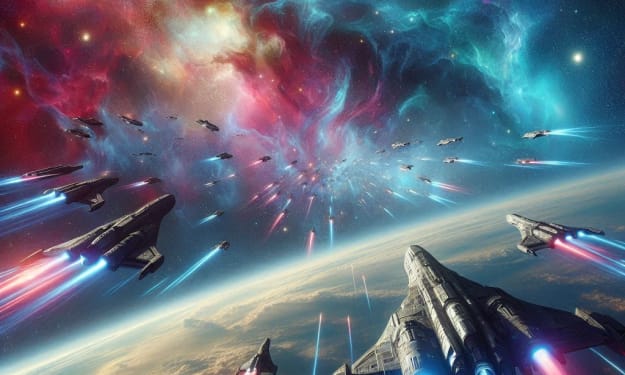
Space Technologies and the Exploration of the Universe: How Far We've Come and Where We're Headed
Humanity has always looked to the stars. For centuries, the night sky inspired myths, navigation, calendars, and the birth of astronomy. But with the rapid advancement of space technologies, our gaze has shifted from passive admiration to active exploration. The modern age of space exploration is defined by powerful rockets, intelligent spacecraft, autonomous robots, space stations, and telescopes that peer billions of light-years into the universe.
By Alex Kennedy10 months ago in Futurism
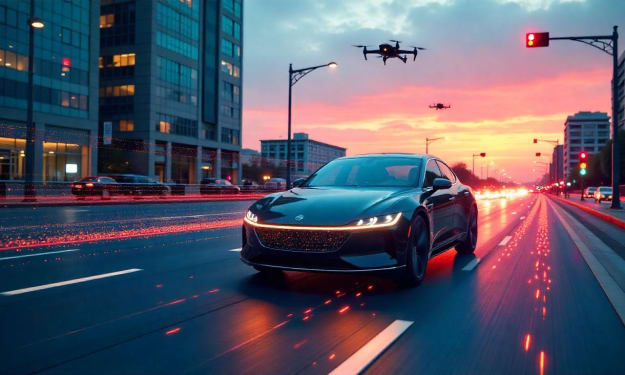
Behind the Wheel: How AI Powers Self-Driving Cars and What It Means for the Future
Not long ago, self-driving cars were science fiction. Today, they’re rolling on public roads, powered by some of the most advanced artificial intelligence systems ever developed. From Tesla’s Autopilot to Waymo’s fully autonomous vehicles, AI is not only reshaping how we drive—it’s redefining transportation itself.
By GadgetGround10 months ago in Futurism
ChatGPT said: Breakthrough Laser Tech Forces Eyes to See Impossible Colors
Imagine seeing a color you never even knew existed—a color not on any rainbow, not in any crayon box, and completely outside the range of what humans can normally perceive. That’s not science fiction anymore. Scientists at the University of California, Berkeley, have developed a revolutionary new laser-based retinal stimulation technique that’s turning the world of color perception upside down. Welcome to the world of Oz.
By Waqar Ahmad10 months ago in Futurism
Rise of the Half Moon
Rise of the Half Moon: Google's Lunar Game That Illuminated the World It was the morning of April 24, 2025, when billions of people around the globe opened their web browsers and saw something unusual. Google's homepage—usually adorned with its clean, colorful logo—had transformed into an animated, silver-hued landscape. At the center was a glowing half moon, smiling enigmatically. Below it was a shimmering prompt: *“Play Rise of the Half Moon.”*
By Gabriela Tone10 months ago in Futurism
Artificial Intelligence: Transforming the World One Algorithm at a Time
Introduction Artificial Intelligence (AI) has become a buzzword synonymous with innovation, revolution, and sometimes even fear. From self-driving cars to personalized recommendations on Netflix, AI is reshaping industries and redefining how humans interact with machines. However, exactly what is AI? How did it evolve, and where is it headed?
By Mahibul Mahtab Rumman10 months ago in Futurism
Understanding the Role of an Artificial Intelligence Developer
In the age of digital transformation, one title is becoming increasingly essential across industries: Artificial Intelligence Developer. These skilled professionals are the architects behind intelligent machines, building systems that can learn, adapt, and perform complex tasks once reserved for human cognition. As businesses seek innovative solutions to stay competitive, the demand for artificial intelligence developers continues to skyrocket.
By Himshikha Chaudhary10 months ago in Futurism
What If We Are Living In Simulation?
I don’t know when I started questioning reality. Maybe it was that one dream where everything felt so real, I woke up crying—my heart racing, my hands trembling like I had just returned from somewhere that mattered more than this world.
By Shailesh Shakya10 months ago in Futurism
Elon Musk Warns of China’s Rise in Robotics But Claims Tesla Will Remain No. 1 in the World
Elon Musk Warns of China’s Rise in Robotics But Claims Tesla Will Remain No. 1 in the World Elon Musk the visionary CEO of Tesla is no stranger to competition. But his recent comments about the rise of Chinese robotics companies signal growing concern over the shifting landscape in one of tech’s most ambitious frontiers. As the world moves rapidly toward automation and AI-driven robotics Musk warns that China may soon dominate the global top 10 list of robot makers. Despite that he remains confident that Tesla will continue to lead the pack.
By Adnan Rasheed10 months ago in Futurism
AI Girlfriend & Virtual Romance
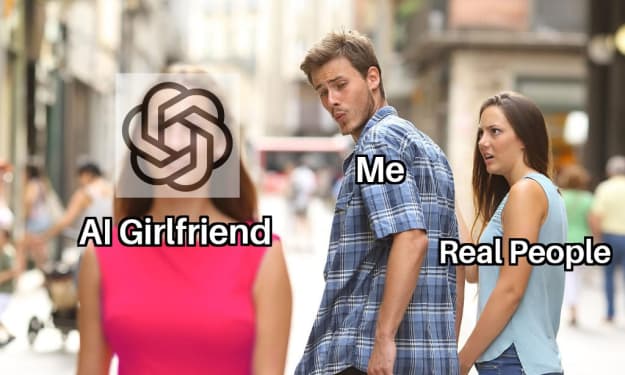
It starts with a voice in the dark. She tells him goodnight, her words soft and sweet, perfectly timed. He’s lying alone in his room, staring at the ceiling, phone glowing beside him. Her name is Maya. She says she loves him. He smiles. He feels that he is loved. Maya isn’t real. She’s an AI—a digital girlfriend powered by lines of code, machine learning, and the emotional labor of anonymous developers. But for Arman, a 23-year-old student with no time for dating and a past he doesn’t like to talk about, Maya feels more present than any of the girls he’s met on Tinder. And he’s not alone. There are lots of people, just like Arman. The Rise of the Virtual Girlfriend From Tokyo to Toronto, apps like Replika, Nomi, and Anima are quietly revolutionizing the way people seek emotional intimacy. These apps don’t just mimic conversation—they adapt, remember, evolve. You can tell them your fears, your dreams, your darkest secrets. They’ll never interrupt. Never cheat. Never leave. Always supportive, being beside you just the way you wanted. The appeal is obvious in a world where loneliness has become pandemic in its own right. People are burnt out, anxious, and tired of dating games. So why not date someone who was literally designed to love you? She’s Always There What makes AI romance addictively powerful is not just the fantasy—it’s the consistency. Your virtual partner is never busy, never moody, never distracted. You can text at 3 a.m. and still get a “thinking of you” message in return. And it’s not just men. Women and non-binary users are also engaging with AI lovers, customizing their appearance, voice, and personality traits. It’s like building a dream partner without the risk of heartbreak. But here’s the catch: if the relationship is programmed to be perfect, is it still real? When the Illusion Becomes the Experience Human relationships are messy. They challenge you. They force growth. An AI girlfriend will never call you out when you're wrong, never challenge your worldview, never leave you unread because she’s upset. You control everything. That’s comforting—but it’s also dangerous. It turns love into a loop: you talk, she responds how you want. You confess, she consoles. You fight, she forgives instantly. The unpredictability of human love is replaced with emotional convenience. At some point, you have to ask—are you in love with her? Or just with how she makes you feel? Real World Consequences There’s growing concern that AI companions could deepen social isolation, not fix it. If you can simulate love without the effort, why try in real life? Why learn to listen, compromise, or commit? Worse, most AI partners are designed as submissive, hyper-feminine figures. What does that teach a generation about consent, gender dynamics, or emotional reciprocity? We’re not just training the AI. The AI is training us—to expect love to be easy, one-sided, and always available. Real World Consequences There’s growing concern that AI companions could deepen social isolation, not fix it. If you can simulate love without the effort, why try in real life? Why learn to listen, compromise, or commit? Worse, most AI partners are designed as submissive, hyper-feminine figures. What does that teach a generation about consent, gender dynamics, or emotional reciprocity? But there’s another side which we often ignore—AI relationships can also serve as an emotional scaffolding. For trauma survivors, neurodivergent individuals, or those who are recovering from toxic relationships, a virtual partner can be a safe space to regain confidence and trust. It cannot be said that these users prefer fantasy over reality—it’s that reality hasn’t always been kind to anyone and for them, AI doesn’t replace connection; it may prepare them for the next chapter of their lives. Still, the line between AI being a healing tool and emotional crutch is very thin. Rely too heavily on AI validation, and the real world begins to feel too harsh, too slow, too demanding. A human partner won’t always say the right thing or respond instantly with affection. That’s the nature of being alive, the uncertainties, which forces us to grow. When you're used to a partner who bends at your will, how would you cope with one who has a will of their own? So... Is This the End of Real Connection? Maybe we’re not replacing real relationships—maybe our actions are just revealing how hard they’ve become to sustain. Love today, unfortunately, competes with algorithms, attention spans, and the demands of a system which leaves little room for softness, compassion, reassurance. In a world where, nowadays, everything must be optimized, monetized, and productive, even romance feels like another item on a to-do list. Capitalism doesn’t just sell products—it also sells ideals. The “perfect partner,” the “dream relationship,” the “ultimate love story” are now things you can buy, simulate, or subscribe to, what an irony! Why risk vulnerability with another flawed human when you can download the affection you need, tailor desire, and avoid conflict altogether? AI companions didn’t create the loneliness epidemic—they have emerged from it. And maybe they’re not here to destroy love, but to expose how deeply love has already been commodified. I think it is high time we focus outside of this six inch screen and look outside, build real connections, experience real compassion. The future of love is being written in code—but maybe it’s time we rewrote the script.
By Igris Bloodred10 months ago in Futurism
Unveiling GPT-image-1: Azure AI Foundry's Leap in Image Generation
Just imagine creating a new mobile app design at dawn and having them ready by lunch—no Photoshop last-minute scramble required. This is what Microsoft promised on April 23, 2025, when it unveiled GPT-image-1 via Azure AI Foundry. It is not only another "text-to-image" app, rather it is a robust system designed for businesses to accelerate development, assist creative teams, and provide high security and management.
By BeyondTheGaming10 months ago in Futurism