
Space Technologies and the Exploration of the Universe: How Far We've Come and Where We're Headed
Discover how space technologies shape modern exploration, from rockets to AI in space, and humanity's future beyond Earth.


Humanity has always looked to the stars. For centuries, the night sky inspired myths, navigation, calendars, and the birth of astronomy. But with the rapid advancement of space technologies, our gaze has shifted from passive admiration to active exploration. The modern age of space exploration is defined by powerful rockets, intelligent spacecraft, autonomous robots, space stations, and telescopes that peer billions of light-years into the universe.
In this article, we dive deep into the current state of space technology, explore the milestones of humanity’s cosmic journey, and investigate what lies ahead — from lunar bases to Mars colonization, from asteroid mining to the search for extraterrestrial life.
What are space technologies?
Space technologies refer to a broad spectrum of tools, systems, and techniques developed to support activities in outer space. These include launch vehicles (like the Falcon 9 or SLS), satellites, space probes, space habitats, rover systems, and deep space communication networks.
Today’s space tech innovations are not only used for exploration but also benefit life on Earth. GPS navigation, weather forecasting, Earth observation, and satellite internet all rely on space infrastructure.
Milestones in space exploration
- Sputnik and the dawn of space age: The Soviet Union launched Sputnik 1 in 1957, the first artificial satellite. It marked humanity's first step into space.
- Apollo 11 and the Moon landing: In 1969, Neil Armstrong became the first human to set foot on the Moon, showcasing the technological prowess of the era.
- Space stations and long-term habitation: From Mir to the International Space Station (ISS), we’ve learned how to live and work in space for months or even years.
- Mars rovers: NASA’s Spirit, Opportunity, Curiosity, and Perseverance rovers have revolutionized our understanding of Mars, capturing stunning images and analyzing soil chemistry.
- Telescopes and deep space observation: The Hubble Space Telescope and the recent James Webb Space Telescope (JWST) have opened up the cosmos in stunning detail.
How are we exploring space today?
Space agencies and private companies are pushing the boundaries of the possible:
- NASA is working on the Artemis program to return humans to the Moon and eventually send astronauts to Mars.
- SpaceX is building Starship, a fully reusable rocket system designed for interplanetary travel.
- Blue Origin, Rocket Lab, ESA, JAXA, CNSA, and ISRO all contribute to a growing international ecosystem of space exploration.
- Planetary defense missions, like NASA’s DART (which successfully altered the trajectory of an asteroid), prove we can interact with near-Earth objects.
The rise of private space companies
Private spaceflight is now one of the most dynamic areas of innovation. With reusable rockets, faster iteration cycles, and reduced costs, companies like SpaceX, Blue Origin, and Rocket Lab are transforming the way we access space. These companies are not just sending satellites; they are preparing for space tourism, lunar logistics, and eventually interplanetary missions.
Key technologies enabling space exploration
- Reusable rockets – Drastically reducing the cost of launch.
- Ion propulsion systems – Allowing for efficient long-duration deep space missions.
- Artificial intelligence in space – Used in autonomous navigation, data analysis, and rover decision-making.
- 3D printing in space – Manufacturing tools and parts aboard space stations and potentially on the Moon or Mars.
- Radiation shielding – Protecting astronauts from cosmic radiation beyond Earth’s magnetosphere.
- Life support systems – Closed-loop systems for oxygen, water, and food recycling on long missions.
Why space exploration matters
Why should we explore space? It’s a question that surfaces often, especially when challenges on Earth demand attention. But space exploration provides more than just cosmic curiosity:
- Technological innovation: Many everyday technologies (camera sensors, memory foam, water purification) have roots in space R&D.
- Economic growth: The space economy is now worth hundreds of billions, with projections of reaching a trillion-dollar industry within a decade.
- Planetary defense: Monitoring asteroids and solar activity can help protect Earth.
- Scientific understanding: Studying planets, stars, and cosmic phenomena helps us understand Earth’s history, climate, and place in the universe.
- Survival of humanity: Becoming a multi-planetary species may one day be essential for human survival.
Future goals: Mars, moons, and beyond
The next few decades will define humanity’s place in the solar system. Major goals include:
- Lunar bases: NASA and partners plan to build Artemis Base Camp and the Lunar Gateway, enabling sustainable Moon exploration.
- Mars missions: Crewed missions to Mars could launch in the 2030s. Technologies are being tested now — from habitats to nuclear propulsion.
- Europa and Titan: Missions like Europa Clipper and Dragonfly will explore these icy moons for signs of life.
- Interstellar precursors: Projects like Breakthrough Starshot aim to send nano-spacecraft to Alpha Centauri using light sails — our first potential venture beyond the solar system.
Challenges of space exploration
Space is the most hostile environment humanity has ever faced. Major challenges include:
- Radiation exposure
- Microgravity effects on the body
- Psychological isolation
- Life support and closed-loop systems
- Communication delays
- Extreme temperatures and terrain
Solving these challenges will require global collaboration, innovative technologies, and robust human resilience.
What is the role of artificial intelligence in space?
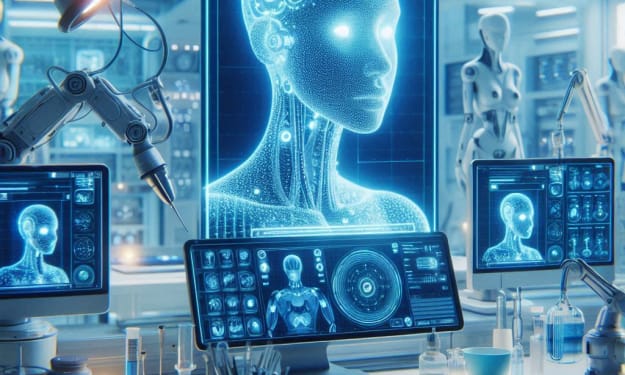
AI is revolutionizing how we explore space. From autonomous navigation on Mars rovers to analyzing data from telescopes, artificial intelligence in space missions is essential. It enables real-time decision-making when communication with Earth is delayed and can detect anomalies that human operators might miss.
As our technologies advance, space exploration and technology will become even more integrated into our lives. From planetary defense and space-based solar power to asteroid mining and galactic telescopes, our reach continues to grow.
The dream of space is no longer confined to science fiction. It’s an unfolding reality, powered by human curiosity, ambition, and ingenuity.
About the Creator
Alex Kennedy
Founder of a future-tech blog focused on AI, biotech, and cybernetics. I write deep-dive articles on how emerging technologies are reshaping industries and society. Passionate about turning complex ideas into practical insights.
Keep reading
More stories from Alex Kennedy and writers in Futurism and other communities.
The Rise of Artificial Intelligence in Medicine: A New Era of Healthcare
Artificial Intelligence (AI) is reshaping almost every industry, and healthcare is no exception. From assisting in diagnostics to streamlining administrative processes and even predicting future outbreaks, AI is becoming a critical tool in transforming medicine as we know it. But what does AI in medicine really mean? How does it work? Can it be trusted? And how is it already making a difference in the lives of doctors and patients alike?
By Alex Kennedy9 months ago in Futurism
About Binding Prometheus
I want to start actively advocating on behalf of my own work, and the most valuable part of my canon is, without a doubt, Binding Prometheus, the play I have been working on since 2019 and only finished in 2023 as part of my MA. The play itself is an amalgamation of a million different inspirations. On one end, it evokes the Ancient Greek myth-play, deriving its own title from the earliest extant work of Western drama we have, Aeschylus’s Prometheus Bound. On the other end, it borrows significantly from the sci-fi bulwarks from over the years, namely Mary Shelley’s Frankenstein and Karel Capek’s Rossum’s Universal Robots. The play could be an episode of Black Mirror, I fear. I don’t know. I’ve only ever seen one episode of Black Mirror.
By Steven Christopher McKnight26 days ago in Futurism
Office Supplies Market: Hybrid Work Demand, Smart Stationery & Workplace Productivity Trends
According to IMARC Group's latest research publication, global office supplies market size reached USD 267.56 Billion in 2024. Looking forward, IMARC Group expects the market to reach USD 307.34 Billion by 2033, exhibiting a growth rate (CAGR) of 1.54% during 2025-2033.
By yash mishra7 days ago in Futurism


Comments
There are no comments for this story
Be the first to respond and start the conversation.