
United States Plant-Based Food Market Size and Forecast 2026–2034
Why Health, Sustainability, and Innovation Are Powering America’s Plant-Based Food Boom

United States Plant-Based Food Market: Big Numbers, Bigger Momentum
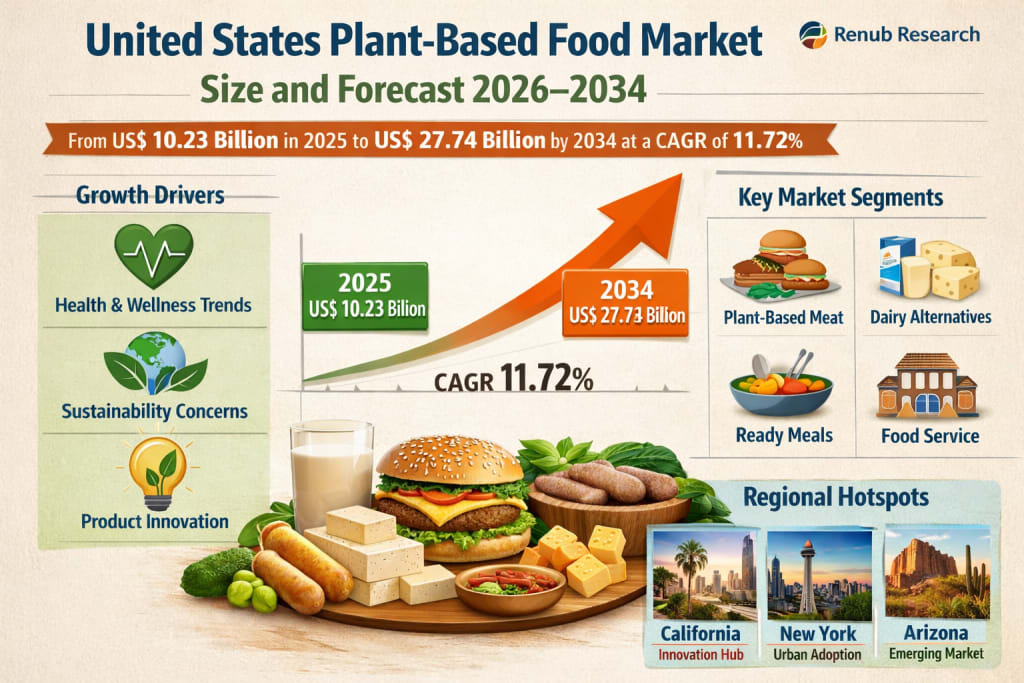
The United States plant-based food market is entering a decisive growth phase. According to Renub Research estimates, the market is anticipated to expand from US$ 10.23 billion in 2025 to US$ 27.74 billion by 2034, registering a strong CAGR of 11.72% during 2026–2034. This remarkable trajectory reflects a fundamental shift in how Americans think about food—moving beyond niche veganism into mainstream, everyday consumption.
Plant-based foods, once confined to specialty stores and health-focused communities, are now firmly embedded in supermarkets, restaurants, healthcare facilities, and even sports and recreation venues. The category includes a wide spectrum of products made primarily or entirely from plant sources such as fruits, vegetables, grains, legumes, nuts, seeds, and plant-derived proteins. Today’s offerings go far beyond basic tofu and soy milk, spanning meat substitutes, dairy-free milk and cheese, plant-based snacks, ready-to-eat meals, functional foods, and ready-to-drink beverages designed to match or even improve upon the taste, texture, and nutritional profile of animal-based foods.
This expansion is not accidental. It is being fueled by a powerful combination of health awareness, environmental concerns, evolving consumer lifestyles, product innovation, and expanding retail access. Together, these forces are reshaping the American food landscape and positioning plant-based products as a core pillar of the future food economy.
Market Outlook: From Alternative to Mainstream
Plant-based foods are increasingly perceived not as “substitutes” but as legitimate first-choice options. Consumers are no longer limited to choosing these products only for ethical or dietary reasons; taste, convenience, and nutrition now play equally important roles.
In the United States, rising interest in vegan, vegetarian, and especially flexitarian diets—where consumers reduce meat intake without eliminating it completely—has dramatically widened the target audience. For many households, plant-based food is no longer a lifestyle statement but a practical, everyday decision tied to wellness goals, weight management, heart health, and long-term disease prevention.
At the same time, food manufacturers have invested heavily in improving flavor, mouthfeel, cooking performance, and nutritional balance, making modern plant-based foods far more appealing to mainstream consumers than earlier generations of products. This has helped break down lingering skepticism and accelerated adoption across multiple age groups and income levels.
Growth Drivers Shaping the US Plant-Based Food Market
1. Rising Health and Wellness Awareness
Health consciousness is one of the strongest drivers of the plant-based food market in the United States. Consumers are increasingly concerned about lifestyle-related conditions such as obesity, cardiovascular disease, diabetes, and high cholesterol. Plant-based foods are widely perceived as healthier alternatives due to their lower saturated fat content and higher levels of fiber, vitamins, and antioxidants.
The scale of the health challenge in the US underscores this shift. A large portion of the adult population struggles with obesity and prediabetes, while physical inactivity and poor sleep habits remain widespread. These factors have intensified interest in dietary patterns that emphasize whole, plant-forward foods. As a result, many Americans are adopting flexitarian eating habits, reducing their dependence on animal products without fully eliminating them—an approach that significantly broadens the consumer base for plant-based products.
Healthcare professionals and evolving dietary guidelines also continue to reinforce confidence in plant-forward eating patterns, further normalizing these choices in everyday life.
2. Sustainability and Environmental Concerns
Environmental awareness is another powerful engine of growth. Consumers are becoming more mindful of the carbon footprint, water usage, and land impact associated with conventional animal agriculture. In contrast, plant-based foods are generally seen as having a lower environmental impact, aligning well with sustainability-focused lifestyles.
For many buyers, food choices have become an expression of personal values. Sustainability messaging, ethical sourcing, and climate-friendly branding now play a meaningful role in purchase decisions. Companies that position their products around environmental responsibility and transparent supply chains are finding stronger resonance with younger and urban consumers in particular.
This value-driven consumption trend is not a passing phase—it represents a long-term shift in how food brands compete and communicate in the US market.
3. Product Innovation and Retail Expansion
Innovation remains a cornerstone of the market’s rapid expansion. Food companies are investing heavily in research and development to improve taste, texture, and nutritional quality, especially in plant-based proteins derived from soy, peas, wheat, and other sources. These improvements have made plant-based products more appealing to consumers who might otherwise be reluctant to move away from traditional meat and dairy.
Retail access has also expanded dramatically. Major grocery chains, mass merchandisers, and foodservice operators now dedicate significant shelf and menu space to plant-based offerings. Competitive pricing strategies, private-label brands, and wider distribution have all helped make these products more accessible to everyday shoppers.
Recent launches and retail expansions by leading brands highlight how quickly this category is scaling across the country, moving well beyond niche health food stores into mainstream retail environments.
Key Challenges in the Market
Price Sensitivity and Cost Barriers
Despite strong growth, price remains a notable barrier for some consumers. Many plant-based products are still more expensive than their animal-based counterparts, largely due to specialized ingredients, processing methods, and smaller-scale production compared to traditional meat and dairy industries.
While costs are gradually declining as volumes increase and supply chains mature, price sensitivity can still slow adoption among budget-conscious shoppers. However, it is important to note that price is no longer the only or even the primary barrier for many consumers—perceived value, health benefits, and sustainability credentials increasingly justify the premium for a growing segment of buyers.
Taste, Texture, and Consumer Perception
Although product quality has improved significantly, taste and texture remain critical decision factors. Some consumers, especially those accustomed to traditional meat and dairy, may still find certain plant-based alternatives less satisfying. A single negative experience can discourage repeat purchases.
In addition, misconceptions about processing levels and nutritional value can influence consumer perception. Clear labeling, transparent ingredient lists, and effective consumer education will be essential in overcoming these concerns and sustaining long-term market growth.
Segment Insights: Where Growth Is Happening
United States Meat Plant-Based Food Market
The plant-based meat segment is one of the most dynamic parts of the overall market. It includes burgers, sausages, nuggets, and ground meat alternatives made from plant proteins such as soy and peas. Originally targeted at vegans and vegetarians, these products now appeal strongly to flexitarian consumers seeking familiar formats with a healthier or more sustainable twist.
Continuous innovation in formulation has made these products more convincing in terms of taste and texture, while major food manufacturers and restaurant chains have accelerated mainstream acceptance by adding plant-based options to their menus.
United States Tofu and Tempeh Market
Tofu and tempeh represent a more mature segment, characterized by steady, reliable growth. These traditional soy-based products are valued for their high protein content, versatility, and relatively minimal processing. Rising interest in Asian cuisine and whole-food, plant-based diets continues to support demand, especially among health-conscious consumers seeking clean-label options.
Foodservice and Institutional Markets
Plant-based foods are gaining strong traction across full-service restaurants, quick-service restaurants, healthcare facilities, educational institutions, and recreational venues. Full-service restaurants, in particular, are expanding their plant-based menus to cater to diners seeking healthier and more sustainable choices without compromising on culinary experience.
In healthcare settings, plant-based foods are increasingly viewed as part of preventive nutrition strategies, supporting cardiovascular health and weight management. Meanwhile, recreation and sports venues are responding to demand from fitness-focused consumers and athletes who associate plant-based diets with performance and recovery benefits.
Regional Highlights: State-Level Momentum
California
California remains the epicenter of plant-based innovation in the United States. With high consumer awareness around health, sustainability, and animal welfare, cities like Los Angeles, San Francisco, and San Diego continue to drive adoption. The state’s strong ecosystem of startups, research centers, and foodservice experimentation makes it a key trendsetter for the national market.
New York
New York’s diverse, urban, and globally influenced population has made it a fertile ground for plant-based meat alternatives. A vibrant restaurant scene, high disposable incomes, and strong exposure to international food trends continue to support market expansion, especially in metropolitan areas.
Washington
Washington’s environmentally conscious culture and openness to innovation have created a favorable environment for plant-based foods. Progressive consumer attitudes and a strong technology-driven lifestyle make the state particularly receptive to new product concepts and sustainable food solutions.
Arizona
Arizona represents an emerging growth market, supported by rising health awareness and a younger urban population in cities like Phoenix and Tucson. While traditional dietary habits still play a role, increasing exposure to plant-based options through retail and foodservice channels is gradually reshaping consumption patterns.
Competitive Landscape
The US plant-based food market features a mix of specialized innovators and large multinational food companies. Key players include:
Beyond Meat Inc.
Conagra Brands
Maple Leaf Food Inc.
Archer Daniels Midland
US Foods Holding Corp
Kellanova
Tyson Foods
Hormel Foods Corporation
These companies compete across multiple dimensions, including product innovation, portfolio expansion, strategic partnerships, distribution reach, and branding. Their strategies reflect a broader industry consensus: plant-based foods are no longer a side bet, but a core growth engine for the future of food.
Final Thoughts: A Market Redefining the American Plate
The United States plant-based food market is no longer an experiment—it is a structural transformation of the food industry. With the market projected to grow from US$ 10.23 billion in 2025 to US$ 27.74 billion by 2034, the coming decade will likely see plant-based products become even more deeply embedded in everyday American diets.
Health awareness, sustainability concerns, continuous innovation, and expanding retail and foodservice presence will keep driving this momentum. While challenges around pricing, taste, and perception remain, the overall direction is clear: plant-based foods are moving from the margins to the mainstream.
For investors, manufacturers, retailers, and consumers alike, this market represents not just a growth opportunity—but a lasting shift in how the United States eats, thinks about food, and defines the future of nutrition.
About the Creator
Growing Our Own Food
Growing Our Own Food I never set out to become someone who grows their own food. It just sort of happened. One spring I bought a small packet of lettuce seeds because they were cheap and I was fed up paying for bags of leaves that went brown in the fridge. I did not expect much from it. I pushed the seeds into an old plastic tray of compost and left it on the windowsill, half thinking nothing would come of it.
By Marie381Uk a day ago in Feast



Comments
There are no comments for this story
Be the first to respond and start the conversation.