
United States Hazelnut Market Size & Forecast 2025–2033
Rising Demand for Plant-Based Nutrition and Premium Ingredients Fuels Market Expansion

United States Hazelnut Market Outlook
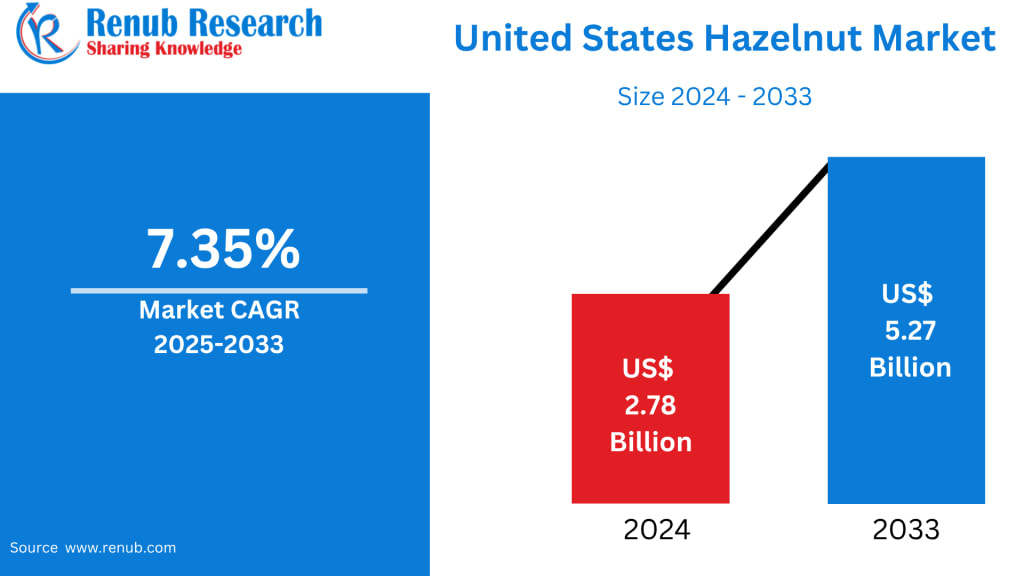
The United States Hazelnut Market is on a strong growth trajectory and is expected to reach US$ 5.27 billion by 2033, up from US$ 2.78 billion in 2024, registering a CAGR of 7.35% from 2025 to 2033, according to insights aligned with Renub Research estimates. This growth reflects evolving consumer food habits, the rapid expansion of plant-based diets, and the increasing use of hazelnuts across food, beverage, cosmetic, and pharmaceutical applications.
Hazelnuts—also known as filberts—belong to the Corylus genus, most notably Corylus avellana. Valued for their rich, nutty flavor and exceptional nutritional profile, hazelnuts are widely consumed raw, roasted, or processed into pastes, oils, and spreads. Their high content of healthy fats, antioxidants, vitamins E and B, protein, and dietary fiber has positioned them as a premium ingredient in modern diets focused on wellness and sustainability.
In the United States, the hazelnut industry has traditionally been concentrated in the Pacific Northwest, particularly Oregon, which dominates domestic production. However, innovation in hybrid varieties, disease-resistant plants, and improved orchard management practices is gradually expanding cultivation into new regions. Combined with rising imports to meet growing demand, the U.S. hazelnut market is becoming increasingly diversified and globally integrated.
United States Hazelnut Industry Overview
Hazelnuts occupy a unique position in the American agricultural and food processing ecosystem. They are deeply embedded in confectionery manufacturing, bakery applications, dairy alternatives, and premium snack products. Beyond food, hazelnut oil and extracts are gaining traction in cosmetics and personal care due to their moisturizing, antioxidant, and skin-nourishing properties.
The rising popularity of vegan, gluten-free, and clean-label diets has significantly enhanced the appeal of hazelnuts. Consumers increasingly associate hazelnuts with heart health, natural energy, and functional nutrition. Their compatibility with both indulgent products—such as chocolates and spreads—and health-oriented offerings—such as protein bars and plant-based beverages—makes them a highly versatile ingredient.
Furthermore, sustainability is becoming a critical purchasing factor. Ethically sourced and organically grown hazelnuts are witnessing increased demand, prompting growers and processors to adopt environmentally responsible practices, including reduced chemical usage, efficient water management, and regenerative farming techniques.
Growth Drivers for the United States Hazelnut Market
1. Rising Health Awareness
Growing health consciousness among U.S. consumers is one of the most powerful drivers of the hazelnut market. Hazelnuts are rich in monounsaturated fats that support cardiovascular health, along with antioxidants that combat oxidative stress. Regular consumption has been linked to reduced LDL cholesterol levels, improved metabolic health, and enhanced digestive function.
As consumers actively seek nutrient-dense foods that align with preventive healthcare trends, hazelnuts are increasingly incorporated into everyday diets. This has boosted demand for hazelnut-based snacks, spreads, cereals, and beverages, particularly within the premium and functional food segments.
2. Expansion of Plant-Based Diets
The accelerating shift toward plant-based eating patterns in the United States is significantly benefiting the hazelnut industry. Hazelnuts serve as an excellent plant-based source of protein, healthy fats, and essential micronutrients, making them attractive to vegans, vegetarians, and flexitarians alike.
Hazelnut milk, dairy-free spreads, nut butters, and vegan confectionery products are seeing strong growth as consumers look for alternatives to soy and almond-based options. Their mild flavor and creamy texture enhance their suitability across both sweet and savory formulations, further supporting widespread adoption.
3. Rising Usage in the Confectionery Industry
The confectionery sector remains a cornerstone of hazelnut consumption in the United States. Globally, nearly 90% of hazelnuts are used in chocolate and confectionery products, and this trend is strongly reflected in the U.S. market. Hazelnuts add depth, texture, and a premium taste profile to chocolates, cookies, wafers, and spreads.
Major chocolate manufacturers continue to innovate with hazelnut-infused offerings to meet consumer demand for indulgent yet high-quality products. The perception of hazelnuts as both luxurious and nutritious gives confectionery brands a competitive edge in an increasingly health-aware market.
4. Growth of Organic and Sustainable Products
Demand for organic and sustainably sourced hazelnuts is rising rapidly. Consumers are more informed about environmental and ethical issues related to food production and are willing to pay a premium for products that align with their values. This has encouraged growers to invest in organic certification, sustainable farming practices, and transparent supply chains.
The organic segment is expected to grow faster than conventional hazelnuts during the forecast period, driven by clean-label trends and the expansion of organic retail channels.
5. Technological Advancements in Processing
Improvements in harvesting, roasting, grinding, and oil extraction technologies have enhanced product quality and reduced waste. Advanced processing techniques allow for better flavor retention, longer shelf life, and improved nutritional preservation, making hazelnut-derived products more appealing to manufacturers and consumers alike.
Challenges in the United States Hazelnut Market
Pests and Diseases
One of the most significant challenges facing the U.S. hazelnut industry is vulnerability to pests and diseases. Eastern filbert blight is a major fungal disease that can severely damage orchards, reducing yields and increasing management costs. Pests such as filbertworms and aphids further threaten crop productivity.
Managing these risks requires continuous monitoring, disease-resistant cultivars, and increased use of crop protection measures, all of which raise production costs and impact profitability.
Climate Sensitivity
Hazelnut trees are highly sensitive to climatic conditions, requiring mild winters and moderate summers for optimal growth. Extreme weather events such as late frosts, prolonged droughts, excessive rainfall, and temperature fluctuations can significantly affect flowering and nut development.
Climate change has increased uncertainty in production, limiting the expansion of suitable growing regions and adding risk to long-term supply stability in the United States.
United States Hazelnut Market Segmentation
By Product
Whole Hazelnut
Hazelnut Paste
Hazelnut Oil
Others
Whole hazelnuts dominate the market due to their extensive use in snacks and confectionery, while hazelnut paste and oil are witnessing rapid growth driven by food processing and cosmetic applications.
By Application
Food & Beverage
Cosmetics & Personal Care
Pharmaceuticals
Others
The food and beverage segment accounts for the largest market share, supported by bakery, confectionery, dairy alternatives, and functional food products.
Recent Developments Impacting the Broader Industry
Recent corporate acquisitions in adjacent health and food-related industries highlight ongoing consolidation and innovation across ingredient and nutrition-driven markets. While not directly tied to hazelnuts, these developments underscore increasing investment in functional, high-value product categories—an environment that benefits nutrient-rich ingredients such as hazelnuts.
Key Players in the United States Hazelnut Market
The competitive landscape of the U.S. hazelnut market includes a mix of global agribusinesses and specialized producers:
Archer Daniels Midland Company
Olam International
Arslanturk S.A.
Holmquist Hazelnut Orchards, LLC
DurakFindik
DeveHerbes
Azerstar LLC
American Hazelnut Company
Company Analysis Includes
Company Overview
Key Decision Makers
Recent Developments & Strategies
Sales and Revenue Analysis
Final Thoughts
The United States Hazelnut Market is entering a dynamic growth phase, supported by powerful trends such as health-focused consumption, plant-based diets, premium confectionery demand, and sustainable agriculture. While challenges related to climate sensitivity and crop diseases persist, continued innovation in farming practices, processing technologies, and product development is expected to mitigate these risks.
With a projected market value of US$ 5.27 billion by 2033, hazelnuts are set to play an increasingly important role in the U.S. food and wellness ecosystem. For producers, processors, and investors, the coming decade presents significant opportunities to capitalize on evolving consumer preferences and the expanding role of hazelnuts across multiple industries.
About the Creator
Marthan Sir
Educator with 30+ years of teaching experience | Passionate about sharing knowledge, life lessons & insights | Writing to inspire, inform, and empower readers.
Keep reading
More stories from Marthan Sir and writers in Feast and other communities.
North America Organic Starch Market Trends & Summary (2025–2033)
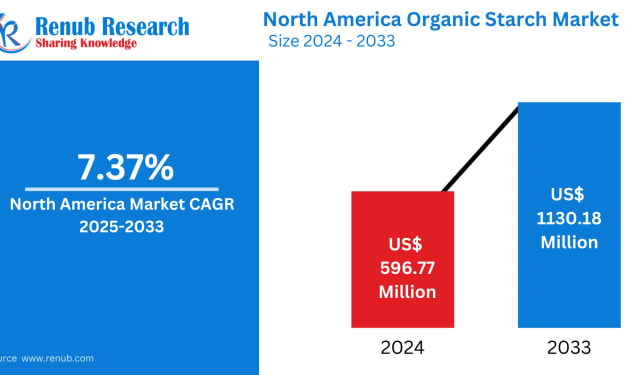
Introduction The North America Organic Starch Market is witnessing consistent and promising growth as consumers, manufacturers, and regulators increasingly prioritize clean-label, sustainable, and health-driven ingredients. Valued at US$ 596.77 million in 2024, the market is expected to expand at a compound annual growth rate (CAGR) of 7.37% between 2025 and 2033, reaching approximately US$ 1,130.18 million by 2033, according to Renub Research.
By Marthan Sir28 days ago in Feast
My Tous les Jours Trip
As someone who lives in a rural area, I don't get the chance to visit fancy restaurants or bakeries that often. So, when a friend told me about a French-Asian bakery that's less than an hour away, I knew I had to check it out and grab some pictures for social media. Tous les Jours ended up providing an immersive experience that went above and beyond my expectations--although I did leave with a few reservations.
By Kaitlin Shanks17 days ago in Feast
Standing While Falling
Quotation from Friedrich Nietzsche "He who wrestles long with monsters should beware lest he himself become a monster. And if you gaze long into an abyss, the abyss also gazes into you. Man is not destroyed by suffering, but by the meaning he makes of it."
By LUCCIAN LAYTH5 days ago in Critique



Comments
There are no comments for this story
Be the first to respond and start the conversation.