
United States Date Syrup Market Size and Forecast 2025–2033
Naturally Sweet, Rapidly Rising: How Clean-Label Trends Are Fueling America’s Date Syrup Boom

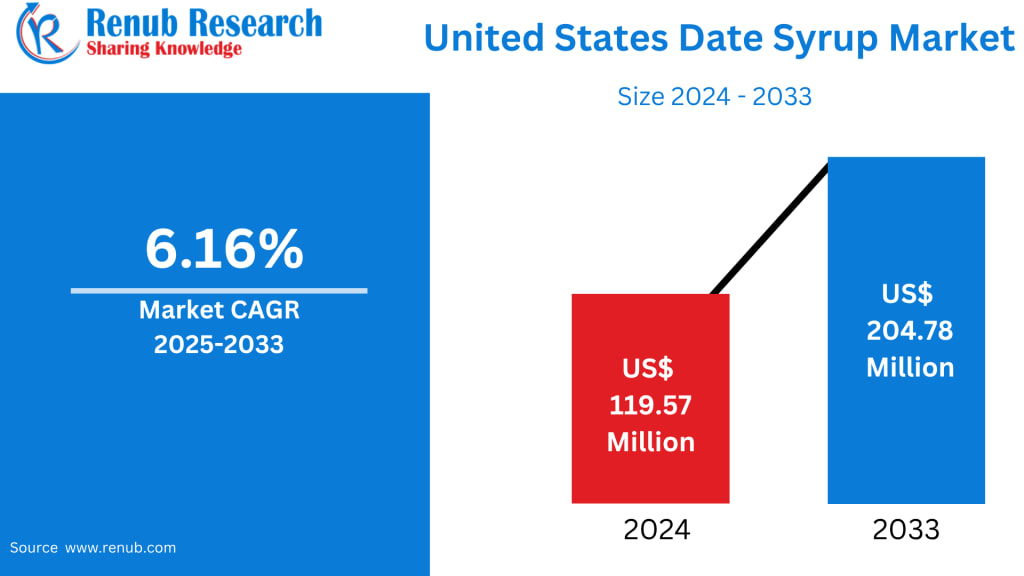
The United States Date Syrup Market is entering a defining growth phase—one shaped by shifting consumer preferences, clean-label demands, and the rise of plant-based nutrition. According to Renub Research, the U.S. Date Syrup Market is expected to reach US$ 204.78 million by 2033, up from US$ 119.57 million in 2024, growing at a CAGR of 6.16% between 2025 and 2033. This steady expansion reflects not just a trend, but a transformation in how Americans choose to sweeten their foods, fuel their diets, and evaluate product transparency.
As refined sugar faces increasing scrutiny and artificial sweeteners lose consumer trust, date syrup has emerged as one of the most promising natural sweeteners in the country—valued for its nutritional content, clean-label image, and rich caramel-like taste. From bakeries and beverage brands to nutraceutical companies and vegan food startups, industries across the U.S. are integrating date syrup into their formulations, signaling a powerful shift toward healthier, more sustainable ingredients.
United States Date Syrup Industry Overview
Date syrup is produced by extracting and concentrating the juice from dates—resulting in a thick, naturally sweet syrup that retains the fruit’s nutrients, including minerals, fiber, and antioxidants. Unlike refined sugar, which offers empty calories, date syrup delivers sweetness with a nutritional advantage and a comparatively lower glycemic impact.
Its usage extends across:
Baking and confectionery
Beverages and smoothies
Breakfast foods and cereals
Health foods and energy bars
Culinary sauces and marinades
Vegan and plant-based products
With its clean-label profile, plant-based origins, and minimal processing, date syrup has positioned itself as a compelling alternative to sugar, honey, maple syrup, and artificial sweeteners. As U.S. consumers increasingly prioritize transparency and natural ingredients, date syrup is becoming a staple within retail grocery, foodservice, and wellness-driven product innovation.
What’s Driving Growth in the U.S. Date Syrup Market?
1. Clean-Label and Natural Sweetener Preference
American consumers are demanding honesty from their food—and date syrup fits perfectly into this narrative. Clean-label products free from artificial preservatives, chemicals, or additives are now a mainstream priority. Date syrup, derived from a single natural ingredient and requiring minimal processing, resonates strongly with shoppers who value:
Ingredient transparency
Wholesome nutrition
Chemical-free food formulations
Naturally sourced sweeteners
Brands reformulating products with natural sweeteners are increasingly turning to date syrup to enhance product appeal and trust. As the clean-eating movement gains momentum, date syrup is poised to hold premium market positioning among natural sweeteners.
2. Expanding Use Across Food, Beverage & Nutraceutical Sectors
Versatility is date syrup’s biggest competitive edge. Manufacturers value its ability to:
Blend seamlessly into liquid and dry mixes
Deliver rich flavor
Provide natural sweetness without artificial additives
Support vegan and allergen-free claims
This makes it ideal for:
Bakery items like muffins, breads, and cookies
Dairy alternatives such as plant-based yogurt and milk
Protein bars and energy bites
Functional beverages and wellness drinks
Breakfast cereals and granola
Meanwhile, nutraceutical companies are leveraging date syrup’s natural antioxidant and mineral content in functional foods targeting health-conscious consumers. As Americans seek products that balance taste and nutrition, date syrup’s multifunctional profile is strengthening its role in product development and innovation.
3. Rising Health Awareness and Plant-Based Diet Adoption
The U.S. wellness movement is reshaping the sweetener landscape. Growing awareness of the health risks tied to refined sugar—including obesity, diabetes, and heart disease—has pushed consumers toward natural alternatives. Date syrup perfectly aligns with:
Vegan and vegetarian lifestyles
Whole-food and plant-based diets
Functional and nutrient-rich food choices
Sustainable and ethical sourcing considerations
Vegan desserts, smoothies, and protein snacks frequently feature date syrup as a naturally derived sweetening agent. As plant-based diets continue to scale from niche to mainstream, date syrup’s demand is set to accelerate nationwide.
Challenges Restraining Market Growth
1. High Production and Sourcing Costs
Date syrup production involves labor-intensive processes—extraction, filtration, and concentration—designed to preserve both flavor and nutrition. Additionally, the U.S. relies heavily on imported dates or limited domestic supply, increasing raw material costs. This translates into:
Higher retail prices
Limited affordability compared to sugar and honey
Cost barriers for mass-market products
Balancing quality and cost efficiency remains a key challenge for manufacturers aiming to scale production and expand access.
2. Limited Consumer Awareness and Retail Penetration
Despite rapid growth within health-focused circles, many mainstream consumers remain unfamiliar with date syrup’s benefits. Honey, maple syrup, and brown sugar continue to dominate shelf space and consumer recognition. Current barriers include:
Limited retail availability in major grocery chains
Lack of consumer education
Perception as a niche product
Expansion through sampling programs, influencer partnerships, and foodservice integrations will be critical to accelerating adoption and awareness.
Regional Insights: State-Level Growth Leaders
California
California leads the U.S. market, driven by:
Health-conscious consumers
Strong organic and specialty food culture
Widespread plant-based adoption
Proximity to date cultivation regions
Bakeries, cafés, and wellness brands are integrating date syrup into menus and products, while local suppliers benefit from shorter supply chains and reduced costs.
Texas
Texas is one of the fastest-growing regional markets. Major urban centers—Houston, Dallas, and Austin—show strong demand for:
Organic products
Vegan and clean-label foods
Artisanal bakery and beverage innovations
Education and trial-based marketing remain key to expanding appeal beyond niche audiences.
New York
New York’s culinary diversity and premium food culture make it a fertile market for date syrup. Key drivers include:
High disposable incomes
Gourmet and artisanal food trends
Sustainability-focused consumers
Smoothie bars, bakeries, and high-end restaurants frequently utilize date syrup in desserts and wellness beverages.
Florida
Florida’s multicultural demographic—including Middle Eastern and Mediterranean communities—accelerates familiarity with date-based foods. Growth is supported by:
Expanding vegan population
Strong café and juice bar culture
Demand for clean-label, tropical-friendly flavors
Retail visibility and foodservice adoption continue to rise statewide.
Market Segmentation
By Type:
Conventional
Organic
By Application:
Food & Beverage
Nutraceuticals
Cosmetics
Others
By Distribution Channel:
Hypermarkets & Supermarkets
Specialty Stores
Online Retail
B2B Sales
By State:
29-State Market Coverage including California, Texas, New York, Florida, Illinois, Pennsylvania, Ohio, Georgia, New Jersey, and more.
Competitive Landscape & Key Players
Leading companies include:
Parsunday Symbol Co.
Ario Co
Al Barakah Dates Factory LLC
Rapunzel Naturkost
Sun Seas Business Group
AL FOAH
Lion Dates
RatinKhosh
Bateel
Just Date
These players are focusing on:
Portfolio expansion
Organic and premium product lines
Retail partnerships
Supply-chain optimization
Branding around clean-label health benefits
Recent Market Developments
2024: The Truffle & Wine Co. acquired a U.S.-based truffle farming operation to expand North American production capabilities.
August 2022: TRUFF collaborated with Hidden Valley Ranch to debut a Spicy Truffle Ranch product, marking a new trend in gourmet, flavor-focused partnerships.
While not directly tied to date syrup, these developments highlight the growing U.S. appetite for premium, specialty, and natural flavor innovations—creating a ripple effect across clean-label sweetener markets.
Final Thoughts: The Future of Sweetness Is Natural
The United States Date Syrup Market is riding a strong wave of momentum—powered by health consciousness, plant-based diets, and the clean-label revolution. As consumers move away from artificial ingredients and refined sugar, date syrup offers a compelling combination of taste, nutrition, and natural credibility.
With rising adoption in food manufacturing, retail, and foodservice, the next decade could reposition date syrup from a niche product to a mainstream sweetening powerhouse. Strategic marketing, cost optimization, and expanded retail access will shape its trajectory—but the trend is clear:
About the Creator
Keep reading
More stories from Aaina Oberoi and writers in Feast and other communities.
Global Chocolate Market Size and Forecast 2025–2033
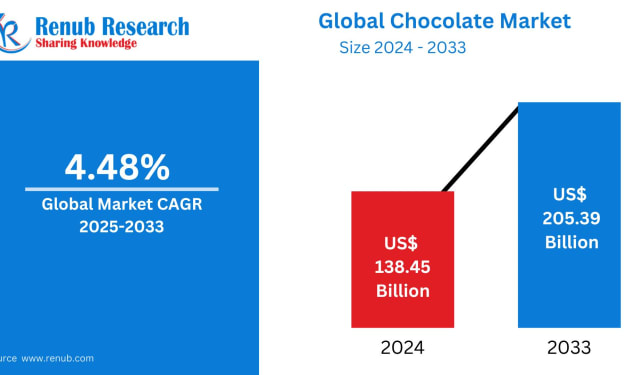
The global chocolate market continues to satisfy taste buds across continents, evolving into one of the most resilient and dynamic segments of the global food and beverage industry. According to Renub Research, the global chocolate market was valued at US$ 138.45 billion in 2024 and is projected to grow at a CAGR of 4.48% from 2024 to 2033, reaching US$ 205.39 billion by 2033. This growth is driven by rising indulgence consumption, health-oriented dark chocolate demand, expanding distribution networks, and the rapid penetration of premium, artisanal, and sustainable product categories.
By Aaina Oberoi2 months ago in Feast
My Tous les Jours Trip
As someone who lives in a rural area, I don't get the chance to visit fancy restaurants or bakeries that often. So, when a friend told me about a French-Asian bakery that's less than an hour away, I knew I had to check it out and grab some pictures for social media. Tous les Jours ended up providing an immersive experience that went above and beyond my expectations--although I did leave with a few reservations.
By Kaitlin Shanks16 days ago in Feast



Comments
There are no comments for this story
Be the first to respond and start the conversation.