
United States Crab Market Size and Forecast 2025–2033
A Growing Appetite: How America’s Love for Premium Seafood Is Powering a Billion-Dollar Crab Industry


The United States Crab Market is expected to reach US$ 5.71 billion by 2033, rising from US$ 3.42 billion in 2024, according to Renub Research. The industry is forecast to grow at a CAGR of 5.86% from 2025 to 2033, supported by rising seafood consumption, expanding foodservice channels, and strong demand for premium crab species such as blue crab and king crab. Both domestic harvesting and large-scale imports play significant roles in shaping market dynamics, making crab one of the most commercially important seafood categories in the United States.
Renub Research’s report, United States Crab Market by Type, Form, State and Company Analysis (2025–2033), highlights how blue crab, Chinese mitten, gazami crab, and other crab varieties contribute to this steadily growing market.
United States Crab Industry Overview
The U.S. crab industry forms a crucial pillar of the nation’s seafood economy, involving commercial fishing fleets, processing plants, distributors, exporters, and a large network of foodservice establishments.
The market is largely defined by the harvesting and distribution of key species:
Blue Crab – Predominantly harvested in the Atlantic and Gulf regions, notably Maryland, Virginia, and Louisiana.
Dungeness Crab – Primarily sourced from the West Coast, especially California, Oregon, and Washington.
Alaskan King Crab – Sourced from the cold waters of Alaska and valued for its exceptional size, taste, and market price.
These operations support thousands of jobs in coastal communities—from small family fisheries to large seafood companies—making crab fishing not only an economic driver but also a cultural staple in regions such as Chesapeake Bay and Alaska.
American consumers continue to show strong demand for flavorful, protein-rich seafood. Crab consumption has grown as high-protein diets, pescatarian lifestyles, and awareness of the health benefits of omega-3-rich shellfish gain traction. Meanwhile, seafood restaurants, premium food chains, and retail supermarkets further boost consumption through innovative products and wide menu adoption.
However, the industry also faces structural challenges including seasonal harvest restrictions, environmental changes, and the rising impact of ocean warming and acidification on marine ecosystems.
Despite these challenges, investments in aquaculture, sustainability certifications, and cold-chain improvements continue to strengthen the industry's long-term outlook.
Key Drivers of Growth in the U.S. Crab Market
1. Rising Consumer Preference for Healthy Seafood
Crab’s nutritional profile—high protein, low saturated fat, and packed with omega-3 fatty acids—has made it a favorite among health-conscious American consumers. The rise of Mediterranean, flexitarian, and seafood-centric diet trends has brought crab deeper into mainstream American cuisine.
Consumers are increasingly experimenting with preparing seafood at home, aided by meal-kit delivery services and convenient retail packs of frozen or canned crab. From crab cakes to gourmet pastas, crab’s versatility keeps it relevant across cuisines and age groups.
This shift in consumer behavior, coupled with rising disposable income and food awareness, is expected to support stable growth for crab products in both retail and foodservice sectors throughout the forecast period.
2. Expanding Foodservice Sector and Menu Innovation
Seafood restaurants, fast-casual outlets, fine dining establishments, and specialty crab houses play an integral role in boosting market demand. Crab is now featured across a wide spectrum of dishes—from crab bisque and crab rolls to king crab legs and crab sushi.
Foodservice operators increasingly prioritize:
Premium and sustainably sourced seafood
Seasonal crab menu promotions
Creative crab-based dishes
High-quality frozen and pre-processed crab products
The rise of seafood-focused chains and the booming meal-delivery ecosystem also improve market access and strengthen nationwide crab consumption.
3. Advancements in Sustainability and Regulatory Support
Sustainable fishing has become a defining element of U.S. crab market growth. Federal agencies such as NOAA enforce catch quotas, gear restrictions, and seasonal closures to maintain healthy crab populations.
Consumers prefer seafood that is responsibly sourced, and certification programs—such as MSC (Marine Stewardship Council)—strengthen trust in crab products. Traceability technologies and digital monitoring systems further boost transparency across supply chains.
Additionally, crab aquaculture and hatchery programs are emerging as potential long-term solutions to supplement wild catch, supporting a balanced ecological approach that ensures the industry’s durability.
Challenges in the U.S. Crab Market
1. Environmental Instability and Climate Impact
Climate change is one of the most pressing issues facing the U.S. crab industry.
Key challenges include:
Rising water temperatures affecting crab reproduction
Ocean acidification disrupting shell development
Unpredictable storms and hurricanes damaging coastal ecosystems
Shifting crab migration patterns
For instance, blue crab populations in the Atlantic have been impacted by warming waters, while Alaska’s king crab stocks have seen declines due to thinning sea ice and habitat changes.
This environmental uncertainty complicates harvest predictions, supply stability, and long-term resource management.
2. Seasonal Fishing Restrictions and Complex Regulations
Strict regulatory oversight—though essential for sustainability—presents challenges for fishermen and processors. Seasonal closures can limit supply during peak demand periods, contributing to price volatility.
Management requirements include:
Catch limits
Gear regulations
License restrictions
Fishing bans in sensitive areas
Minimum size requirements
Rising compliance costs also pose challenges, encouraging companies to invest in better planning, efficient processing, and cold-chain logistics to manage fluctuating supply.
United States Crab Market Breakdown by States
California Crab Market
California remains a powerhouse for Dungeness crab, known for its sweet flavor and large size. Harvesting occurs primarily along the northern and central coastlines.
Key factors shaping the California crab market:
Strong export demand, especially from Asian markets
High domestic consumption driven by the state's seafood culture
Strict regulatory oversight to manage domoic acid risks
Environmental challenges including algae blooms and marine heatwaves
Despite periodic delays and closures, California’s crab market remains one of the most robust in the United States.
Texas Crab Market
Texas’ Gulf Coast environment makes it a prime habitat for blue crab, feeding both commercial and recreational markets.
Highlights:
Strong local demand due to seafood-rich Gulf cuisine
Vulnerability to extreme weather events such as hurricanes
Efforts to restore estuaries and coastal crab populations
Consistent market growth driven by restaurants and seafood retailers
Texas continues to be a major supplier of blue crab to the Southern and Central U.S. markets.
New York Crab Market
While not a major crab-producing state, New York plays a key role as a:
High-demand consumer market
Critical seafood distribution hub
Major import gateway through its ports
New York City’s vibrant culinary scene fuels strong demand for king crab, snow crab, and blue crab sourced from other U.S. states and international suppliers.
Florida Crab Market
Florida’s warm waters and extensive estuaries support a thriving blue crab market.
Key factors:
Strong tourism drives year-round seafood demand
Blue crab is central to Florida regional cuisine
Natural threats such as water pollution and hurricanes
Ongoing conservation measures including catch size regulations
Florida remains one of the top contributors to the U.S. blue crab supply.
Recent Developments in the U.S. Crab Industry
May 2025 – Canada’s Gulf snow crab fishery neared its quota limit by late May, leaving Newfoundland & Labrador as the primary supplier for U.S. markets for the remainder of the season.
April 2025 – Northern California’s rock crab fishery reopened after ten years following successful safety tests for domoic acid, marking a major development for West Coast crab supply.
Market Segmentation
By Type
Blue Crab
Chinese Mitten
Gazami Crab
Other Crab Types
By Form
Frozen
Canned
Other Forms
By State
California, Texas, New York, Florida, Illinois, Pennsylvania, Ohio, Georgia, New Jersey, Washington, North Carolina, Massachusetts, Virginia, Michigan, Maryland, Colorado, Tennessee, Indiana, Arizona, Minnesota, Wisconsin, Missouri, Connecticut, South Carolina, Oregon, Louisiana, Alabama, Kentucky, Rest of United States.
Key Companies Covered
Bumble Bee Foods LLC
Supreme Crab & Seafood Inc.
Maine Lobster Now
Millennium Ocean Star Corporation
Phil-Union Frozen Foods Inc.
JM Clayton Seafood Company
RGE Agridev Corporation
Siam Canadian Group Limited
Handy Seafood
Includes: Company Overview, Key People, Recent Developments, SWOT Analysis, Revenue Analysis
Final Thoughts
The United States crab market is entering a phase of sustained expansion, powered by surging consumer demand for flavorful, nutritious seafood and reinforced by advanced foodservice networks and evolving sustainability standards. While environmental pressures and regulatory challenges persist, the industry's commitment to responsible harvesting, aquaculture investment, and supply chain modernization positions it for long-term growth.
With the market forecast to reach US$ 5.71 billion by 2033, the next decade offers significant opportunities for seafood brands, fisheries, retailers, and investors as America continues to embrace high-quality crab products across its culinary and cultural landscape.
About the Creator
Marthan Sir
Educator with 30+ years of teaching experience | Passionate about sharing knowledge, life lessons & insights | Writing to inspire, inform, and empower readers.
Keep reading
More stories from Marthan Sir and writers in Feast and other communities.
Canned Food Market Size & Forecast 2025–2033
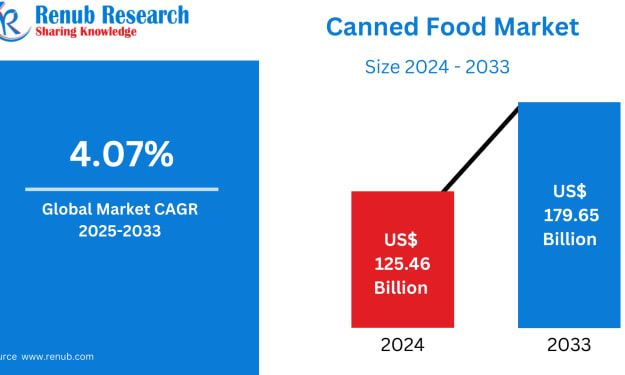
Introduction The Canned Food Market is witnessing a renewed global surge, expected to reach US$ 179.65 billion by 2033, rising from US$ 125.46 billion in 2024, according to Renub Research. This expansion reflects a CAGR of 4.07% from 2025 to 2033—driven by shifting consumer lifestyles, improved processing technologies, and the rising preference for food products that balance nutrition, convenience, and affordability.
By Marthan Sirabout a month ago in Feast
My Tous les Jours Trip
As someone who lives in a rural area, I don't get the chance to visit fancy restaurants or bakeries that often. So, when a friend told me about a French-Asian bakery that's less than an hour away, I knew I had to check it out and grab some pictures for social media. Tous les Jours ended up providing an immersive experience that went above and beyond my expectations--although I did leave with a few reservations.
By Kaitlin Shanks16 days ago in Feast
United States Oatmeal Market Size & Forecast 2025–2033
United States Oatmeal Market Overview The United States Oatmeal Market is positioned for steady and sustained growth over the coming decade, supported by rising health awareness, changing breakfast habits, and the growing preference for nutritious convenience foods. According to Renub Research, the market is expected to expand from US$ 1.82 billion in 2024 to US$ 2.83 billion by 2033, registering a Compound Annual Growth Rate (CAGR) of 5.04% during the forecast period from 2025 to 2033.
By Aaina Oberoi5 days ago in Feast
Bruce Lee and The God of War: Kuan Ti
It starts with love.. The Power to the God Of War and Wealth Walk into a Chinese restaurant (even in Oklahoma, USA), a Chinese police station, a kung fu martial arts studio or even a Chinese temple and you often see a red faced warrior holding a heavy quan-do (spear like weapon).
By WILD WAYNE : The Dragon King5 days ago in Chapters



Comments
There are no comments for this story
Be the first to respond and start the conversation.